Why RAM Prices Are So High in 2026 (And When They'll Drop)
AI datacenters are consuming the world's DRAM supply, and Samsung, SK Hynix, and Micron all say relief won't come quickly for PC buyers.
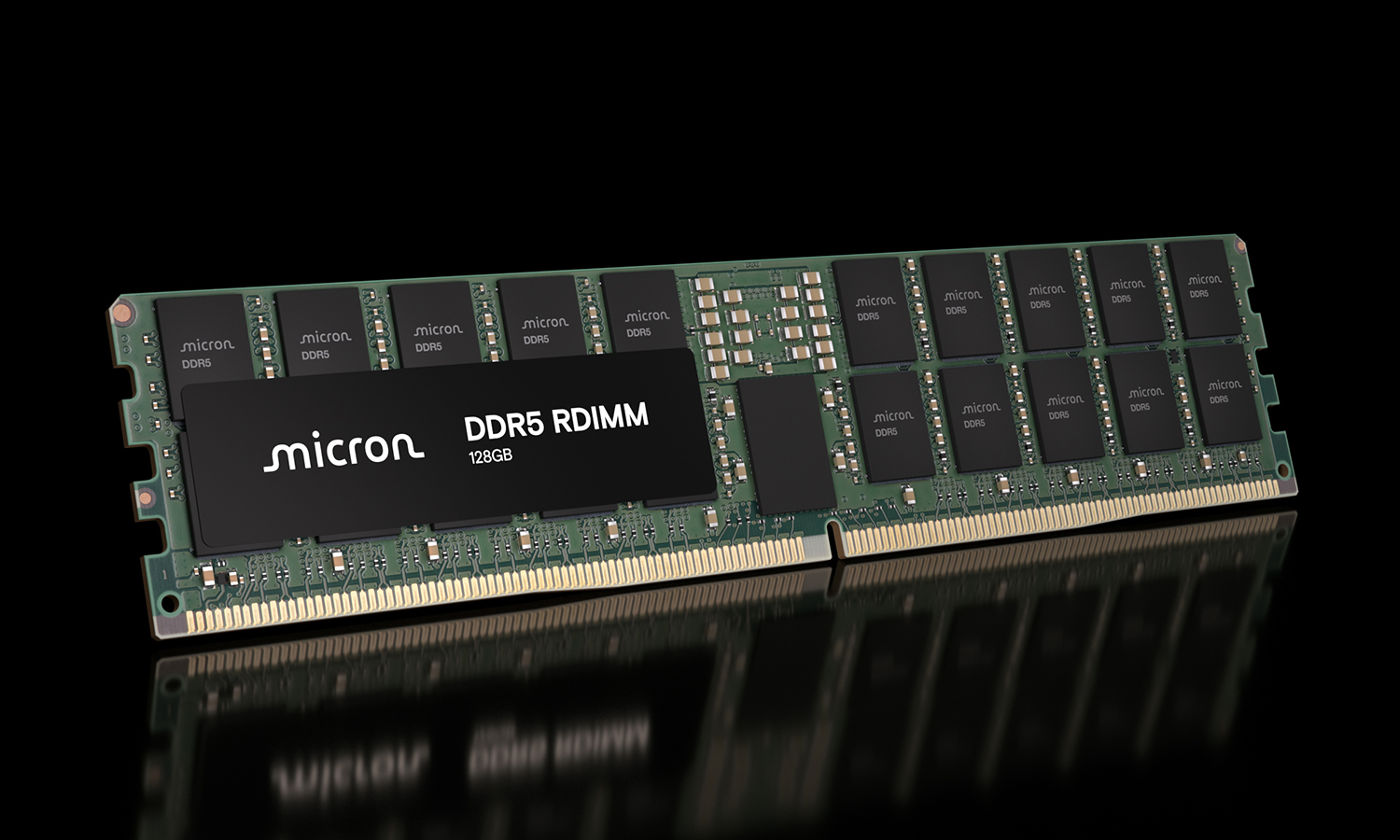
RAM prices have risen sharply through 2026, and the cause is not a shortage of silicon so much as a shortage of attention: Samsung, SK Hynix and Micron are pouring their fabrication capacity into high-bandwidth memory (HBM) for AI data centers, leaving far less DDR5 behind for ordinary PCs, laptops and servers. Samsung's own first-quarter 2026 results show just how fast that repricing has moved, and SK Hynix says its entire 2026 production of DRAM, NAND and HBM is already spoken for. For anyone buying or building a PC, the practical effect is the same: memory now costs dramatically more than it did a year ago, and none of the three big manufacturers is promising a quick fix.
- AI datacenter demand for HBM is consuming fabrication capacity that used to make consumer DDR5, tightening supply industry-wide.
- Samsung's Q1 2026 results show DRAM's blended average selling price jumping roughly 90% and NAND's roughly 80%, quarter over quarter.
- SK Hynix says its DRAM, NAND and HBM capacity is essentially sold out for all of 2026.
- Micron is exiting its consumer-facing Crucial memory brand to prioritize enterprise and AI customers.
- Samsung, SK Hynix and Micron executives have each pointed to a shortage lasting into 2027 or 2028, with SK Group's chairman citing 2030.
What's actually happening to RAM prices
The memory industry has flipped from oversupply to scarcity in the space of about a year. Through most of 2023 and 2024, DRAM and NAND makers were cutting production to prop up prices after a brutal downturn. Then generative AI infrastructure spending accelerated, and hyperscalers began placing enormous, open-ended orders for HBM — the stacked memory that sits next to AI accelerators from Nvidia and others. Because HBM uses far more wafer capacity per bit of storage than standard DDR5, every wafer redirected to HBM production is a wafer that isn't making laptop or desktop memory.
That reallocation, combined with manufacturers' reluctance to expand legacy DDR4 and DDR5 lines after years of losses, has left conventional PC and server memory in short supply just as demand for AI PCs, new server refreshes and everyday upgrades continues. The result, as tracked in Wikipedia's account of the shortage, has been price increases in the 200% to 400% range for DRAM and NAND since the shortage began, with PC makers absorbing cost increases in the range of 15% to 20%.
Why AI demand is squeezing consumer DRAM
HBM is not a side project for the memory makers anymore — it's the most profitable product line they've ever had, and it is being bought in volumes that dwarf typical PC-memory contracts. SK Hynix's own 2026 market outlook, published on its newsroom, projects the overall memory market growing past $440 billion in 2026, with the HBM segment alone expected to reach roughly $54.6 billion — a 58% jump from the prior year. SK Hynix also expects HBM tied to custom AI chips to grow by around 82% in 2026, eating up roughly a third of the entire HBM market on its own.
Every gigabit of capacity a fab commits to HBM4 is capacity it isn't using to print DDR5 for a gaming PC or an office laptop. That's the mechanical reason a boom in AI chips shows up as a price hike on a stick of memory that has nothing to do with artificial intelligence.
Samsung's price hikes, by the numbers
Samsung doesn't publish a public retail price list for DDR5, but its quarterly results function as a real-time gauge of how fast memory pricing is moving. In its first-quarter 2026 earnings release, Samsung Electronics reported that its blended average selling price — a company-reported measure that blends every DRAM product it sells, from server modules to mobile memory — rose in the "low 90% range" quarter over quarter for DRAM, and in the "high 80%" range for NAND. Samsung's memory division alone generated $50.4 billion in revenue that quarter, a record, driven mostly by surging prices rather than higher shipment volumes.
Samsung has also been explicit about where its capacity is going: in October 2025 the company's newsroom announced a strategic partnership with OpenAI to supply memory for the Stargate AI infrastructure project, one of several enormous long-term supply commitments memory makers have signed with AI infrastructure companies over the past year.
SK Hynix: sold out through 2026
SK Hynix has been the most blunt of the three major manufacturers about how little spare capacity is left. Announcing its third-quarter 2025 results, the company said it had "already secured full customer demand for its entire DRAM and NAND production for next year" — meaning 2026 — and that HBM supply discussions for 2026 were also complete, with HBM4 shipments beginning in the fourth quarter of 2025. That quarter delivered SK Hynix a record 11.4 trillion won in operating profit, a 47% operating margin, which the company attributed to a "full-scale rise in prices of DRAM and NAND" layered on top of strong AI server shipments.
In plain terms: if you are a PC maker, motherboard vendor or module brand trying to buy more DRAM or NAND from SK Hynix for 2026, there isn't any more to buy. Whatever memory reaches consumers has to come out of allocations that were already committed, or from Samsung and Micron's comparatively squeezed capacity.
Micron's retreat from consumer memory
Micron has taken the most visible step of the three, announcing on December 3, 2025 that it would exit its Crucial consumer memory and storage business entirely. Crucial-branded consumer shipments were set to continue only through the end of Micron's fiscal second quarter, February 2026, after which the company would keep supporting existing warranties but stop selling to consumer retail and e-tail channels.
Sumit Sadana, Micron's executive vice president and chief business officer, framed the move as a matter of where the company's supply could do the most good: "The AI-driven growth in the data center has led to a surge in demand for memory and storage," he said in the announcement, adding that the company wanted to "improve supply and support" for its larger strategic customers in faster-growing segments. Micron said affected employees would be redeployed internally rather than laid off, and that Micron-branded enterprise and commercial products would continue to be sold through business channels.
Crucial was, for two decades, one of the default recommendations for anyone buying a stick of RAM or a SATA SSD at retail. Its wind-down is as clear a signal as any that the consumer memory market has stopped being a priority for the companies that actually make the chips.
How much has DDR5 actually gone up
Because none of the big three publish consumer DDR5 price sheets, the cleanest verified numbers come from the companies' own financial disclosures and from the aggregated tracking in Wikipedia's article on the shortage. Taken together, they paint a consistent picture of a market that has roughly doubled, and in some segments more than tripled, in a little over a year.
| Metric | Figure | Source |
|---|---|---|
| Samsung blended DRAM ASP, QoQ change (Q1 2026) | ~90% increase | Samsung Electronics Q1 2026 earnings release |
| Samsung blended NAND ASP, QoQ change (Q1 2026) | ~80% increase | Samsung Electronics Q1 2026 earnings release |
| SK Hynix full-year 2026 DRAM ASP forecast | +33% year over year | SK Hynix 2026 Market Outlook (newsroom) |
| SK Hynix full-year 2026 NAND ASP forecast | +26% year over year | SK Hynix 2026 Market Outlook (newsroom) |
| DRAM price increase during 2025 alone | ~172% | Cited in Wikipedia's shortage timeline |
| Cumulative DRAM/NAND price increase since shortage began | 200%–400% | Wikipedia, "2025–present global memory supply shortage" |
| Reported PC OEM cost increase from memory | ~15%–20% | Wikipedia, "2025–present global memory supply shortage" |
Those are blended, company-wide or industry-wide figures rather than a single retail SKU's before-and-after price, but they're the numbers Samsung and SK Hynix have put their own names to, and they move in the same direction as everything shoppers have been seeing at retail: DDR5 kits that were routinely available for modest prices in 2024 now cost dramatically more, when they're in stock at all.
Who's actually affected
The shortage touches nearly every tier of the PC market, but not evenly:
- PC builders and upgraders are the most exposed group, since DIY DDR5 kits are exactly the product line manufacturers have deprioritized in favor of server and HBM contracts. If you're planning a build, it's worth first checking your current RAM's speed and confirming XMP or EXPO is actually enabled before assuming you need to buy more or faster memory at today's prices.
- Laptop and prebuilt PC buyers are seeing the increases passed through more gradually, as OEMs work through existing inventory and long-term supply agreements, but new configurations — especially anything with 32GB or more of memory — are getting noticeably more expensive.
- Server and data-center buyers, ironically, are somewhat insulated by comparison, because many hyperscalers locked in long-term supply agreements before prices spiked. Everyone buying on the spot market has no such protection.
- Component shoppers comparing CPUs and GPUs alongside memory should expect the same inflationary pressure to show up gradually across other parts of a build, since fabrication capacity and packaging capacity are both under strain; our Core Ultra 7 265K+ vs. Ryzen 7 9800X3D vs. 9950X3D pricing comparison is a useful baseline for what a build cost before this cycle accelerated.
When will RAM prices come back down
This is the question everyone actually wants answered, and none of the three manufacturers is promising fast relief. Micron CEO Sanjay Mehrotra said in June 2026 that he expected the shortage to persist through 2027, with supply only gradually improving in 2028. Samsung's Jaejune Kim said in August 2026 that he expects the crunch to continue through 2028. SK Group chairman Chey Tae-won has gone further, estimating in comments covered in Wikipedia's timeline of the shortage that supply won't fully catch up with demand until 2030, with wafer supply currently trailing demand by roughly 20%.
There is a more optimistic counter-argument circulating inside the industry: some analysts and at least one former Samsung chip executive have suggested that a wave of new Chinese DRAM capacity could undercut current pricing within a year or two, once it reaches volume production. Whether that capacity actually materializes at scale, and whether it's allowed to reach Western markets given ongoing export-control tensions, remains genuinely uncertain. For now, the manufacturers' own public statements point toward a multi-year adjustment rather than a short-term spike that unwinds by early 2027.
It's also worth watching the transition to the next DRAM generation. Our explainer on the upcoming DDR6 standard covers how a new memory generation typically resets pricing dynamics — though in this cycle, DDR6's arrival is more likely to add new demand for AI and server platforms than to immediately relieve DDR5 pricing for existing PCs.
What PC buyers can do right now
If you need memory today, the practical options are limited but real. Buying only the capacity you actually need, rather than pre-buying extra RAM speculatively, avoids paying inflated prices for capacity that will (eventually) get cheaper. If you're troubleshooting whether an existing system needs more memory at all, confirming your current modules are running at their rated speed is a free first step. Builders comparing platforms should also factor memory costs into total build price when weighing CPU and GPU choices, since a component that looked like a bargain on paper six months ago may now come with a much pricier memory kit attached.
The outlook
Nothing in Samsung's, SK Hynix's or Micron's own disclosures suggests the DRAM market is about to loosen up in the next few quarters. SK Hynix has no spare 2026 capacity to sell. Samsung's blended memory prices are still climbing quarter over quarter. Micron has formally stepped back from selling to consumers at all. Barring a faster-than-expected ramp of new capacity — from Chinese fabs, from the manufacturers' own new plants (Micron broke ground on a new $9.3 billion fab in Japan in July 2026, though it isn't expected to start production until 2028), or from an unexpected slowdown in AI infrastructure spending — the current price environment looks set to persist well into 2027, and by the memory makers' own estimates, potentially beyond. For now, "RAM prices going down" is a search people are typing far more often than it's an outcome anyone building or buying a PC should expect this year.
Frequently asked questions
Why are RAM prices so high right now?
Samsung, SK Hynix and Micron have shifted fabrication capacity toward high-bandwidth memory (HBM) for AI accelerators, which uses far more wafer capacity per bit than standard DDR5. That leaves less capacity for consumer and server DRAM just as demand keeps rising, pushing prices up sharply through 2026.
How much have DDR5 prices actually increased?
Samsung's own Q1 2026 earnings release reported its blended DRAM average selling price rose roughly 90% and NAND roughly 80%, quarter over quarter. Wikipedia's tracking of the shortage puts cumulative DRAM and NAND price increases since it began at 200% to 400%.
Is SK Hynix really sold out of RAM for 2026?
Yes. SK Hynix said in its third-quarter 2025 results that it had already secured full customer demand for its entire DRAM and NAND production for next year, with HBM supply for 2026 also fully allocated.
Why is Micron shutting down Crucial?
Micron announced on December 3, 2025 that it would exit the Crucial consumer memory and storage brand, redirecting supply toward larger enterprise and AI data center customers. Consumer shipments continued only through February 2026.
When will RAM prices go back down?
Not soon, according to the manufacturers themselves. Micron's CEO has pointed to gradual improvement starting in 2028, Samsung has cited 2028, and SK Group's chairman has estimated the shortage could persist until 2030. Some analysts think new Chinese DRAM capacity could ease prices sooner, but that isn't guaranteed.
Should I buy RAM now or wait?
If you need memory for a build today, buy only the capacity you need rather than stockpiling, since near-term relief isn't guaranteed. If your current system's memory is already installed, confirming it's running at its rated speed with XMP or EXPO enabled is a free way to get more out of what you already have before paying today's prices for more.
Sources
- Samsung Electronics Announces First Quarter 2026 Resultsnews.samsung.com
- Samsung and OpenAI Announce Strategic Partnershipnews.samsung.com
- SK hynix Announces 3Q25 Financial Resultsnews.skhynix.com
- SK hynix 2026 Market Outlooknews.skhynix.com
- Micron Announces Exit from Crucial Consumer Businessinvestors.micron.com
- Wikipedia: 2025–present global memory supply shortageen.wikipedia.org
Mara Lindqvist edits the hardware desk. She covers graphics cards, processors, memory and storage, the foundries and chip designers behind them, and what the numbers on a spec sheet mean for people choosing a PC. Specifications in her stories come from manufacturer spec pages and datasheets.