How Much RAM Do You Need in 2026? 8GB vs 16GB vs 32GB vs 64GB
Still running 8GB? Here’s how much RAM Windows 11, modern games, Premiere Pro, coding and local AI actually require, with numbers straight from the source.
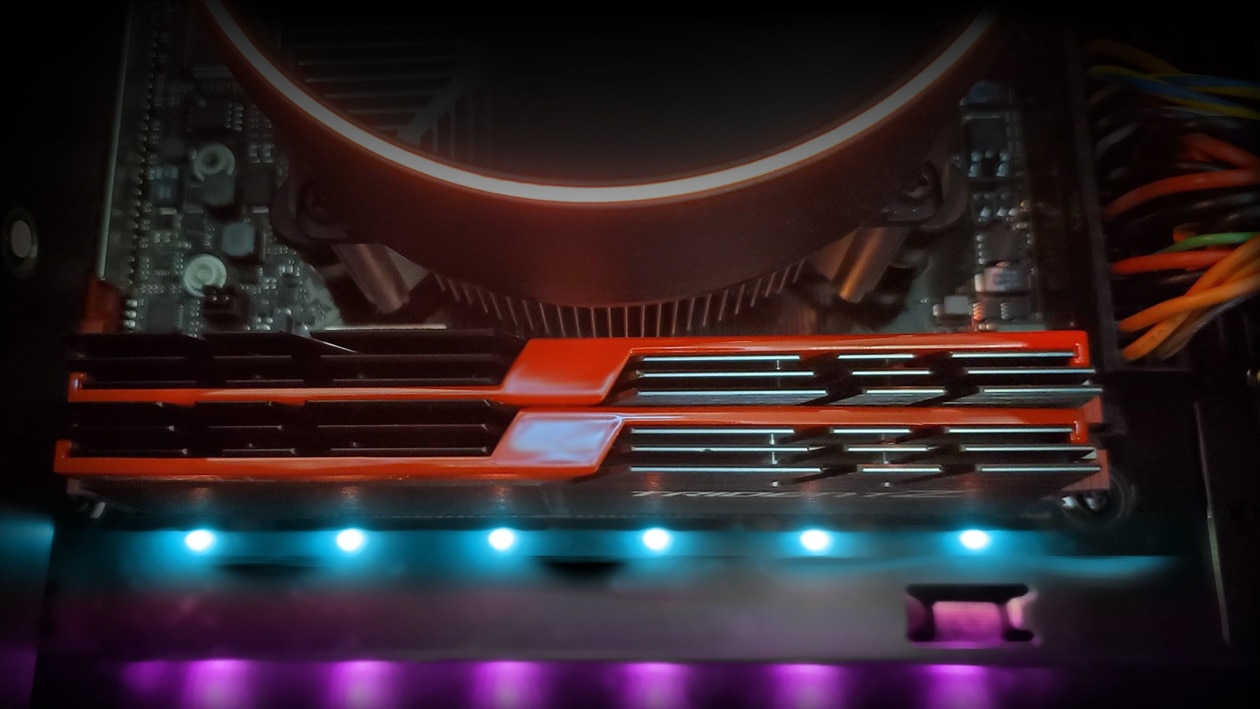
If you only read one line of this guide: 16GB of RAM is the realistic 2026 baseline for a Windows 11 PC, 32GB is the comfortable number for gaming and heavy multitasking, and 64GB or more is for video editing, software development with containers and virtual machines, or running larger AI models locally. 8GB still boots a modern PC, but it is now the floor, not a comfortable place to live, and it shows up in official spec sheets from Microsoft, Adobe, Mojang and Epic Games as either a bare minimum or something that has already been retired.
This guide is about capacity — how many gigabytes to buy — not about memory speed or when to buy. If you want help deciding whether to buy now or wait for prices to settle, see our separate guide on RAM pricing and timing. Every figure below is pulled from an official system-requirements page or a memory maker's own buying guidance, linked throughout.
- 8GB — absolute minimum. Fine for a secondary machine or very light Chromebook-style use, but tight for modern Windows 11 multitasking.
- 16GB — the realistic baseline. Comfortable for web browsing, office work, most gaming, and HD video or photo editing.
- 32GB — the sweet spot for gamers who stream or multitask, software developers, 4K video editors, and anyone running mid-size local AI models.
- 64GB+ — for heavy creative work (8K video, large 3D scenes), serious local-AI use with bigger models, or running several virtual machines at once.
Why 16GB Is the New Baseline
For years, 8GB was considered adequate for a "normal" PC. That has changed. Microsoft's own specification page still lists 4GB of RAM as the bare minimum to install Windows 11, but the same page sets a much higher bar for its newest class of machines: a Windows 11 Copilot+ PC requires 16GB of RAM as a hard requirement, not a suggestion. That is Microsoft itself telling the market where it expects mainstream PCs to sit.
Software makers are moving the same direction. In July 2026, Mojang raised Minecraft: Java Edition's official system requirements for the first time in the game's history, citing hardware that has moved on since the original 2011 specs. The new minimum is 8GB of RAM with a discrete GPU, or 12GB with integrated graphics, and the recommended tier is 16GB. If a famously lightweight game like Minecraft now recommends 16GB, treating that figure as the floor for a general-purpose 2026 PC is not overkill — it is just keeping up.
Basic Use: Web Browsing, Office Work and Windows 11
For email, browser tabs, video calls and office documents, you can technically run Windows 11 on the 4GB Microsoft lists as its minimum. In practice that minimum exists so the installer doesn't block you — it does not describe a pleasant experience with a dozen browser tabs, Teams, and an Office app open at once. Memory maker Crucial frames this more usefully in its own upgrade guidance: it groups casual users who browse, stream and use office software at around 8GB, and bumps that up for anyone doing real multitasking, putting intermediate, multi-app users at 16GB. Kingston's memory guidance draws a similar line, putting basic users who run a handful of applications in a roughly 4–16GB range and "professional" users — heavier browsing, full office suites, multiple apps at once — at 16–64GB and up.
Translation for a 2026 buyer: if you are only ever doing light, single-task work, 8GB will run. If you want a Windows 11 PC that stays responsive with normal multitasking and doesn't bottleneck the OS itself, 16GB is the number to buy.
Gaming: What Modern Titles Actually Require
Gaming is where the 16GB-to-32GB question gets concrete, because game studios publish real numbers. Two useful data points:
- Minecraft: Java Edition (Mojang's July 2026 update): minimum 8GB RAM with a discrete GPU (12GB with integrated graphics) for 1080p/30fps on the Fast preset; recommended 16GB RAM for 1080p/60fps on the Fancy preset.
- Fortnite (Epic Games' official PC requirements): minimum 8GB of RAM, with Epic's recommended tier calling for 16GB alongside a faster CPU and an NVMe SSD.
Both of those are mainstream, broadly optimized games. Newer, more graphically demanding titles tend to want at least as much. Memory maker Kingston places gamers and enthusiasts in a 32GB-to-128GB+ range in its own guidance, reflecting that modern games increasingly run alongside Discord, a browser, and in many cases streaming or recording software — all of which eat into whatever the game itself needs.
Practical recommendation: 16GB is enough to actually play most current games well. 32GB is the better buy if you regularly have a browser, Discord and a launcher open at the same time, or if you stream, record, or run background AI upscaling/frame-generation tools while playing.
Video and Photo Editing: What Adobe Specifies
Creative work is the clearest case for going well past 16GB, and Adobe publishes exact tiers rather than leaving it to guesswork. Adobe's official Premiere Pro system requirements list 8GB of RAM as the Windows minimum (16GB on Windows on Arm devices), but Adobe's own recommended specification is 16GB for editing HD media, rising to 32GB or more for 4K and higher resolutions. On macOS, Adobe lists the same 8GB minimum, with 16GB of unified memory recommended on Apple silicon Macs.
Photoshop's official requirements are more modest but point the same direction: Adobe lists 8GB as the minimum and 16GB or more as recommended for both Windows and macOS. Large RAW files, many layers, and Photoshop's own AI-powered tools all lean on available memory.
For editors, the practical tiers are: 16GB for HD video or typical photo editing; 32GB if you regularly cut 4K footage, work with large RAW batches, or multitask between Premiere Pro, Photoshop and a browser full of reference tabs; 64GB or more if you're doing 8K, heavy color grading, or complex multi-track timelines with lots of effects.
Software Development: IDEs, Containers and Virtual Machines
There's no single "official" spec page for software development the way there is for an OS or a creative app, because the number depends heavily on what you're building. But the building blocks are predictable and additive: a modern IDE (especially a JetBrains or Electron-based one) commonly sits in the low gigabytes by itself, a browser with developer tools open adds more, and each Docker container, local database, or virtual machine you run adds its own allocation on top of that. Kingston's own guidance puts "professional" users — a bucket that includes developers running multiple heavier applications at once — at roughly 16GB to 64GB or more, which maps well onto real-world developer setups.
In practice: 16GB is workable for lightweight scripting or single-project web development. 32GB is the comfortable number once you're running a local database, a couple of Docker containers, and an IDE side by side. If your workflow includes multiple VMs, a full local Kubernetes cluster, or large in-memory datasets, 64GB stops being a luxury and starts being the thing that keeps your machine from swapping to disk under load.
Running Local AI Models: How Much RAM for LLMs
This is the newest line item in a 2026 RAM-buying decision, and it has its own math. Corsair's own guidance on running large language models locally lays out a rule of thumb: at 4-bit quantization (the common "Q4" format), expect to need roughly 0.5 to 0.6GB of memory per billion parameters, on top of overhead for the operating system and the model's context window.
Mapped to real tiers, per Corsair's own guide:
- 8GB comfortably handles small models in the 1B–7B parameter range at 4-bit quantization.
- 16GB is the practical starting point for serious local-AI use: enough for 7B–8B models at higher quality (8-bit) settings, or 13B–14B models at 4-bit, while still leaving room for the OS and other apps.
- 32GB runs 32B-class models comfortably, and can load 70B-class models only with heavy quantization.
- 64GB or more is where larger models at reasonable quality become practical — Corsair's own math (0.5–0.6GB per billion parameters) puts a 70B model's weights alone at roughly 35–42GB at Q4, before accounting for context and the OS, which is why 64GB is the common recommendation for that tier.
If you don't plan to run local AI models at all, you can ignore this section entirely. If you do, it's effectively its own RAM budget layered on top of whatever your other use cases need — and it's the single biggest reason a 2026 buyer might reasonably go straight to 64GB.
Laptop vs. Desktop: Does It Change the Math?
The use-case tiers above apply whether you're buying a laptop or a desktop, but laptops add a wrinkle: in a growing number of thin-and-light designs, RAM is soldered to the motherboard and cannot be upgraded later. On a desktop, or a laptop that still uses SO-DIMM slots, you can reasonably buy 16GB now and add more later if you need it. On a soldered, non-upgradeable laptop, it's worth buying one tier higher than you think you need today, because there is no second chance. This matters most for the Windows 11 Copilot+ laptops Microsoft specifies with a 16GB RAM requirement — on many of those machines, that 16GB is fixed for the life of the laptop.
A Quick Note on DDR4 vs. DDR5
Capacity and generation are two separate decisions. DDR5 is now the mainstream standard on current Intel and AMD platforms and generally offers higher bandwidth than DDR4 at the same capacity, but the generation you need is dictated by your motherboard, not your use case — a DDR4 board can't take DDR5 sticks and vice versa. If you want the deeper comparison, including what's coming after DDR5, see our explainer on DDR6 and how it compares to DDR5. Once you've confirmed which generation your system takes, the capacity guidance in this article applies the same way to either one. If you already own DDR4 or DDR5 memory and just want to make sure you're getting its full rated speed, our guide to checking RAM speed and enabling XMP or EXPO walks through that separately.
How to Check How Much RAM You Have — and How Much You're Using
Before buying anything, it's worth checking what you're starting with. On Windows 11:
- Total installed RAM: Settings > System > About, under "Device specifications," next to "Installed RAM."
- Live usage and speed: open Task Manager (Ctrl+Shift+Esc), go to the Performance tab, and select Memory. This shows total capacity, speed, how many slots are filled, and how much is currently in use.
- Which apps are using the most: in Task Manager's Processes tab, click the Memory column header to sort every running app and background process by how much RAM it's holding.
If you're routinely sitting above 80–90% memory usage during normal work, that's a reliable practical signal you've outgrown your current capacity, regardless of which tier this guide suggests for your use case.
| Use case | Minimum to run | Recommended for 2026 |
|---|---|---|
| Basic web, email, office work, Windows 11 | 8GB | 16GB |
| Gaming (Minecraft, Fortnite and similar) | 8–12GB | 16GB |
| Gaming with streaming, recording or heavy multitasking | 16GB | 32GB |
| Photo editing / HD video editing (Photoshop, Premiere Pro) | 8GB | 16GB |
| 4K+ video editing, heavy creative work | 16GB | 32–64GB |
| Software development (IDEs, containers, VMs) | 16GB | 32GB |
| Local AI / small-to-mid LLMs (up to ~14B parameters) | 8–16GB | 32GB |
| Local AI / large LLMs (30B–70B parameters) | 32GB | 64GB+ |
Bottom Line: What to Buy
If you only do light browsing and office work, 16GB comfortably covers you with room to spare, even though Windows 11 will technically install on far less. If you game, edit photos, or do typical HD video work, 16GB is workable and 32GB removes any doubt. If you edit 4K+ video, develop software with containers or VMs, or plan to run local AI models beyond the smallest sizes, budget for 32GB as a floor and 64GB if your workload clearly points that way, using the local-AI math above as a guide. And if you're buying a laptop with soldered memory, round up — you won't get a second chance to add more later.
Frequently asked questions
How much RAM do I need for gaming in 2026?
16GB is enough to play most current games well, including Fortnite and Minecraft: Java Edition at their official recommended settings. 32GB is the better choice if you stream, record, or regularly keep Discord and a browser open while playing.
Is 8GB of RAM still enough in 2026?
It's a floor, not a comfortable target. Windows 11 will technically install on 4GB, and Minecraft's new 2026 minimum is 8GB with a discrete GPU, but neither figure describes smooth multitasking. Treat 8GB as adequate only for light, single-task use.
How much RAM do I need for video editing?
Adobe's official Premiere Pro requirements list 16GB as recommended for HD editing, rising to 32GB or more for 4K and higher-resolution footage.
How much RAM do I need for a laptop?
The same use-case tiers apply, but check whether the RAM is soldered to the motherboard before buying. Many thin-and-light laptops can't be upgraded later, so it's worth buying one tier higher than you think you currently need.
How much RAM do I need to run local AI models?
Corsair's own guidance works out to roughly 0.5-0.6GB per billion parameters at 4-bit quantization. In practice, 16GB covers smaller 7B-14B models, 32GB handles 32B-class models comfortably, and 64GB or more is recommended for 70B-class models.
Should I buy DDR4 or DDR5 RAM?
That depends on your motherboard, not your use case, since DDR4 and DDR5 modules aren't interchangeable. Confirm which generation your system supports before shopping by capacity.
Sources
- Microsoft — Windows 11 Specificationsmicrosoft.com
- Mojang/Minecraft — Minecraft: Java Edition System Requirementsminecraft.net
- Epic Games — Fortnite PC System Requirementsepicgames.com
- Adobe — Premiere Pro System Requirementshelpx.adobe.com
- Kingston — Memory Assessor: How Much RAM Do You Needkingston.com
- Corsair — Memory for Local LLMs: How Much RAM Do You Needcorsair.com
Mara Lindqvist edits the hardware desk. She covers graphics cards, processors, memory and storage, the foundries and chip designers behind them, and what the numbers on a spec sheet mean for people choosing a PC. Specifications in her stories come from manufacturer spec pages and datasheets.