Why Are RAM and DDR5 Prices So High in 2026?
RAM and DDR5 prices have roughly doubled in early 2026 as AI data centers devour DRAM supply. Here's why, how it hits PC builders, and whether you should buy now or wait.
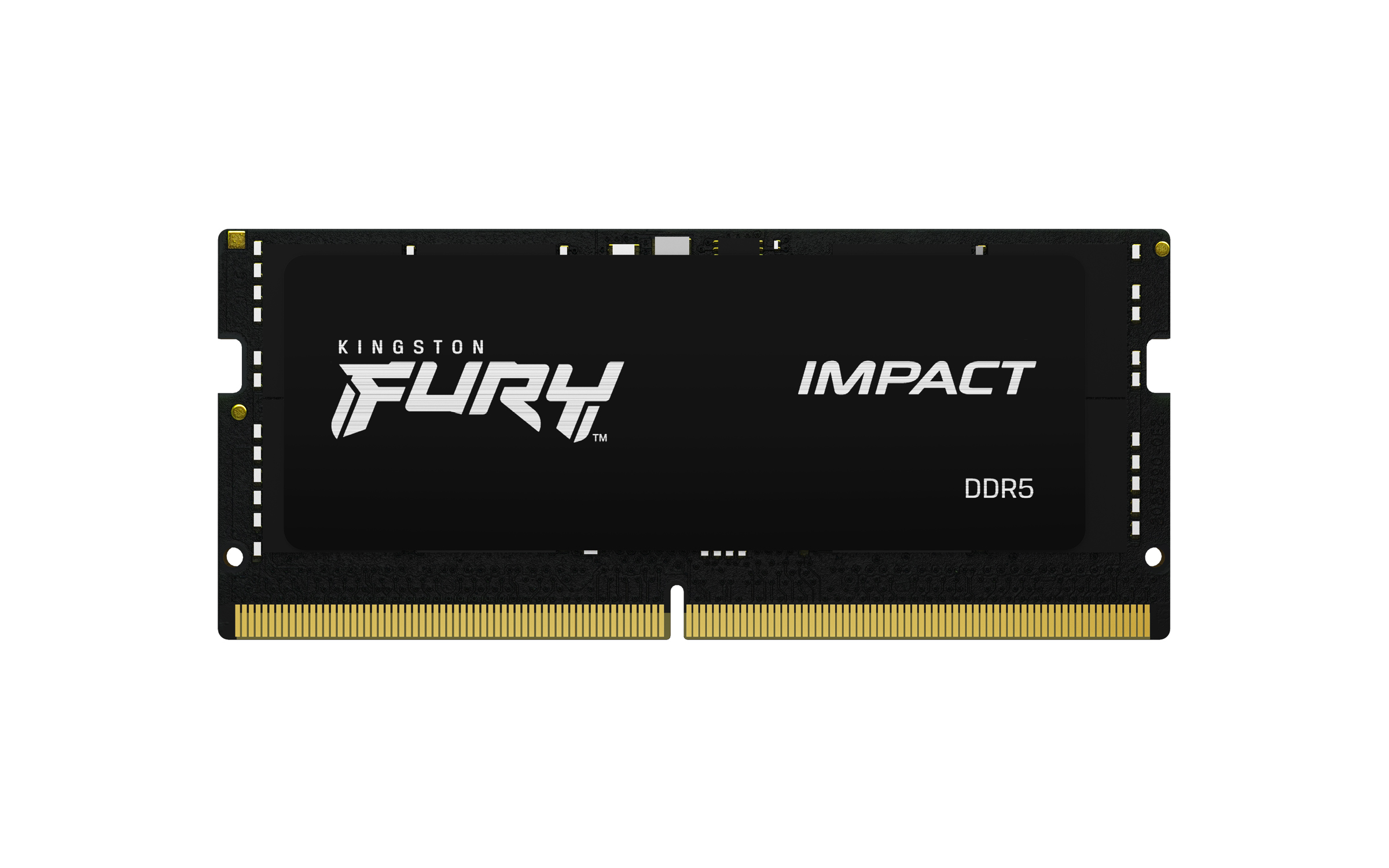
RAM is expensive right now because the chipmakers that supply it — Samsung, SK Hynix, and Micron — have been redirecting manufacturing capacity toward the high-bandwidth memory (HBM) and server-grade DRAM that AI data centers need, leaving less conventional DRAM for PCs, laptops, and phones at the exact moment PC shipments came in stronger than expected. Market-research firm TrendForce has tracked the fallout in real time: in a January 2026 forecast it projected conventional DRAM contract prices would rise 55–60% quarter-on-quarter in the first quarter of 2026; by early February it had revised that estimate up to 90–95%, with PC DRAM alone projected to more than double. Prices aren't expected to meaningfully ease until new fab capacity comes online, which manufacturers and analysts have suggested could stretch into 2027.
- TrendForce revised its Q1 2026 conventional DRAM contract-price forecast from +55–60% to +90–95% quarter-on-quarter, with PC DRAM projected to rise more than 100% — a record quarterly jump.
- Micron's DRAM revenue hit $18.8 billion in fiscal Q2 2026 (quarter ended February 26, 2026), up roughly 207% year-over-year and about 79% of total company revenue, per its SEC filing.
- The main driver is AI data-center demand for DRAM and HBM, which is pulling fab capacity and output away from conventional consumer memory.
- A separate, unproven antitrust lawsuit filed in June 2026 accuses Samsung, SK Hynix, and Micron of coordinating the supply shift — distinct from, but related to, the pricing dynamics described here.
- Industry analysts tracking the memory market expect the current capacity squeeze to persist for an extended period while new fab capacity is built out, so near-term relief looks limited.
What's happening to RAM prices right now
If you've priced out a DDR5 kit recently and done a double-take, you're not imagining it. Through late 2025 and into 2026, contract and retail memory prices climbed sharply and repeatedly — not as a one-time spike, but as a series of upward revisions. Analysts initially underestimated how bad it would get: TrendForce's own forecasts for the first quarter of 2026 were revised upward twice within a month, each time by a wide margin, as it became clear that demand for both server and consumer memory was outstripping what suppliers could produce.
The result is a market where memory makers have pricing power they haven't had in years. That's good news for Samsung, SK Hynix, and Micron's balance sheets — Micron in particular has reported record results — and uncomfortable news for anyone trying to buy or upgrade a PC.
How much have DRAM and RAM prices actually risen
The clearest paper trail comes from TrendForce, the semiconductor market-data tracker that publishes quarterly contract-price forecasts for DRAM and NAND flash. Its two most recent reports show both how fast the market moved and how much analysts had to keep revising their own numbers upward.
| Category | TrendForce forecast, Jan 5, 2026 | TrendForce revised forecast, Feb 2, 2026 |
|---|---|---|
| Conventional DRAM contract price (QoQ) | +55% to +60% | +90% to +95% |
| PC DRAM (QoQ) | Sharp rise expected | Over +100% — a new quarterly record |
| Server DRAM (QoQ) | More than +60% | About +90% — largest quarterly increase on record |
| Mobile DRAM, LPDDR4X/LPDDR5X (QoQ) | Undersupplied, prices firming | About +90% — steepest increase in their history |
| NAND Flash, for context (QoQ) | +33% to +38% | +55% to +60% |
These are contract-price forecasts — the prices memory makers negotiate with large buyers like PC OEMs — not retail shelf prices, which move with a lag and with retailer margins layered on top. But the direction and scale are unmistakable, and TrendForce explicitly called the projected PC DRAM increase a new record for a single quarter.
Micron's own numbers back this up from the supply side. In its fiscal second quarter of 2026 (ended February 26, 2026), the company's DRAM revenue reached $18.8 billion — about 79% of its total $23.86 billion in revenue for the quarter — up roughly 207% from $6.1 billion a year earlier, according to Micron's quarterly SEC filing. Total company revenue nearly doubled sequentially, from $13.64 billion the prior quarter, and gross margin jumped to roughly 74–75% from around 56% — a sign that most of the growth came from pricing power rather than simply shipping more chips. CEO Sanjay Mehrotra attributed the results to a "strong demand environment, tight industry supply" in the company's official earnings release, adding that "in the AI era, memory has become a strategic asset for our customers."
Driver one: AI data centers are competing for the same silicon
The single biggest reason RAM is expensive is that the memory industry's biggest customers are no longer PC makers — they're cloud providers building out AI infrastructure. Training and running large AI models leans heavily on high-bandwidth memory (HBM), which stacks DRAM dies vertically and wires them directly to compute chips to shrink the distance data has to travel. That architecture matters because, as SK Hynix explained in an October 2026 piece on its newsroom, fetching data from off-chip memory can cost hundreds to thousands of times more energy than an on-chip computation — so AI system designers are increasingly building around memory bandwidth first, not around the processor. That's a big part of why Nvidia's latest AI accelerators, including the Vera Rubin platform now reaching cloud instances at hyperscalers like Google Cloud, are designed around ever-larger pools of HBM.
TrendForce's reporting is blunt about the consequence: "persistent AI and data center demands... are further worsening the global memory supply and demand imbalance," and "intense competition among buyers for the limited supply" is what's pushing server DRAM prices up by roughly 90% in a single quarter. U.S. cloud service providers have reportedly been locking in long-term supply agreements with memory makers since late 2025, effectively pre-buying a growing share of future output before it's even made.
Driver two: manufacturers are reallocating fab capacity toward HBM and server DRAM
DRAM and HBM aren't made on separate assembly lines that can simply be expanded independently — they compete for the same advanced-node wafer capacity inside the same fabs. When a memory maker decides to dedicate more wafer starts to HBM or high-density server DRAM, every one of those wafers is one fewer available for conventional PC and laptop memory. TrendForce's reporting describes exactly this kind of reallocation happening across the industry, including suppliers shifting production lines from NAND flash to DRAM to chase higher margins — which, in turn, squeezes NAND supply and prices too, which is why SSD prices have risen sharply as well.
Because HBM is also more wafer-intensive to produce than ordinary DRAM for a given capacity, pulling fab capacity toward it has an outsized effect on how much conventional memory supply disappears. Samsung, SK Hynix, and Micron have each discussed raising capital spending to add new capacity, but new fabs and process nodes take years to come online — which is exactly why the industry generally doesn't expect this supply gap to close quickly.
Driver three: a surprisingly strong PC market made a tight situation worse
Compounding the AI-driven reallocation, PC shipments in the fourth quarter of 2025 came in stronger than forecasters expected, according to TrendForce's analysis. That left PC makers' memory inventories falling right as supply was already being redirected elsewhere. With module makers and OEMs competing harder for a shrinking pool of available DRAM, TrendForce reported some PC manufacturers were being forced to buy memory through module makers at elevated prices just to secure supply at all — which flows straight through to the price of finished laptops, desktops, and the DIY memory kits sold to PC builders. If you're currently deciding between upgrading your existing system or building something new, that same supply squeeze is also worth weighing against GPU pricing and availability, since graphics cards and RAM have been squeezed by overlapping fab and component shortages.
The price-fixing lawsuit: related, but a different question
Separately from the supply-and-demand story above, Samsung, SK Hynix, and Micron are now facing a class-action antitrust lawsuit filed in June 2026 in the U.S. District Court for the Northern District of California. The suit alleges the three companies didn't just respond to AI demand but actively coordinated a shift of production away from DDR3 and DDR4 toward HBM, and claims this drove consumer DRAM prices up by roughly 700% over four years. Those are allegations from the complaint, not established facts, and Micron has publicly denied wrongdoing and said it remains committed to "lawful and fair competition."
It's worth being precise about what this lawsuit is and isn't. It does not change the underlying math of global AI demand outstripping memory supply — that dynamic is well documented independently through manufacturer earnings and market-tracker data, as shown above. What the lawsuit disputes is whether the three dominant suppliers' capacity decisions amounted to unlawful coordination rather than independent business responses to a genuinely hot AI market. That's a legal question for the courts, not something this explainer can settle — but it's one reason it's worth watching the case rather than assuming high prices are purely a "natural" market outcome.
This isn't the industry's first price-fixing rodeo
Memory price-fixing has a long history, which is useful context for how seriously regulators and plaintiffs take these allegations. Samsung, SK Hynix's predecessor Hynix, and other manufacturers pleaded guilty to an earlier international DRAM price-fixing conspiracy running from 1998 to 2002, resulting in hundreds of millions of dollars in U.S. criminal fines, and European regulators separately fined nine manufacturers more than €331 million in 2010, according to the documented history of DRAM price-fixing cases on Wikipedia. A more recent 2018 class action against Samsung, SK Hynix, and Micron over a 2016–2018 DRAM price spike was ultimately dismissed by a federal court and affirmed on appeal in 2022, after judges found the plaintiffs hadn't shown sufficiently plausible evidence of coordination rather than independent market behavior. That earlier case is a reminder that a sharp price run-up alone isn't proof of collusion — but it's also why a new lawsuit making similar claims is being taken seriously rather than dismissed out of hand.
What this means if you're building or upgrading a PC right now
For anyone shopping for memory in late 2026, the practical reality is straightforward: DDR5 kits, especially higher-capacity ones, cost meaningfully more than they did a year ago, and that's true across virtually every brand, because every memory maker is drawing from the same constrained pool of DRAM wafers. A few consequences worth planning around:
- Capacity matters more than brand. Since the shortage is a function of wafer supply rather than any one company's execution, shopping around between brands won't find you pre-shortage pricing — it may only find you which retailer hasn't marked up their remaining stock yet.
- Buy only the capacity you'll actually use. Higher-capacity kits (64GB, 128GB) have seen some of the sharpest percentage increases, since they require more DRAM dies per module. If 32GB covers your workload, there's less reason to stretch into double capacity "just in case" while prices are elevated.
- Prebuilt and laptop prices lag, then catch up. OEMs lock in memory under longer contracts, so finished-system price increases often arrive a quarter or two after spot and module prices move. Expect further increases in prebuilt PC and laptop pricing through 2026 even if DIY module prices stabilize.
- It's not just RAM. Because NAND production lines are also being converted toward DRAM, SSD prices have risen too — budget for storage costs rising alongside memory if you're pricing out a full build.
Should you buy RAM now, or wait?
There's no analyst or manufacturer statement promising a near-term price drop — if anything, the opposite: TrendForce's own forecasts kept getting revised upward rather than downward through early 2026, and building new fab capacity to ease the squeeze is a process that typically takes years rather than months. That doesn't mean prices will only ever go up — markets like this have cooled before once hyperscalers' initial ordering waves are fulfilled and new capacity starts shipping — but there's no credible primary-source evidence pointing to a drop arriving in the next couple of quarters.
Given that, the most defensible approach for most PC builders is need-based, not speculative:
- If you need to build or upgrade now — a failed stick, a genuine productivity bottleneck, a system you can't put off — buy the capacity you need and don't wait on a price drop that isn't currently forecast by any primary source.
- If your upgrade is optional and your current system is still workable, it's reasonable to delay discretionary RAM purchases, since there's little indication prices will be lower a few months from now, and delaying costs you nothing you weren't already living without.
- If you're assembling a new build piece by piece, consider buying memory early relative to other components, since RAM and SSD pricing both appear to be moving faster than GPU or CPU pricing right now.
Keep an eye on TrendForce's quarterly updates and the memory makers' own earnings calls for the clearest signal of when this actually turns — contract prices for the following quarter are usually visible in these reports before they show up at retail.
Frequently asked questions
Why are RAM and DDR5 prices so high in 2026?
The main driver is AI data centers competing for the same DRAM wafer capacity used for consumer memory. Manufacturers have shifted production toward high-bandwidth memory (HBM) and server DRAM for AI infrastructure, leaving less conventional DRAM for PCs and laptops, right as PC shipments came in stronger than expected in late 2025.
How much have DRAM prices actually gone up?
According to TrendForce, conventional DRAM contract prices for Q1 2026 were revised from an initial forecast of +55-60% quarter-on-quarter up to +90-95%, with PC DRAM alone projected to rise more than 100% quarter-on-quarter — a new record for a single quarter.
Is the DRAM price-fixing lawsuit the reason prices are high?
No. The AI-driven supply squeeze is documented independently through manufacturer earnings and market-tracker data. The separate 2026 lawsuit against Samsung, SK Hynix, and Micron alleges their capacity shift amounted to unlawful coordination rather than independent business decisions — an allegation the courts haven't ruled on, and which Micron has denied.
Will RAM prices come down soon?
There's no primary-source forecast pointing to a near-term drop. TrendForce's own price forecasts were revised upward, not downward, through early 2026, and building the new fab capacity needed to ease the shortage typically takes years.
Should I buy RAM now or wait for prices to drop?
If you need memory now for a build or a genuine bottleneck, buy only the capacity you need rather than waiting on a drop that isn't currently forecast. If your upgrade is optional, it's reasonable to delay, since there's little evidence prices will be meaningfully lower in the next few months.
Are other PC components affected by the same shortage?
Yes. Some manufacturers have converted NAND flash production lines to DRAM to meet demand, which has squeezed NAND supply and pushed SSD prices up as well. Graphics cards face overlapping but separate supply constraints.
Sources
- TrendForce: 1Q26 DRAM contract price forecast raised to 90-95% QoQ (Feb 2, 2026)trendforce.com
- TrendForce: January 2026 DRAM and NAND price outlook (Jan 5, 2026)trendforce.com
- Micron Technology: Form 10-Q, fiscal Q2 2026 (SEC EDGAR)sec.gov
- Micron Technology: Fiscal Q2 2026 earnings release (SEC EDGAR exhibit)sec.gov
- SK hynix Newsroom: The semiconductor paradigm shifts toward memorynews.skhynix.com
- Wikipedia: DRAM price fixing scandalen.wikipedia.org
Mara Lindqvist edits the hardware desk. She covers graphics cards, processors, memory and storage, the foundries and chip designers behind them, and what the numbers on a spec sheet mean for people choosing a PC. Specifications in her stories come from manufacturer spec pages and datasheets.