Black Friday GPU Deals 2026: What RTX 50-Series Cards Actually Cost
With Black Friday about two weeks out, street prices for Nvidia’s RTX 50-series and AMD’s RX 9070 XT are shifting — but a global memory shortage means deep discounts aren’t guaranteed.
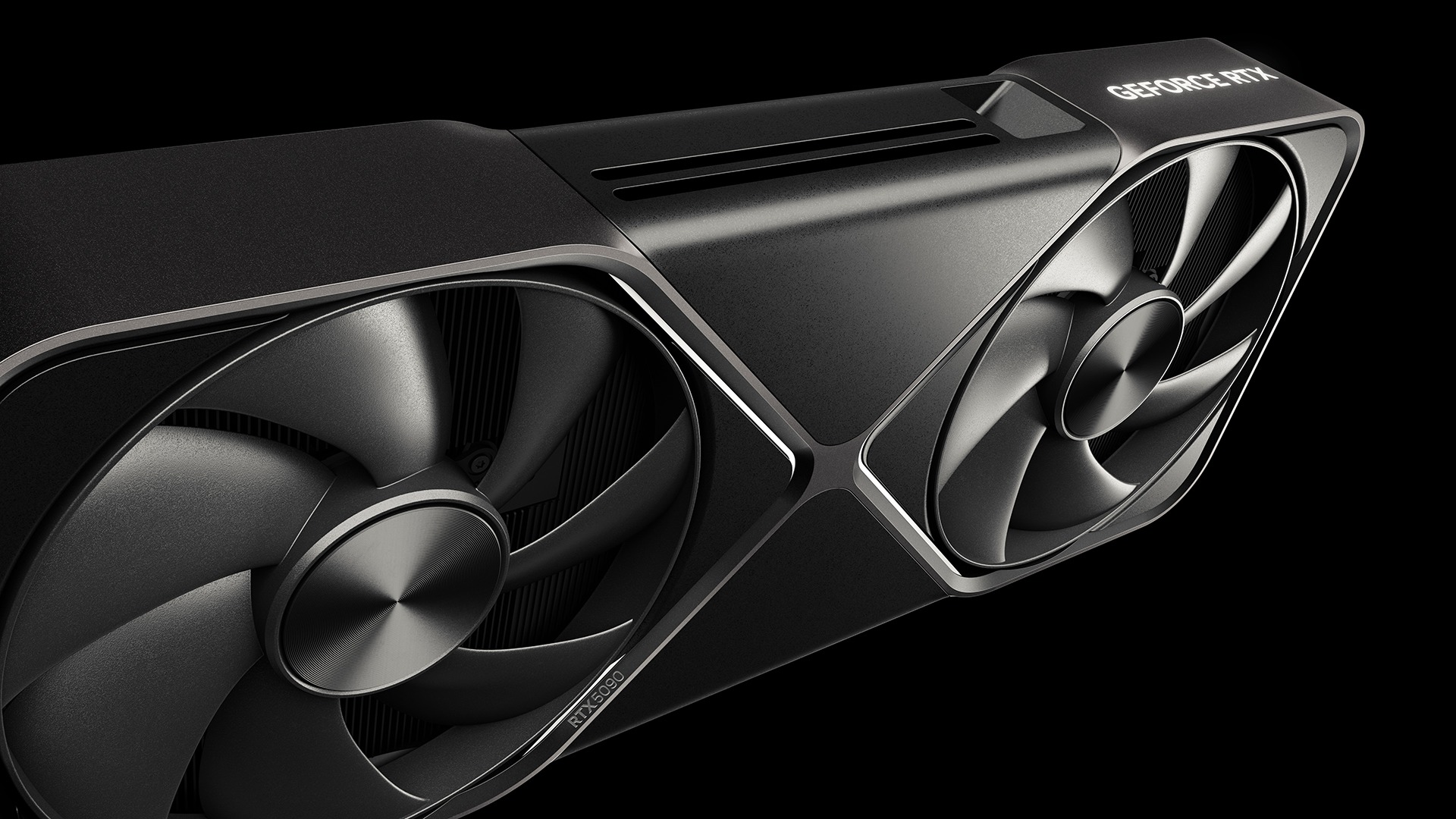
Black Friday 2026 is about two weeks away, and graphics card prices are already on the move — just not in the direction most shoppers are hoping for. Street prices for Nvidia’s GeForce RTX 5090 are currently running nearly double the card’s own suggested price, and AMD’s Radeon RX 9070 XT is selling well above where board partners priced it at launch. Some of that gap is starting to narrow as early seasonal discounting kicks in, but a global memory-chip shortage that’s been pushing up GPU board costs all year means Black Friday 2026 is shaping up to be a “smaller cuts, not blowout deals” event for most of the lineup.
Here’s what the RTX 5090, RTX 5080, RTX 5070 Ti, RTX 5070 and RX 9070 XT actually cost right now, based on official Nvidia and AMD product pages and live retailer listings, plus a realistic read on what to expect as November 27 approaches.
- Official MSRPs (Nvidia Founders Edition, set at launch): RTX 5090 $1,999, RTX 5080 $999, RTX 5070 Ti $749, RTX 5070 $549. AMD does not publish a suggested price for the RX 9070 XT on its own product page.
- Current street prices run well above MSRP for the cards we could verify live — a Best Buy-listed RTX 5090 card was $3,899.99, and a Best Buy-listed RX 9070 XT card was $1,034.99, at the time of writing.
- Why: an ongoing DRAM and GDDR memory shortage is raising board costs industry-wide, not a one-off pricing decision by either company.
- Timing: Black Friday 2026 falls on November 27. Some retailers are already running discounts off recently-inflated list prices rather than off MSRP.
What GPUs Actually Cost Right Now
The clearest real-world data point going into this Black Friday is the Zotac Solid OC GeForce RTX 5090, which Best Buy has listed at $3,899.99, marked down from a prior $4,399.99 — and marked “sold out” at that price. For context, Nvidia’s own GeForce RTX 5090 product page lists the card’s official price at $1,999. That means even after a few hundred dollars of markdown, this particular 5090 card is still selling for roughly double what Nvidia says it should cost.
On the AMD side, a Gigabyte Radeon RX 9070 XT Gaming OC was listed at $1,034.99, down slightly from $1,049.99. AMD’s own RX 9070 XT product page doesn’t publish a suggested retail price at all — AMD leaves list pricing to its board partners and retailers, which is normal for the company but makes it harder for shoppers to judge how far above “normal” today’s prices really sit.
Other SKUs in the RTX 5080, RTX 5070 Ti and RTX 5070 tiers are in stock at Best Buy from multiple board partners — PNY, Gigabyte, ASUS and MSI all currently list cards at each tier — but pricing across those listings was inconsistent and actively shifting at the time of reporting, which is itself a signal that sellers are adjusting prices ahead of the holiday. We’re not going to guess at a number we can’t stand behind; instead, treat the RTX 5090 and RX 9070 XT figures above as the clearest available markers of how far current street pricing has drifted from list price across the stack.
| Card | Official MSRP | Current street price (verified) | Status |
|---|---|---|---|
| GeForce RTX 5090 | $1,999 (Nvidia) | $3,899.99, was $4,399.99 (Best Buy, Zotac Solid OC) | Listed sold out |
| GeForce RTX 5080 | $999 (Nvidia) | In stock at Best Buy (PNY, Gigabyte); live price not consistently verifiable at time of writing | In stock, multiple partners |
| GeForce RTX 5070 Ti | $749 (Nvidia) | In stock at Best Buy (PNY, Gigabyte, MSI); live price not consistently verifiable at time of writing | In stock, multiple partners |
| GeForce RTX 5070 | $549 (Nvidia) | In stock at Best Buy (PNY, ASUS, Gigabyte); live price not consistently verifiable at time of writing | In stock, multiple partners |
| Radeon RX 9070 XT | Not published by AMD | $1,034.99, was $1,049.99 (Best Buy, Gigabyte Gaming OC) | In stock |
Why Prices Are Elevated: The Memory Shortage
None of this is happening in a vacuum. The tech industry has spent much of 2026 dealing with a DRAM and memory-chip shortage that’s rippled well beyond graphics cards — it’s part of why PC builders have been paying closer attention to RAM pricing and capacity in general, a trend our own coverage of the October 2026 Steam Hardware Survey touched on when 16GB of system memory retook the top spot among surveyed gamers. The same memory-market pressure that’s affecting system RAM pricing extends to GDDR6 and GDDR7, the specialized memory used on graphics cards themselves — and GPUs like the RTX 5090 and RX 9070 XT carry 32GB and 16GB of it, respectively. That’s a meaningfully larger bill of materials than it was at launch, and board partners don’t have much room to absorb it.
This context matters for Black Friday specifically: a markdown calculated off an already-inflated list price looks like a deal on paper but may not represent genuine savings against what the card cost a few months ago. It’s worth keeping memory-market dynamics in mind generally — our explainer on LPDDR6 and how it compares to LPDDR5X is a useful primer on where memory pricing and supply are headed industry-wide, even though that piece focuses on mobile memory rather than GDDR.
Are Early Deals Already Live?
Yes, to a degree. The Zotac RTX 5090 listing above already shows a markdown from $4,399.99 to $3,899.99, which suggests Best Buy is actively adjusting GPU pricing ahead of the holiday rather than waiting until November 27 to move. The Gigabyte RX 9070 XT listing shows a smaller, but still real, $15 reduction. Neither of these is a dramatic Black Friday-style cut — they read more like routine price tracking against demand and stock levels — but they confirm that list prices on current-generation cards are not frozen in place right now, which is exactly the kind of signal search interest in “black friday gpu deals 2026” is picking up on.
Whether that trend continues or accelerates into real doorbuster-style pricing by late November is the open question, and it depends heavily on how board partners and retailers handle margin given the memory-cost pressure described above.
RTX 5090: The Highest-Profile Case Study
The RTX 5090 is the single clearest example of how far current pricing has drifted from Nvidia’s official number. At $1,999 MSRP, it was already the most expensive mainstream consumer GPU Nvidia has launched. At a verified $3,899.99 street price, it’s selling for essentially double that — and it’s listed as sold out at that price, which tells you demand (or constrained supply) is still outpacing what’s on shelves even before Black Friday officially begins. Shoppers hoping for a 5090 at anywhere close to MSRP this November should treat that as a best-case scenario rather than an expectation.
RTX 5080, 5070 Ti and 5070: Same Pressure, Less Visibility
The more mainstream tiers of Nvidia’s 50-series — the RTX 5080 at $999 MSRP, and the RTX 5070 Ti at $749 and RTX 5070 at $549 — are the cards most shoppers are actually asking about ahead of Black Friday, and search terms like “rtx 5080 black friday deals” and “rtx 5080 black friday price” reflect that. All three remain available from multiple board partners at Best Buy right now, which is itself a reasonably good sign heading into the holiday compared to the near-total sellouts seen at points earlier in the RTX 50-series’ life. We weren’t able to confidently verify a single current street price for these tiers at the moment of reporting — retailer listings for these SKUs were actively fluctuating — so we’d rather be upfront about that gap than publish a number we can’t stand behind. The safest assumption, based on how the RTX 5090 and RX 9070 XT are currently priced relative to their own reference points, is that these cards are also selling above MSRP right now, with the exact premium varying by partner and cooler design.
AMD’s RX 9070 XT: No Official Price, Same Story
AMD handles pricing differently than Nvidia — its RX 9070 XT product page lists full specs (16GB of GDDR6 memory on a current-generation Radeon RX card) but no suggested retail price, leaving that entirely to partners like Gigabyte, Sapphire, ASRock, PowerColor, XFX and ASUS. That makes it harder to quote a clean “MSRP vs. street price” gap the way we can for Nvidia’s cards. What we can say is that the Gigabyte Gaming OC 16G model Best Buy lists at $1,034.99 puts the RX 9070 XT solidly in flagship-adjacent pricing territory — well above where this tier of card has historically sat — which lines up with the same memory-cost pressure affecting Nvidia’s lineup. If you’re cross-shopping GPUs against other current-generation hardware, it’s also worth a look at how a card like Intel’s Arc Pro B70 stacks up against the RTX 5090 on price and specs, for a sense of where the rest of the market sits.
What to Realistically Expect by Black Friday 2026
Based on what we can verify right now, the realistic range of outcomes for Black Friday 2026 looks like this:
- Modest, incremental markdowns are likely on top of already-adjusted list prices, similar in scale to the roughly 11% cut already visible on the Best Buy RTX 5090 listing above.
- A return to Nvidia or AMD reference pricing is unlikely for any card in this lineup, given that current street prices for the two cards we verified sit well above MSRP even before accounting for further seasonal discounting.
- Stock, not price, may be the bigger story for the RTX 5090 in particular — a card that’s already selling out at double its MSRP is one where availability on the day matters as much as the sticker price.
- Bundle and accessory deals (prebuilt PCs, monitor-plus-GPU bundles) are more likely to deliver visible “savings” than standalone GPU price cuts, since retailers have more room to discount a bundle without touching the GPU’s own margin.
None of this means shoppers should skip checking prices on November 27 — it means going in with a realistic baseline. A 5090 at $3,899.99 right now is not a deal; a 5090 meaningfully below that, especially if it’s back in stock rather than sold out, would be.
A Practical Way to Shop This Year
Given the pricing picture above, a few practical habits are worth adopting over the next two weeks. First, screenshot or note today’s prices on the specific card you want — list prices have already moved once (as shown by the RTX 5090 and RX 9070 XT examples above), and they could move again before November 27, in either direction. Second, compare the discount against the card’s own recent price history, not against Nvidia’s or AMD’s original MSRP, since that gap is now so wide for some cards that it isn’t a useful benchmark for judging a Black Friday deal in isolation. Third, don’t assume every board partner and cooler variant is discounted equally — Best Buy alone lists multiple distinct SKUs per GPU tier from different partners, and pricing moves independently for each one.
What’s Next
The two weeks between now and November 27 are where this story will actually resolve. Watch for whether retailers extend the kind of early markdown already visible on the RTX 5090 and RX 9070 XT listings above to the RTX 5080, RTX 5070 Ti and RTX 5070 tiers specifically, since those are the cards most shoppers are searching for. Also watch memory-market commentary more broadly — if GDDR and DRAM costs ease even slightly before the holiday, that’s the most likely path to board partners having room to cut prices further rather than just shuffling list prices around. We’ll continue tracking official Nvidia and AMD pricing alongside live retailer listings as Black Friday approaches.
Frequently asked questions
When is Black Friday 2026?
Black Friday 2026 falls on November 27, about two weeks from mid-November, which is why graphics card pricing is already starting to shift ahead of the holiday.
How much will GPU prices drop on Black Friday 2026?
Based on current listings, expect modest, incremental markdowns rather than dramatic cuts. A Best Buy-listed RTX 5090 has already dropped from $4,399.99 to $3,899.99 — about an 11% reduction — but that's still roughly double Nvidia's $1,999 MSRP, so a full return to list pricing isn't likely.
Are RTX 5080 Black Friday deals live yet?
RTX 5080 cards are in stock at Best Buy from multiple partners including PNY and Gigabyte, but a single, consistently verifiable current street price wasn't available at the time of reporting. Given how the RTX 5090 and RX 9070 XT are currently priced relative to MSRP, expect RTX 5080 street prices to also be running above Nvidia's $999 list price.
Why are graphics card prices so high right now?
An ongoing global DRAM and GDDR memory shortage has been raising the cost of the memory chips used on every current GPU, from the RTX 5090's 32GB of GDDR7 to the RX 9070 XT's 16GB of GDDR6. That's pushed board partner costs up industry-wide, independent of any single Black Friday sale.
Is the RX 9070 XT a good Black Friday alternative to Nvidia?
It's worth watching, but it isn't immune to the same pricing pressure. A Best Buy-listed Gigabyte RX 9070 XT currently sells for $1,034.99, down only slightly from $1,049.99. AMD doesn't publish its own suggested price for the card, which makes it harder to measure the gap versus list price the way you can with Nvidia's cards.
Should I buy a GPU now or wait for Black Friday?
If you need a card immediately and find one in stock near its current listed price, there's no guarantee waiting will do better, especially for the RTX 5090, which is already selling out at elevated prices. For other tiers, waiting two more weeks to see whether retailers extend early markdowns is reasonable, but don't expect MSRP-level pricing to return.
Sources
- Nvidia — GeForce RTX 5090 product pagenvidia.com
- Nvidia — GeForce RTX 5080 product pagenvidia.com
- Nvidia — GeForce RTX 5070 Ti & RTX 5070 product pagenvidia.com
- AMD — Radeon RX 9070 XT product pageamd.com
- Best Buy — Zotac GeForce RTX 5090 Solid OC listingbestbuy.com
- Best Buy — Gigabyte Radeon RX 9070 XT Gaming OC listingbestbuy.com
Mara Lindqvist edits the hardware desk. She covers graphics cards, processors, memory and storage, the foundries and chip designers behind them, and what the numbers on a spec sheet mean for people choosing a PC. Specifications in her stories come from manufacturer spec pages and datasheets.