Nvidia's Vera Rubin Comes to Google Cloud as A5X Instances
Announced at GTC Berlin, A5X brings Nvidia's next-gen Vera Rubin platform to Google Cloud for agentic AI and large-scale reinforcement learning workloads.
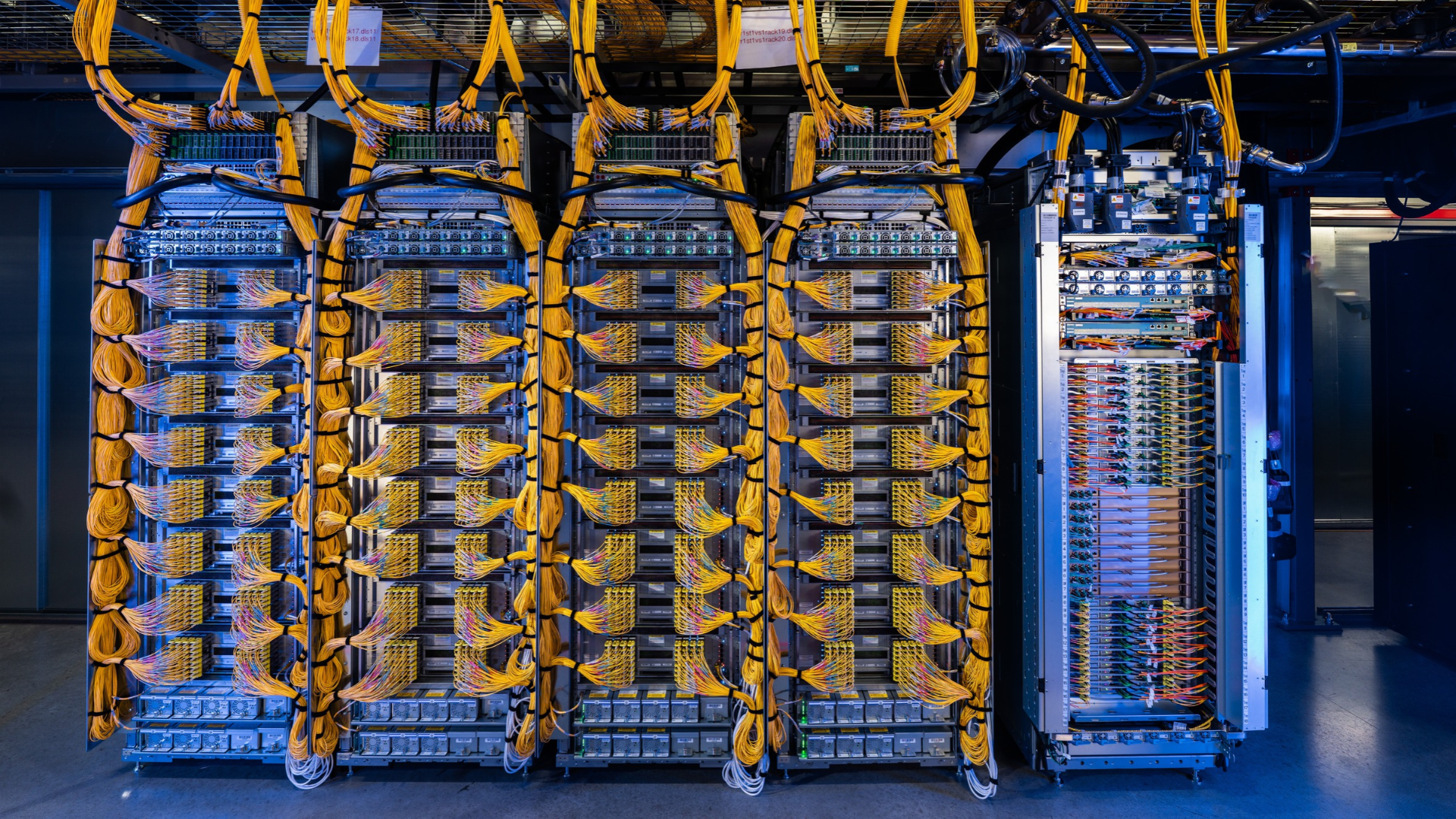
Nvidia and Google Cloud used the GTC Berlin 2026 event to announce that Vera Rubin, Nvidia's next-generation AI computing platform, is coming to Google Cloud as a new instance type called A5X. According to Nvidia's own announcement, general availability of A5X is expected "next month," with Google Cloud planning to expand the offering into Europe after its initial rollout.
The announcement is a distinct, later milestone from the one Pandromeda covered on October 14, when Nvidia opened the Vera Rubin rack architecture to the industry through the Open Compute Project. That earlier news was about standardizing the rack design itself; this one is about an actual cloud provider making Vera Rubin-based instances available to paying customers.
What are Google Cloud's A5X instances?
A5X is Google Cloud's new instance type built on Nvidia Vera Rubin NVL72 systems. Per Nvidia's announcement, the instances combine Nvidia's ConnectX-9 SuperNICs with Google Cloud's own Virgo Network and fourth-generation liquid cooling, and are integrated into Google Cloud's broader AI Hypercomputer architecture, which bundles compute, networking and storage into one managed offering rather than requiring customers to assemble the pieces themselves.
Nvidia and Google Cloud are positioning A5X specifically for two workload types: agentic inference (running AI agents that take multiple sequential actions) and large-scale reinforcement learning, where models improve through repeated trial-and-error training rather than static datasets.
What Vera Rubin actually is
| Milestone | Date | What happened |
|---|---|---|
| Rack architecture opened via OCP | October 14, 2026 | Nvidia published the Vera Rubin rack design to the Open Compute Project, letting other manufacturers build compatible infrastructure |
| Google Cloud GA announced | October 21, 2026 | A5X instances on Vera Rubin NVL72 announced at GTC Berlin; GA expected next month, Europe expansion planned |
Vera Rubin is Nvidia's successor platform to Blackwell, its current generation of AI data center hardware, and like Blackwell before it, the name follows Nvidia's practice of naming platforms after scientists — in this case astronomer Vera Rubin, whose observations of galaxy rotation provided key early evidence for dark matter. The "NVL72" designation refers to a rack-scale system that links 72 GPUs together with Nvidia's NVLink interconnect, treating the whole rack as a single, very large accelerator for training and running AI models — the same basic design philosophy as Nvidia's GB200 and GB300 NVL72 Blackwell-generation racks, just built around Vera Rubin's newer chips.
Nvidia has historically shipped a new rack-scale AI platform roughly once a year, with Blackwell succeeding Hopper in 2024 and Vera Rubin now succeeding Blackwell. Each generation has focused on tighter integration between GPUs, networking and memory at rack scale rather than purely on raw chip specifications, which is why announcements like this one emphasize networking components (ConnectX-9 SuperNICs, Google's Virgo Network) and cooling (fourth-generation liquid cooling) alongside the GPUs themselves.
What "agentic inference" and "reinforcement learning at scale" actually mean
Nvidia and Google Cloud are positioning A5X around two specific workload types, both of which differ from the simple chatbot-style AI queries most people are familiar with. Agentic inference refers to running AI systems that take multiple sequential actions toward a goal — searching for information, calling other software tools, checking results and adjusting course — rather than producing one response to one prompt. That workflow needs the AI model to stay loaded and responsive across many steps, which is more demanding on networking and memory bandwidth than single-turn inference.
Large-scale reinforcement learning, meanwhile, is a training approach where a model improves by repeatedly attempting tasks and receiving feedback on the outcome, rather than learning purely from a fixed, pre-collected dataset. Ineffable Intelligence's "superlearner" framing fits this category: systems designed to keep improving from their own ongoing experience. Both workload types tend to need more total compute and higher-bandwidth GPU-to-GPU communication than standard inference, which is the specific gap Nvidia is positioning Vera Rubin NVL72's rack-scale NVLink design to fill.
Ineffable Intelligence: the first named customer
Nvidia's announcement names London-based Ineffable Intelligence, founded by David Silver, as the first company to get access to A5X. The company is using the instances for large-scale reinforcement learning work on what it calls "superlearner" systems — AI systems designed to keep improving through their own experience rather than relying solely on pre-existing training data.
"We're building superlearners that continually improve through their own experience," Silver said in a quote included in Nvidia's announcement, adding that Vera Rubin's compute and high-bandwidth networking let the company push its reinforcement learning research further than before.
Nvidia and Google Cloud didn't disclose how many A5X instances Ineffable Intelligence is currently using, how long its early access has run, or specific performance gains over its previous infrastructure. As the first named customer on a not-yet-generally-available instance type, its experience should be read as an early validation case Nvidia chose to highlight, rather than a broad, independently verified benchmark of A5X's real-world performance.
A real-world agentic workload: WPP's creative pipeline
Advertising giant WPP also demonstrated a reference architecture on A5X, built around Nvidia Nemotron models and Nvidia OpenShell, for multistep creative workflows such as video generation, upscaling and restyling — with a human approval step before any output is finalized. According to Nvidia, in WPP's initial tests, workloads that previously needed a multi-node cluster of servers ran successfully on a single A5X instance, illustrating the kind of consolidation Nvidia is promising from the new hardware.
What else went generally available at GTC Berlin
A5X itself isn't fully generally available yet — Nvidia's own announcement says GA is "coming next month." Two related items from the same announcement wave are already live, however: Confidential Computing on Google Cloud's G4 VMs, which uses Nvidia RTX PRO 6000 Blackwell Server Edition GPUs, reached general availability immediately, and Google Cloud says it will be among the first cloud providers to offer confidential computing at rack scale on bare-metal A4X Max instances powered by GB300 NVL72 systems (Nvidia's current Blackwell-generation hardware, not Vera Rubin).
Confidential-computing customers named in the announcement include Vertebrae, Polaris Cloud and Confidential Core AI, covering use cases like confidential AI inference, verifiable agent execution and policy-governed enterprise AI deployments. Confidential computing, in this context, means the GPU can process encrypted data and run AI workloads without exposing that data in plaintext to the cloud provider's own infrastructure or staff — a feature increasingly requested by enterprise and government customers handling regulated or sensitive information, and one reason Nvidia has built it into both its current Blackwell-generation hardware and, eventually, Vera Rubin.
Bundling a confidential-computing GA announcement with a Vera Rubin preview announcement is a pattern Nvidia and its cloud partners have repeated at recent GTC events: ship the security and compliance features on currently-shipping hardware first, so enterprise customers already have a validated path to adopt them, then extend the same capabilities to the next-generation platform once it reaches GA.
Google Cloud's stated scale ambitions
Nvidia's announcement states that Google Cloud plans to scale its Vera Rubin infrastructure to as many as 960,000 Rubin GPUs across multiple sites, though the announcement doesn't specify which sites or a timeline for reaching that figure. Google Cloud and Nvidia also said they are exploring Nvidia's DSX MaxLPS technology for improving the energy efficiency of Vera Rubin infrastructure, without publishing specific efficiency figures yet.
That scale target should be read as a stated ambition rather than a confirmed buildout — cloud providers routinely announce large GPU-fleet targets well ahead of actually deploying them, and Nvidia's own announcement frames it as a plan rather than a completed rollout. For comparison, a figure of 960,000 GPUs would represent roughly 13,000 NVL72 racks at 72 GPUs apiece, spread across however many data center sites Google Cloud and Nvidia ultimately bring online — underscoring that this week's A5X announcement covers the first sliver of a much larger planned deployment, not the deployment itself.
Why this matters for Google Cloud specifically
Google is somewhat unusual among major cloud providers in that it designs its own AI accelerators (TPUs) alongside offering Nvidia GPU-based instances. Making Vera Rubin available through A5X signals that Google Cloud intends to keep offering customers a choice between its own TPU infrastructure and Nvidia's latest GPUs, rather than steering AI customers exclusively toward one or the other — a notable contrast with providers that depend entirely on Nvidia for their AI hardware roadmap. For Nvidia, having Google Cloud as a launch partner for Vera Rubin cloud availability — alongside earlier reports naming AWS, Microsoft Azure, Oracle Cloud and CoreWeave as planned first-wave partners for Vera Rubin deployments in the second half of 2026 — keeps its hardware central to the infrastructure plans of every major hyperscaler simultaneously, regardless of whether that hyperscaler also builds its own competing silicon.
It also matters for the WPP-style enterprise customers Nvidia highlighted alongside the announcement: being able to run the same Nemotron and OpenShell-based agentic workloads on Google Cloud's A5X instances as on other Vera Rubin cloud deployments elsewhere gives large enterprise buyers more flexibility to choose a cloud provider on price, region or existing contractual relationship, rather than being locked into whichever provider happens to have Vera Rubin capacity first.
What Nvidia hasn't said
Nvidia and Google Cloud's announcement doesn't include pricing for A5X instances, specific GPU-per-rack performance figures beyond the NVL72 designation, or a precise general-availability date beyond "next month." It also doesn't name specific European data center locations for the planned expansion. Customers interested in early access should expect Google Cloud to publish pricing and capacity details closer to the actual general-availability date rather than at the GTC Berlin announcement itself, which is typical for Nvidia's rack-scale system launches and mirrors how Nvidia handled pricing disclosure for its current Blackwell-generation instances.
What to watch next
The next concrete milestone is A5X's actual general availability, expected in November 2026 per Nvidia's own timeline, which should come with real pricing and capacity details. After that, watch for Google Cloud's announced European expansion, and for AWS, Microsoft Azure, Oracle Cloud and CoreWeave to confirm their own Vera Rubin instance timelines, since all were previously named as planned first-wave cloud partners for the platform. If Ineffable Intelligence or WPP publish further results from their early A5X workloads, that would be the first independent signal of how the new hardware performs outside Nvidia's own announcement. And because Nvidia's rack-scale platforms have shipped on roughly annual cycles in recent years, expect the earliest public previews of whatever follows Vera Rubin to start surfacing at Nvidia's major events well before A5X itself is fully rolled out.
Frequently asked questions
What are Google Cloud's A5X instances?
A5X is a new Google Cloud instance type built on Nvidia's Vera Rubin NVL72 systems, aimed at agentic AI inference and large-scale reinforcement learning workloads. It was announced October 21, 2026 at GTC Berlin.
When will A5X be generally available?
Nvidia's announcement says general availability is expected 'next month,' meaning November 2026, with Google Cloud planning to expand the instances to Europe afterward.
How is this different from the October 14 Vera Rubin news?
The October 14 announcement was about Nvidia opening the Vera Rubin rack architecture to the industry through the Open Compute Project, a standards move. This announcement is about an actual cloud provider, Google Cloud, making Vera Rubin-based instances available to customers.
Who is the first customer using A5X?
Nvidia named London-based Ineffable Intelligence, founded by David Silver, as the first company with access, using it for large-scale reinforcement learning on what it calls 'superlearner' systems.
Has Nvidia announced pricing for A5X?
No. Nvidia and Google Cloud's announcement doesn't include pricing, specific performance benchmarks, or European data center locations; those details are expected closer to the general-availability date.
Sources
- NVIDIA Blog: Google Cloud and NVIDIA Announce General Availability of Vera Rubin Infrastructureblogs.nvidia.com
- NVIDIA Newsroomnvidianews.nvidia.com
- Wikipedia: Vera Rubin (scientist)en.wikipedia.org
Mara Lindqvist edits the hardware desk. She covers graphics cards, processors, memory and storage, the foundries and chip designers behind them, and what the numbers on a spec sheet mean for people choosing a PC. Specifications in her stories come from manufacturer spec pages and datasheets.