Should You Buy RAM Now or Wait? A 2026 Buying Guide
DRAM contract prices are still rising into Q4 2026. Here's what the data says about buying RAM now versus waiting, and how much to buy either way.
If you need a working PC today, buy only the RAM you actually need and stop waiting for a discount: every forecaster tracking the memory market, from the Taiwan-based research firm TrendForce to Micron's own fiscal-year earnings call, now expects DRAM contract prices to keep climbing through the rest of 2026 and into 2027, not fall. The AI data-center buildout has pulled so much wafer capacity into high-bandwidth memory (HBM) and server DRAM that conventional DDR5 for PCs and laptops is simply scarcer than it was a year ago, and the makers who set contract prices have said they don't have a date for when that changes. If you've been hovering over the "add to cart" button hoping for a return to 2024-style prices, the honest answer is: that's not a near-term bet worth making.
Quick take: Conventional DRAM contract prices are forecast to rise roughly another 10–15% quarter over quarter in Q4 2026 (15–20% once HBM is included), according to TrendForce figures reported by financial and trade press in late September 2026. Micron, SK hynix and Samsung have each said supply will stay tight into 2027 and 2028, and 2027 production allocations are reportedly already sold out. No major forecaster is calling for a price drop before the second half of 2027 at the earliest, and several expect the squeeze to persist well beyond that. If you need to build or repair a PC now, buy what you need; if you're upgrading purely to future-proof, there's little reason to expect "waiting a bit longer" to pay off this time.
What's actually driving RAM prices right now
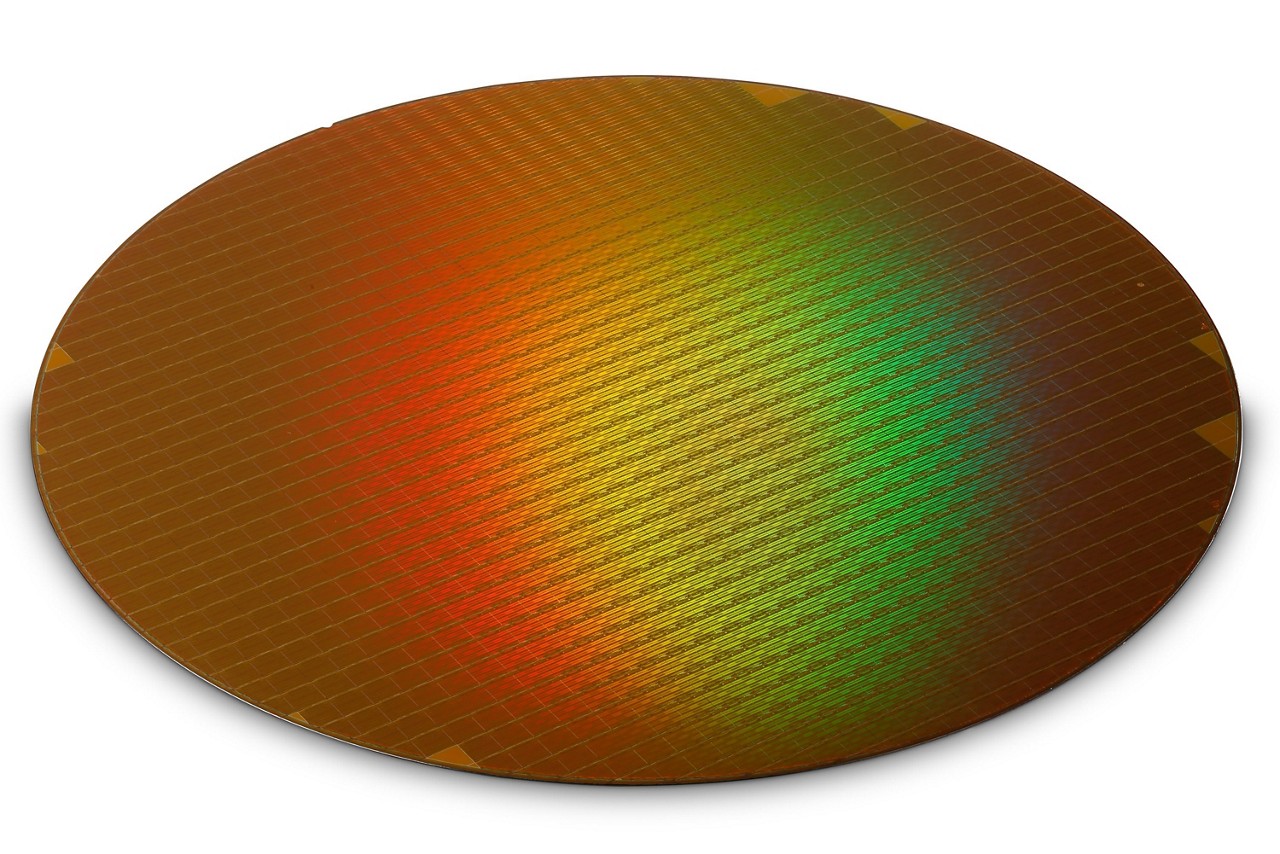
The short version, covered in more detail in our explainer on why RAM prices are so high in 2026, is that AI data centers need enormous amounts of high-bandwidth memory to feed GPU clusters, and HBM is built on the same production lines as ordinary DDR5. Because a given wafer can be turned into a relatively small number of HBM dies or a much larger number of standard DRAM dies, every wafer that Samsung, SK hynix or Micron diverts to HBM is wafer capacity that isn't making PC, laptop or server DDR5. Suppliers have been doing exactly that for most of 2026, and all three have said they intend to keep doing it because HBM carries far higher margins.
That capacity shift, not a one-off shortage or a single bad quarter, is why this cycle has run longer and hit harder than previous memory price swings. It also means the fix isn't simply "wait for a glut": new fab capacity takes three to five years to reach volume production, so the supply response to this demand surge won't fully arrive until closer to the end of the decade.
The latest price data: quarter by quarter through 2026
Memory contract prices are negotiated between manufacturers and large buyers (OEMs, module makers, cloud providers) and are reported in ranges rather than single numbers, and different trackers sometimes classify "DRAM" differently (conventional DRAM, PC DRAM, server DRAM, DRAM including HBM). The table below pulls together the clearest publicly reported figures for 2026, with the caveat that some are TrendForce's own published forecasts and some are from financial and trade outlets summarizing those forecasts — we've flagged which is which.
| Period | Reported contract price move (QoQ) | Attribution |
|---|---|---|
| Q1 2026 | Conventional DRAM up ~90–95%; PC DRAM >100%; server DRAM ~90% | TrendForce forecast, as reported by trade press (revised up from an earlier 55–60% estimate) |
| Q2 2026 | Industry DRAM revenue up ~59.5% QoQ; price-increase forecasts in the high-50s to low-60s percent range | TrendForce data, as cited in financial/trade coverage |
| Q3 2026 | Contract price increases narrowing to roughly 13–18% | TrendForce data, as cited in financial/trade coverage (September 2026) |
| Q4 2026 | Conventional DRAM forecast +10–15%; with HBM included, overall DRAM +15–20%; NAND +15–20% | TrendForce quarterly outlook, as reported by multiple outlets following its ~September 30, 2026 release |
| Micron fiscal Q4 2026 (ended ~Aug 2026) | DRAM average selling prices up in the "high teens" percent sequentially; DRAM ~73% of revenue | Micron's own September 30, 2026 earnings release and call, as reported by financial press |
| 2027–2028 outlook | No consensus figure; multiple suppliers expect tighter, not looser, supply | Micron, SK hynix (see below) |
Two things stand out. First, the pace of quarter-over-quarter increases has been decelerating since the ferocious Q1 2026 spike — that's real, and it's the basis for some of the more optimistic "it's calming down" headlines. Second, "decelerating" still means prices went up every single quarter in 2026; a smaller percentage increase on an already-inflated base is not a price cut. Nothing in the data we could verify shows DRAM contract prices falling quarter over quarter at any point in 2026.
What Micron, Samsung and SK hynix are actually saying
You don't have to take a research firm's word for it — the companies setting these prices have been unusually direct on their own earnings calls. We covered Micron's most recent numbers in depth in our report on what Micron's Q4 results mean for RAM prices, but the headline from its September 30, 2026 fiscal Q4 release, as reported by financial outlets covering the call, is this: management said memory supply-demand conditions in calendar 2027 and 2028 are expected to be tighter than in 2026, and declined to give a timeline for a return to balance. Micron also said it has signed more than two dozen strategic customer agreements covering upward of 35% of its revenue through 2030 — a sign that the company itself is planning for a multi-year tight market, not a short squeeze.
SK hynix has been even blunter. According to Reuters' coverage of remarks by CEO Kwak Noh-jung around the company's July 2026 Nasdaq listing, the executive said 2027 is expected to be the industry's tightest year on record for memory supply, and that the shortage likely won't meaningfully ease until around 2030. Samsung's own commentary, as summarized in subsequent technology-press coverage, points the same direction: shortages are expected to persist through 2027 and 2028 rather than resolve.
None of this is confirmed by a single, unified "official" roadmap — these are separate statements from three different companies, made at different moments, and they don't all use the same timeframe or language. But they all point the same way: toward a longer, not shorter, period of tight supply than most PC buyers were expecting a year ago.
DDR5, DDR4 and whether a "cheaper alternative" exists
If you're hoping a different memory standard might sidestep the shortage, the honest answer is: not really, at least not yet. DDR4 is not a long-term workaround — Samsung has told PC makers it will discontinue DDR4 modules, accelerating the industry's move to DDR5, and most new platforms don't support DDR4 anyway. Some reports do note that spot prices for older DDR4 chips and secondhand modules, particularly in China's resale market, have eased even as DDR5 contract prices keep rising, but that's a narrow, geography-specific pocket of relief, not a general trend you can rely on for a new build.
On the high end, Micron has publicly demonstrated a 512GB DDR5 server memory module (announced mid-September 2026, with AMD and Intel reportedly validating it for next-generation platforms) that points to where the industry's engineering attention is going: ultra-dense modules for AI and cloud servers, not cheaper consumer kits. Micron has said it expects volume production of that module in the second half of 2027. That's a useful signal for timing — it suggests supply attention stays concentrated on server and AI products well into 2027 — but it's not a product most PC buyers will ever purchase directly. For now, DDR5 remains the only realistic mainstream choice for a new build, and there's no indication a cheaper alternative standard is arriving to relieve pricing pressure in the next year.
Separately, a small but growing share of global DRAM output now comes from Chinese manufacturer CXMT, whose revenue and market share have been climbing through 2026 according to TrendForce-sourced reporting. Some industry voices have suggested Chinese capacity expansion could start easing the crunch from late 2027 onward. That's a real variable to watch, but it remains a minority share of global supply today, and it depends on export, trade and manufacturing-policy factors that are themselves uncertain.
Should you buy RAM now, or wait?
There's no single right answer for every buyer, but the data points to a fairly clear decision framework depending on why you need memory in the first place.
| Your situation | What the data suggests |
|---|---|
| Building or repairing a PC you need now | Buy. Every reported forecast through Q4 2026 shows prices rising, not falling; delaying a purchase you actually need is very unlikely to save you money this cycle. |
| Upgrading for a concrete, current need (gaming at higher settings, video editing, running local AI models) | Buy what covers that need now. Consider sizing to what you need today rather than the largest kit "just in case" — extra headroom you don't use yet is capacity you're paying inflated 2026 prices for. |
| Speculative or "future-proofing" upgrade with no immediate need | It's reasonable to wait and watch, but don't wait expecting a 2026-style price drop. No major forecaster we found is calling for contract prices to fall before the second half of 2027 at the earliest, and several expect tightness well past that. |
| Buying a prebuilt desktop or laptop | Expect sticker prices to keep drifting upward each quarter as memory costs reach retail; press reports describe notebook makers raising prices in the 10–30% range during 2026. Buying sooner in the cycle has generally been cheaper than buying later. |
| Buying for a server, workstation or small business deployment | Expect the tightest allocation of all. Reports indicate 2027 DRAM and HBM production allocations are already largely committed across the three major suppliers — plan lead times accordingly, and lock in quotes early. |
The pattern across every one of these scenarios is the same: 2026 has not offered a dip to "buy the dip" into, and nothing in Micron's, Samsung's or SK hynix's own public statements suggests one is coming before 2027 at the earliest. If your plan is "wait a month or two and it'll be cheaper," the data available right now doesn't support that bet.
If you're buying now: how to size your purchase
Given that capacity you buy today is unlikely to get cheaper by waiting, it's worth being deliberate about how much you actually buy rather than defaulting to the biggest kit in budget:
- 16GB is a realistic minimum for general browsing, office work and light multitasking in 2026, but it leaves little headroom and may already feel tight with modern browsers and AI-assisted apps running in the background.
- 32GB is the sensible mainstream target for most gaming, creative and everyday power-user builds — it's the tier most reviewers and system builders were already recommending before prices rose, and it's unlikely to become genuinely obsolete soon.
- 64GB and above makes sense for heavy video/photo editing, running large local AI models, virtualization or professional workloads — but at current pricing, treat it as a deliberate decision tied to an actual workload, not a "why not" upsell.
If you're also dealing with a looming platform deadline — for example, still running an older Windows 11 build that needs attention before support lapses — it's worth bundling your hardware and software planning together rather than treating them separately; see our guide on the Windows 11 24H2 end-of-support date and what to do now if that applies to you.
If you're waiting: what would actually change the calculus
A few concrete developments would be worth watching for, because they're the kinds of things that have historically preceded memory price relief:
- A TrendForce quarter showing an actual QoQ price decline for conventional DRAM, not just a smaller increase. That hasn't happened at any point we could confirm in 2026.
- A supplier publicly walking back its tight-supply guidance. So far, Micron, Samsung and SK hynix have all gone the other direction, extending their tight-supply windows into 2027 and 2028 rather than shortening them.
- Meaningful new non-AI-aligned capacity coming online — either from the big three re-allocating wafers back toward conventional DRAM, or from newer entrants like CXMT scaling further. Some analysts point to late 2027 as an earliest plausible inflection point; others, including SK hynix's own CEO, have suggested the squeeze persists toward 2030.
- A slowdown in AI data-center capital spending. Several industry commentators have noted that the entire premise of this shortage rests on continued, large-scale AI infrastructure investment; if that spending cools meaningfully, memory makers could reallocate capacity back toward conventional DRAM faster than current forecasts assume. This is speculative, not a forecast anyone has committed to a date on.
Until one or more of those actually happens, "wait and see" is a reasonable posture only if you have no real deadline — it is not currently a strategy with a predictable payoff date.
What to do next
If you need to build, repair or upgrade a PC in the near term, the most defensible move based on everything forecasters and manufacturers have said through Q4 2026 is to buy the capacity you actually need now, size it to your real workload rather than padding for a "someday" use case, and stop treating the next few months as a likely discount window. For background on how this shortage developed and Micron's specific earnings dynamics, see our companion pieces on why RAM prices climbed so high in 2026 and what Micron's latest earnings report means for the market. We'll keep tracking TrendForce's quarterly updates and the next round of Micron, Samsung and SK hynix earnings calls, and will revisit this guide if the supply picture meaningfully changes.
Frequently asked questions
Should I buy RAM now or wait for prices to drop in 2026?
If you need to build or repair a PC now, buy only what you need. Every forecast we could verify through Q4 2026, including TrendForce's own quarterly outlooks and Micron's fiscal Q4 2026 earnings call, shows DRAM contract prices still rising, not falling. Waiting a few weeks or months has not paid off at any point in 2026.
When will DDR5 RAM prices go down?
There's no confirmed date. Micron has said supply-demand conditions in 2027 and 2028 are expected to be tighter than in 2026, and SK hynix's CEO has said the shortage likely won't meaningfully ease until around 2030. Some analysts see a possible easing from the second half of 2027 onward if new non-AI-aligned capacity comes online, but this is not a settled forecast.
Why are RAM prices so high right now?
AI data centers need huge volumes of high-bandwidth memory (HBM), which is built on the same production lines as ordinary DDR5. Memory makers have shifted wafer capacity toward HBM because it's more profitable, leaving less capacity for conventional PC, laptop and server DRAM. We cover this in more detail in our explainer on why RAM prices are so high in 2026.
Is DDR4 a cheaper way to avoid the DDR5 price surge?
Not as a long-term plan. Samsung has told PC makers it will discontinue DDR4 modules, and most current platforms require DDR5 anyway. Some reports note that spot prices for older DDR4 chips and secondhand modules have eased in certain markets, but that's a narrow exception, not a general alternative for a new build.
How much RAM do I actually need right now?
16GB is a realistic minimum for general use, 32GB is the sensible mainstream target for gaming and most creative work, and 64GB or more should be reserved for heavy video editing, local AI workloads or virtualization. Given current prices, it's worth sizing to your actual workload rather than buying extra capacity 'just in case.'
Will AI PCs make the RAM shortage worse?
The primary driver of the shortage is AI data-center demand for HBM, not consumer AI PCs. That said, AI-enabled laptops and desktops that need more onboard memory add incremental demand on top of an already tight conventional DRAM market, so it's a secondary pressure rather than the main cause.
Sources
- Micron Technology – Newsroommicron.com
- TrendForce – DRAM Contract Price research reporttrendforce.com
- TrendForce Newstrendforce.com
- SK hynix Newsroomnews.skhynix.com
- Samsung Newsroomnews.samsung.com
- Wikipedia: Dynamic random-access memoryen.wikipedia.org
Mara Lindqvist edits the hardware desk. She covers graphics cards, processors, memory and storage, the foundries and chip designers behind them, and what the numbers on a spec sheet mean for people choosing a PC. Specifications in her stories come from manufacturer spec pages and datasheets.