RAM Prices 2026: TrendForce Predicts Another 10-15% Jump in Q4
TrendForce's September 30 forecast says DRAM contract prices will climb another 10-15% and NAND flash 15-20% this quarter, as AI server demand keeps squeezing supply for PCs.
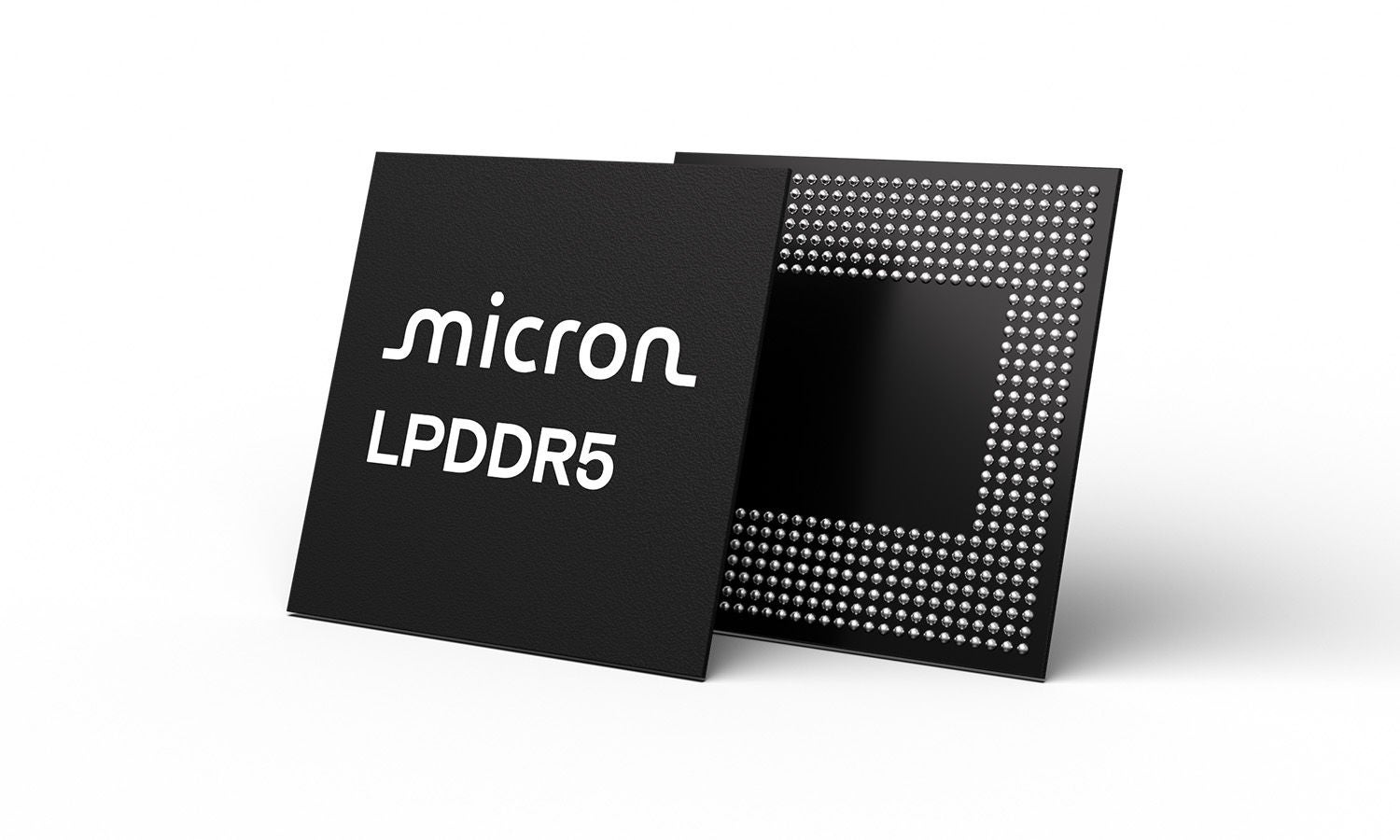
Conventional DRAM contract prices are projected to rise another 10-15% quarter over quarter in the fourth quarter of 2026, with NAND flash contract prices climbing even faster at 15-20%, according to a memory industry forecast TrendForce published on September 30, 2026. The Taiwan-based research firm says DRAM suppliers are still prioritizing advanced-process capacity for AI servers over PC, laptop and consumer parts, which is why RAM keeps getting more expensive even as the pace of DRAM price hikes actually starts to cool.
The numbers, straight from TrendForce's Q4 2026 outlook (published September 30, 2026):
- Conventional DRAM contract prices: up 10-15% quarter over quarter in Q4 2026
- NAND flash contract prices (overall): up 15-20% quarter over quarter in Q4 2026
- Enterprise SSDs are the only memory category expected to see price growth accelerate versus the prior quarter
- For comparison, TrendForce's Q3 2026 forecast had conventional DRAM up 13-18% and NAND up 10-15% — so DRAM's pace is slowing while NAND's is speeding up
What TrendForce is actually forecasting for Q4 2026
TrendForce's research note, titled "AI Server Demand Sustains Memory Contract Price Increases in 4Q26, While Consumer-Side Pressure Persists," is careful to frame Q4 as a moderation, not a reversal. Memory suppliers are still selling every wafer of advanced-node capacity they can make, and they are still routing the bulk of it toward high-performance server products rather than PC and laptop memory. That keeps the overall DRAM market undersupplied heading into the new quarter, even though the percentage increase itself is smaller than earlier in the year.
The firm's own number for conventional DRAM — the ordinary PC, server and mobile memory that doesn't include High Bandwidth Memory (HBM) stacks built for AI accelerators — is a 10-15% quarter-over-quarter contract price increase for Q4 2026. NAND flash, which covers everything from SSDs to the storage chips in phones, is forecast to rise faster: 15-20% quarter over quarter overall. TrendForce singles out enterprise SSDs as the one category where the rate of increase is expected to actually speed up compared to Q3, because cloud service providers are still racing to buy capacity for AI inference infrastructure.
DRAM by segment: PC, server, mobile and graphics memory
TrendForce's report breaks conventional DRAM down by end market, and the picture is uneven:
- PC DRAM: Notebook makers are increasingly passing higher component costs through to retail prices, but PC brands are still buying aggressively because they expect DRAM supply to stay tight into 2027. TrendForce specifically warns that PC DRAM supply "could decline in 2027 as more capacity shifts to server applications."
- Server DRAM: Improving CPU availability has let cloud providers and server makers increase bit procurement to meet RDIMM demand for general-purpose servers running agentic AI workloads. The market is expected to stay undersupplied through Q4, and TrendForce notes that some suppliers' price increases will lag the market average because of pricing mechanisms written into long-term agreements.
- Mobile DRAM: Prices keep rising, but the pace is moderating because much of the increase was already priced in during earlier quarters. Smartphone makers are depleting low-cost inventory built up before the shortage.
- Graphics DRAM: GDDR6 supply keeps shrinking as suppliers wind that product down, while GDDR7 output stays limited because the advanced-process capacity it needs is being redirected to server DRAM. Both dynamics point the same way: up.
- Consumer DRAM: Demand has picked up from SSD, networking and TV makers, and with major suppliers still committed to production cuts, the market leans heavily on Taiwanese suppliers. Prices keep rising, just more slowly than before.
NAND flash: enterprise SSDs defy the slowdown everywhere else
NAND tells a split story. Consumer demand for flash storage is weak — TrendForce describes PC brands shrinking SSD capacities in mainstream laptops just to hold down bill-of-materials costs, and smartphone brands relying on existing eMMC/UFS inventory rather than placing new orders. That's pushed NAND suppliers toward a "more flexible pricing stance" for client SSDs specifically, which is limiting how much those prices can rise.
Enterprise SSDs are the opposite case. TrendForce projects enterprise SSD bit demand will grow more than 80% year over year in 2026, driven by cloud providers expanding AI inference infrastructure and by the shift from large-model training toward actual AI deployment — plus a less obvious driver: the rollout of agentic AI, which TrendForce says is pushing "exponential growth in data volumes for real-time retrieval and caching." Most of the incremental enterprise SSD supply for Q4 has already been committed to customers, leaving almost nothing on the open market, which is why TrendForce expects enterprise SSD price growth to accelerate in Q4 2026 even as every other NAND category slows down.
| Category | TrendForce Q3 2026 forecast (QoQ) | TrendForce Q4 2026 forecast (QoQ) | Direction |
|---|---|---|---|
| Conventional DRAM | +13% to +18% | +10% to +15% | Slowing |
| NAND flash (overall) | +10% to +15% | +15% to +20% | Accelerating |
| Enterprise SSD | Rising with the NAND market | Accelerating faster than every other NAND category | Accelerating |
Figures from TrendForce's July 3, 2026 Q3 2026 memory price release and its September 30, 2026 Q4 2026 release.
Why AI server demand, not gamers or PC buyers, is driving this
None of this is happening because consumer demand for memory is strong — TrendForce explicitly says consumer-side pressure "persists," meaning buyers are increasingly priced out, not piling in. What's driving contract prices is that memory makers have a finite amount of advanced-node wafer capacity, and every wafer that goes into a stack of HBM for an AI accelerator, or a high-capacity server RDIMM, or an enterprise SSD controller for a data center, is a wafer that doesn't go into ordinary PC, laptop or phone memory. That's a direct, mechanical supply constraint, not just a pricing decision.
Micron's own numbers back up how large that AI-driven pull has become. The company's fiscal fourth-quarter 2026 results, filed with the SEC and dated September 30, 2026 — the same day as TrendForce's Q4 forecast — show revenue of $54.23 billion for the quarter, up from $41.46 billion the prior quarter and $11.32 billion a year earlier. Full fiscal year 2026 revenue came in at $133.19 billion, against $37.38 billion in fiscal 2025. "Micron delivered record fiscal 2026 results, and we expect an even stronger fiscal 2027," said chairman and CEO Sanjay Mehrotra in the earnings release, pointing to the company's Strategic Customer Agreements — the same kind of long-term agreements TrendForce says are letting some DRAM customers lag the broader market's price increases.
Micron has also been demonstrating exactly the kind of high-density server product TrendForce says is soaking up capacity. On September 15, 2026, Micron announced what it calls the industry's first 512GB DDR5 RDIMM, built by stacking DRAM dies with through-silicon vias and rated for speeds up to 9,200 MT/s, enough to pack 12TB of DDR5 into a single dual-socket, 24-slot server. Micron says volume production is targeted for the second half of 2027 — a timeline that lines up with TrendForce's own warning that server DRAM will likely stay undersupplied well beyond this quarter.
Samsung's memory business is telling a similar story from the other side of the Pacific. The company's own October 8, 2026 earnings guidance points to consolidated operating profit of approximately 107.4 trillion Korean won for Q3 2026, up from 89.49 trillion won the prior quarter — a jump Pandromeda covered in detail when the guidance came out, and one that lines up with the same memory-driven windfall Micron is reporting.
Contract prices vs. the price you actually pay
It's worth being precise about what TrendForce is actually measuring. A "contract price" is the negotiated price memory makers like Micron, Samsung and SK hynix charge module makers, OEMs and other large buyers for DRAM and NAND chips, typically settled on a monthly or quarterly cadence. It is not the same thing as the price on a retail RAM kit or a laptop's spec sheet, and it is also distinct from the "spot price" paid on the open market by smaller buyers, which tends to move faster and more erratically than contract pricing in either direction. When TrendForce says conventional DRAM contract prices are rising 10-15% quarter over quarter, that's the upstream number — the one that eventually works its way into module and system prices over the following weeks to months, not instantly and not always proportionally, since retailers and system builders absorb some of the swing in their own margins before passing the rest along.
That lag cuts both ways. It means a contract-price forecast like this one isn't a prediction that store shelf prices will jump 10-15% overnight. But it does mean that, absent a supply surprise, retail DIMM and laptop prices have more room to rise before this round of contract increases is even fully reflected — which is part of why TrendForce and the memory makers themselves keep describing the market as undersupplied rather than merely expensive.
If supply is the problem, why won't prices just fall back down?
Because the capacity shift isn't temporary. TrendForce's PC DRAM note warns supply "could decline in 2027 as more capacity shifts to server applications" — meaning next year could be tighter for PC memory, not looser. That tracks with what's driving demand on the server side in the first place: the same wave of agentic AI infrastructure buildouts that TrendForce cites as a reason server DRAM procurement is accelerating. Building a new fab, or re-qualifying existing capacity from one memory type to another, takes years, not months — so a demand spike that started with AI training and is now extending into AI inference and agentic deployment doesn't resolve itself on a quarterly cadence.
What this means for PC builders and buyers right now
If you've been pricing out a new PC build, a RAM upgrade or a prebuilt system, this forecast is one more data point confirming that the squeeze isn't over. Contract prices — what memory makers charge module makers and OEMs — don't translate one-to-one into retail DIMM prices, and there's typically a lag of weeks to a couple of months before contract-price moves show up on store shelves. But a 10-15% contract increase on top of the increases already baked into 2026 pricing is not a signal that retail RAM prices are about to soften. Pandromeda's recent buying guide walked through the trade-offs of buying now versus waiting; TrendForce's Q4 numbers argue for the "now" side of that decision, at least for anyone who needs memory in the next few months rather than next year.
A few practical takeaways follow directly from the forecast rather than from guesswork. First, DDR5 and other conventional DRAM-based upgrades are the segment TrendForce flags as most exposed to further PC-specific tightening in 2027, since that's the capacity suppliers are most actively reallocating toward servers. Second, graphics memory — the GDDR6 and GDDR7 chips used in graphics cards — is squeezed from both ends, with GDDR6 output winding down and GDDR7 output still capacity-constrained, so there's little reason in this forecast to expect graphics card memory costs to ease. Third, NAND-based storage, especially anything that touches enterprise-grade SSDs, is the category where TrendForce sees the least relief: client SSDs are the one bright spot for consumers, since suppliers are taking a more flexible pricing stance there specifically because PC OEMs are drawing down existing inventory instead of placing new orders.
What's next
TrendForce typically refreshes its quarterly memory forecasts roughly every three months, so the next major data point should land around late December or early January, covering Q1 2027. Watch for three things: whether PC DRAM supply actually tightens further as TrendForce's own note warns, whether enterprise SSD price growth keeps outpacing the rest of NAND as agentic AI deployments scale, and whether Micron's and Samsung's upcoming quarterly results keep confirming the pricing power that's already showing up in their revenue and profit guidance. Until one of those trends breaks, the base case for RAM and NAND shoppers remains the same one TrendForce has been describing all year: tight supply, AI-driven demand, and contract prices that keep climbing even when the percentage gains get smaller.
Frequently asked questions
How much are RAM prices expected to rise in Q4 2026?
TrendForce's September 30, 2026 forecast projects conventional DRAM contract prices will rise 10-15% quarter over quarter in Q4 2026, with NAND flash contract prices rising 15-20% over the same period.
Why are DRAM and NAND prices still going up?
TrendForce says memory makers are still prioritizing advanced-process manufacturing capacity for AI servers and HBM over PC, laptop and consumer memory, which keeps the overall DRAM and NAND market undersupplied even as demand from PC buyers stays weak.
Is the rate of RAM price increases speeding up or slowing down?
It depends on the category. TrendForce's own numbers show conventional DRAM price growth cooling slightly, from 13-18% quarter over quarter in Q3 2026 to 10-15% in Q4 2026. NAND flash is moving the other way, accelerating from 10-15% in Q3 to 15-20% in Q4, led by enterprise SSDs.
Will PC and laptop memory prices come down in 2027?
TrendForce's own Q4 2026 note warns that PC DRAM supply could actually decline in 2027 as more manufacturing capacity shifts toward server applications, which points toward continued tightness rather than relief.
Does a rising DRAM contract price mean retail RAM prices jump immediately?
No. Contract prices are what memory makers charge module makers and OEMs, and they typically take weeks to months to fully show up in retail DIMM, laptop and prebuilt PC pricing, with retailers and system builders absorbing part of the swing in their own margins.
Which memory category is seeing the fastest price growth right now?
Enterprise SSDs. TrendForce projects enterprise SSD bit demand will grow more than 80% year over year in 2026 on cloud AI infrastructure spending, and expects enterprise SSD price growth to accelerate in Q4 2026, the only memory category where that's the case.
Sources
- TrendForce: AI Server Demand Sustains Memory Contract Price Increases in 4Q26 (Sept. 30, 2026)trendforce.com
- TrendForce: 3Q26 Memory Price Outlook (July 3, 2026)trendforce.com
- Micron Technology Fiscal Q4 2026 Earnings Release (SEC Form 8-K, Exhibit 99.1)sec.gov
- Micron: Industry's First Ultra-Dense 512GB DDR5 Module for Next-Generation Serversinvestors.micron.com
- Samsung Electronics: Earnings Guidance for Third Quarter 2026news.samsung.com
Mara Lindqvist edits the hardware desk. She covers graphics cards, processors, memory and storage, the foundries and chip designers behind them, and what the numbers on a spec sheet mean for people choosing a PC. Specifications in her stories come from manufacturer spec pages and datasheets.