Samsung's Q3 2026 Profit Guidance Tops ₩100 Trillion for First Time
Samsung's Oct. 8 guidance points to ₩195 trillion in sales and ₩107.4 trillion in operating profit for Q3 2026 — its first quarter above ₩100 trillion, driven by surging memory chip prices.
Samsung Electronics said on October 8, 2026 (Korea time) that it expects consolidated operating profit of about ₩107.4 trillion for the third quarter of 2026 — the first time in the company's history that quarterly operating profit has crossed the ₩100 trillion mark. The preliminary guidance, published through Samsung's own newsroom and investor relations channels, also points to consolidated sales of roughly ₩195 trillion, up from ₩171.5 trillion in the second quarter and more than double the ₩86.06 trillion Samsung posted in the same quarter a year ago.
The numbers are guidance, not final results. Samsung is explicit that the figures are released "before the external audit on the financial results of our headquarters, subsidiaries and affiliates is completed," meaning the audited numbers that eventually appear in Samsung's quarterly report could move slightly once the audit is finished and a full, division-by-division earnings release follows.
Key facts: Samsung's Q3 2026 earnings guidance
- Announced: October 8, 2026, Korea time, via Samsung's global newsroom and an investor relations disclosure filing
- Consolidated sales guidance: approximately ₩195 trillion (internal range: ₩194–196 trillion)
- Consolidated operating profit guidance: approximately ₩107.4 trillion (internal range: ₩107.3–107.5 trillion)
- Milestone: first quarter in Samsung's history with operating profit above ₩100 trillion
- Quarter-over-quarter change: operating profit up about 20% from ₩89.49 trillion in Q2 2026
- Year-over-year change: operating profit up about 782% from ₩12.17 trillion in Q3 2025
- Accounting basis: consolidated K-IFRS figures, no business-division breakdown included
- Status: preliminary, unaudited guidance; a full earnings report with segment-level detail follows later
Samsung's Q3 2026 guidance, in numbers
According to the guidance release on Samsung's global newsroom, Samsung expects, on a K-IFRS consolidated basis:
- Consolidated sales of approximately ₩195 trillion
- Consolidated operating profit of approximately ₩107.40 trillion
The same figures appear in Samsung's own regulatory disclosure, filed as a "3Q 2026 Pre-Earnings Guidance" filing on Samsung's investor relations site, which spells out the underlying ranges: sales of ₩194 trillion to ₩196 trillion, and operating profit of ₩107.3 trillion to ₩107.5 trillion. Both the newsroom release and the IR filing describe these as preliminary numbers, provided ahead of the completion of Samsung's external audit, and both carry the standard caution that the company assumes no obligation to update the forward-looking guidance if conditions change before final results are published.
Neither document breaks the guidance down by business division — there is no separate line for the Device Solutions (semiconductor) business, Display, or Mobile eXperience (MX) in this release. That level of detail typically arrives only with Samsung's full quarterly earnings report and investor presentation, after the external audit is complete.
Why Samsung reports one figure, not a range
Samsung's own disclosure explains an idiosyncrasy that can confuse readers used to Western-style earnings previews: Korean disclosure rules do not allow a listed company to publish forward earnings guidance as a range for its headline figure. To comply, Samsung calculates the median of its internal estimate range and reports that single number — ₩195 trillion in sales and ₩107.4 trillion in operating profit — while still disclosing the underlying range (₩194–196 trillion and ₩107.3–107.5 trillion, respectively) in the filing itself.
That's a procedural detail, not a sign of unusual uncertainty in Samsung's numbers. It does mean that when the audited results land, the final figures could fall anywhere inside that band rather than landing on the headline number exactly — a nuance worth keeping in mind when comparing this guidance to the eventual, fully audited quarterly report.
What "operating profit guidance" actually measures
It's worth being precise about which number Samsung is guiding to. Operating profit is revenue minus the direct costs of running the business — cost of goods sold, R&D, SG&A — before interest, taxes, and one-off items such as asset sales, currency effects, or equity-method gains and losses from affiliates. It is not the same as net profit, which sits further down the income statement and can swing for reasons that have little to do with how the underlying business performed in a given quarter. Samsung's October 8 release guides only to consolidated sales and consolidated operating profit; it does not provide a net profit estimate. That's standard practice for Samsung's preliminary guidance releases, and it's one more reason the ₩107.4 trillion figure, large as it is, should be read as an operating-performance signal rather than a bottom-line earnings number.
How the numbers compare: quarter over quarter and year over year
Samsung's own guidance release includes comparison figures for the prior quarter and the year-earlier quarter, which let the scale of the jump be measured directly against Samsung's own prior reported results.
| Period | Consolidated sales | Operating profit | Change vs. prior period |
|---|---|---|---|
| Q3 2025 (actual) | ₩86.06 trillion | ₩12.17 trillion | — |
| Q2 2026 (actual) | ₩171.5 trillion | ₩89.49 trillion | Sales +99% YoY; profit +635% YoY |
| Q3 2026 (guidance) | ≈₩195 trillion | ≈₩107.4 trillion | Sales +13.7% QoQ / +126.6% YoY; profit +20.0% QoQ / +782.5% YoY |
The year-over-year comparison is the more striking one: a company that earned ₩12.17 trillion in operating profit in the third quarter of 2025 is now guiding to roughly ₩107.4 trillion for the same quarter a year later — an increase of close to 782%, on sales that roughly doubled. The sequential comparison shows the climb hasn't slowed down, either: operating profit guidance is up about 20% from an already-large Q2 2026 figure of ₩89.49 trillion, and sales guidance is up almost 14% over the same span. Two consecutive quarters of acceleration, rather than a single unusual quarter, is what makes this guidance notable beyond the headline ₩100 trillion threshold.
What's driving the jump
Samsung's guidance release itself does not attribute the increase to a specific business or product line — it is a consolidated, company-wide figure with no segment breakdown. But the timing lines up with a memory chip market that Pandromeda has been tracking closely through 2026: persistent shortages and climbing prices for DRAM and NAND flash, and a fast ramp in high-bandwidth memory (HBM) sales tied to AI data center buildouts.
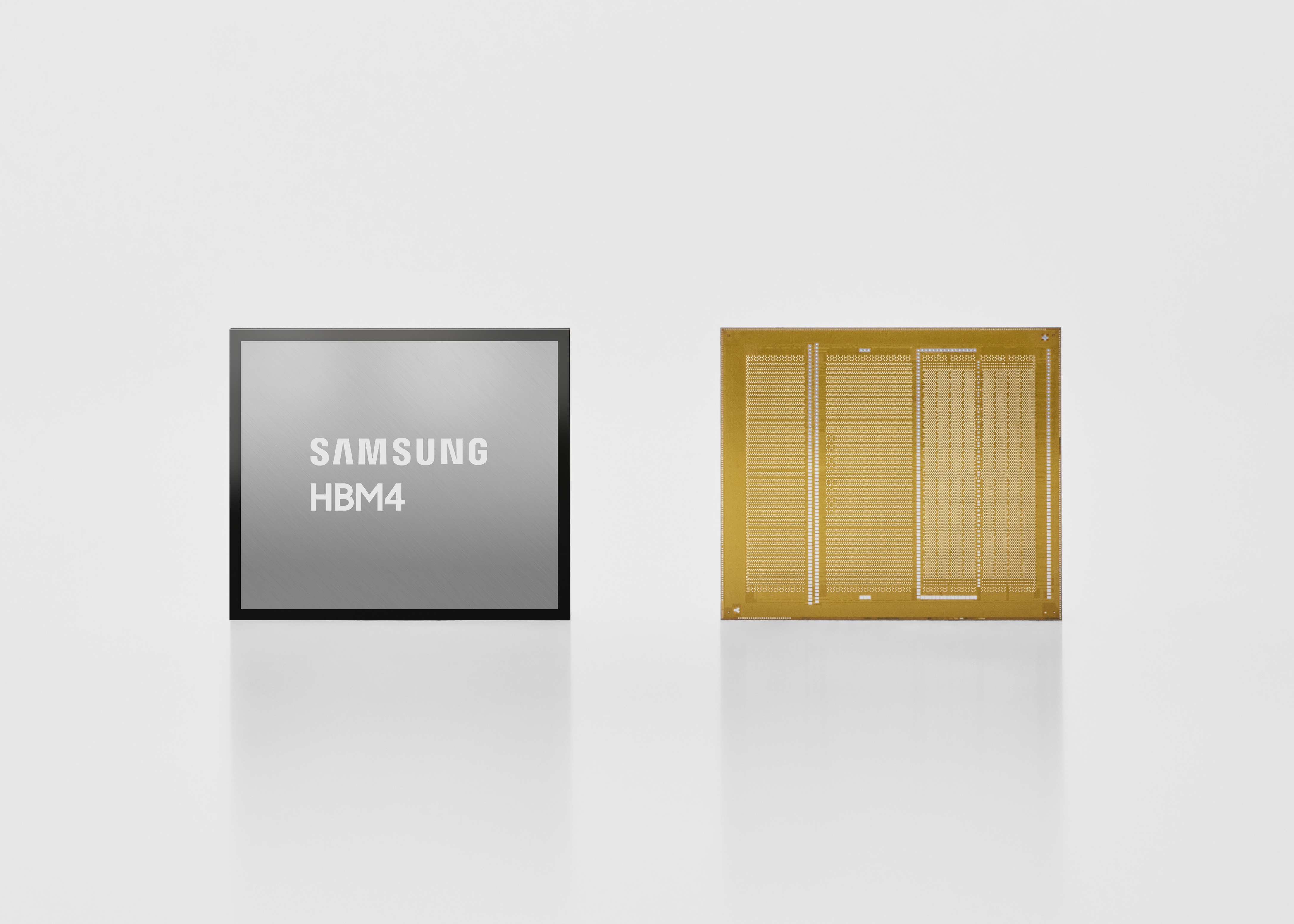
Samsung has been vocal about its own HBM progress this year. In a February 2026 newsroom release, the company said it had begun mass production of HBM4 and shipped commercial units to customers, calling it an industry first. Samsung described its HBM4 as delivering a consistent transfer speed of 11.7 gigabits per second (Gbps) — about 46% above the 8Gbps industry standard — with headroom up to 13Gbps, built on the company's most advanced 1c (6th-generation 10nm-class) DRAM process paired with a 4-nanometer logic base die. The company also said total memory bandwidth per stack rose 2.7x versus the prior HBM3E generation, to a maximum of 3.3 terabytes per second, with 12-layer stacking offering 24GB to 36GB capacities and a future 16-layer option reaching 48GB.
"Instead of taking the conventional path of utilizing existing proven designs, Samsung took the leap and adopted the most advanced nodes like the 1c DRAM and 4nm logic process for HBM4," Sang Joon Hwang, Executive Vice President and Head of Memory Development at Samsung Electronics, said in that release. "By leveraging our process competitiveness and design optimization, we are able to secure substantial performance headroom, enabling us to satisfy our customers' escalating demands for higher performance, when they need them."
In the same release, Samsung said it anticipates its HBM sales will more than triple in 2026 compared with 2025, and that it is actively expanding HBM4 production capacity, with HBM4E sampling expected in the second half of 2026 and custom HBM samples reaching customers in 2027. HBM commands substantially higher prices than commodity DRAM, and demand for it has reportedly been straining fabrication capacity across the memory industry — a dynamic Pandromeda has covered in its explainer on why RAM prices have climbed so sharply through 2026 and in reporting on memory makers signaling another 10–15% DRAM price increase for Q4.
Put together, a memory market where supply is tight and AI-driven HBM demand is high-margin is the most plausible explanation for why a company whose semiconductor division has historically swung between feast and famine is now guiding to its largest quarterly profit on record. That said, this is Pandromeda's own contextual read of publicly available market conditions — Samsung's Q3 2026 guidance filing does not itself state which business line is responsible for how much of the ₩107.4 trillion figure, and that detail will only be confirmed when Samsung publishes its full quarterly report.
The smartphone business: an open question
One thing this guidance release can't answer is how Samsung's Mobile eXperience (MX) division — the smartphone and wearables business behind the Galaxy line — performed in the quarter. Some market watchers have speculated that MX swung to a loss even as semiconductors carried the overall result, a plausible scenario given that component costs across the entire electronics industry, including Samsung's own device business, have been pushed up by the same memory shortage that is lifting its chip profits. But Samsung's guidance release does not break out divisional results, so that remains unconfirmed and should be treated as speculation until the company's full earnings report and investor presentation are published.
How this fits Pandromeda's ongoing RAM price coverage
Samsung's guidance isn't happening in a vacuum. It lands in the middle of a run of memory-market stories Pandromeda has been following for months: rising component costs that PC makers have been passing on to buyers, including the price hikes detailed in our coverage of HP, Dell and Lenovo raising laptop prices over memory costs. Samsung's record profit guidance is best read as the earnings-side confirmation of a trend Pandromeda's hardware desk has been documenting from the buyer's side all year: memory is scarce, memory is expensive, and the companies that make it are benefiting substantially, at least for now. Whether that dynamic eases or intensifies heading into 2027 will depend heavily on how quickly memory makers, Samsung included, can bring new fab capacity online without over-correcting into oversupply — the same boom-bust cycle that has defined the memory business for decades.
What analysts and investors will watch for next
Because this release is guidance rather than a full report, several questions remain open that only Samsung's detailed quarterly disclosure can answer:
- How the Device Solutions (semiconductor) division's profit breaks down between DRAM, NAND, and foundry/logic operations
- Whether HBM4 and other AI-memory products are now a meaningfully large share of semiconductor revenue, and at what margin
- Whether the Mobile eXperience and Display divisions posted profits, losses, or roughly flat results for the quarter
- Any commentary from Samsung management on how long elevated memory pricing is expected to persist, and on capital expenditure plans for additional fab capacity
- Whether the final, audited figures land at, above, or below the ₩107.4 trillion median once the external audit is complete
Samsung's own investor relations site is the authoritative place those answers will appear once the quarter's audit is complete.
What's next
This guidance is preliminary by design — Samsung's standard practice is to issue a high-level sales and operating-profit estimate ahead of its full quarterly earnings release, which includes audited financials, a divisional breakdown, and a management conference call. Samsung has not specified an exact date for that full Q3 2026 report as of this writing; based on the company's past reporting cadence, a detailed earnings release with segment-level results would typically follow within a few weeks of this guidance. Pandromeda will update this story, and publish follow-up coverage, once Samsung's audited Q3 2026 results and divisional breakdown are released.
Frequently asked questions
How much operating profit is Samsung guiding to for Q3 2026?
Samsung said on October 8, 2026 that it expects consolidated operating profit of about ₩107.4 trillion for the third quarter of 2026, within an internal range of ₩107.3 trillion to ₩107.5 trillion — the first time its quarterly operating profit has topped ₩100 trillion.
Is this Samsung's final Q3 2026 earnings report?
No. These are preliminary guidance figures that Samsung published ahead of its external audit. A full earnings report with audited numbers and a business-division breakdown follows later.
How does Q3 2026 compare with the same quarter last year?
Samsung's guidance implies operating profit up about 782% year over year, from ₩12.17 trillion in Q3 2025, and sales up about 127%, from ₩86.06 trillion.
Why does Samsung report a single number instead of a range?
Korean disclosure rules don't allow listed companies to publish earnings guidance as a range for the headline figure, so Samsung reports the median of its internal range — ₩195 trillion in sales and ₩107.4 trillion in operating profit — while disclosing the full range in its filing.
What's driving Samsung's record profit guidance?
Samsung's guidance release doesn't break results down by business line, but it comes amid a tight global memory chip market, with rising DRAM and NAND prices and fast growth in HBM4 sales for AI data centers, including Samsung's own HBM4 shipments that began in February 2026.
When will Samsung release final, audited Q3 2026 results?
Samsung hasn't announced an exact date. The company typically follows preliminary guidance with a full earnings report, including audited financials and divisional results, within a few weeks.
Sources
- Samsung Newsroom: Samsung Electronics Announces Earnings Guidance for Third Quarter 2026news.samsung.com
- Samsung Electronics IR: 3Q 2026 Pre-Earnings Guidance disclosure filingsamsung.com
- Samsung Newsroom: Samsung Ships Industry-First Commercial HBM4 With Ultimate Performance for AI Computingnews.samsung.com
- Samsung Electronics Investor Relationssamsung.com
Mara Lindqvist edits the hardware desk. She covers graphics cards, processors, memory and storage, the foundries and chip designers behind them, and what the numbers on a spec sheet mean for people choosing a PC. Specifications in her stories come from manufacturer spec pages and datasheets.