DRAM Prices Set to Climb Another 10-15% in Q4 2026, Makers Say
Taiwan's Nanya and Winbond just posted record September revenue as DRAM supply stays tight, with TrendForce pointing to another 10-15% contract-price jump in Q4 2026.
DRAM contract prices are heading for another double-digit jump in the fourth quarter of 2026, and the latest evidence comes not from Samsung, SK Hynix or Micron, but from two smaller Taiwanese chipmakers posting the best months in their history. Nanya Technology and Winbond Electronics both reported record September revenue this week, and market researcher TrendForce says Nanya's DRAM average selling price (ASP) is on track to rise roughly 10% quarter over quarter in Q4 2026, with Winbond seeing gains of 8% to 13% and the broader conventional DRAM contract market climbing 10% to 15%.
- Nanya Technology posted NT$45.09 billion in September 2026 revenue, up 576.62% year over year, per its October 5 filing.
- Winbond Electronics posted NT$28.25 billion for September, up 256.67% year over year, also filed October 5.
- Both companies have now logged more than 12 consecutive months of record monthly sales, according to TrendForce's October 6 report.
- TrendForce projects Nanya's DRAM ASP to rise about 10% quarter over quarter in Q4 2026, Winbond's 8% to 13%, and conventional DRAM contract prices broadly 10% to 15%.
- The driver is the same one squeezing the whole industry: Samsung, SK Hynix and Micron are shifting capacity to HBM and DDR5 for AI servers, leaving smaller legacy-DRAM suppliers to absorb surging demand for DDR4 and LPDDR4.
Nanya and Winbond just posted their best months yet
Nanya Technology's own investor relations filing, dated October 5, 2026, discloses unaudited consolidated net sales revenue of NT$45,091 million for September — a 0.9% increase from August's NT$44,690 million and a 576.62% jump from September 2025's NT$6,664 million. That brought the company's nine-month 2026 total to NT$265,285 million, up 626.95% year over year.
Winbond's filing from the same day shows consolidated September revenue (combining Winbond Electronics, subsidiary Nuvoton Technology, and other units) of NT$28.249 billion, up 3.44% from August and 256.67% from a year earlier. Winbond's nine-month revenue reached NT$180.43 billion, an increase of 187.39% over the same period in 2025.
TrendForce's October 6 write-up, citing Commercial Times reporting, frames both results as extensions of "a streak of more than 12 consecutive months of record monthly sales" for each company — a run that started well before this year's headline-grabbing Samsung and Micron price hikes and has simply kept accelerating. Quarterly, the numbers tell the same story: Nanya's Q3 2026 revenue came in at NT$133.65 billion, up 61.9% from Q2, while Winbond's Q3 revenue reached NT$82.33 billion, up 37.58% quarter over quarter — both companies growing sequentially even after several straight quarters of gains, rather than plateauing.
Those are unaudited, company-disclosed figures — Nanya's own release notes the September number is "internal data" pending confirmation through its full financial statements, and Winbond's release carries an identical disclaimer that the revenue "has not been audited by CPA." Final audited quarterly results, due in the companies' upcoming earnings calls, could adjust the figures slightly, though the scale of the year-over-year swings leaves little doubt about the broader trend.
Why DRAM prices are projected to rise another 10% to 15% in Q4
The new figure worth flagging is the forward guidance, not just the trailing revenue. According to TrendForce's October 6 report, Nanya's own DRAM ASP is expected to climb approximately 10% quarter over quarter in the fourth quarter of 2026, while Winbond is guiding toward gains of 8% to 13%. TrendForce separately pegs the broader conventional DRAM contract market — the DDR4 and commodity DDR5 parts that go into older PCs, laptops, networking gear and consumer electronics — at a 10% to 15% quarter-over-quarter increase for Q4.
That's a smaller percentage jump than some of the triple-digit year-over-year increases recorded earlier in 2026, but it lands on top of a base that has already risen dramatically. It also confirms that the memory crunch did not ease going into the holiday quarter, as some PC and server buyers had hoped — it simply moved into a steadier, still-upward phase. TrendForce's note adds that Nanya can currently meet only around 50% to 60% of customer demand, with more than 60% of its supply now locked into long-term agreements, leaving little spot-market volume to cool prices.
TrendForce's report also flags a wider upward revision among institutional investors covering the sector: third-quarter 2026 DRAM bit shipment estimates have been revised from an earlier forecast of an 8% decline to a projected 5% increase, while blended ASP growth forecasts for the same quarter have been raised from roughly 32% to about 50%. In other words, analysts spent much of 2026 underestimating both how much memory makers would actually ship and how much pricing power they would retain while doing it — a pattern that, if it continues, suggests the 10% to 15% Q4 contract forecast could itself prove conservative.
The DDR4 squeeze: how legacy memory makers became the story
Nanya and Winbond are not major players in cutting-edge DDR5 or HBM. That's precisely why their results matter right now. As Samsung, SK Hynix and Micron redirect wafer capacity toward HBM4 and DDR5 for AI data centers, they have been stepping back from commodity DDR4 and LPDDR4 production — the memory still used in a huge installed base of PCs, embedded systems, networking equipment and budget devices. Nanya has effectively become one of the most important remaining large-scale DDR4 suppliers as a result, which is why its pricing power — and its revenue — has scaled up in lockstep with the shortage rather than against it.
Winbond's niche is similar: it serves specialty and NOR/DRAM markets that the top three largely vacated, and both companies are now negotiating supply commitments that stretch years rather than quarters. The broader dynamics behind 2026's RAM price surge apply here too, but this week's filings show the squeeze has now fully reached the second tier of DRAM suppliers, not just the big three.
That shift toward long-term contracts is itself notable. When Nanya reported its second-quarter 2026 results, company president Pei-Ing Lee told investors "the memory shortage is expected to persist for several more quarters," and said long-term agreements — deals that lock in volume and pricing for a year or more rather than resetting every quarter — were becoming the industry standard rather than the exception. This week's figures, with more than 60% of Nanya's supply already committed under such deals, show that transition largely complete on the supply side, which is part of why spot pricing has so little room left to move in buyers' favor.
How HBM and AI servers are pulling capacity away from everyday DRAM
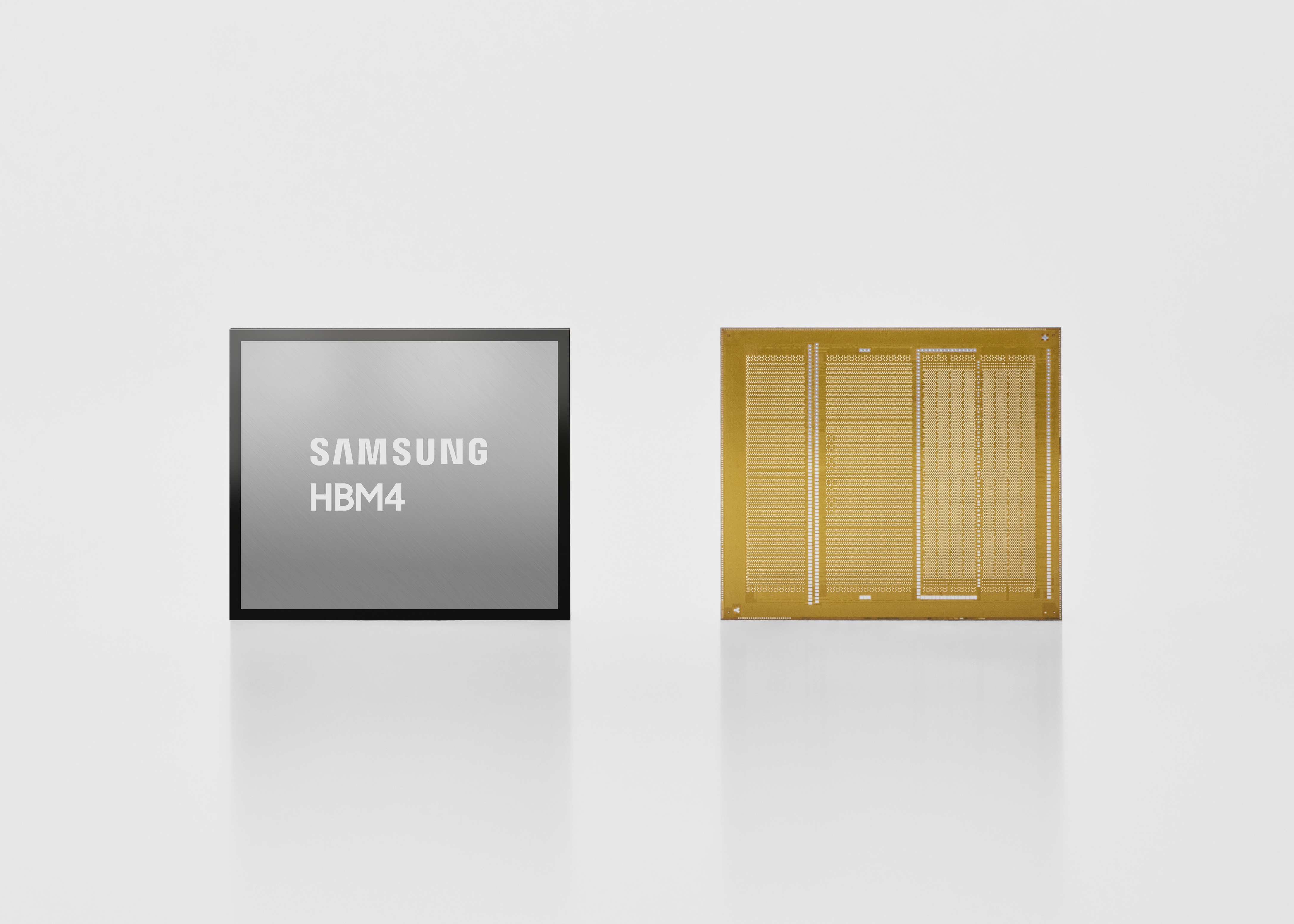
The reason conventional DRAM is tight has little to do with conventional DRAM demand. It's a byproduct of the AI buildout. High Bandwidth Memory (HBM) — the stacked DRAM used alongside AI accelerators — consumes far more silicon area per bit than standard DDR5, because of the way dies are stacked and bonded. Samsung has been racing to scale HBM4 output; the company said in February 2026 that it had begun shipping the industry's first commercial HBM4, built for AI computing workloads where bandwidth and power efficiency matter more than raw cost per gigabyte.
Every wafer redirected to HBM4 or AI-focused DDR5 is a wafer not making DDR4 or LPDDR4. Multiply that across Samsung, SK Hynix and Micron's combined share of the global DRAM market, and the shortfall in commodity memory becomes large enough that smaller suppliers like Nanya and Winbond can post the kind of year-over-year revenue growth — in the hundreds of percent — normally associated with a brand-new product category rather than legacy chips.
This is also why the shortage has proven so hard to forecast. Capacity decisions at the leading-edge fabs were largely locked in over a year ago, based on AI accelerator demand projections that themselves kept being revised upward through 2026. There is no quick way to convert idle DDR4 lines into HBM4 output, and converting the reverse — pulling capacity back from HBM4 to commodity DRAM — makes little financial sense for Samsung, SK Hynix or Micron while HBM margins remain so much higher. That leaves structural tightness in conventional DRAM as a multi-quarter condition rather than a temporary supply hiccup, which is precisely the environment Nanya and Winbond are now capitalizing on.
Where Samsung, SK Hynix and Micron fit into this picture
None of this week's news changes what the big three memory makers have already disclosed. Micron reported record fiscal Q4 2026 revenue of $54.23 billion in its September 30 earnings release, with chairman and CEO Sanjay Mehrotra telling investors the company expects "an even stronger fiscal 2027." Samsung and SK Hynix have both pushed DRAM contract prices higher through the first three quarters of 2026 as part of the same AI-driven shortage. Micron's own Q4 numbers already captured that part of the story in detail.
What's new this week is confirmation that the price pressure isn't confined to the top three. It has pushed deep enough into the supply chain that mid-sized, historically lower-margin DRAM makers are now logging gross margins and revenue growth rates that rival — and in some recent quarters have exceeded — those of the industry's largest players, simply because they're the ones left making the parts everyone still needs.
DRAM price trajectory through 2026
| Quarter | Reported/projected DRAM ASP move | Source |
|---|---|---|
| Q1 2026 | Samsung DRAM ASP up roughly 90% QoQ | TrendForce / industry reporting |
| Q2 2026 | Nanya DRAM ASP up more than 60% QoQ; Samsung up further ~50% | Nanya Q2 results; TrendForce |
| Q3 2026 | Samsung sought ~20% ASP increase; broader contract DRAM up ~13–18% QoQ | TrendForce Q3 forecast |
| Q4 2026 (projected) | Nanya ASP +~10% QoQ; Winbond +8–13% QoQ; conventional DRAM contracts +10–15% QoQ | TrendForce, October 6, 2026 |
The pattern across the table is consistent: every quarter of 2026 has brought another contract-price increase, and the increases keep compounding on top of each other rather than resetting. A part that cost a given amount in December 2025 has, by most industry estimates, gone up well over 100% in contract pricing since, before Q4's projected 10% to 15% move is even applied.
Who actually pays for this
Contract DRAM pricing flows through to consumers with a lag of roughly one to two quarters, depending on how much finished-goods inventory PC makers, module brands and device OEMs are carrying. Desktop and laptop memory, pre-built PCs, game consoles, networking hardware and even some smartphones all draw on the same pool of DDR4/DDR5 and LPDDR4/5X wafers that Nanya, Winbond, Samsung, SK Hynix and Micron are now rationing through long-term agreements. The upcoming DDR6 transition is unlikely to relieve near-term pricing, since early DDR6 output will itself compete for the same leading-edge wafer capacity currently earmarked for HBM4 and DDR5.
For anyone shopping for a memory upgrade or a new system in the next few months, the practical takeaway from this week's numbers is that waiting for DRAM prices to soften before 2027 looks increasingly unlikely based on supplier guidance. Long-term agreements covering the bulk of Nanya's and Winbond's output mean there is little spot-market supply left to absorb extra retail demand without pushing prices up further.
It's also worth separating contract pricing — what TrendForce tracks and what module makers pay memory manufacturers — from retail shelf pricing, which can move faster in either direction depending on channel inventory and promotional timing. Processor pricing has faced its own Q4 2026 pressures from the same AI-driven capacity crunch, and when both CPU and memory costs rise together, system builders and OEMs have historically passed the combined increase through to finished-PC pricing within one to two sales cycles rather than absorbing it indefinitely.
What's next
Nanya Technology is scheduled to hold its third-quarter 2026 earnings conference on October 12, which should give analysts a first direct read on how much of the projected Q4 ASP increase is already locked into contracts versus still being negotiated. Winbond's own Q3 results call typically follows within weeks. Beyond that, watch for Samsung's, SK Hynix's and Micron's Q4 calendar-year and fiscal-quarter updates, due later in the quarter, to confirm whether the 10% to 15% conventional-DRAM contract increase TrendForce is projecting actually holds — or accelerates further if AI server demand keeps outpacing the bit-supply growth memory makers are currently planning for.
Frequently asked questions
Why did Nanya Technology and Winbond post record revenue in September 2026?
Both Taiwanese chipmakers filed unaudited revenue disclosures on October 5, 2026: Nanya reported NT$45.09 billion (up 576.62% year over year) and Winbond reported NT$28.25 billion (up 256.67% year over year). TrendForce attributes the records to tight DRAM supply, since both companies have become key suppliers of DDR4 and specialty memory as Samsung, SK Hynix and Micron shift capacity toward HBM and DDR5.
How much are DRAM prices expected to rise in Q4 2026?
TrendForce's October 6, 2026 report projects Nanya's DRAM average selling price will rise about 10% quarter over quarter in Q4 2026, Winbond's roughly 8% to 13%, and the broader conventional DRAM contract market 10% to 15% quarter over quarter.
Why aren't Samsung, SK Hynix and Micron making more conventional DRAM?
The three largest memory makers have been reallocating wafer capacity to HBM (used with AI accelerators) and DDR5, which carry higher margins amid AI data-center demand. That has left commodity DDR4 and LPDDR4 supply tighter, benefiting smaller suppliers like Nanya and Winbond.
Will the upcoming DDR6 standard ease DRAM prices?
Not in the near term. Early DDR6 production will compete for the same leading-edge wafer capacity currently prioritized for HBM4 and DDR5, so its arrival is not expected to relieve DDR4 or DDR5 pricing pressure before 2027.
When will Nanya and Winbond report full third-quarter 2026 results?
Nanya Technology has scheduled its third-quarter 2026 earnings conference for October 12, 2026. Winbond typically holds its own quarterly results call within a few weeks of Nanya's.
Are these September revenue figures final?
No. Both Nanya's and Winbond's October 5 filings describe the figures as unaudited internal data, pending confirmation in each company's formal quarterly financial statements.
Sources
- TrendForce: Nanya DRAM ASP Seen Rising 10% in 4Q26; Winbond Also Sees Further Price Gains as Memory Supply Stays Tight (Oct. 6, 2026)trendforce.com
- Nanya Technology IR: September 2026 Revenue Disclosure (Oct. 5, 2026)nanya.com
- Winbond Electronics: Monthly Revenue Announcement for September 2026winbond.com
- Samsung Newsroom: Samsung Ships Industry-First Commercial HBM4 With Ultimate Performance for AI Computingnews.samsung.com
- Micron Technology: Fiscal Fourth Quarter and Full Year 2026 Results Press Releasemicron.gcs-web.com
- Wikipedia: High Bandwidth Memoryen.wikipedia.org
Mara Lindqvist edits the hardware desk. She covers graphics cards, processors, memory and storage, the foundries and chip designers behind them, and what the numbers on a spec sheet mean for people choosing a PC. Specifications in her stories come from manufacturer spec pages and datasheets.