Steam Hardware Survey: What GPU Most Gamers Have (Sept 2026)
Valve's fresh September 2026 telemetry reveals the GPU, CPU tier, OS, resolution and VR headset most PC gamers actually use on Steam right now.
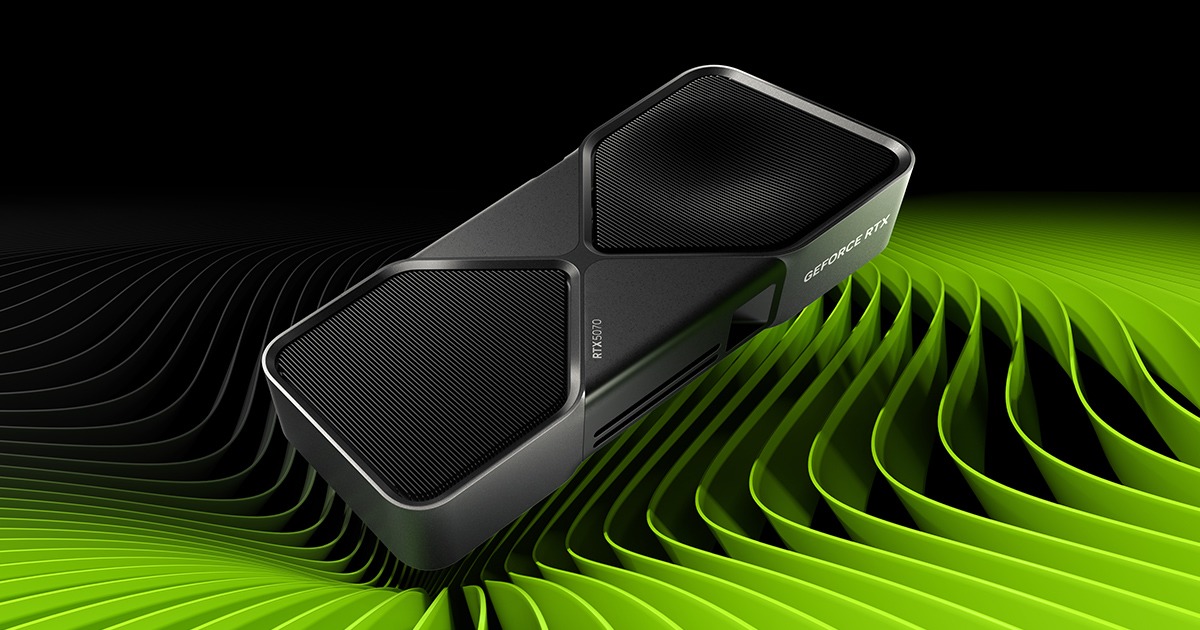
Valve's September 2026 Steam Hardware & Software Survey is out, and the telemetry from millions of PCs shows the same GPU on top for another month: the NVIDIA GeForce RTX 5070, now on 5.86% of surveyed systems. Windows 11 64-bit remains the dominant operating system at 71.34%, 1920x1080 is still the most common monitor resolution at 47.91%, and just 1.35% of Steam users report an attached VR headset — with Meta Quest 3 the single most common model among them. Here is what the official Valve survey actually shows, broken down by GPU, CPU tier, operating system, resolution and VR headset.
- Top GPU: NVIDIA GeForce RTX 5070 — 5.86% of systems
- Top OS: Windows 11 64-bit — 71.34% (Windows 10 64-bit: 23.61%)
- Top resolution: 1920x1080 — 47.91%
- Most common CPU core count: 8 cores — 30.06% of systems
- VR headset adoption: 1.35% of all Steam users
- Top VR headset: Meta Quest 3 — 26.90% of VR users
What is the Steam Hardware & Software Survey?
The Steam Hardware & Software Survey is Valve's own monthly telemetry report, pulled from an opt-in sample of the PCs that run the Steam client. Each month, a subset of users is anonymously polled for their GPU, CPU, RAM, operating system, display resolution, and connected VR hardware, and Valve publishes the aggregated percentages at store.steampowered.com/hwsurvey. Because Steam has hundreds of millions of active accounts, it is the closest thing the PC gaming industry has to a real-time census of what hardware gamers actually own, as opposed to what review sites and marketing cycles might suggest. Game developers, driver teams at NVIDIA, AMD and Intel, and hardware journalists all treat the monthly refresh as a baseline sanity check on their assumptions about the installed base.
It is not a perfect sample — it skews toward users who leave the survey opt-in enabled, and multi-GPU or rapidly upgrading households can shift month to month — but the scale of the sample and Valve's consistent year-over-year methodology make the trend lines meaningful even when any single monthly swing should be read cautiously.
The most common GPU on Steam right now: RTX 5070
For September 2026, the single most-used graphics card among surveyed Steam users is the GeForce RTX 5070, sitting at 5.86% of the sample and up 2.30 percentage points month over month — the largest single-card gain on the list. That jump lines up with the RTX 5070 being NVIDIA's current mainstream Blackwell-generation pick: a 12GB GDDR7 card priced to replace the last generation's most popular tiers, and it is now doing exactly that in the survey data.
What stands out beyond the top slot is how fragmented the rest of the chart still is. No other individual card cracks 4.5%, and the top ten is a mix of current RTX 50-series parts and still-common RTX 40-series and even RTX 30-series cards that remain in heavy use. That split is the clearest evidence in the survey that most PC gamers are not on the newest hardware generation at any given time — they are spread across three or four GPU generations that are all still actively played on.
Top 10 GPUs on Steam, September 2026
Ranked by the share of the overall survey each individual GPU model holds, including the month-over-month change Valve reports alongside each entry:
| Rank | GPU | Share | Month-over-month |
|---|---|---|---|
| 1 | GeForce RTX 5070 | 5.86% | +2.30 |
| 2 | GeForce RTX 5060 | 4.20% | +1.22 |
| 3 | GeForce RTX 5060 Ti | 3.87% | +1.46 |
| 4 | GeForce RTX 4060 | 3.72% | +0.30 |
| 5 | GeForce RTX 3060 | 3.54% | -0.22 |
| 6 | GeForce RTX 4060 Laptop GPU | 3.35% | -0.28 |
| 7 | GeForce RTX 3050 | 2.77% | -0.27 |
| 8 | GeForce RTX 4060 Ti | 2.73% | +0.48 |
| 9 | GeForce RTX 5060 Laptop GPU | 2.33% | -0.17 |
| 10 | GeForce RTX 5080 | 1.89% | +0.27 |
Every single card in the top ten is an NVIDIA GeForce model. Valve's public survey page does not publish a single rolled-up "NVIDIA vs AMD vs Intel" vendor-share figure the way it used to in older versions of the tool, but the individual model rankings make the picture clear on their own: NVIDIA occupies the entire top ten for September 2026, with no AMD Radeon or Intel Arc card appearing until further down the full list.
Reading the GPU tiers: mainstream over flagship
Looking at the top ten as a group rather than card-by-card, the pattern is unmistakable: this is a mainstream-to-midrange market, not a flagship one. The RTX 5070, RTX 5060, RTX 5060 Ti and RTX 4060-family cards together account for roughly a fifth of the entire survey, while halo-tier cards like the RTX 5080 just scrape into tenth place at under 2%. Readers curious whether a step up to the next tier is worth it can see how the closely related RTX 5070 Ti stacks up against AMD's rival card in our RTX 5070 Ti vs RX 9070 XT comparison. But per Valve's own numbers, the typical Steam gamer's card sits well below flagship territory.
Not sure which card is actually inside your own PC before comparing it against this list? Our guide on how to check what graphics card you have on Windows, Mac and Linux walks through the built-in tools on each platform.
It is also worth noting what is missing from the very top of the chart. Despite heavy marketing attention on the RTX 5090 and RTX 5080 Super as the generation's showcase parts, neither cracks the top ten by individual share — a reminder that flagship launches move review-site headlines far more than they move the actual installed base, at least in the months right after release. The survey's lesson for anyone building a game or optimizing for "the average Steam PC" is to target the 60-class and midrange-60 Ti tier first, since that is where the bulk of active players actually sit this month.
What CPU-speed tier most gamers run
On the processor side, Valve's survey breaks results out by both core count and clock-speed band rather than by individual CPU model. By core count, 8-core CPUs are now the single most common configuration at 30.06% of systems, followed closely by 6-core chips at 27.23%. Together, 6- and 8-core processors account for well over half of all Steam gamers' CPUs, confirming that mid-range core counts, not high-core-count enthusiast chips, dominate the installed base. Only 2.78% of surveyed systems report 24 cores, the kind of count found on the highest-end desktop and workstation-class chips.
By clock speed, the most common band is 2.3–2.69GHz at 19.48% of the sample, ahead of 3.3–3.69GHz at 11.96% and 2.7–2.99GHz at 7.92%. That lower-clocked band leading the pack reflects how much of the survey is made up of laptop CPUs and efficiency-tuned desktop chips that run at lower base clocks with higher boost headroom, rather than a sign that gamers are running slow hardware — base clock bands on modern CPUs understate real-world gaming performance, since most chips boost well above their listed base frequency under load.
The practical takeaway for anyone wondering whether their own setup is "behind": the data says no, probably not. A 6- or 8-core processor paired with a 60-class or 60 Ti-class GPU running 1080p or 1440p on Windows 11 is not a compromise build in September 2026 — per Valve's own numbers, it is the single most representative Steam gaming PC that exists.
Windows 11 vs Windows 10 vs macOS vs Linux
Operating system share continues to tilt further toward Windows 11. The September 2026 breakdown:
| Operating system | Share | Month-over-month |
|---|---|---|
| Windows 11 (64-bit) | 71.34% | +0.37 |
| Windows 10 (64-bit) | 23.61% | +0.71 |
| Linux (combined) | 3.05% | -0.85 |
| macOS (combined) | 1.92% | -0.22 |
Combined, Windows in all versions accounts for 95.03% of surveyed systems, up 1.08 points for the month. Windows 10 actually ticked up slightly too (+0.71), which is a reminder that even with Windows 11 the clear majority OS, a meaningful chunk of the Steam base — nearly a quarter — has not moved off the previous version. Linux's combined share slipped 0.85 points this month to 3.05%, while macOS held essentially flat at 1.92%, continuing to be a small but persistent sliver of the Mac gaming audience that plays through Steam.
What resolution most Steam gamers actually play at
1920x1080 remains the single most common primary display resolution on Steam at 47.91% of the survey, even though that is down 2.61 points month over month. The clearest beneficiary of that shift is 1440p: 2560x1440 climbed 5.18 points to 27.04%, by far the largest resolution move in the whole September 2026 dataset. Further down the list, 4K (3840x2160) sits at 4.79%, 2560x1600 (common on higher-end laptop and ultrawide-adjacent panels) is at 5.22%, and the 3440x1440 ultrawide format holds 2.91%. Read together, roughly three in four Steam gamers are still playing at 1080p or 1440p, with 4K and ultrawide formats still a small minority of the installed base despite years of monitor upgrades being marketed around them.
VR on Steam: adoption and the most popular headset
VR remains a niche slice of the overall Steam audience: Valve's survey puts total VR headset adoption at 1.35% of all users, down 0.14 points for the month. Among the users who do report a headset, Meta Quest 3 is the single most common model at 26.90% of VR users (up 0.89 points), narrowly ahead of the older Oculus Quest 2 at 25.80% (down 1.17 points) as that device's owner base continues to age out. Meta Quest 3S sits third at 11.07%, with the Valve Index close behind at 10.83%, still a relevant chunk of the PC-native VR audience years after its original release. Pico 4 (4.76%), Oculus Rift S (3.40%), Sony PS VR2 (2.31%), HTC Vive (2.26%), Windows Mixed Reality headsets (1.85%) and the original Oculus Rift (1.80%) round out the rest of the list.
Meta hardware — Quest 3, Quest 2 and Quest 3S combined — now accounts for well over 60% of all VR headsets reported on Steam, underlining how much the standalone, PC-tethered-capable Quest line has come to dominate PC VR even though it was not originally built as a PC-first device. Valve's own next VR push, detailed in our Steam Frame explainer, is worth watching for whether it can meaningfully move this still-tiny 1.35% adoption number in future surveys.
Why these numbers move the way they do
A few structural forces explain most of the month-to-month shifts in this kind of data. New GPU launches show up as fast risers before plateauing — exactly what is happening with the RTX 5070 and RTX 5060 Ti this month — because early adopters who run Steam surveys skew toward recently built or recently upgraded systems. Laptops make up a large and growing share of any monthly sample, which is part of why lower CPU clock-speed bands and 1080p/1440p resolutions remain so dominant: thin-and-light gaming laptops rarely ship with the highest-end desktop silicon or 4K panels. And because the survey is opt-in and self-selecting, Valve's own guidance has long been to treat single-month swings as noisy and focus on the trend across several consecutive surveys, which is why this article reports both the current share and the month-over-month change Valve itself publishes for each entry.
That caution also applies to reading too much into any single operating system or VR figure. Windows 10's modest gain this month, for instance, is well within the kind of noise a self-selecting opt-in sample can produce from one survey wave to the next, and VR's 1.35% adoption figure has hovered in a similarly narrow band for a long stretch of prior surveys rather than trending sharply in either direction. The more reliable signal is the one this article leads with: which individual products and tiers consistently sit at the top of the chart month after month, not which ones moved a fraction of a point in any single 30-day window.
What's next: October's survey and the trends to watch
Valve typically refreshes the Steam Hardware & Software Survey in the first days of the following month, so the October 2026 edition covering the current month's data should land in early November. Three threads from this release are worth tracking into that next update: whether the RTX 5070's sharp 2.30-point jump keeps accelerating or starts to plateau the way earlier generational leaders have; whether 2560x1440's 5.18-point surge continues eating into 1080p's long-standing lead or settles back down; and whether Windows 10's slight uptick this month was a one-off blip or the start of a slower-than-expected migration curve toward Windows 11 as Windows 10's support window keeps closing. None of those are guaranteed outcomes — they are simply the lines in this month's official data most likely to move the needle next time Valve publishes.
Frequently asked questions
What is the most common GPU on Steam right now?
Per Valve's September 2026 Steam Hardware Survey, the NVIDIA GeForce RTX 5070 is the single most common graphics card, found on 5.86% of surveyed systems, up 2.30 percentage points from the prior month.
Is Windows 11 or Windows 10 more popular with Steam gamers?
Windows 11 64-bit leads by a wide margin at 71.34% of Steam users, compared with 23.61% still on Windows 10 64-bit. Combined, all versions of Windows account for 95.03% of the survey.
What screen resolution do most Steam gamers use?
1920x1080 remains the most common primary resolution at 47.91%, though it fell 2.61 points this month as 2560x1440 climbed 5.18 points to 27.04%, the largest resolution shift in the September 2026 survey.
What percentage of Steam users have a VR headset?
Just 1.35% of all surveyed Steam users report an attached VR headset, according to Valve's September 2026 data, down 0.14 points from the previous month.
Which VR headset is most popular on Steam?
Meta Quest 3 is the most common VR headset among Steam's VR users, at 26.90% of that group, narrowly ahead of the older Oculus Quest 2 at 25.80%.
How often does Valve update the Steam Hardware Survey?
Valve refreshes the Steam Hardware & Software Survey roughly once a month, typically publishing the prior month's aggregated data in the first few days of the following month.
Sources
- Steam Hardware & Software Survey, September 2026 (Valve)store.steampowered.com
- GeForce RTX 5070 Family (NVIDIA)nvidia.com
- Windows 11 (Microsoft)microsoft.com
- Meta Quest 3 (Meta)meta.com
- Valve Index VR Kit (Steam Store)store.steampowered.com
Mara Lindqvist edits the hardware desk. She covers graphics cards, processors, memory and storage, the foundries and chip designers behind them, and what the numbers on a spec sheet mean for people choosing a PC. Specifications in her stories come from manufacturer spec pages and datasheets.