Ryzen AI Max+ PRO 495 vs Ryzen AI Max+ 395: Specs Compared
AMD's Ryzen AI Max+ PRO 495 adds 192GB memory support and a faster NPU to the Ryzen AI Max+ 395 formula. Here's exactly what changed, and who each chip is for.
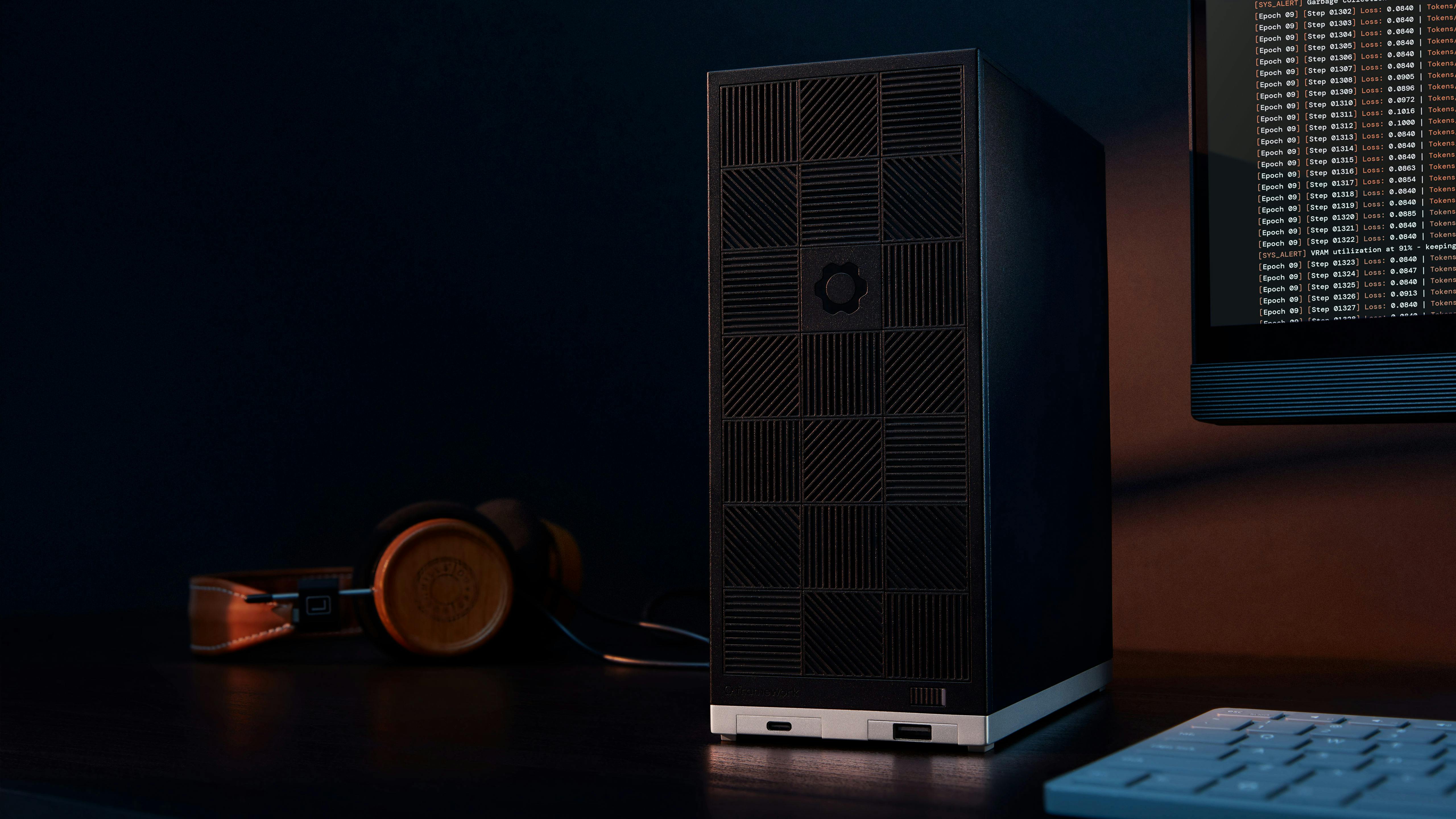
AMD's Ryzen AI Max+ PRO 495 and Ryzen AI Max+ 395 share the same 16-core "Zen 5" CPU, the same 40-compute-unit integrated GPU design and the same XDNA 2 NPU — but the PRO 495 is clocked slightly higher, rated for slightly more NPU and total AI throughput, and, critically, is the only one of the two that AMD and Framework currently qualify for 192GB of unified memory, against a 128GB ceiling for the 395. Framework's new 192GB Desktop configuration, which we covered when it launched, is built entirely on the PRO 495; every existing 395-based system, including the original Framework Desktop, tops out at 128GB.
Quick answer: Ryzen AI Max+ PRO 495 and Ryzen AI Max+ 395 are the same 16-core/32-thread Zen 5 "Strix Halo" silicon family. The PRO 495 runs a touch faster (3.1GHz/5.2GHz vs 3.0GHz/5.1GHz), carries a Radeon 8065S GPU instead of the 8060S (both 40 CUs), and is AMD- and Framework-qualified for up to 192GB of LPDDR5x-8533 memory versus 128GB of LPDDR5x-8000 on the 395. NPU throughput is 55 TOPS on the PRO 495 versus 50 TOPS on the 395 (132 vs 126 TOPS total platform AI performance). Both ship in the Framework Desktop; the PRO 495/192GB configuration starts at $6,799 for the DIY Edition.
What these two chips actually are
Ryzen AI Max+ 395 and Ryzen AI Max+ PRO 495 both belong to AMD's "Strix Halo" family — big APUs that pair a full desktop-class CPU and GPU with a large, fast pool of shared LPDDR5x memory, built specifically to run local large language models without a discrete GPU. The non-PRO 395 launched first, in late 2024, as the top part of AMD's consumer Ryzen AI Max line and is the chip Framework originally used in the standard Framework Desktop. The PRO 495 is the business-line counterpart that debuted through Framework's new 192GB Desktop configuration; it is built on the same silicon but validated for a larger memory pool and sold as part of AMD's commercial Ryzen AI Max PRO 400 Series.
Both chips use a three-die package on TSMC's 4nm process, and both are what AMD calls "Gorgon Halo" or "Strix Halo" derivatives depending on the marketing name used at the time. The headline difference for buyers isn't architecture — it's memory qualification, clocks, and which systems each one actually ships in.
One quirk worth flagging: AMD's own site files the Ryzen AI Max+ 395 under its laptop processor pages, while the PRO 495 sits under its Ryzen PRO commercial-laptop line. That reflects how AMD designed this silicon family — for thin, high-performance laptops and small-form-factor systems where a discrete GPU and separate VRAM aren't practical — rather than any difference specific to how Framework happens to use the chips. Framework takes "laptop" silicon and puts it in a 4.5-liter desktop chassis with active cooling, which is why both chips can sustain higher power limits in the Framework Desktop than they might in a thin-and-light notebook; other manufacturers sell the same chips in actual laptops and mini PCs.
CPU: identical core count, a small clock bump
According to AMD's own spec pages, both chips use 16 "Zen 5" cores with simultaneous multithreading for 32 threads, backed by 16MB of L2 cache and 64MB of L3 cache. The Ryzen AI Max+ PRO 495 runs a 3.1GHz base clock with a maximum boost of 5.2GHz. The Ryzen AI Max+ 395 is rated at a 3.0GHz base and 5.1GHz max boost. That's a 100MHz gap on both ends — a real but minor difference that AMD's own figures suggest is mostly clock-driven rather than architectural, since core count, cache and SMT are identical between the two parts.
NPU and total AI throughput
Both chips use AMD's XDNA 2 neural processing unit, but AMD publishes different TOPS ratings for each. The PRO 495's spec sheet lists NPU performance of up to 55 TOPS and combined CPU+GPU+NPU platform performance of up to 132 TOPS, with FP16 AI compute rated up to 61 TFLOPS. The 395's spec sheet lists up to 50 TOPS from the NPU alone, up to 126 TOPS combined, and up to 60 TFLOPS of FP16 compute. In other words, the PRO 495 is rated roughly 10% higher on NPU throughput and about 5% higher on total platform AI performance — consistent with its higher clocks rather than a different NPU design.
Integrated GPU: same CU count, different model number
Graphics are where the two chips carry different model names despite near-identical hardware. The PRO 495 pairs with AMD's Radeon 8065S, while the 395 pairs with the Radeon 8060S — both are 40-compute-unit RDNA designs from the same generation, and AMD's own documentation describes the 8060S as an RDNA 3.5 part. The practical distinction AMD publishes is clock speed: the 8065S tops out at 3000MHz versus 2900MHz for the 8060S, a roughly 3.4% bump. Neither chip adds CUs over the other; this is the same integrated GPU design running slightly hotter clocks on the PRO part.
Memory: 192GB vs 128GB is the real split
This is the one spec where the two chips genuinely diverge, and it's also the reason the PRO 495 exists as a distinct SKU rather than just a higher binned 395. AMD's spec page lists the Ryzen AI Max+ PRO 495's maximum supported memory as 192GB over a 256-bit LPDDR5x-8533 interface. The 395's own spec page caps out at 128GB over the same 256-bit bus width, running LPDDR5x-8000 — a slightly slower memory speed as well as a lower capacity ceiling.
AMD's chip pages don't publish a bandwidth figure directly for either part, but the numbers are derivable from the published bus width and speed, and Framework — which builds the only systems currently shipping each chip — confirms both ends directly. Framework's own 192GB Desktop announcement states 273GB/s of memory bandwidth for the PRO 495 configuration at LPDDR5x-8533, while the 395-based Desktop's LPDDR5x-8000 memory works out to the 256GB/s that AMD's own 395 developer-platform documentation lists for that configuration. So the PRO 495 is faster in raw bandwidth as well as larger in capacity — roughly a 7% bandwidth increase on top of 50% more addressable memory.
Because memory is unified and shared between CPU, GPU and NPU on both chips, capacity is what determines how large a model you can load, not just how fast you can run it. A 128GB system can comfortably hold large quantized models in the tens of billions of parameters; Framework's own example for the 192GB PRO 495 configuration is DeepSeek-V4.1-Flash at Q2 quantization, which alone occupies well over 160GB, leaving little headroom on a 128GB machine but room to spare at 192GB.
Power envelope: both configurable, PRO 495 pushed slightly higher in practice
AMD lists an identical default/configurable TDP range for both chips on its own spec sheets: a 55W default with a configurable range of 45W to 120W. On paper, then, the two chips share a power envelope. In practice, Framework's own configurator for the Framework Desktop lists the PRO 495 configuration running at a 120W sustained power level with a 140W boost limit — at the very top of, and briefly above, AMD's published configurable range — while the standard 395-based Desktop ships at lower sustained power targets. That's a system-level tuning choice by Framework rather than a different chip spec, but it means the PRO 495, as actually sold today, draws more power than a typical 395 system.
Side-by-side spec comparison
| Spec | Ryzen AI Max+ PRO 495 | Ryzen AI Max+ 395 |
|---|---|---|
| CPU cores / threads | 16 / 32 (Zen 5) | 16 / 32 (Zen 5) |
| Base clock | 3.1GHz | 3.0GHz |
| Max boost clock | Up to 5.2GHz | Up to 5.1GHz |
| L2 / L3 cache | 16MB / 64MB | 16MB / 64MB |
| Integrated GPU | Radeon 8065S, 40 CUs, up to 3000MHz | Radeon 8060S, 40 CUs, up to 2900MHz |
| NPU | XDNA 2, up to 55 TOPS | XDNA 2, up to 50 TOPS |
| Total platform AI performance | Up to 132 TOPS | Up to 126 TOPS |
| FP16 AI compute | Up to 61 TFLOPS | Up to 60 TFLOPS |
| Max. memory | 192GB LPDDR5x-8533 | 128GB LPDDR5x-8000 |
| Memory bus | 256-bit | 256-bit |
| Memory bandwidth | 273GB/s (Framework-stated) | 256GB/s |
| Default / configurable TDP | 55W / 45–120W | 55W / 45–120W |
| Process / packaging | TSMC 4nm, 3-die package | TSMC 4nm |
| Where sold (as of writing) | Framework Desktop (192GB config), from $6,799 | Framework Desktop (up to 128GB) and other Ryzen AI Max+ mini PCs/laptops |
Which systems and buyers each chip is aimed at
AMD positions the two parts for different markets even though the hardware is so close. The 395 is sold as part of the consumer Ryzen AI Max line, and it's the chip behind the broadest range of products: the original Framework Desktop, several mini PCs, and AI-focused laptops, generally capped at 128GB of memory. That's plenty for running most open-weight models up to roughly 70B parameters at reasonable quantization, plus a desktop workload or a Linux dev environment on top, and it's the chip AMD and reviewers position as a local-AI-capable alternative to Nvidia's entry small-form-factor AI boxes — a comparison we laid out in detail when we weighed the Ryzen AI Max+ 395 against Nvidia's DGX Spark.
The PRO 495 is pitched squarely at memory-bound AI workstation use: running larger models, longer context windows, or multiple models at once, entirely on-device. Framework's launch material for the 192GB configuration leads with exactly that scenario — loading models like DeepSeek-V4.1-Flash that simply don't fit in 128GB — and even highlights clustering several PRO 495 systems together over USB4 or 50Gbps RoCE networking for tensor-parallel inference across machines, a workstation-and-small-cluster use case the 395 isn't marketed for. It's also, notably, a Linux-only proposition in Framework's current lineup: Framework does not offer a Windows configuration for the PRO 495 Desktop, while 395-based Desktops support both Windows and Linux.
Framework Desktop pricing and availability
Both chips currently reach consumers primarily through Framework's Framework Desktop line (Framework's standard mini-PC-vs-mini-PC comparisons, including how the Framework Desktop stacks up against Valve's Steam Machine, cover the chassis itself in more depth). The 192GB PRO 495 configuration is priced from $6,799 for the DIY Edition and $7,449 for the pre-built edition with Fedora Linux preinstalled, before tax and duties, per Framework's own configurator. Framework opened pre-orders for this configuration on September 30, 2026, citing constrained LPDDR5x memory inventory as the reason it's shipping only one initial batch; as of this writing, Framework's configurator shows the first two shipping batches sold out, with a further batch scheduled to ship in December. Framework has said pricing and availability for any additional batches will depend on memory costs, which have been climbing industry-wide.
By contrast, 395-based Framework Desktop configurations — including the 128GB maximum option — have been shipping and selling since the line's original 2025 launch and are not subject to the same single-batch constraint. Framework is not the exclusive seller of either chip: other system builders have shipped Ryzen AI Max+ 395-based mini PCs and laptops since 2024, while the PRO 495, as a newer commercial-line part, is so far confirmed only in Framework's 192GB Desktop configuration.
Bottom line
If you're choosing between the two chips rather than between two different computers, the decision mostly comes down to one question: do you need more than 128GB of unified memory? If not, the Ryzen AI Max+ 395 gets you effectively the same CPU, the same 40-CU GPU class, and NPU performance within about 10% of the PRO 495, in systems that are more widely available and, in Framework's case, available with Windows. If your workload — a specific large open-weight model, a long-context local chatbot, or multi-model serving — genuinely needs more than 128GB of addressable memory in one box, the PRO 495 is currently the only Ryzen AI Max+ part AMD and Framework qualify for 192GB, and the Framework Desktop is, as of this writing, the only shipping system built around it.
Both chips are drawn from the same underlying "Strix Halo" design, so neither is a generational leap over the other — this is a memory-tier and clock-speed split within one chip family, not two different platforms.
Frequently asked questions
What's the difference between the Ryzen AI Max+ PRO 495 and the Ryzen AI Max+ 395?
Both are 16-core/32-thread Zen 5 chips with a 40-compute-unit integrated GPU and an XDNA 2 NPU. The PRO 495 runs slightly higher clocks (3.1GHz/5.2GHz vs 3.0GHz/5.1GHz), is rated for higher NPU throughput (55 vs 50 TOPS), and is qualified for up to 192GB of memory versus 128GB on the 395.
Does the Ryzen AI Max+ PRO 495 support more memory than the 395?
Yes. AMD's spec sheets list a 192GB maximum for the PRO 495 versus 128GB for the 395, both over a 256-bit LPDDR5x bus. The PRO 495 also uses slightly faster LPDDR5x-8533 memory versus LPDDR5x-8000 on the 395.
Which chip has more NPU TOPS?
The PRO 495 is rated at up to 55 NPU TOPS and up to 132 TOPS of total platform AI performance. The 395 is rated at up to 50 NPU TOPS and up to 126 TOPS total, per AMD's own spec pages.
Can I buy a laptop with the Ryzen AI Max+ PRO 495, or only the Framework Desktop?
As of this writing, the only confirmed system shipping with the PRO 495 is Framework's 192GB Framework Desktop configuration. The Ryzen AI Max+ 395 has a wider footprint, appearing in the original Framework Desktop and other mini PCs and laptops from various manufacturers.
How much does the Framework Desktop with the PRO 495 cost?
Framework prices the 192GB PRO 495 configuration from $6,799 for the DIY Edition and $7,449 for the pre-built Edition with Fedora Linux preinstalled, before tax and duties.
Should I get the PRO 495 or the 395 for running local AI models?
If the models you want to run fit within 128GB, the 395 gets you nearly identical CPU, GPU and NPU performance at a lower cost and in more widely available systems. The PRO 495 is worth the premium mainly if you need the extra 64GB of memory headroom for larger models.
Sources
Mara Lindqvist edits the hardware desk. She covers graphics cards, processors, memory and storage, the foundries and chip designers behind them, and what the numbers on a spec sheet mean for people choosing a PC. Specifications in her stories come from manufacturer spec pages and datasheets.