Intel XeSS 3 Multi-Frame Generation: Supported GPUs, Explained
Intel's latest Arc driver confirms XeSS 3 Multi-Frame Generation now spans the full current Arc lineup, from 2022's Alchemist cards to the newest Panther Lake iGPUs.
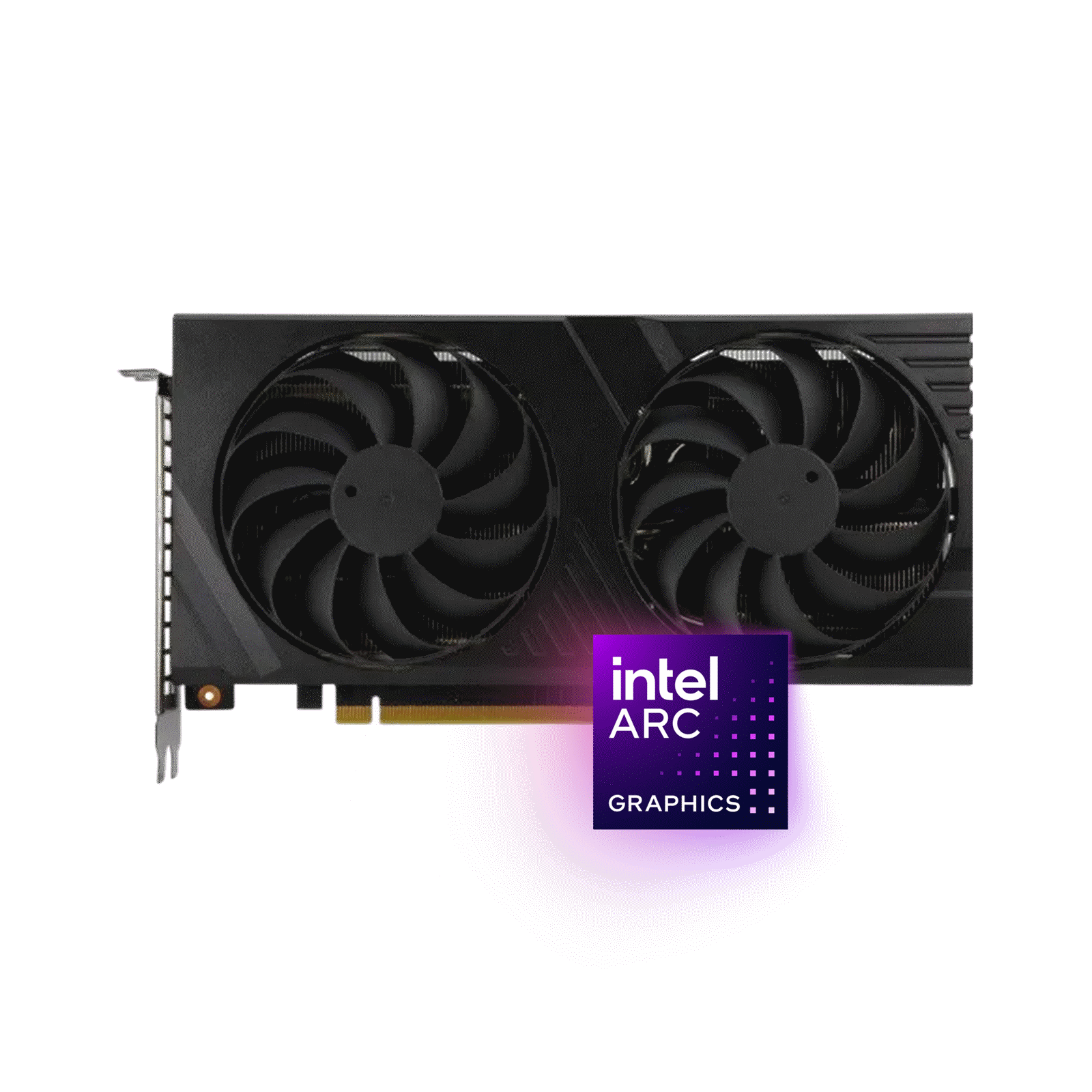
Intel's XeSS 3 Multi-Frame Generation (MFG) is no longer a Panther Lake exclusive. The feature, which can insert multiple AI-generated frames between every frame a game actually renders, is now listed as supported across Intel's current Arc Graphics lineup in the company's own driver documentation — from the Arc A-Series and B-Series discrete cards through the integrated Arc GPUs built into several generations of Core Ultra processors. The latest WHQL driver, version 32.0.101.9175, dated November 4, 2026, confirms that coverage and keeps shipping it as the baseline for every supported platform.
- Feature: XeSS 3 Multi-Frame Generation (MFG), part of the XeSS 3 suite alongside XeSS Super Resolution and Xe Low Latency
- What it does: Inserts extra AI-interpolated frames between rendered frames, with 2x, 3x and 4x modes
- First shipped on: Intel Core Ultra Series 3 (Panther Lake) integrated Arc B390/B370 graphics
- Now listed as supported on: Arc A-Series (Alchemist), Arc B-Series and Arc Pro B-Series (Battlemage), and integrated Arc graphics on Meteor Lake, Lunar Lake, Arrow Lake and Panther Lake
- Latest driver: 32.0.101.9175 WHQL, released November 4, 2026
What XeSS 3 Multi-Frame Generation actually does
XeSS is Intel's AI upscaling and frame-generation stack, and version 3 adds multi-frame generation on top of the single-frame generation that shipped with XeSS 2. According to Intel's own XeSS SDK documentation on GitHub, the suite is built from three pieces: XeSS Super Resolution (XeSS-SR) for AI upscaling, XeSS Frame Generation (XeSS-FG) for interpolating additional frames, and Xe Low Latency (XeLL) to keep input lag in check while those extra frames are being generated.
Multi-Frame Generation extends that frame-generation piece so the driver can produce more than one synthetic frame for every frame the GPU actually renders. Intel's Graphics Software lets players choose between 2x, 3x and 4x modes, meaning up to three AI-generated frames can appear for each real one, before the result is handed to the display. It is Intel's answer to Nvidia's multi-frame generation in DLSS 4 and sits ahead of AMD, which has not shipped an equivalent multi-frame mode in FSR as of this writing.
Because MFG builds on the existing XeSS Frame Generation path, Intel has said the feature does not require developers to patch existing XeSS 2 titles individually; Intel's Graphics Software can apply the override to any game that already implements XeSS 2 frame generation, though actual image quality and stability still depend on each title's own implementation.
From one laptop chip to the whole lineup
XeSS 3 MFG first shipped tied to a single platform: Intel's Core Ultra Series 3 (codename Panther Lake) and its built-in Arc B390 and B370 graphics. That exclusivity didn't last long. Driver trackers and hardware press subsequently logged Intel widening MFG support to Arc's discrete lineup in two further WHQL releases — one that is listed on Intel's own historical Arc graphics driver page as version 32.0.101.8425/8362 WHQL, and a subsequent one listed as 32.0.101.8509 WHQL that extended coverage to Arc A-Series (Alchemist) and B-Series (Battlemage) discrete GPUs plus additional integrated Arc generations. Intel's historical driver listing confirms both version numbers as genuine WHQL-certified releases, though it does not itself carry dated release notes for either build.
That expansion has stuck. The current driver, 32.0.101.9175 WHQL, lists the same broad hardware set in its supported-platforms table, meaning MFG eligibility hasn't been walked back as Intel has moved on to newer driver branches and newer "Game On" titles.
Which Arc GPUs and processors are covered
Intel's current driver release notes for build 32.0.101.9175 list the following hardware as supported by the driver branch that carries MFG:
| Platform | Codename | Examples |
|---|---|---|
| Intel Core Ultra Series 3 with built-in Arc graphics | Panther Lake | Arc B390, B370 integrated graphics |
| Intel Arc B-Series discrete graphics | Battlemage | Arc B580, B570 |
| Intel Arc Pro B-Series discrete graphics | Battlemage | Arc Pro B50, Pro B60, Pro B65, Pro B70 |
| Intel Core Ultra with built-in Arc graphics | Meteor Lake, Lunar Lake, Arrow Lake-S/H/U | Multiple Core Ultra SKUs |
| Intel Arc A-Series discrete and mobile graphics | Alchemist | Arc A770, A750, A580, A380, A310 and mobile/embedded variants |
| Intel Core Series 3 with built-in graphics | Wildcat Lake | Entry integrated graphics |
That list comes straight from the official release notes for driver 32.0.101.9175, Intel's current WHQL-certified Arc Graphics driver as published on its Arc & Iris Xe Graphics driver download page. The notes describe this as the platform coverage for the driver branch as a whole rather than calling out MFG by name in this specific build's highlights — MFG itself was introduced in earlier driver releases and has carried forward since.
The Arc B580, which launched at $249 in Q4 2024 with 12GB of GDDR6 on a 192-bit bus and 20 Xe-cores (Battlemage/Xe2), is the best-known card on that list and remains Intel's volume desktop GPU. Workstation buyers get the same MFG eligibility on the Arc Pro B-series cards built on the same silicon.
How to turn it on
For games that already ship their own XeSS 3 implementation, MFG typically appears as a frame-generation mode selector (2x/3x/4x) inside the game's own graphics settings, alongside the existing XeSS upscaling toggle. For older titles that only implemented XeSS 2 frame generation, Intel's Graphics Software (formerly Arc Control) includes an override that forces MFG on at the driver level, without the game needing a patch. As with any frame-generation technology, Intel recommends starting from a healthy base frame rate before adding generated frames, since MFG amplifies whatever latency and artifacts already exist in the underlying render.
Getting the feature at all starts with being on a current driver. Intel's Arc Graphics product page and its driver download page both point to the Intel Driver & Support Assistant or a manual download of the latest WHQL package as the supported path to update.
What's still rough around the edges
The November 4 release notes for driver 32.0.101.9175 list several game-specific issues that predate and sit alongside MFG support, rather than being caused by it directly. Fixed in this build: an intermittent crash in Planet Zoo 2 (DX12) on several Core Ultra generations after changing endurance-gaming settings, and incorrect texture rendering in Call of Duty: Modern Warfare 4 (DX12) on both Arc A-Series and B-Series cards. Still open as of this release: a tutorial-stage crash in Stalzone (OpenGL) across every supported platform, tree-shadow flickering in World of Warcraft Classic and World of Warcraft: Dragonflight when ray tracing is enabled, and an application crash loading into No Man's Sky (Vulkan) on Core Ultra Series 3 systems. Intel's Graphics Software Performance Tuning page also remains in beta, with the release notes flagging that fan-speed targets and shared-GPU-memory reporting may not reflect real values yet.
None of the open issues in this build are listed against MFG or XeSS itself, but anyone planning to lean on multi-frame generation in a specific title should check that title against Intel's current release notes first, since per-game compatibility is still being filled in game by game rather than guaranteed engine-wide.
How it stacks up against DLSS 4 and FSR
Nvidia was first to ship a true multi-frame-generation mode, as part of DLSS 4 alongside the GeForce RTX 50-series launch, generating up to three AI frames per rendered frame on RTX 50-series cards. AMD's FSR has shipped single-frame generation but, as of this writing, has not published an equivalent multi-frame mode of its own, leaving Intel as the second of the three major GPU vendors to ship a shipping multi-frame feature. The headline difference Intel is pointing to is hardware reach: where Nvidia's multi-frame DLSS 4 mode has so far been tied to the newest RTX 50-series silicon, Intel's driver-level documentation lists MFG as available on Arc hardware going back to the original Alchemist (A-Series) cards from 2022, not just the newest Battlemage and Panther Lake parts.
That breadth comes with a caveat worth repeating: driver-level availability is not the same as per-game validation. A feature being listed as supported on a GPU means the driver can expose the override; whether a specific game looks and feels good with 3x or 4x generation turned on is still determined title by title, and Intel's own release notes keep adding and removing per-game caveats with nearly every build. Readers comparing frame-generation claims across vendors should treat vendor-published "supported hardware" lists and independent, game-by-game testing as two different questions.
What else is in the November 4 driver
Driver 32.0.101.9175 isn't solely about MFG continuity. Intel's release notes list it as adding "Game On" driver-level support for three titles at launch: Football Manager 27, Phantom Blade Zero and World of Warcraft: Forever, across Arc B-Series, A-Series and Core Ultra integrated GPUs alike. The package bundles the graphics driver itself alongside the Intel Media SDK Runtime, the Intel oneVPL GPU Runtime, the Graphics Compute Runtime for OpenCL, a Vulkan runtime installer, the Arc Software & Drivers installer/uninstaller, oneAPI Level Zero components, the Intel Graphics Software installer and the Intel Driver & Support Assistant — the same bundle structure Intel has shipped with recent WHQL releases. Supported operating systems span Windows 11 24H2/25H2/26H2 and Windows 10 22H2, with DirectX 12, Vulkan 1.4, OpenGL 4.6 and OpenCL 3.0 listed as the supported API baseline on 11th Generation Core processors and newer.
Why this matters for Arc buyers
Frame generation has become one of the headline features buyers compare when shopping a midrange GPU, alongside raw performance and price — a trend visible in how shoppers have been comparing this year's Black Friday GPU deals across brands. Having MFG available on the $249 Arc B580 and on older Arc A-Series cards gives Intel a feature parity argument it didn't have a year ago, when frame generation of any kind was mostly a Nvidia talking point. Driver-level maturity matters too: Intel has had a rockier driver history than Nvidia or AMD on long-tail game compatibility, a dynamic also visible in how closely Intel's own GPU driver releases get tracked industry-wide for day-one game support.
It's also a software story as much as a hardware one. Because MFG is delivered through the driver and Intel's Graphics Software rather than requiring a new GPU generation, every Arc buyer going back to the original Alchemist cards gets to try it — a contrast with frame-generation features on competing platforms that have sometimes been limited to newer silicon.
What's next
Watch for two things from here. First, per-game XeSS 3 coverage: Intel's driver-level override makes MFG technically available in any XeSS 2 title, but developers still need to validate it, and early testing of titles patched for XeSS 3 has turned up mixed results industry-wide, so expect Intel's release notes to keep growing with new game-specific fixes and caveats release after release. Second, keep an eye on Intel's driver cadence itself: 32.0.101.9175 is the current WHQL baseline as of mid-November, and Intel has historically shipped follow-up WHQL builds every few weeks, each one a candidate to expand Game On support, fix the open issues above, or extend MFG to whatever new Arc hardware ships next.
Frequently asked questions
What is Intel XeSS 3 Multi-Frame Generation?
It's a frame-generation mode in Intel's XeSS 3 upscaling suite that inserts multiple AI-generated frames between each frame a game actually renders, with 2x, 3x and 4x modes selectable in Intel Graphics Software.
Which Intel Arc GPUs support XeSS 3 MFG?
Intel's current driver release notes list it as supported on Arc A-Series (Alchemist) and B-Series/Pro B-Series (Battlemage) discrete cards, plus integrated Arc graphics on Meteor Lake, Lunar Lake, Arrow Lake and Panther Lake Core Ultra processors.
Do I need a game patch to use Multi-Frame Generation?
Not necessarily. Intel's Graphics Software can apply an MFG override to any game that already supports XeSS 2 frame generation, though actual results still vary by title.
What's the latest Intel Arc graphics driver?
As of this writing, the current WHQL-certified driver is version 32.0.101.9175, released November 4, 2026, available from Intel's official Arc & Iris Xe Graphics driver download page.
How does XeSS 3 MFG compare to Nvidia DLSS 4 and AMD FSR?
Nvidia shipped multi-frame generation first with DLSS 4, tied to RTX 50-series cards. AMD's FSR has not shipped an equivalent multi-frame mode. Intel's MFG is notable for being listed as available on Arc hardware going back to 2022's Alchemist cards, not just its newest GPUs.
Are there known issues with the latest Arc driver?
Yes. Intel's November 4 release notes list open issues including a Stalzone crash after the tutorial, World of Warcraft tree-shadow flickering with ray tracing on, and a No Man's Sky crash on Core Ultra Series 3 systems, none of which are tied to MFG itself.
Sources
- Intel Arc & Iris Xe Graphics Driver for Windows (download page)intel.com
- Intel Arc Graphics Driver Release Notes, version 32.0.101.9175 WHQL (PDF)downloadmirror.intel.com
- Historical Intel Arc Graphics Driversintel.com
- Intel Arc Graphics product pageintel.com
- Intel XeSS SDK (GitHub)github.com
- Intel Arc B580 Graphics specificationsintel.com
Mara Lindqvist edits the hardware desk. She covers graphics cards, processors, memory and storage, the foundries and chip designers behind them, and what the numbers on a spec sheet mean for people choosing a PC. Specifications in her stories come from manufacturer spec pages and datasheets.
