RTX 5080 vs RX 9070 XT: Specs, Price and Performance Compared
A specs, price, and performance breakdown of two rival GPUs — Nvidia's $999 RTX 5080 and AMD's $599 RX 9070 XT.
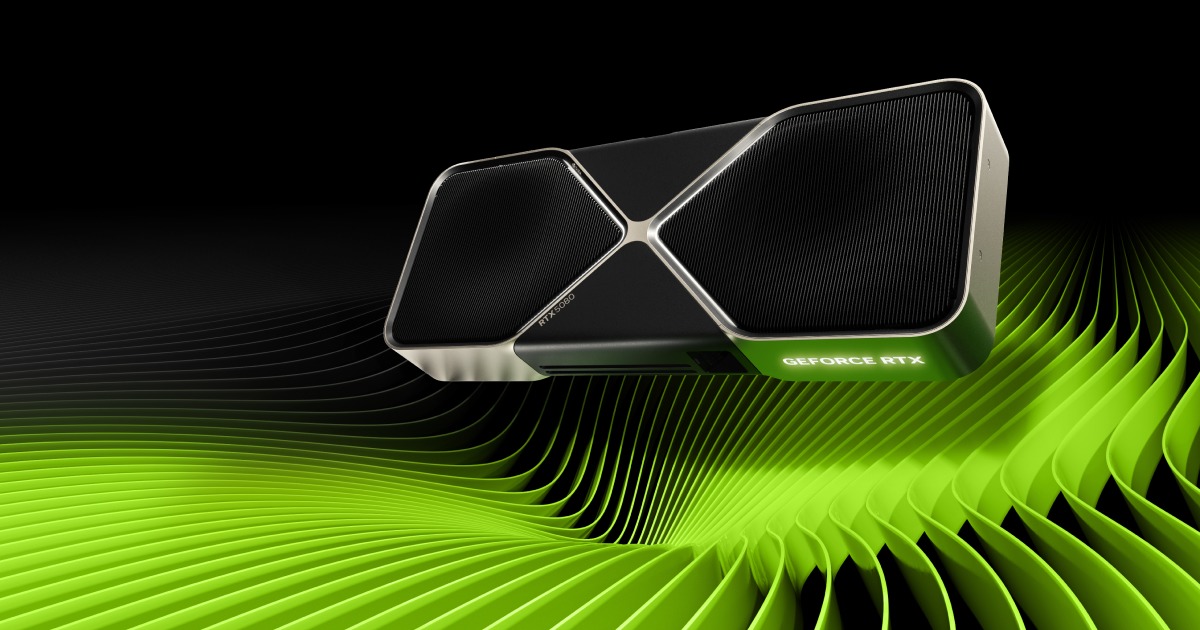
Nvidia's GeForce RTX 5080 and AMD's Radeon RX 9070 XT sit one tier apart on paper but end up competing directly in the real world: the RTX 5080 carries a $999 MSRP and wins at 4K and in ray-traced games, while the RX 9070 XT launched at a $599 SEP and trades some top-end horsepower for a much lower price and roughly 56W less power draw. Neither card is a clear universal winner — which one makes sense depends on the resolution you actually play at and how much you value ray tracing over raw value.
Quick facts
- RTX 5080: $999 MSRP, 16GB GDDR7, 360W, launched January 30, 2025.
- RX 9070 XT: $599 SEP, 16GB GDDR6, 304W, launched March 6, 2025.
- Price gap: RTX 5080 costs 67% more than RX 9070 XT at official MSRP/SEP.
- Performance gap: RTX 5080 leads in rasterization and by a wider margin in ray tracing; RX 9070 XT is the stronger price-to-performance pick at 1440p.
Price and availability
Nvidia's GeForce RTX 5080 product page lists a starting price of $999, and the card has been sold both as an Nvidia Founders Edition and through add-in board partners since it launched on January 30, 2025, alongside the flagship RTX 5090.
AMD's Radeon RX 9070 XT launched about five weeks later, on March 6, 2025, at a suggested etail price (SEP) of $599, according to AMD's official RDNA 4 launch press release. AMD did not build a reference/Founders Edition equivalent for this generation, so every RX 9070 XT is a board-partner card from vendors like ASUS, Sapphire, XFX, PowerColor, Gigabyte and others, and street pricing varies by cooler and factory overclock. It's worth being upfront that the $599 SEP was largely aspirational for most of 2025 — cards routinely sold well above that figure at US retail for months after launch, only settling at or near $599 later in the year. Treat $599 as AMD's official launch price, not necessarily the price you'll find on a shelf today.
Specs at a glance
| Spec | GeForce RTX 5080 | Radeon RX 9070 XT |
|---|---|---|
| Architecture | Blackwell | RDNA 4 |
| Cores | 10,752 CUDA cores | 4,096 stream processors (64 CUs) |
| Ray tracing hardware | 4th-gen RT Cores (171 TFLOPS) | 64 3rd-gen Ray Accelerators |
| AI hardware | 5th-gen Tensor Cores (1,801 AI TOPS) | 128 2nd-gen AI Accelerators |
| Boost clock | 2.62 GHz | Up to ~2.97 GHz |
| Memory | 16GB GDDR7 | 16GB GDDR6 |
| Memory bus / bandwidth | 256-bit, up to 960 GB/s | 256-bit, up to 640 GB/s (+64MB Infinity Cache) |
| Board power (TGP/TBP) | 360W | 304W |
| Recommended PSU | 850W | 750W |
| Interface | PCIe 5.0 | PCIe 5.0 x16 |
| Upscaling | DLSS 4 (Multi Frame Generation) | FSR 4 |
| Launch price | $999 MSRP | $599 SEP |
| Launch date | January 30, 2025 | March 6, 2025 |
Architecture and core counts
The RTX 5080 is built on Nvidia's Blackwell architecture (the same generation covering the whole GeForce RTX 50 series) and packs 10,752 CUDA cores, plus fifth-generation Tensor Cores (rated at 1,801 AI TOPS) and fourth-generation RT Cores (171 TFLOPS of ray-tracing throughput), all confirmed on Nvidia's own RTX 5080 specifications page. Boost clock is rated at 2.62 GHz with a 2.30 GHz base clock.
The RX 9070 XT uses AMD's newer RDNA 4 architecture, with 64 compute units totaling 4,096 stream processors, 64 third-generation Ray Accelerators and 128 second-generation AI Accelerators, per AMD's official RX 9070 XT product page. AMD's own spec sheet lists a 2.4 GHz game clock and a boost clock of up to roughly 2,970 MHz (AMD rounds this to "up to 3.0 GHz" in its press release), plus a 53.9 billion transistor count. RDNA 4 is a smaller die built for efficiency rather than an outright flagship, which is reflected in the price gap between the two cards.
These aren't directly comparable core-count figures — Nvidia's CUDA cores and AMD's stream processors are architected differently and don't scale performance 1:1 — but they do signal each company's relative positioning: the RTX 5080 is built as a high-end 4K part, while the RX 9070 XT is tuned as an upper-mid-range 1440p-first card.
Memory: VRAM, bus width and bandwidth
Both cards ship with 16GB of video memory on a 256-bit bus, which keeps them evenly matched on capacity for the vast majority of games at 1440p and 4K. The difference is memory type and resulting bandwidth: the RTX 5080 uses newer GDDR7 for up to 960 GB/s of bandwidth (a figure Nvidia says is a 34% increase over the RTX 4080's 717 GB/s, per its RTX 50-series announcement), while the RX 9070 XT uses GDDR6 for up to 640 GB/s, backed by a 64MB Infinity Cache to help offset the narrower raw bandwidth.
In practice, 16GB is comfortable headroom for current AAA titles at both resolutions; neither card is likely to be VRAM-limited before it's compute-limited in games released around this generation.
Size, display outputs and connectivity
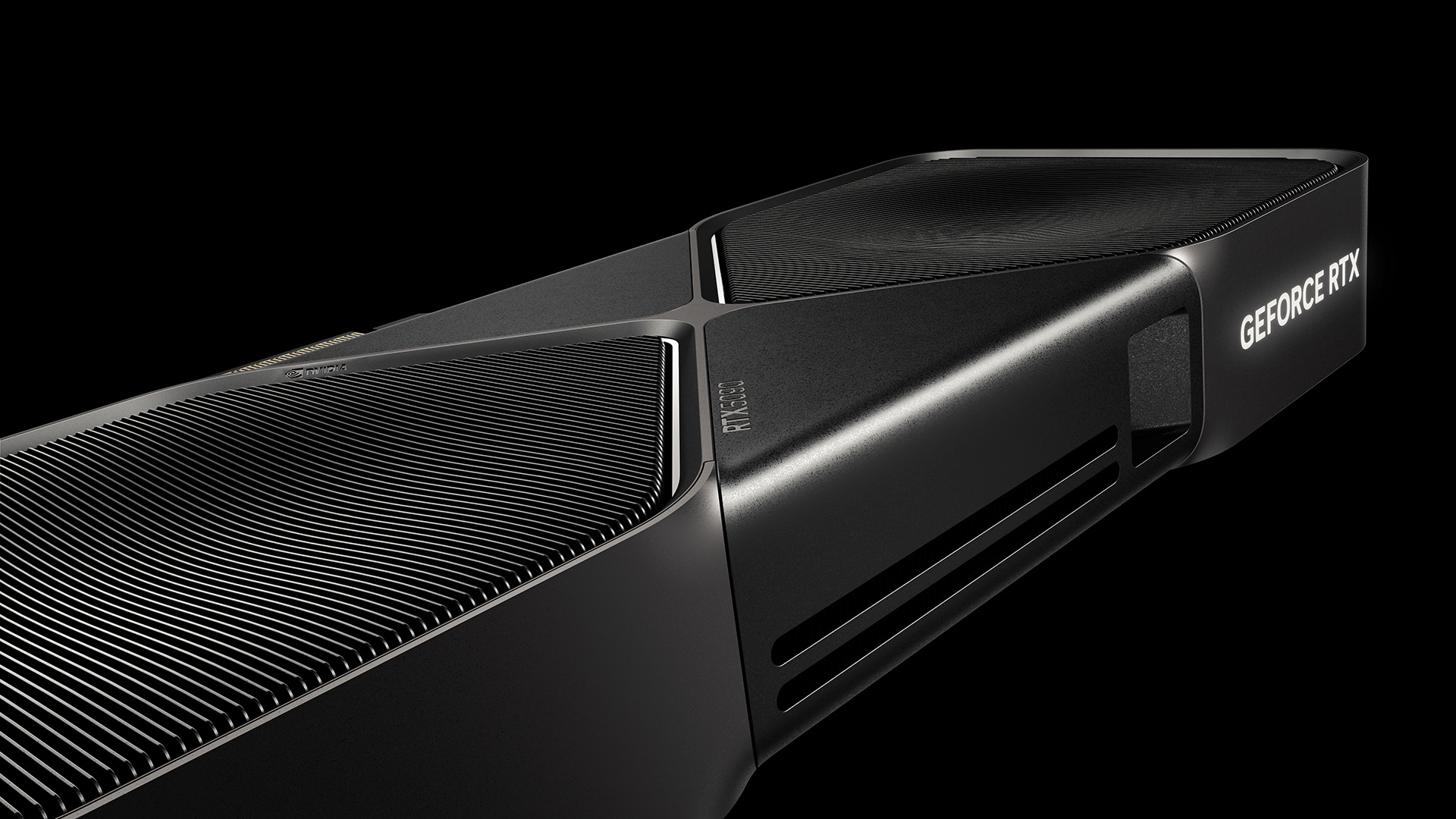
Nvidia's own Founders Edition RTX 5080 is a compact 2-slot card at 304mm long and 137mm wide, rated SFF-ready for small-form-factor builds, with a maximum GPU temperature spec of 88°C. Outputs are three DisplayPort 2.1b connectors plus one HDMI 2.1b, supporting up to four monitors simultaneously, 4K at up to 480Hz, or 8K at up to 165Hz (both with Display Stream Compression), per Nvidia's specifications page.
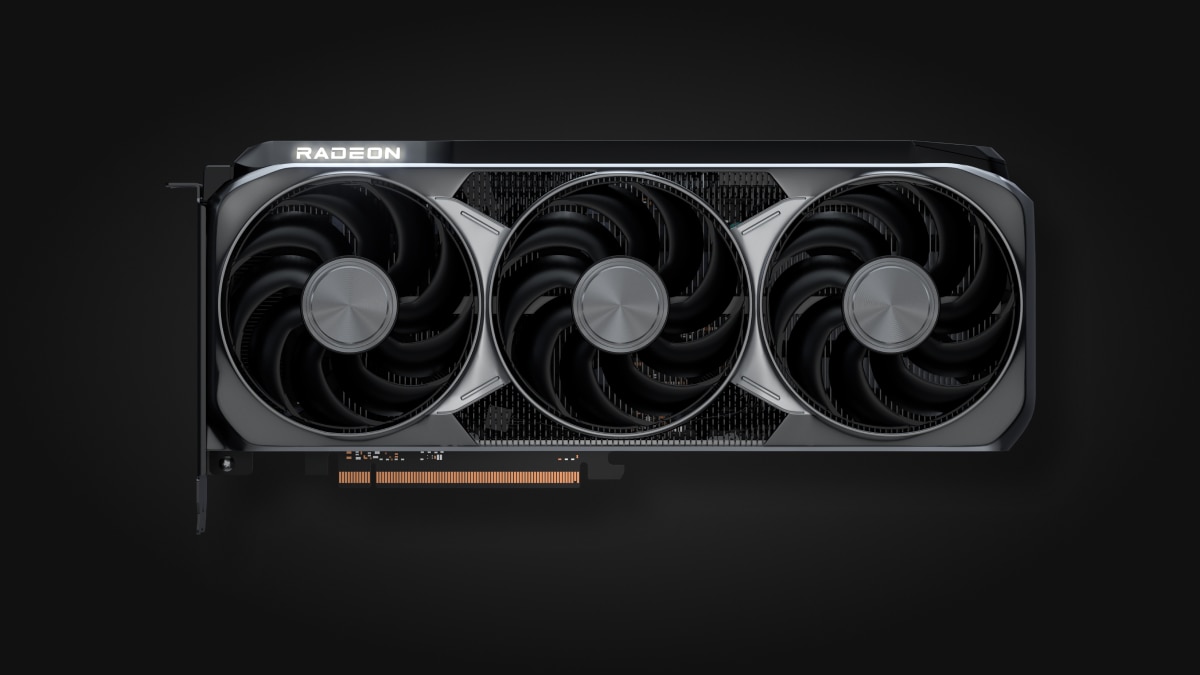
AMD doesn't sell a reference RX 9070 XT, so there's no single official dimension to quote — every card is a board-partner design, and physical size, cooler style and slot width vary from vendor to vendor, so it's worth checking the specific model you're buying against your case rather than assuming a standard footprint. Connectivity is DisplayPort 2.1a and HDMI 2.1b, one generation behind the RTX 5080's DisplayPort 2.1b spec, though the practical difference at typical monitor refresh rates and resolutions is minor for most buyers.
Power draw and system requirements
Nvidia rates the RTX 5080 at 360W total graphics power and recommends an 850W power supply, using either three 8-pin PCIe connectors (with the included adapter) or a single native 12V-2x6/PCIe Gen5 cable. AMD rates the RX 9070 XT at 304W typical board power with a 750W minimum PSU recommendation and standard dual 8-pin connectors — simpler for anyone upgrading an older system without a newer power connector.
The roughly 56W gap between the two cards' official TDP figures is modest rather than dramatic, but it does mean the RX 9070 XT is the easier card to drop into a system with a smaller power supply or tighter case airflow, and it will typically run a bit cooler and quieter under sustained load as a result.
Gaming performance: rasterization
Pandromeda has not benchmarked either card directly, so these figures are drawn from independent third-party testing rather than in-house numbers. Reviewers at Tom's Hardware and other outlets running the two cards across modern game suites have generally found the RTX 5080 ahead of the RX 9070 XT in traditional rasterized (non-ray-traced) performance by a mid-single-digit percentage at 1440p, with the gap widening somewhat at 4K where the RTX 5080's extra memory bandwidth and core count matter more. AMD's own RDNA 4 launch materials instead position the RX 9070 XT against its own previous generation, claiming over 40% average uplift at 1440p versus the RX 7900 GRE — a same-brand comparison, not a claim about beating the RTX 5080.
The practical takeaway echoed across independent reviews is that the RX 9070 XT delivers a large majority of the RTX 5080's rasterized frame rate at 1440p for meaningfully less money, which is why it's been positioned by reviewers as the value pick for gamers who aren't chasing 4K or heavy ray tracing.
Ray tracing and upscaling
This is where the gap between the two cards widens the most. Nvidia's fourth-generation RT Cores and dedicated ray-tracing hardware have been the more mature and higher-throughput implementation across the Blackwell generation, and third-party testing (again, most notably from Tom's Hardware) has generally shown the RTX 5080 pulling further ahead of the RX 9070 XT specifically in heavier ray-traced and path-traced workloads — titles like Cyberpunk 2077's Overdrive mode — than in standard rasterization. AMD's RDNA 4 Ray Accelerators are a real generational step up from RDNA 3, and the RX 9070 XT handles lighter ray-tracing effects (reflections, shadows) reasonably well, but it isn't the stronger ray-tracing card of this pair.
Upscaling and frame generation partly offset raw performance gaps for both vendors. Nvidia ships DLSS 4 with Multi Frame Generation on the RTX 5080, while AMD's answer is FSR 4, a new machine-learning-based upscaler that AMD's press release describes as exclusive to the RX 9000 series at launch, delivered through AMD Software: Adrenalin Edition. Nvidia has since detailed a newer DLSS 5 release (covered in our DLSS 5 explainer), which further widens Nvidia's software feature set on top of the RTX 5080's hardware lead, though that's a driver/software advantage rather than a change to the GPU's fixed specs.
Drivers and software support
Both companies ship regular driver updates that add game-day optimizations and fix bugs; Nvidia's GeForce driver releases (we've covered the recent GeForce 617.14 driver update, for example) and AMD's Adrenalin Edition releases both add per-title tuning on a similar cadence. Neither card is meaningfully harder to keep updated than the other, though Nvidia's ecosystem still has a broader base of RTX-specific features (DLSS, Reflex, RTX HDR) that have had longer to mature across more titles.
Which one should you buy?
If you're building or upgrading a 4K gaming PC, want the strongest ray-tracing performance available at this price class, or you're deep into Nvidia's software ecosystem (DLSS, Reflex, broadcast/creator tools), the RTX 5080's $999 price is easier to justify given its lead in both raw rasterization at 4K and, more significantly, in ray-traced titles.
If you're gaming primarily at 1440p, don't lean heavily on ray tracing, or simply want the best frame rate for the money, the RX 9070 XT's $599 launch price (bearing in mind street prices ran higher through much of 2025) makes it the stronger value proposition, and its lower 304W board power is a real practical advantage for smaller cases and older power supplies. Neither is a bad buy — they're simply built for different budgets and different resolutions, and matching the card to how you actually play is the whole decision.
A quick way to think about it by use case:
- 4K gaming, maximum ray tracing, or heavy creator/AI workloads: RTX 5080 — the extra $400 buys the faster memory, stronger RT hardware and Nvidia's more mature DLSS 4 feature set.
- 1440p gaming on a tighter budget: RX 9070 XT — close enough in rasterized frame rates that the price gap is hard to ignore.
- Smaller case, older or lower-wattage PSU: RX 9070 XT's 304W TBP and 750W PSU recommendation are easier to accommodate than the RTX 5080's 360W/850W spec.
- Already invested in Nvidia's software stack (DLSS, Reflex, Studio/broadcast tools): RTX 5080, for ecosystem consistency.
It's also worth glancing one tier in each direction before you commit. Nvidia's RTX 5070 Ti launched at $749, closer to the RX 9070 XT's price but with less VRAM headroom for the most demanding workloads, while AMD's own non-XT RX 9070 launched at $549 with a lower 220W TBP for buyers who want RDNA 4 at an even smaller footprint and price than the XT reviewed here.
Worth noting: this isn't the only Nvidia/AMD pairing we've covered on the hardware desk. If you're shopping a tier down, we've separately compared the RX 9070 GRE against the RTX 5070 and RTX 5060 Ti, which is a distinct, more budget-focused matchup from the RTX 5080 vs RX 9070 XT pairing covered here.
Frequently asked questions
Which is faster, the RTX 5080 or the RX 9070 XT?
The RTX 5080 is generally the faster card overall, with a modest lead in rasterized (non-ray-traced) games at 1440p and 4K and a larger lead in ray-traced titles, based on independent third-party testing including reviews from Tom's Hardware. The RX 9070 XT closes much of that gap in pure rasterization while costing significantly less.
How much do the RTX 5080 and RX 9070 XT cost?
Nvidia's RTX 5080 launched at a $999 MSRP on January 30, 2025. AMD's RX 9070 XT launched at a $599 suggested etail price (SEP) on March 6, 2025, though US street prices ran above $599 for much of 2025 before settling near that figure later in the year.
Does the RX 9070 XT support ray tracing?
Yes. The RX 9070 XT has 64 third-generation Ray Accelerators and handles moderate ray-tracing effects like reflections and shadows reasonably well, but independent testing shows Nvidia's RTX 5080 pulling further ahead in heavier, path-traced ray-tracing workloads.
Which GPU uses less power?
The RX 9070 XT is rated at 304W typical board power with a 750W minimum PSU recommendation, versus the RTX 5080's 360W total graphics power and 850W recommended PSU, per each company's official specifications.
Is 16GB of VRAM enough for both cards?
Yes, both the RTX 5080 and RX 9070 XT ship with 16GB of VRAM, which is comfortable headroom for current games at 1440p and 4K. The RTX 5080's GDDR7 memory gives it higher bandwidth (up to 960 GB/s) than the RX 9070 XT's GDDR6 (up to 640 GB/s, aided by 64MB of Infinity Cache).
Do I need a new power supply or motherboard for either card?
Both cards use a PCIe 5.0 interface but work fine in PCIe 4.0 or even 3.0 slots with a small bandwidth trade-off. The RTX 5080 needs an 850W PSU and either three 8-pin connectors or a single high-wattage 12V-2x6 cable; the RX 9070 XT needs a 750W PSU and standard dual 8-pin connectors, which is typically easier to fit into an existing system.
Sources
- Nvidia: GeForce RTX 5080 product and specifications pagenvidia.com
- Nvidia: GeForce RTX 50 Series graphics cards announcementnvidia.com
- AMD: Radeon RX 9070 XT product and specifications pageamd.com
- AMD: RDNA 4 architecture and Radeon RX 9000 series launch press releaseamd.com
- Wikipedia: GeForce RTX 50 seriesen.wikipedia.org
- Wikipedia: Radeon RX 9000 seriesen.wikipedia.org
Mara Lindqvist edits the hardware desk. She covers graphics cards, processors, memory and storage, the foundries and chip designers behind them, and what the numbers on a spec sheet mean for people choosing a PC. Specifications in her stories come from manufacturer spec pages and datasheets.