RTX 5070 vs RTX 5070 Ti: Specs, Price and Which to Buy
Nvidia's RTX 5070 and RTX 5070 Ti share the same GDDR7 memory and Blackwell architecture, but differ in CUDA cores, VRAM and price. Here's what the extra money buys.
The RTX 5070 Ti costs $200 more than the RTX 5070 at their official $749 and $549 launch prices, and for that money you get 46% more CUDA cores, 33% more VRAM (16GB vs 12GB) and a wider 256-bit memory bus instead of 192-bit. If you're gaming at 1440p or higher, want more headroom for future games, or plan to keep the card for 4+ years, the 5070 Ti is the one to buy. If you're on a tighter budget, gaming mostly at 1080p-to-1440p, or building a smaller/quieter system, the plain RTX 5070 is still a genuinely capable Blackwell-generation card and the better value.
- RTX 5070: 6,144 CUDA cores, 12GB GDDR7, 192-bit bus, 250W, official MSRP $549.
- RTX 5070 Ti: 8,960 CUDA cores, 16GB GDDR7, 256-bit bus, 300W, official MSRP $749.
- Buy the Ti if: you game at 1440p/4K, run ray tracing or heavy texture packs, or want the card to last longer.
- Buy the 5070 if: you're mainly at 1080p-1440p, want a smaller/cheaper build, or need a lower 650W PSU.
RTX 5070 vs RTX 5070 Ti: full specs compared
Both cards use Nvidia's Blackwell architecture and the same GDDR7 memory type, but Nvidia built them on different dies with a meaningfully different core count. Here's the official breakdown from Nvidia's own GeForce RTX 5070 family page.
| Spec | RTX 5070 | RTX 5070 Ti |
|---|---|---|
| CUDA Cores | 6,144 | 8,960 |
| Boost Clock | 2.51 GHz | 2.45 GHz |
| Base Clock | 2.33 GHz | 2.3 GHz |
| Memory | 12GB GDDR7 | 16GB GDDR7 |
| Memory Bus | 192-bit | 256-bit |
| Total Graphics Power (TGP) | 250W | 300W |
| Required System Power | 650W | 750W |
| Launch MSRP | $549 | $749 |
The Ti's lead isn't just in raw core count. Its wider 256-bit bus and larger 16GB frame buffer matter more than the clock speed gap, which actually favors the cheaper card slightly (2.51GHz boost on the 5070 vs 2.45GHz on the Ti) because Nvidia gave the smaller chip a bit more clock headroom to compensate for having fewer cores.
CUDA cores and real-world performance
The RTX 5070 Ti has roughly 46% more CUDA cores than the RTX 5070 (8,960 vs 6,144). Nvidia doesn't publish a single official FPS comparison number between these two specific cards on its family page, but the core count, bus width and memory bandwidth gap all point the same direction: expect the Ti to pull meaningfully ahead at 1440p and especially at 4K, where the extra memory bandwidth stops the 5070 from being bottlenecked. At 1080p, the gap narrows because neither card's memory or bus width is the limiting factor at that resolution.
If your monitor is 1440p at 144Hz or higher, or you're running a 4K display at all, the Ti's extra compute is where you'll actually feel the difference, not just see it in a spec sheet.
Memory: is 12GB enough in 2026?
This is the gap that will age the two cards differently. 12GB was comfortable for 1440p gaming when the RTX 50-series launched, but newer titles with high-resolution texture packs, frame generation, and ray-traced lighting are pushing VRAM use higher every year. 16GB gives the Ti more runway before you have to drop texture settings to keep frame times smooth — particularly relevant since memory chip prices have been climbing sharply through 2026, which makes "buy more VRAM once" a more attractive strategy than it used to be.
If you plan to keep this GPU for four or five years rather than upgrading every generation, the extra 4GB on the Ti is arguably the single best argument for spending the extra $200.
Power draw and PSU requirements
The RTX 5070 draws up to 250W and Nvidia recommends at least a 650W power supply. The RTX 5070 Ti draws up to 300W and needs a 750W supply. That 100W gap in recommended PSU wattage matters if you're building a new system from scratch — it can be the difference between reusing an existing power supply and needing to buy a new one, which effectively narrows the real price gap between the two cards once you account for the rest of the build.
Price: official MSRP vs what you'll actually pay
Nvidia's official launch pricing was $549 for the RTX 5070 and $749 for the RTX 5070 Ti. Those figures are the number to compare the cards by on specs alone, but actual retail pricing in 2026 has moved around a lot due to the broader GPU and memory chip shortage that has also pushed RAM and SSD prices higher this year. Street prices for both cards have fluctuated well above and, at times, back down near their MSRPs depending on retailer stock and timing, so it's worth checking current listings at a major retailer like Best Buy before assuming either number still applies on the day you buy.
As a rule of thumb: if you can find either card within roughly 10-15% of its official MSRP, that's a fair price in the current market. If the premium is much larger than that, it's worth waiting or considering the other card in this comparison instead.
Ray tracing, RT cores and upscaling
Both cards belong to the same Blackwell generation, so they support the same feature set: the same generation of RT cores for ray-traced lighting and reflections, the same Tensor core generation for AI-upscaled image quality, and the same DLSS feature stack, including frame generation. The difference isn't in which ray-tracing features each card can run — it's in how much ray tracing each one can run before frame rates start to drop.
Because the RTX 5070 Ti has more CUDA cores, more RT cores (scaling with the overall core count), and a wider memory bus to feed them, it holds onto playable frame rates for longer once you turn ray tracing up to its highest settings, particularly path-traced lighting in newer titles. On the RTX 5070, ray tracing at lower-to-medium settings is very usable, but pushing every slider to maximum at 1440p or 4K is more likely to require leaning on DLSS upscaling or frame generation to stay smooth. Neither card is "missing" a ray-tracing feature the other has — the Ti just has more room to use those features at higher settings without needing as much help from upscaling.
Who each card is actually for
Beyond simple resolution, a few other buyer profiles make the choice clearer:
- Esports and competitive players: if you mostly play lighter, high-frame-rate competitive titles rather than the latest ray-traced AAA releases, the RTX 5070 can comfortably push high refresh rates at 1080p or 1440p, and the Ti's extra power is mostly wasted here.
- Single-player and open-world gamers: big, visually heavy open-world games are exactly where the Ti's extra VRAM and bandwidth show up, since these titles tend to use the most texture memory and the heaviest ray-traced effects.
- Content creators and streamers: encoding, exporting and running creative applications alongside a game benefits from the extra VRAM headroom on the Ti, since those background tasks also consume memory that would otherwise go to the game itself.
- VR users: VR headsets render at high effective resolutions and benefit disproportionately from extra memory bandwidth, which tips this group toward the Ti as well.
- Budget-conscious 1440p gamers: if 1440p at high (not maximum) settings is the target and the budget is tight, the RTX 5070 is still a legitimately strong 1440p card for the price — just expect to dial back a few settings in the heaviest new releases.
Upgrading from an older GPU
If you're coming from an older-generation card rather than deciding between these two from scratch, the jump to either RTX 5070 or RTX 5070 Ti brings the same generational benefits: GDDR7 memory (faster than the GDDR6X or GDDR6 memory on most previous-generation cards), a newer Tensor core generation for better upscaling quality, and Nvidia's latest Blackwell-generation ray-tracing hardware. The practical question for upgraders is less "which generation" and more the same VRAM-and-bus-width tradeoff covered above: anyone upgrading specifically to get more comfortable VRAM headroom for the next several years should lean Ti, while anyone upgrading mainly for a straightforward performance bump at their existing resolution can save the $200 with the standard RTX 5070.
Which should you buy?
Buy the RTX 5070 Ti if you game at 1440p or 4K, want to future-proof against rising VRAM demands, or you're building a system you intend to keep for several years without a mid-cycle GPU upgrade. The extra $200 buys a meaningfully wider memory bus, 4GB more VRAM, and about 46% more CUDA cores — a real generational step up, not a minor refresh.
Buy the plain RTX 5070 if you're gaming mainly at 1080p or 1440p at more moderate settings, you're on a tighter overall budget, or your existing power supply is closer to 650W than 750W. It's still a fully modern Blackwell GPU with GDDR7 memory, not a cut-down budget part, and it remains the better value per dollar for most mainstream builds.
Founders Edition vs partner cards
Nvidia's quoted specs and official MSRP apply to its own Founders Edition design, but most buyers will end up with a partner card from a board maker like Asus, MSI, Gigabyte or PNY instead, since Founders Edition stock tends to sell out fast at launch and stay scarce afterward. Partner cards carry the same core specs — the same CUDA core count, memory size and bus width for a given model — but often ship with larger coolers, factory overclocks, and extra connectivity, and they're typically priced somewhat above the official MSRP as a result. When comparing listed prices across retailers, check whether you're looking at a reference-clocked card near MSRP or a premium overclocked model before assuming you're comparing like for like.
How it fits against the rest of the RTX 50-series
If neither of these two cards is quite right, it's worth seeing how they stack up against Nvidia's higher-end options too — we've already compared the RTX 5080 against the RTX 5070 Ti for buyers deciding whether to skip the Ti entirely and jump a tier. And if upscaling technology is a bigger factor in your buying decision than raw core count, our explainer on how DLSS 4.5 ray reconstruction works covers what both of these cards support out of the box.
The VRAM question above is also tied to a bigger 2026 story: climbing memory chip prices, which we covered in detail when SK Hynix posted record Q3 2026 profit on surging AI-driven memory demand — the same dynamic nudging GPU memory configurations and pricing this year.
What to do next
Check current listings at a major retailer before buying either card, since 2026 street pricing has moved meaningfully away from MSRP at different points this year. If you're still undecided, default to the resolution test above: 1080p/1440p-at-moderate-settings buyers should save the $200 and get the RTX 5070, while 1440p-at-high-settings and 4K gamers should spend it on the Ti.
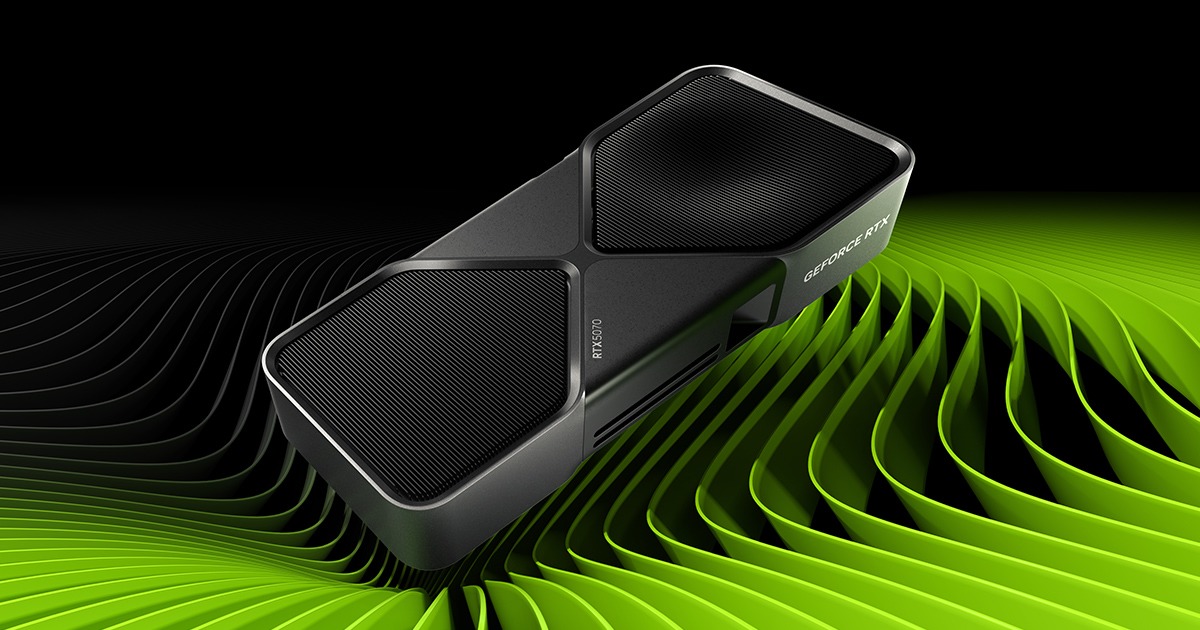
Image: Nvidia.
Frequently asked questions
What's the main difference between the RTX 5070 and RTX 5070 Ti?
The RTX 5070 Ti has 46% more CUDA cores (8,960 vs 6,144), 4GB more VRAM (16GB vs 12GB GDDR7), and a wider 256-bit memory bus versus 192-bit on the RTX 5070. It also draws more power, 300W vs 250W, and costs $200 more at official MSRP ($749 vs $549).
Is 12GB of VRAM enough for the RTX 5070 in 2026?
Yes for most games at 1080p and 1440p with typical settings, but newer titles with high-resolution texture packs and heavy ray tracing are pushing VRAM demands higher. If you want more headroom for future games or plan to keep the card several years, the RTX 5070 Ti's 16GB gives more runway.
What power supply do I need for the RTX 5070 vs RTX 5070 Ti?
Nvidia recommends at least a 650W power supply for the RTX 5070 and a 750W power supply for the RTX 5070 Ti, based on their official TGP ratings of 250W and 300W respectively.
Is the RTX 5070 Ti worth $200 more than the RTX 5070?
It's worth it if you game at 1440p or 4K, use ray tracing at high settings, or want to keep the card for several years. For 1080p or moderate 1440p gaming on a tighter budget, the RTX 5070 remains the better value.
Can I buy either card at its official MSRP in 2026?
It depends on retailer stock. Both cards have seen street prices move above and below their $549 and $749 MSRPs at different points in 2026 due to broader GPU and memory chip supply pressure, so it's worth checking current listings before buying.
Sources
- Nvidia: GeForce RTX 5070 Family official specsnvidia.com
- Nvidia: GeForce RTX 5070 User Guide (official PDF)nvidia.com
- Best Buy: RTX 5070 Ti graphics cardsbestbuy.com
- Best Buy: RTX 5070 graphics cardsbestbuy.com
Mara Lindqvist edits the hardware desk. She covers graphics cards, processors, memory and storage, the foundries and chip designers behind them, and what the numbers on a spec sheet mean for people choosing a PC. Specifications in her stories come from manufacturer spec pages and datasheets.