RX 9070 GRE vs RTX 5070 vs RTX 5060 Ti: Specs and Price Compared
Two $549 cards with 12GB and a $429 card with 16GB. How AMD’s RX 9070 GRE stacks up against Nvidia’s RTX 5070 and RTX 5060 Ti.
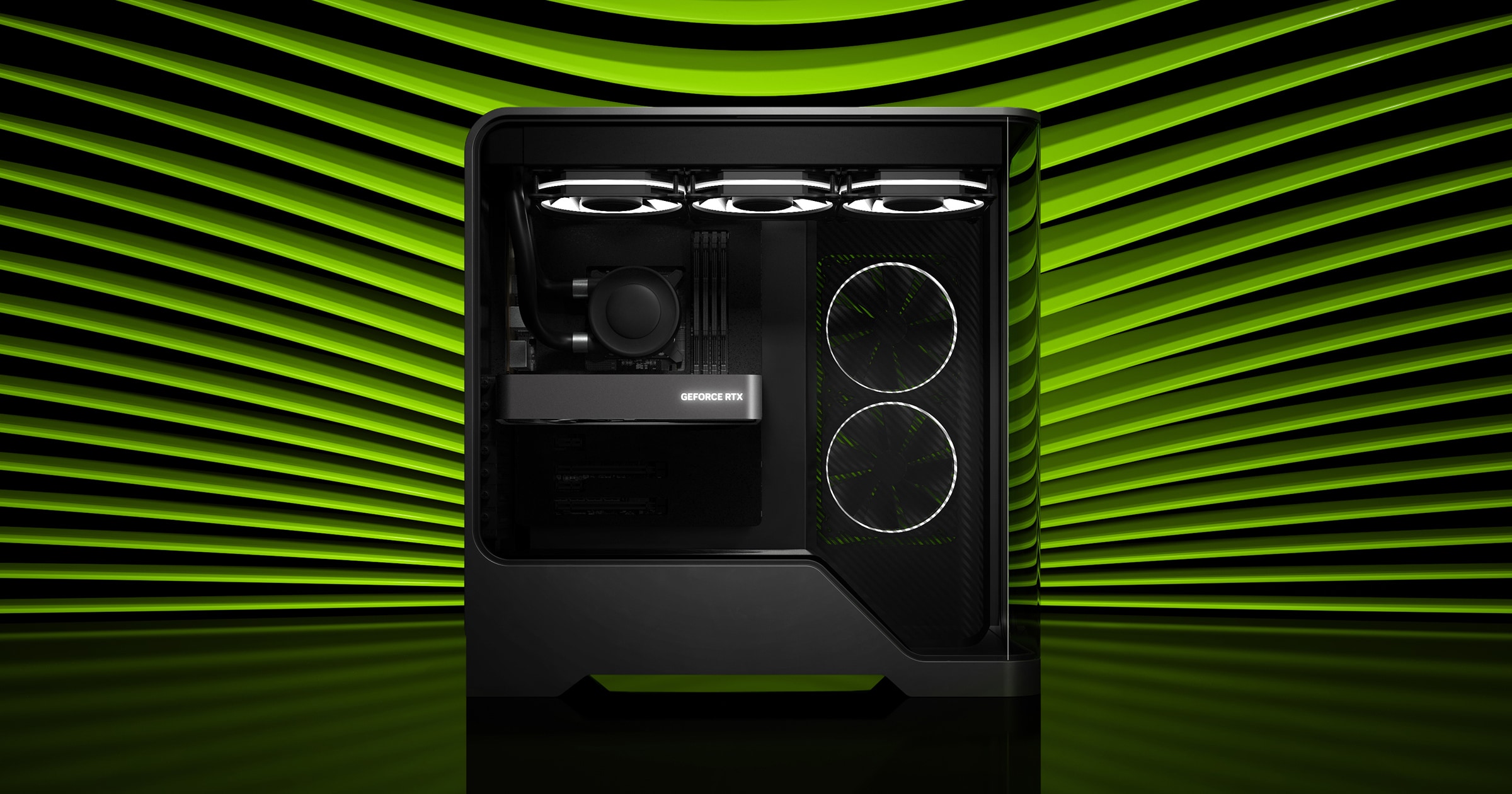
The Radeon RX 9070 GRE, GeForce RTX 5070 and GeForce RTX 5060 Ti are three of the most closely matched mid-range graphics cards on sale in 2026. On launch pricing, the RX 9070 GRE ($549) and RTX 5070 ($549) cost the same, while the RTX 5060 Ti 16GB ($429) sits $120 lower. The short version: the RX 9070 GRE and RTX 5070 both have 12GB and a 192-bit bus, the RTX 5060 Ti is the only one with 16GB, and AMD’s own testing puts the GRE an average of 21% ahead of the RTX 5060 Ti 16GB at 1440p.
Key facts
- Launch prices: RX 9070 GRE $549 (AMD suggested e-tail price), RTX 5070 $549, RTX 5060 Ti 16GB $429, RTX 5060 Ti 8GB $379
- Memory: RX 9070 GRE 12GB GDDR6 (192-bit); RTX 5070 12GB GDDR7 (192-bit); RTX 5060 Ti 16GB or 8GB GDDR7 (128-bit)
- Power: 220W, 250W and 180W respectively
- AMD’s claim: RX 9070 GRE averages 21% faster than RTX 5060 Ti 16GB at 1440p (AMD testing)
- Upscaling: FSR “Redstone” on Radeon; DLSS with Multi Frame Generation on GeForce RTX 50
Which should you buy: RX 9070 GRE, RTX 5070 or RTX 5060 Ti?
- Pick the RX 9070 GRE if you mainly play at 1440p, want AMD’s RDNA 4 architecture at the $549 price point, backed by AMD’s own 1440p performance claims, and are happy with the FSR ecosystem.
- Pick the RTX 5070 if you want Nvidia’s DLSS and Multi Frame Generation, stronger AI and creator tooling, and a second NVENC video encoder, at the same launch price as the GRE.
- Pick the RTX 5060 Ti 16GB if your budget stops below $500, you play at 1080p or 1440p, or you specifically want 16GB of VRAM for large textures or local AI models.
- Avoid the RTX 5060 Ti 8GB for new builds meant to last, unless the price gap to the 16GB model is large where you shop. Eight gigabytes is the tightest memory configuration of the group.
The rest of this guide explains where those recommendations come from, using the manufacturers’ own spec sheets.
RX 9070 GRE vs RTX 5070 vs RTX 5060 Ti: specs compared
All figures below are taken from AMD’s Radeon RX 9070 GRE spec page and Nvidia’s RTX 5070 family and RTX 5060 family pages. Nvidia’s figures describe its Founders Edition or reference design; partner cards may run different clocks.
| Spec | Radeon RX 9070 GRE | GeForce RTX 5070 | GeForce RTX 5060 Ti |
|---|---|---|---|
| Architecture | AMD RDNA 4 | Nvidia Blackwell | Nvidia Blackwell |
| Shader units | 48 compute units / 3,072 stream processors | 6,144 CUDA cores | 4,608 CUDA cores |
| Boost clock | Up to 2,790MHz (2,220MHz game clock) | 2.51GHz | 2.57GHz |
| Ray tracing hardware | 48 ray accelerators | 4th-gen RT cores (94 TFLOPS) | 4th-gen RT cores (72 TFLOPS) |
| AI hardware | 96 AI accelerators | 5th-gen Tensor cores (988 AI TOPS) | 5th-gen Tensor cores (759 AI TOPS) |
| Memory | 12GB GDDR6 | 12GB GDDR7 | 16GB or 8GB GDDR7 |
| Memory bus | 192-bit | 192-bit | 128-bit |
| Memory bandwidth | Up to 432GB/s, plus 48MB Infinity Cache | Not listed on product page | Not listed on product page |
| Board power | 220W typical board power | 250W total graphics power | 180W total graphics power |
| Recommended PSU | 650W | 650W | 600W |
| PCIe interface | PCIe 5.0 x16 | PCIe 5.0 | PCIe 5.0 |
| Display outputs | DisplayPort 2.1a, HDMI 2.1b | 3x DisplayPort 2.1b, 1x HDMI 2.1b | 3x DisplayPort 2.1b, 1x HDMI 2.1b |
| Video encoders | AV1, HEVC, H.264 encode | 2x 9th-gen NVENC (AV1 encode) | 1x 9th-gen NVENC (AV1 encode) |
| Launch price (US) | $549 | $549 | $429 (16GB) / $379 (8GB) |
A note on reading this table: AMD compute units and Nvidia CUDA cores are not equivalent units, and neither are AMD’s “AI accelerators” and Nvidia’s Tensor cores. Shader counts are only meaningful within one vendor’s lineup. The most useful cross-vendor comparisons are memory size and bus width, power, features and measured game performance.
How much do they cost?
Launch pricing is the only official pricing available for all three cards:
- Radeon RX 9070 GRE: AMD announced global availability from 2 June 2026 at a suggested e-tail price of $549, with reference and factory-overclocked cards from board partners, in its Computex 2026 announcement.
- GeForce RTX 5070: Nvidia set a $549 launch price when it announced the RTX 50 Series at CES 2025, with availability from February 2025.
- GeForce RTX 5060 Ti: Nvidia launched the RTX 5060 Ti on 16 April 2025 at $429 for the 16GB model and $379 for the 8GB model.
Street prices are a different matter. Nvidia’s current product pages for both families no longer display a starting price, and retail prices for graphics cards can sit well away from launch MSRPs. Treat the launch prices above as a reference for how the vendors positioned these cards against each other, then compare current listings from the retailers you trust on the day you buy.
Which is fastest?
Neither AMD nor Nvidia has published a direct RX 9070 GRE versus RTX 5070 comparison. What exists is each company’s own testing against its chosen rival.
AMD’s numbers
AMD says the RX 9070 GRE delivers “an average of 21% faster 1440p gaming performance than the competition.” Its footnote identifies that competitor as the RTX 5060 Ti 16GB, tested in AMD’s labs in April 2026 on a Ryzen 7 9800X3D system with 32GB of DDR5-6000 across a long list of games, with and without ray tracing, including Alan Wake 2, Cyberpunk 2077, Black Myth: Wukong, Indiana Jones and the Great Circle and Monster Hunter Wilds.
AMD’s product page also lists its own 1440p Ultra frame rates for the RX 9070 GRE, again from AMD testing on a Ryzen 7 9800X3D system in May 2026:
| Game (1440p, AMD testing) | RX 9070 GRE fps (AMD figures) |
|---|---|
| Arc Raiders | 100 |
| Call of Duty: Black Ops 7 | 115 |
| The Last of Us Part 2 | 82 |
| Horizon Forbidden West | 86 |
| Marvel’s Spider-Man 2 | 108 |
| Ghost of Tsushima | 100 |
| Forza Horizon 5 (ray tracing) | 144 |
| Grand Theft Auto V Enhanced (ray tracing) | 116 |
These are vendor figures, so treat them as a best case under AMD’s chosen settings, not as independent results.
Nvidia’s numbers
Nvidia’s product pages chart relative performance against older GeForce cards rather than against AMD, and those charts are measured with DLSS Super Resolution, Ray Reconstruction and Multi Frame Generation (4X mode) enabled on RTX 50 Series cards. That makes them useful for judging an upgrade from an RTX 2060, 3060 or 4060-class card, but not for comparing native rendering against Radeon.
Reading between the lines
On hardware alone, the RTX 5070 has 33% more CUDA cores than the RTX 5060 Ti (6,144 versus 4,608), a wider 192-bit bus and a 70W higher power budget, so it should sit clearly above the 5060 Ti. AMD chose to compare the GRE with the cheaper RTX 5060 Ti 16GB, not the equally priced RTX 5070. For a head-to-head between the GRE and the RTX 5070, independent reviews are the place to look.
12GB vs 16GB: does VRAM matter?
This is the most interesting trade-off in the group. The two $549 cards both have 12GB, while the cheaper RTX 5060 Ti 16GB has more memory than either.
- Bus width is only half the story. Bandwidth depends on both bus width and memory speed. The RTX 5070 pairs a 192-bit bus with GDDR7, the RTX 5060 Ti uses GDDR7 on a narrower 128-bit bus, and the RX 9070 GRE uses slower GDDR6 (up to 18Gbps, 432GB/s) on a 192-bit bus backed by 48MB of Infinity Cache. Nvidia does not list bandwidth figures on these product pages.
- For texture-heavy games and high settings, 16GB gives more headroom before the card has to swap data over PCIe, which can cause stutter.
- For local AI, capacity is often the deciding factor. Larger language and image models need to fit in VRAM, which favours the RTX 5060 Ti 16GB within this group.
The RTX 5060 Ti 8GB is the outlier. It has half the memory of its 16GB sibling on the same 128-bit bus, and it is the configuration most likely to run short in new games at higher settings.
Features: FSR Redstone vs DLSS
Upscaling and frame generation increasingly decide how these cards feel in practice.
AMD Radeon RX 9070 GRE
- AMD FSR “Redstone”, which AMD says is part of its FSR gaming technologies now available in more than 300 titles
- AMD Fluid Motion Frames, Radeon Super Resolution and Radeon Anti-Lag 2
- Smart Access Memory, FreeSync and HYPR-RX profiles in AMD Software: Adrenalin Edition
- AV1, HEVC and H.264 hardware encoding
Nvidia GeForce RTX 5070 and RTX 5060 Ti
- DLSS Super Resolution, DLAA, Ray Reconstruction, Frame Generation and Multi Frame Generation, per Nvidia’s spec tables
- Nvidia’s product pages now also promote DLSS 5 with “3D-Guided Neural Rendering” on RTX 50 Series GPUs, and Dynamic Multi Frame Generation that Nvidia says can generate up to five frames per rendered frame
- Reflex 2 low-latency mode
- NVIDIA Broadcast, the NVIDIA App and Studio drivers for creators
- Ninth-generation NVENC: two encoders on the RTX 5070, one on the RTX 5060 Ti
If you stream or edit video, the RTX 5070’s dual encoders are a genuine advantage. If you mostly play and prefer open standards, the GRE’s feature set covers the essentials.
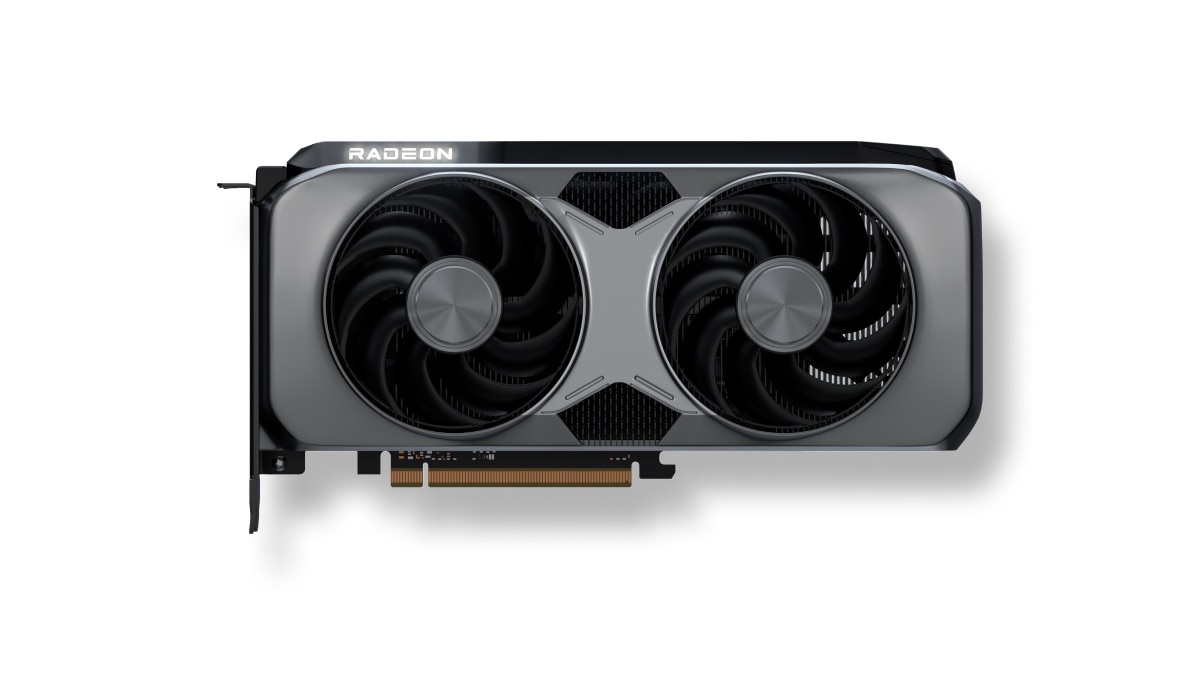
Power, PSU and case fit
All three are mid-range cards, but their power budgets differ:
- RX 9070 GRE: 220W typical board power, 650W minimum PSU recommendation. AMD’s spec page lists two 8-pin power connectors.
- RTX 5070: 250W total graphics power, 650W required system power. Nvidia’s Founders Edition measures 242mm long and 112mm wide in a two-slot design, and uses two 8-pin cables via an adapter or a single 300W-or-greater PCIe Gen 5 cable.
- RTX 5060 Ti: 180W total graphics power, 600W required system power, one 8-pin cable or a 300W PCIe Gen 5 cable.
Nvidia notes that its required system power figures assume a PC with a Ryzen 9 9950X. Partner cards vary in length, width and slot count, so check the specific model’s dimensions against your case before buying.
Who should buy each card?
| If you… | Best fit |
|---|---|
| Play mainly at 1440p and prefer AMD Radeon at $549 | RX 9070 GRE |
| Want DLSS Multi Frame Generation and Nvidia’s creator tools | RTX 5070 |
| Stream or edit video regularly | RTX 5070 (two NVENC encoders) |
| Have a budget under $450 | RTX 5060 Ti 16GB |
| Run local AI models that need more VRAM | RTX 5060 Ti 16GB |
| Have a 600W power supply you don’t want to replace | RTX 5060 Ti |
Bottom line
At launch prices, the real contest is between the RX 9070 GRE and the RTX 5070, which both cost $549 and both carry 12GB on a 192-bit bus. The GRE is AMD’s answer at that price, with a large Infinity Cache and FSR Redstone; the RTX 5070 brings Nvidia’s DLSS stack, a second video encoder and broader creator support. The RTX 5060 Ti 16GB is the sensible choice for smaller budgets and for anyone who values memory capacity over a wider memory bus. Whichever way you lean, check today’s street prices first: with Nvidia no longer listing starting prices on its product pages, launch MSRPs are a guide to positioning, not a guarantee of what you will pay.
Frequently asked questions
Is the RX 9070 GRE better than the RTX 5060 Ti?
AMD says the RX 9070 GRE averages 21% faster 1440p gaming performance than the RTX 5060 Ti 16GB, based on its own lab testing in April 2026. The RTX 5060 Ti 16GB has more memory (16GB versus 12GB) and launched at a lower price.
How much VRAM does the RX 9070 GRE have?
The Radeon RX 9070 GRE has 12GB of GDDR6 on a 192-bit bus, with up to 432GB/s of bandwidth and 48MB of AMD Infinity Cache.
What was the launch price of the RTX 5070?
Nvidia launched the GeForce RTX 5070 at $549, with availability from February 2025. Nvidia’s current product page does not display a starting price.
What power supply do I need for an RTX 5070 or RX 9070 GRE?
Nvidia lists 650W required system power for the RTX 5070, and AMD recommends a minimum 650W PSU for the RX 9070 GRE. The RTX 5060 Ti needs 600W according to Nvidia.
When did the RX 9070 GRE launch globally?
AMD announced at Computex 2026 that the Radeon RX 9070 GRE would be available globally from board partners starting 2 June 2026, at a suggested e-tail price of $549.
Should I buy the 8GB or 16GB RTX 5060 Ti?
The 16GB model launched at $429 and the 8GB model at $379. Both use a 128-bit bus, so the 16GB version mainly buys extra headroom for high-resolution textures and local AI models.
Sources
- AMD: Radeon RX 9070 GRE specificationsamd.com
- AMD blog: Computex 2026 announcements including Radeon RX 9070 GREamd.com
- Nvidia: GeForce RTX 5070 family specificationsnvidia.com
- Nvidia: GeForce RTX 5060 family specificationsnvidia.com
- Nvidia Newsroom: GeForce RTX 5060 family launch press releasenvidianews.nvidia.com
- Nvidia Newsroom: GeForce RTX 50 Series announcement at CES 2025nvidianews.nvidia.com
Mara Lindqvist edits the hardware desk. She covers graphics cards, processors, memory and storage, the foundries and chip designers behind them, and what the numbers on a spec sheet mean for people choosing a PC. Specifications in her stories come from manufacturer spec pages and datasheets.