RTX 5080 vs RTX 4090: Upgrade or Downgrade?
Nvidia RTX 5080 vs RTX 4090: architecture, VRAM, power, price and DLSS 4 compared to help gamers and AI/creative users pick the right GPU.
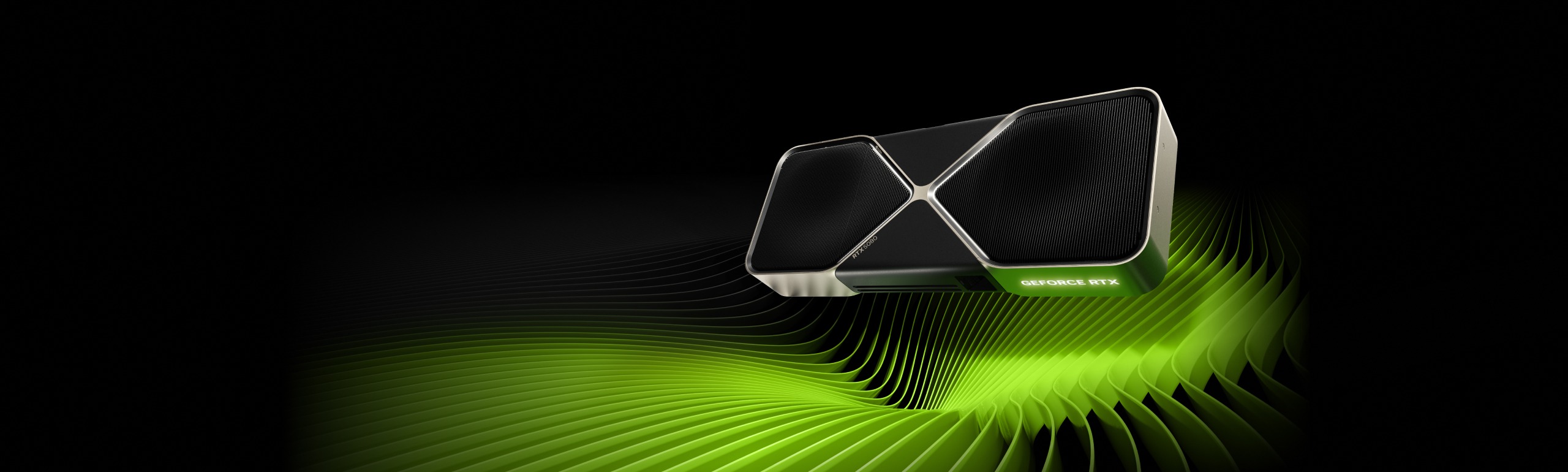
If you're choosing between a new GeForce RTX 5080 and a discounted or used RTX 4090, the short version is this: buy the RTX 5080 for a modern, efficient gaming rig with DLSS 4 Multi Frame Generation and Reflex 2, and buy the RTX 4090 if your workload is bottlenecked by VRAM — local large-language-model inference, large Stable Diffusion/Flux batches, or 4K/8K content-creation timelines where 24GB of memory matters more than architecture age. Neither card is a strict upgrade over the other; they trade blows in different places.
Quick answer: The RTX 5080 (Blackwell, 16GB GDDR7, 360W, $999 MSRP) is the newer, more efficient, software-richer card, built for 1440p/4K gaming with DLSS 4. The RTX 4090 (Ada Lovelace, 24GB GDDR6X, 450W, $1,599 launch MSRP) has far more raw CUDA cores and 8GB more VRAM, making it the better pick for memory-hungry creative and AI workloads — if you can find one at a fair used price.
RTX 5080 vs RTX 4090: Specs at a Glance
Nvidia's own product pages lay out the core differences clearly. The RTX 5080 is a current-generation Blackwell card still sold new at its original price, while the RTX 4090 has been discontinued by Nvidia and now lives on as a secondary-market flagship from the Ada Lovelace generation.
| Spec | RTX 5080 | RTX 4090 |
|---|---|---|
| Architecture | Blackwell | Ada Lovelace |
| CUDA Cores | 10,752 | 16,384 |
| Boost Clock | 2.62 GHz | 2.52 GHz |
| Memory | 16GB GDDR7 | 24GB GDDR6X |
| Memory Bus | 256-bit | 384-bit |
| Memory Bandwidth | 960 GB/s | 1,008 GB/s |
| AI (Tensor) Performance | 1,801 AI TOPS (5th-gen Tensor Cores) | 4th-gen Tensor Cores (figure not published by Nvidia on current page) |
| Ray Tracing Cores | 4th-gen, 171 TFLOPS | 3rd-gen |
| Board / Total Graphics Power | 360W | 450W |
| Recommended PSU | 850W | 850W |
| DLSS Support | DLSS 4 (Multi Frame Generation) | DLSS 3.5 (single Frame Generation) |
| Reflex 2 / Frame Warp | Yes (listed on product page) | Not listed |
| Launch MSRP | $999 | $1,599 |
| Launch Date | January 30, 2025 | October 12, 2022 |
| Current Status | Sold new, $999 on Nvidia's site | Discontinued by Nvidia; secondary market only |
Architecture: Blackwell vs Ada Lovelace
The RTX 5080 is built on Nvidia's Blackwell architecture, the same design family that underpins the entire RTX 50 series, including the RTX 5070 Ti one tier down. Blackwell brings 5th-generation Tensor Cores, 4th-generation RT Cores, and the neural-rendering pipeline that powers DLSS 4. The RTX 4090, by contrast, runs on Ada Lovelace, the architecture Nvidia shipped starting in late 2022. Ada was a huge leap in its day — it's still the architecture behind the RTX 4090's massive core count — but it lacks the dedicated hardware Nvidia uses to generate multiple AI frames per rendered frame on the 50-series.
In practical terms: newer architecture doesn't automatically mean faster in every workload. Blackwell is more efficient per CUDA core and adds new software capabilities, but the RTX 4090 compensates with sheer core count, as the next section covers.
CUDA Cores and Raw Compute
This is where the RTX 4090 pulls ahead on paper. It ships with 16,384 CUDA cores versus 10,752 on the RTX 5080 — roughly 52% more shader cores. Even accounting for the RTX 5080's higher 2.62GHz boost clock (versus the 4090's 2.52GHz), the 4090's core-count advantage gives it a meaningful edge in heavily parallel, compute-bound tasks that don't rely on DLSS frame generation: traditional rasterization at native resolution, non-real-time rendering, and GPU compute workloads that scale with core count rather than AI-accelerated upscaling.
Where the RTX 5080 claws performance back is anywhere DLSS 4's Multi Frame Generation applies. Nvidia states the feature can generate up to five displayed frames for every frame the GPU actually renders — a capability that exists only on Blackwell hardware. In supported titles, that can make the 5080 feel faster than its raw compute specs suggest, though this is Nvidia's own characterization of the technology rather than independently measured frame-time data, and results vary by game and by how much upscaling/generation a player is comfortable with.
Memory: 16GB GDDR7 vs 24GB GDDR6X
Memory is the single biggest practical differentiator between these two cards. The RTX 5080 carries 16GB of GDDR7 on a 256-bit bus, good for 960 GB/s of bandwidth. The RTX 4090 carries 24GB of GDDR6X on a wider 384-bit bus, reaching 1,008 GB/s — slightly more bandwidth despite using an older memory standard, simply because Nvidia paired it with a much wider bus and more memory chips.
For gaming at 1440p or 4K with modern textures, 16GB is generally sufficient for the RTX 5080's target resolution and performance class. But for workloads that load an entire model or dataset into VRAM — local LLM inference, larger Stable Diffusion/Flux checkpoints, multi-layer video editing timelines, or 3D scenes with huge texture sets — the extra 8GB on the RTX 4090 can be the difference between a workload fitting on the card at all or spilling into slower system memory. This is the core tradeoff buyers in AI and content-creation workflows need to weigh.
Power Draw and System Requirements
The RTX 5080 has a 360W total graphics power rating; the RTX 4090 is rated at 450W. Nvidia recommends an 850W power supply for both cards, but the 4090's higher draw means more heat, a larger case-cooling budget, and typically a bigger, heavier cooler on both Founders Edition and partner cards. If you're building a new system around either GPU, the RTX 5080's lower power draw is a meaningful advantage for smaller cases, quieter builds, or anyone watching electricity costs on a card that may run for hours during AI workloads or long gaming sessions.
Price: Launch MSRP vs Today's Market
At launch, the gap was stark: the RTX 5080 debuted at $999 in January 2025, while the RTX 4090 launched at $1,599 back in October 2022. As of this writing, Nvidia's own site still lists the RTX 5080 at its original $999 MSRP for new units. The RTX 4090, however, has been discontinued from Nvidia's current lineup — it no longer appears with an official Nvidia-listed price, and anyone buying one today is shopping the secondary, open-box, or clearance market, where pricing is set by individual retailers and sellers rather than Nvidia. That makes the RTX 4090 a different kind of purchase: you're not buying new-in-box at a fixed MSRP, you're buying a used or old-stock flagship, so condition, warranty status, and seller reputation matter as much as the sticker price.
DLSS 4, Multi Frame Generation and Reflex 2
Software is where the generational gap is clearest. According to Nvidia's DLSS technology page, Super Resolution and Ray Reconstruction are supported all the way back to the RTX 20 series, and single-frame DLSS Frame Generation works on both RTX 40 and RTX 50 series cards. But Dynamic Multi Frame Generation — the headline DLSS 4 feature, powered by the RTX 50 series' 5th-generation Tensor Cores — is listed as RTX 50 Series only. The RTX 4090 cannot run it, regardless of driver updates.
The RTX 5080's product page also lists Reflex 2, including a "Frame Warp" latency-reduction feature that reprojects the frame based on the latest mouse input right before it's displayed. Nvidia's Reflex technology page describes Frame Warp as a newer capability tied to the current GPU generation; the RTX 4090 supports the original Reflex low-latency mode but is not listed with Reflex 2 on Nvidia's current materials. For competitive, latency-sensitive gaming, that's another point in the RTX 5080's favor.
Gaming Performance: What to Expect
Nvidia doesn't publish head-to-head frame-rate comparisons between the RTX 5080 and RTX 4090 specifically, so there's no official benchmark to cite directly for this exact pairing, and we have not run our own tests. What the specifications support is a directional read: in games and settings where DLSS 4 Multi Frame Generation is supported and enabled, the RTX 5080 has access to a frame-multiplication technique the RTX 4090 simply cannot use, which can narrow or close the raw-compute gap in supported titles. In games without DLSS 4 support, or in workloads measuring native rendering performance without any upscaling or frame generation, the RTX 4090's larger core count and wider memory bus tend to matter more. Buyers who care primarily about one specific game or engine should check whether that title supports DLSS 4 Multi Frame Generation before assuming either card has a clear overall lead.
VRAM-Heavy Workloads: Local AI and Content Creation
For anyone running local AI models, VRAM capacity is frequently the limiting factor, not raw compute throughput. Larger language models, higher-resolution image/video generation batches, and bigger fine-tuning jobs all need memory headroom before they need more CUDA cores. Here the RTX 4090's 24GB of GDDR6X is a real practical advantage over the RTX 5080's 16GB, letting it hold larger models or larger batch sizes entirely in VRAM. The same logic applies to professional content creation: 4K/8K video editing with many effects layers, large 3D scenes, and GPU-accelerated rendering in tools like Blender can all benefit from the extra headroom. If your work is defined by "does this fit in VRAM," the RTX 4090's memory capacity can outweigh the RTX 5080's newer architecture and lower power draw.
Who Should Buy Which Card
Choose the RTX 5080 if:
- You're buying new and want Nvidia's current-generation card at its original $999 MSRP, with a warranty and driver support path.
- You play titles with DLSS 4 Multi Frame Generation support and want the smoothest experience in those games.
- You want lower power draw (360W vs 450W) for a smaller case or a quieter, cooler build.
- Your workloads comfortably fit inside 16GB of VRAM.
Choose the RTX 4090 if:
- You can find one used or discounted at a price that reflects its age and lack of warranty, and 24GB of VRAM is a hard requirement for your local AI, 3D, or video work.
- You're less concerned with DLSS 4-specific features and more concerned with raw CUDA core count for non-DLSS workloads.
- You already have a case and PSU built around a 450W-class card.
Readers who already own an RTX 4090 and are weighing a move to the very top of the current stack rather than the 5080 may also want to see how the math changes in our separate look at the RTX 5090 against the same RTX 4090 baseline.
Bottom Line: What to Do Next
There's no universal winner here — the RTX 5080 and RTX 4090 are built for overlapping but distinct priorities. If you're a gamer buying new, the RTX 5080 is the easier recommendation: it's cheaper new, more efficient, and gets exclusive access to DLSS 4 Multi Frame Generation and Reflex 2. If you're a creator or local-AI tinkerer who finds a fairly priced used RTX 4090, its 24GB of VRAM and higher core count can make it the better tool for the job even though it's a generation older and pulls more power. Before buying either, confirm current local pricing (new 5080 pricing is stable at Nvidia's $999 MSRP as of this writing, while 4090 pricing varies by retailer since Nvidia has discontinued it), and check whether the specific software or games you care about actually support DLSS 4 and Multi Frame Generation, since that's the feature doing most of the work in tilting this comparison toward the 5080 for gaming use cases. If you're also tracking Nvidia's broader business momentum before making a purchase decision, our coverage of the company's upcoming Q3 FY2027 earnings date is worth a look.
Frequently asked questions
Is the RTX 5080 better than the RTX 4090?
It depends on the workload. The RTX 5080 is newer, more power-efficient, cheaper new, and exclusively supports DLSS 4 Multi Frame Generation and Reflex 2, making it the better gaming buy for most people. The RTX 4090 has 52% more CUDA cores and 8GB more VRAM (24GB vs 16GB), which can make it the better choice for VRAM-heavy AI and content-creation workloads if you can find one at a fair used price.
How much VRAM do the RTX 5080 and RTX 4090 have?
The RTX 5080 has 16GB of GDDR7 memory on a 256-bit bus (960 GB/s bandwidth). The RTX 4090 has 24GB of GDDR6X memory on a 384-bit bus (1,008 GB/s bandwidth), giving it 8GB more capacity.
Does the RTX 4090 support DLSS 4 Multi Frame Generation?
No. According to Nvidia's DLSS technology page, Dynamic Multi Frame Generation is powered by the RTX 50 series' 5th-generation Tensor Cores and is listed as RTX 50 Series only. The RTX 4090 supports DLSS 3.5 with single-frame Frame Generation, not Multi Frame Generation.
What is the current price of the RTX 5080 vs RTX 4090?
Nvidia's own site still lists the RTX 5080 at its original $999 MSRP for new units. The RTX 4090 launched at $1,599 in October 2022 but has since been discontinued by Nvidia; it's now only available on the secondary or open-box market at prices set by individual retailers and sellers.
Which card is better for local AI and content creation?
The RTX 4090's 24GB of VRAM gives it an edge for workloads that need to fit large models, datasets, or multi-layer editing timelines entirely in memory, such as local LLM inference or large Stable Diffusion/Flux batches. The RTX 5080's 16GB is sufficient for many workloads but can be a limiting factor for the largest local AI models.
How much power do the RTX 5080 and RTX 4090 need?
The RTX 5080 has a 360W total graphics power rating, while the RTX 4090 is rated at 450W. Nvidia recommends an 850W power supply for either card.
Sources
- Nvidia: GeForce RTX 5080 Specsnvidia.com
- Nvidia: GeForce RTX 4090 Specsnvidia.com
- Nvidia: DLSS Technology Overviewnvidia.com
- Nvidia: Reflex Technology Overviewnvidia.com
- Wikipedia: GeForce RTX 50 seriesen.wikipedia.org
- Wikipedia: GeForce RTX 40 seriesen.wikipedia.org
Mara Lindqvist edits the hardware desk. She covers graphics cards, processors, memory and storage, the foundries and chip designers behind them, and what the numbers on a spec sheet mean for people choosing a PC. Specifications in her stories come from manufacturer spec pages and datasheets.