Nvidia RTX Spark vs Apple Mac Studio: Which Personal AI PC to Buy
RTX Spark's Grace Blackwell chip and 128GB of memory face off against Mac Studio's M5 Max and M5 Ultra — including the one number Nvidia hasn't published yet: the price.
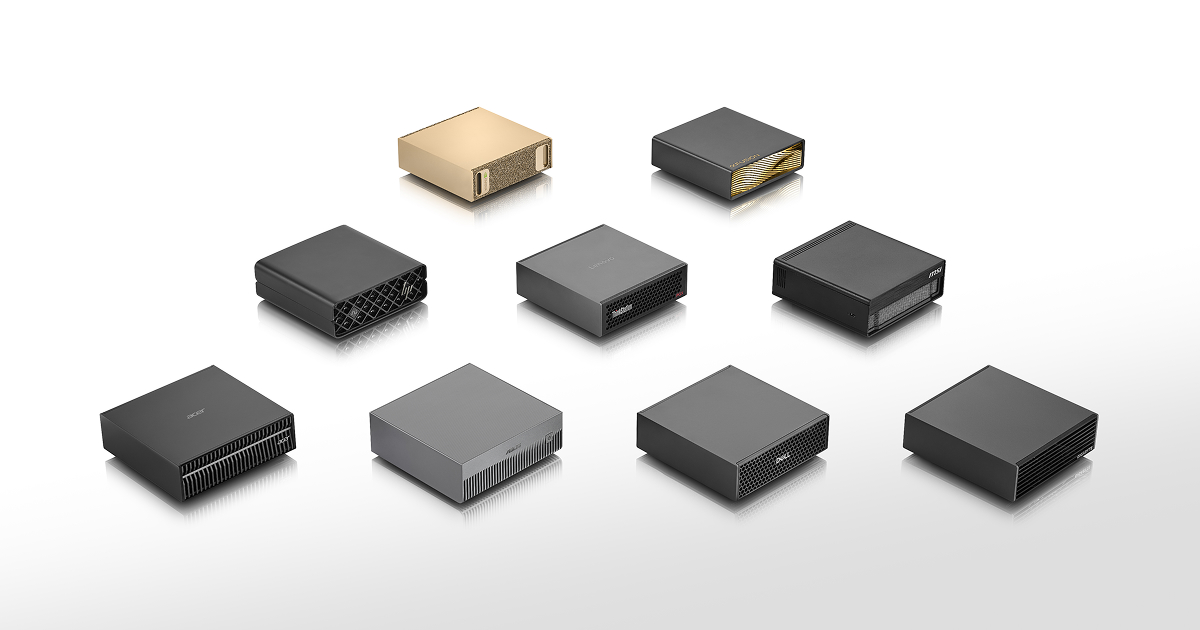
Nvidia's RTX Spark compact desktops — the first retail machines built on Nvidia's "personal AI" superchip platform — went on sale today from ASUS, Dell and MSI. The obvious rival for a desk-sized box that runs large AI models locally is Apple's Mac Studio, which Apple rebuilt around the M5 Max and M5 Ultra chips in September 2026. Short answer: if you need up to 512GB of unified memory, a mature desktop OS, and a price you can actually see today, Mac Studio is the safer buy right now. If you want the newest Nvidia CUDA stack in the smallest box, and don't mind that no RTX Spark vendor has published a price yet, RTX Spark is the one to watch.
Quick take: RTX Spark tops out at 128GB of unified memory and roughly 1 petaflop of FP4 AI performance in a sub-1.1-liter box, built around a 20-core Nvidia Grace CPU and a Blackwell RTX GPU with 6,144 CUDA cores — but as of publication, no vendor has listed a price. Mac Studio starts at $2,499 for M5 Max (36GB, expandable to 128GB) and $5,499 for M5 Ultra (96GB, expandable to 512GB), with mature macOS software support for local AI tools like MLX.
What is Nvidia RTX Spark?
RTX Spark is Nvidia's branding for compact desktop PCs built around the same Grace Blackwell "GB10" superchip that powers Nvidia's own DGX Spark developer unit. Nvidia confirmed in a November 18, 2026 blog post that RTX Spark desktops from ASUS, Dell and MSI are available to buy today, with Acer, Gigabyte and HP machines — plus a Microsoft Surface RTX Spark Dev Box — still to come. The two named launch models are the ASUS ProArt GR1X and the MSI EdgeMesa N AI+ Series. For the full release rundown, see Nvidia RTX Spark desktop: price, specs, release date.
Every RTX Spark machine shares the same core specification: a 20-core Nvidia Grace CPU (10 Cortex-X925 performance cores plus 10 Cortex-A725 efficiency cores), a Blackwell-architecture RTX GPU with 6,144 CUDA cores and 5th-generation Tensor Cores, and up to 128GB of unified LPDDR5X memory over a 256-bit interface. Nvidia rates the platform at up to roughly 1 petaflop of FP4 AI performance (with sparsity) — the same figure it quotes for DGX Spark, confirming RTX Spark runs on the same silicon in a Windows-first consumer package rather than Nvidia's Linux-based DGX OS.
What is Apple's Mac Studio with M5?
Apple announced the M5 generation of Mac Studio on August 25, 2026, skipping straight to M5 Max and M5 Ultra chips, with the machines shipping from September 22. It's the same aluminum desktop form factor Apple has used since 2022, but Apple is now explicitly pitching it at local AI workloads — running large language models entirely on-device, without the chip needing to be in the same room as a CUDA driver.
The base M5 Max configuration has an 18-core CPU (6 performance plus 12 efficiency cores) and a 32-core GPU, configurable up to a 40-core GPU, with 36GB of unified memory as standard, expandable to 48GB, 64GB or 128GB. The M5 Ultra — Apple's two-M5-Max-chips-fused design — starts at a 30-core CPU and 64-core GPU, configurable to 36 cores and 80 cores, with 96GB of memory standard and configurable all the way to 256GB or 512GB.
RTX Spark vs Mac Studio: full spec comparison
| Spec | Nvidia RTX Spark | Mac Studio (M5 Max / M5 Ultra) |
|---|---|---|
| Compute | 20-core Grace CPU + Blackwell RTX GPU, 6,144 CUDA cores | 18-core CPU / 32–40-core GPU (Max); 30–36-core CPU / 64–80-core GPU (Ultra) |
| AI performance | Up to ~1 petaflop FP4 (with sparsity) | Not quoted in FP4 PFLOPs by Apple; Neural Engine 16-core (Max) / 32-core (Ultra) |
| Unified memory | Up to 128GB LPDDR5X (256-bit) | 36–128GB (Max); 96–512GB (Ultra) |
| Memory bandwidth | 273GB/s | 460–614GB/s (Max); 1.2TB/s (Ultra) |
| Storage | Dual M.2 NVMe (PCIe 5.0/4.0), up to 4TB | Up to 1TB+ SSD depending on configuration |
| OS | Windows (RTX Spark); Nvidia DGX OS/Ubuntu on the related DGX Spark dev unit | macOS |
| Form factor | As small as 1.1 liters (ASUS ProArt GR1X: 150 × 150 × 51mm) | Standard Mac Studio enclosure |
| Starting price | Not yet listed by any vendor | $2,499 (M5 Max) / $5,499 (M5 Ultra) |
Ports, networking and clustering
Nvidia's reference DGX Spark design — the same GB10 silicon RTX Spark desktops use — ships with a ConnectX-7 network card offering 200 Gbps over two QSFP ports, a 10-gigabit Ethernet (RJ-45) port, Wi-Fi 7, Bluetooth 5.4, four USB-C ports, one HDMI 2.1a output and up to three DisplayPort outputs over USB-C. Today's RTX Spark launch coverage from Nvidia specifically calls out 10-gigabit Ethernet as a shared spec across the ASUS, Dell and MSI machines; Nvidia's materials don't confirm whether every OEM box also carries the ConnectX-7 200 Gbps networking or the full clustering support that the DGX Spark reference unit offers for linking up to four units together into a single 512GB memory pool. Buyers who specifically want that multi-unit clustering should confirm it model-by-model with ASUS, Dell or MSI rather than assuming it carries over from the DGX Spark spec sheet.
Mac Studio's M5 generation carries Thunderbolt 5 connectivity, a jump from the Thunderbolt 4 ports on the previous M4 Max generation, alongside Apple's usual HDMI, 10-gigabit Ethernet and Wi-Fi 7 support. Apple doesn't offer anything resembling RTX Spark's multi-unit clustering for a single inference job — Mac Studio is designed to scale up within one box (hence the 512GB ceiling) rather than across several.
Memory and bandwidth: who actually wins for local LLMs
For running large language models locally, two numbers matter more than raw core counts: how much unified memory you have, and how fast the chip can read from it. RTX Spark's 128GB ceiling and 273GB/s of bandwidth are respectable for a desktop this small, and Nvidia's own materials suggest an RTX Spark system can fine-tune models up to roughly 70 billion parameters or run inference on models up to around 200 billion parameters at full memory capacity.
Mac Studio's M5 Ultra reaches 1.2TB/s of memory bandwidth — more than four times RTX Spark's figure — and can be configured with up to 512GB of unified memory, four times RTX Spark's ceiling. For anyone whose bottleneck is loading a very large model into memory at all, Mac Studio's Ultra configuration has no equivalent in the RTX Spark lineup. RTX Spark's advantage is elsewhere: native CUDA, which is still the default target for most open-source model-training and fine-tuning code, and Nvidia's own claim of up to four RTX Spark units networking together (via ConnectX-7 on the reference DGX Spark design) for up to 512GB of pooled memory across a small cluster — though that clustering capability has only been confirmed for Nvidia's own DGX Spark reference unit, not yet for third-party RTX Spark desktops specifically.
Price: what's confirmed, and what still isn't
This is the biggest asterisk on any RTX Spark vs Mac Studio comparison today. Mac Studio's pricing has been public since Apple's August 25, 2026 announcement: $2,499 to start with M5 Max, $5,499 to start with M5 Ultra, both configurable upward from there. RTX Spark's OEM desktop pricing is not public. Nvidia's own RTX Spark announcement and product pages do not list a price for the ASUS, Dell or MSI machines, and as of this article's publication none of the three vendors has posted one either.
The closest available reference point is Nvidia's own DGX Spark — the Linux-based developer reference unit built on the same GB10 superchip, sold directly by Nvidia rather than through PC OEMs. Nvidia's developer forum confirmed on February 25, 2026 that it raised the DGX Spark Founders Edition price from $3,999 to $4,699, citing "industry wide memory supply constraints." That is a different product on different silicon packaging sold through a different channel, so it should not be read as a preview of what ASUS or MSI will charge for RTX Spark desktops — but it does suggest the same memory shortages likely to affect the whole GB10 supply chain, RTX Spark included.
Software and ecosystem: CUDA vs macOS
RTX Spark ships Windows, giving it direct access to the Nvidia CUDA ecosystem — the toolchain most AI research code, training frameworks, and fine-tuning scripts are written against first. If you're pulling a model straight off GitHub, there's a good chance the reference implementation assumes an Nvidia GPU. Nvidia also positions the GB10 platform (whether in DGX Spark or RTX Spark form) as a direct on-ramp to its larger DGX-class systems: code developed and tested locally is meant to scale up to Nvidia's data-center GPUs without being rewritten, which matters if your local box is a prototyping step rather than the final deployment target.
Mac Studio runs macOS, where local AI work increasingly goes through Apple's MLX framework, which is built specifically to use Apple Silicon's unified memory the way Nvidia's CUDA stack uses VRAM. MLX has matured quickly, but it's still a smaller ecosystem than CUDA, and some newly published models land on MLX weeks after their CUDA release, if at all. What Mac Studio does offer that RTX Spark can't: a decade of mainstream creative and productivity software — video editing, music production, 3D work — running natively alongside whatever local AI workflow you set up, without dual-booting or relying on Windows-only CUDA tooling.
Who should actually buy RTX Spark
RTX Spark makes the most sense if you already work in CUDA, want the smallest possible desktop footprint on your desk, and are comfortable buying a brand-new platform before pricing — and independent real-world reviews — exist. It's also the pick if you specifically want Windows rather than macOS or Linux on your local AI box, or if you expect to eventually scale a prototyped workload up to Nvidia data-center hardware. Given that pricing is unconfirmed, treat any third-party price estimate you see elsewhere online as unofficial until ASUS, Dell or MSI post one themselves.
Who should actually buy Mac Studio
Mac Studio is the lower-risk choice today: the price is public, the machine has shipped since September 2026, and the M5 Ultra's 512GB ceiling and 1.2TB/s of bandwidth outrun anything in the RTX Spark lineup for sheer model size. It's also the obvious choice if you're already running creative or production software that depends on macOS, or if you'd rather buy a configuration with a known, fixed price today than wait on an unannounced one. The tradeoff is that you're buying into Apple's MLX ecosystem rather than the more widely supported CUDA stack that most open-source AI tooling targets first.
What's next
Watch for ASUS, Dell and MSI to post RTX Spark desktop pricing — that's the single biggest unknown left in this comparison, and it will determine whether RTX Spark undercuts Mac Studio's $2,499 entry point or lands closer to it. Also watch whether the memory-supply pressure that pushed Nvidia's own DGX Spark Founders Edition price up by $700 earlier this year ends up doing the same to RTX Spark OEM pricing before it's even announced.
Frequently asked questions
Has Nvidia or any OEM announced an RTX Spark desktop price?
No. As of this article's publication, Nvidia's RTX Spark announcement and product pages do not list a price, and none of the three launch vendors - ASUS, Dell or MSI - has posted one for their RTX Spark desktops either.
What is the difference between RTX Spark and DGX Spark?
They use the same Nvidia Grace Blackwell GB10 superchip, but DGX Spark is Nvidia's own Linux-based (Ubuntu, DGX OS) developer reference unit sold directly by Nvidia, while RTX Spark is the Windows-based branding used by PC makers like ASUS, Dell and MSI for their own desktop and laptop products built on the same platform.
How much does Mac Studio with M5 cost?
Apple's Mac Studio starts at $2,499 for the M5 Max configuration (36GB unified memory) and $5,499 for the M5 Ultra configuration (96GB unified memory), with both configurable to more memory and GPU cores at additional cost.
Can RTX Spark and Mac Studio run large language models locally?
Yes. RTX Spark's unified memory tops out at 128GB, which Nvidia says can handle inference on models up to roughly 200 billion parameters. Mac Studio's M5 Ultra can be configured with up to 512GB of unified memory, enough to load far larger models, backed by up to 1.2TB/s of memory bandwidth.
Does RTX Spark run Windows or Linux?
Retail RTX Spark desktops from ASUS, Dell and MSI run Windows. Nvidia's own DGX Spark reference unit, built on the same GB10 chip, runs Nvidia's Ubuntu-based DGX OS instead.
Which is better for AI development, CUDA or Apple's MLX?
CUDA, which RTX Spark uses via its Nvidia GPU, remains the primary target for most published AI research code and training frameworks. Apple's MLX framework for Mac Studio is built specifically for Apple Silicon's unified memory and has matured quickly, but it is still a smaller ecosystem, and some new models reach MLX later than CUDA or not at all.
Sources
- Nvidia: DGX Spark product page (GB10 specifications)nvidia.com
- Nvidia Developer Forums: DGX Spark price change announcement, Feb 25 2026forums.developer.nvidia.com
- Apple: Mac Studio overviewapple.com
- Apple: Mac Studio technical specificationsapple.com
Mara Lindqvist edits the hardware desk. She covers graphics cards, processors, memory and storage, the foundries and chip designers behind them, and what the numbers on a spec sheet mean for people choosing a PC. Specifications in her stories come from manufacturer spec pages and datasheets.