Nvidia RTX Spark Desktop Is Out Now: Price, Specs, Release Date
Asus, Dell and MSI are shipping Nvidia RTX Spark compact desktops today. Acer, Gigabyte, HP and Microsoft's Surface Dev Box are still coming.
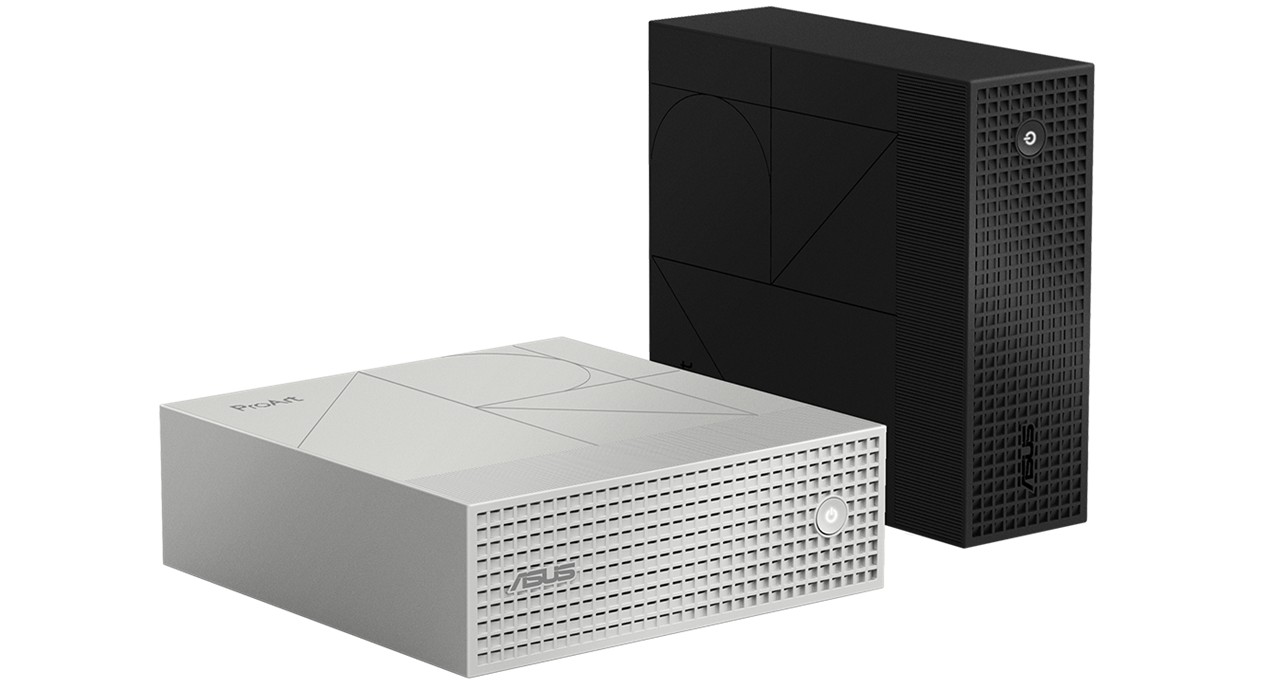
NVIDIA's RTX Spark desktop PCs are out now. The company confirmed in a November 18 blog post that compact desktop systems built around the RTX Spark platform from ASUS, Dell and MSI are available for purchase today, with Acer, GIGABYTE and HP mini PCs, along with a Microsoft Surface RTX Spark Dev Box, still to come. It's the first time the local-AI superchip NVIDIA has been teasing since CES has actually shipped inside a desktop box a shopper can buy.
What's available right now
Three vendors have RTX Spark compact desktops on sale as of today: ASUS, Dell and MSI. NVIDIA's own announcement frames this as the retail follow-through on a platform it has spent most of 2026 previewing as a concept for "personal AI" computing — a small-form-factor machine with enough local compute to run large language models and generative-AI workloads on a desk, without sending data to the cloud.
The rollout is staggered. ASUS, Dell and MSI are shipping now. NVIDIA says Acer, GIGABYTE and HP mini PCs are "coming soon," and it singled out one more machine by name: the Microsoft Surface RTX Spark Dev Box, a developer-focused box that hasn't gone on sale yet. NVIDIA's blog post also notes that RTX Spark-powered laptops are separately available today, though this article covers the desktop lineup specifically.
The first named models: ASUS ProArt GR1X and MSI EdgeMesa N AI+
NVIDIA named two specific desktop models in its announcement: the ASUS ProArt GR1X mini PC and the MSI EdgeMesa N AI+ Series compact desktop. Dell's specific model name wasn't included in the NVIDIA post.
ASUS's own RTX Spark PC page fills in more detail on the ProArt GR1X. It's built on what ASUS calls the "NVIDIA RTX Spark N1X" platform, with up to a 20-core Grace CPU and up to a 6,144-core Blackwell RTX GPU, offered with 64GB or 128GB of unified memory. Storage comes from dual M.2 NVMe slots supporting PCIe 5.0 or 4.0 drives, up to 4TB total. The whole thing fits in a 1.1-liter chassis measuring 150 x 150 x 51 millimeters — small enough to sit next to a monitor rather than under a desk.
MSI's EdgeMesa N AI+ Series was shown alongside the ASUS machine in NVIDIA's announcement as a second compact desktop built on the same RTX Spark foundation, aimed at the same local-AI use case. MSI's own product listing for the EdgeMesa N AI+ wasn't reachable at the time of writing, so its full spec sheet and price aren't independently confirmed yet; this article relies on NVIDIA's description of the model until MSI's page is back up.
Inside the box: what RTX Spark actually packs
Every RTX Spark desktop launching this wave — regardless of vendor — is built around the same core silicon. NVIDIA lists identical headline specs for the platform across ASUS, Dell and MSI's machines:
| Component | Spec |
|---|---|
| CPU | 20-core NVIDIA Grace CPU (Arm-based) |
| GPU | NVIDIA Blackwell RTX GPU, 6,144 CUDA cores |
| Memory | Up to 128GB unified memory (shared between CPU and GPU) |
| AI performance | Up to 1 petaflop |
| Networking | 10-gigabit Ethernet |
That combination is the same basic recipe NVIDIA used for its DGX Spark developer system, which pairs the Grace CPU with a Blackwell-generation GPU on a single Grace Blackwell superchip. The GPU itself is built on NVIDIA's Blackwell architecture, the same generation underpinning NVIDIA's current data-center and consumer GPU lines, scaled down into a unified-memory package small enough for a liter-class desktop.
The unified-memory design is the detail that matters most for the "local AI" pitch. Rather than splitting memory between system RAM and a discrete GPU's VRAM, RTX Spark pools up to 128GB as a single address space the CPU and GPU both draw from. That's what lets a desktop this size claim it can load and run large AI models locally rather than farming inference out to a cloud server.
Why unified memory is the headline feature
It's worth dwelling on the unified-memory architecture, because it's the single spec that separates an RTX Spark desktop from a conventional small-form-factor gaming PC with a similarly sized GPU. On a typical desktop, the CPU draws from system RAM and the GPU draws from its own, separate pool of VRAM, and data has to be copied back and forth between the two whenever a workload needs both. RTX Spark's Grace CPU and Blackwell RTX GPU instead share a single pool of up to 128GB, addressable by both processors without that copy step.
For gaming, that distinction barely registers. For running large AI models locally, it's the difference between a model fitting in memory at all and not fitting. A chatbot or image-generation model with tens of billions of parameters can easily exceed the 8GB, 12GB or 16GB of VRAM found in most consumer GPUs. A 128GB unified pool gives an RTX Spark desktop enough headroom to keep considerably larger models resident on the machine itself, which is the entire premise behind NVIDIA marketing these as "local AI" PCs rather than general-purpose desktops that happen to include an AI-capable GPU.
Pricing: what's confirmed and what isn't
NVIDIA's announcement and the vendor pages checked for this article do not list prices for any RTX Spark desktop. ASUS's RTX Spark PC page describes the ProArt GR1X's specs and chassis dimensions but has no price or an on-page purchase button for it — a contrast with the "pre-order now" treatment ASUS gives its ProArt P16 and P14 RTX Spark laptops on the same page. MSI's and Dell's pricing is likewise not yet listed on the pages checked for this article.
In short: these machines are confirmed on sale today, but shoppers currently have to go through each vendor's own retail channel to find out what they'll actually pay. We'll update this article once ASUS, Dell or MSI publish list prices.
Vendor-by-vendor status
| Vendor | Model | Status | Price |
|---|---|---|---|
| ASUS | ProArt GR1X mini PC | On sale now | Not yet listed |
| MSI | EdgeMesa N AI+ Series | On sale now | Not yet listed |
| Dell | Not named by NVIDIA | On sale now | Not yet listed |
| Acer | Not yet named | Coming soon | — |
| GIGABYTE | Not yet named | Coming soon | — |
| HP | Not yet named | Coming soon | — |
| Microsoft | Surface RTX Spark Dev Box | Coming soon | — |
Who this is actually for
RTX Spark desktops aren't positioned as gaming PCs or general productivity boxes, even though a Blackwell RTX GPU sits inside them. NVIDIA and ASUS both frame the category around running AI models locally — generative AI, agentic workflows and development work that benefits from keeping data and inference on a device the user controls, rather than routing it through a cloud API. ASUS's marketing language for the GR1X calls it an "agent computer" built for cloud, local or hybrid AI work, which lines up with how NVIDIA has described the RTX Spark platform generally since it first showed up as a concept.
That framing matters for expectations. A 6,144-CUDA-core GPU is a mid-range part by discrete-gaming-GPU standards, but the point of RTX Spark isn't peak gaming frame rates — it's the 128GB of memory the CPU and GPU can both address, which lets the system keep much larger AI models resident than a typical gaming rig with a separate, smaller pool of GPU VRAM could manage.
How this fits NVIDIA's RTX Spark push
NVIDIA has been building up to this retail moment for a while. Pandromeda covered what the RTX Spark platform actually is when NVIDIA first laid out the concept, and more recently reported that the RTX Spark superchip won a CES 2027 innovation award. Neither of those moments involved an actual desktop PC a consumer could put in a shopping cart. This week's news is the part that follows the platform announcements and the award recognition: real SKUs, from real PC vendors, shipping today.
It also slots alongside NVIDIA's existing DGX Spark developer system, which uses the same Grace Blackwell superchip concept but is sold directly by NVIDIA and its workstation partners as a developer-oriented machine rather than a mainstream desktop. RTX Spark, by contrast, is explicitly going through consumer and prosumer PC brands — ASUS, Dell, MSI, and soon Acer, GIGABYTE and HP — which is a different distribution strategy than NVIDIA has used for DGX-branded hardware.
What hasn't changed since the platform was announced
The headline numbers in this launch — 20 Grace CPU cores, 6,144 CUDA cores, up to 128GB of unified memory, up to 1 petaflop of AI performance, 10GbE networking — match what NVIDIA has described for the RTX Spark platform all along. Nothing in this week's announcement suggests a spec bump or a cut-down version for retail; the desktops shipping from ASUS, Dell and MSI appear to be the full platform NVIDIA has been describing since RTX Spark was first previewed, now simply available to buy rather than being demonstrated on a show floor.
The 10-gigabit Ethernet port is also worth flagging on its own, since it's easy to skim past in a spec list dominated by CPU cores and CUDA counts. Ten-gig networking is well beyond what a typical consumer desktop ships with, and it points to another intended use case: linking multiple RTX Spark machines together, or moving large AI datasets and model checkpoints to and from the desktop quickly, rather than treating the machine as an isolated single-user box.
How to actually buy one
For now, buying an RTX Spark desktop means going directly to the vendor. ASUS lists the ProArt GR1X on its own RTX Spark PC page, where it currently sits as a "learn more" listing rather than a live add-to-cart product, mirroring how the page treats ASUS's RTX Spark laptops before they went up for pre-order. NVIDIA's own announcement points readers toward checking in with ASUS, Dell and MSI directly for purchase details rather than hosting sales itself, consistent with how NVIDIA has sold DGX-branded hardware through OEM and retail partners rather than a single storefront. Expect listings to firm up — with prices attached — in the days following this announcement.
What's next
Three pieces of this rollout are still unresolved. First, pricing: none of the three vendors shipping today have published a price for their RTX Spark desktop, so the actual cost of entry for this category is still unknown. Second, the rest of the vendor lineup: Acer, GIGABYTE and HP mini PCs are confirmed as coming but have no listed release date, and the same is true of the Microsoft Surface RTX Spark Dev Box, which NVIDIA named specifically but didn't date. Third, independent benchmarks: because these are brand-new SKUs, there's no third-party testing yet to confirm how the 1-petaflop AI-performance figure or the 128GB unified-memory pool translate into real-world local AI performance outside of NVIDIA's own figures.
Pandromeda will follow up once ASUS, Dell or MSI post pricing, and again when Acer, GIGABYTE, HP or Microsoft confirm release dates for their own RTX Spark machines.
Frequently asked questions
What is NVIDIA RTX Spark?
RTX Spark is NVIDIA's local-AI desktop and laptop platform, built around a Grace CPU and a Blackwell RTX GPU sharing a single pool of unified memory. It is designed to run AI models directly on the device instead of in the cloud.
Which RTX Spark desktop PCs are available now?
As of November 18, 2026, NVIDIA says RTX Spark compact desktops from ASUS, Dell and MSI are on sale. NVIDIA named the ASUS ProArt GR1X mini PC and the MSI EdgeMesa N AI+ Series specifically.
How much does an RTX Spark desktop cost?
Pricing has not been published yet by ASUS, Dell or MSI. NVIDIA's announcement and each vendor's product page checked for this article list specs but no price.
What are the specs of an RTX Spark desktop?
NVIDIA lists a 20-core Grace CPU, a Blackwell RTX GPU with 6,144 CUDA cores, up to 128GB of unified memory, up to 1 petaflop of AI performance, and 10-gigabit Ethernet.
When will Acer, GIGABYTE, HP and the Surface RTX Spark Dev Box be available?
NVIDIA says those are coming soon but has not given a specific release date for any of them as of this announcement.
Is an RTX Spark desktop a gaming PC?
No. NVIDIA and ASUS position RTX Spark desktops as local-AI machines for running AI models and agentic workloads, not as gaming systems, even though they use a Blackwell RTX GPU.
Sources
- NVIDIA: RTX Spark Desktops for Local AI Are Available Nowblogs.nvidia.com
- NVIDIA: DGX Spark Product Specificationsnvidia.com
- ASUS: RTX Spark PC Lineup (ProArt GR1X)asus.com
- Wikipedia: Blackwell (microarchitecture)en.wikipedia.org
Mara Lindqvist edits the hardware desk. She covers graphics cards, processors, memory and storage, the foundries and chip designers behind them, and what the numbers on a spec sheet mean for people choosing a PC. Specifications in her stories come from manufacturer spec pages and datasheets.