What Is DLSS 5? Nvidia’s 3D-Guided Neural Rendering Explained
DLSS 5 doesn’t just boost frame rates — it uses AI to redraw a scene’s lighting and materials. Here’s how 3D-Guided Neural Rendering works and which RTX cards and games support it.
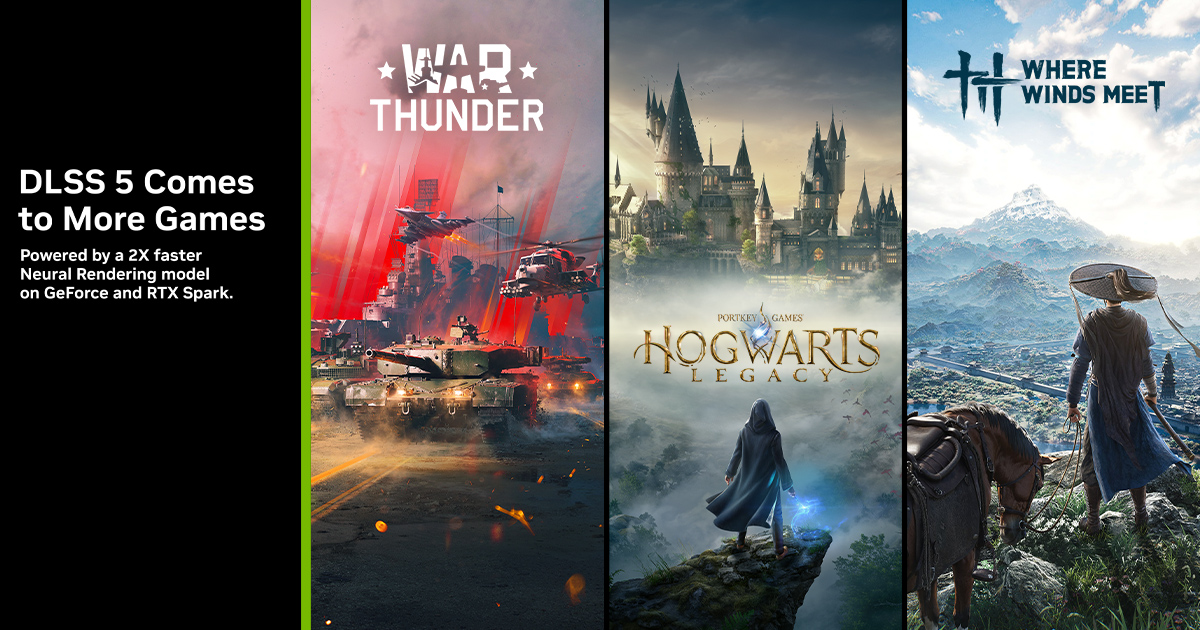
DLSS 5 is Nvidia’s newest AI rendering technology, and it does something none of its predecessors attempted: it doesn’t just upscale resolution or generate extra frames, it rewrites a scene’s lighting and materials in real time. Nvidia calls the core feature “3D-Guided Neural Rendering,” and as of this month it’s live in three real games, with a fourth arriving by the end of November — but it only runs on GeForce RTX 50 Series hardware. Nvidia first detailed the feature in its official DLSS 5 launch announcement, and has since followed up with a second post covering its expansion to three more titles.
- DLSS 5’s headline feature is 3D-Guided Neural Rendering — AI-generated lighting and materials, tuned per game by each developer.
- It launched September 1, 2026 in NBA 2K27, and is now also live in Hogwarts Legacy as of November 5, 2026.
- War Thunder gets it in mid-November and Where Winds Meet in late November 2026.
- DLSS 5 runs only on GeForce RTX 50 Series GPUs, RTX 50 Series laptops, RTX Spark PCs, and GeForce NOW Ultimate streaming from RTX 5080-powered servers.
What is DLSS 5?
DLSS 5 is the latest version of Nvidia’s Deep Learning Super Sampling suite — the umbrella name for the AI techniques GeForce RTX cards use to boost frame rates and image quality. Its new centerpiece, 3D-Guided Neural Rendering, is described by Nvidia as a deterministic, temporally stable AI rendering stage that “infuses game scenes with lifelike lighting and materials,” running on a single GeForce RTX 50 Series GPU at up to 4K resolution.
Unlike earlier DLSS features, which focused on performance (generating frames, upscaling resolution), 3D-Guided Neural Rendering is about visual fidelity: it adjusts shading, texture detail, reflections and shadow depth so a scene looks more physically grounded, without the developer having to hand-author every lighting interaction. Crucially, developers still control the final look — Nvidia’s engine-level masking tools let artists isolate specific objects, like glassware or foliage, and apply custom neural lighting tweaks without touching the rest of the scene, so the feature enhances a game’s existing art direction rather than overriding it.
Nvidia describes the underlying model as deterministic and temporally stable, meaning the AI produces consistent results frame to frame rather than introducing flicker or shimmer as the camera moves — a common failure mode for earlier neural rendering experiments. By the time 3D-Guided Neural Rendering reached Hogwarts Legacy in November, Nvidia was describing it as powered by “a 2X faster AI model” than the version that launched with NBA 2K27 in September — part of why the feature could extend to more demanding, open-world titles within just a few months of its debut. Edward Liu, Nvidia’s Director of Applied Deep Learning Research, and Gabriele Leone, its Director of Content Technology, are the two Nvidia staffers who have publicly walked through how the model and its developer-facing controls work.
How DLSS 5 fits into the DLSS lineup
Nvidia has layered several distinct AI features under the “DLSS” name since 2018, and each new version has typically required newer hardware. Here’s how 3D-Guided Neural Rendering fits into that history, per Nvidia’s own DLSS technology page:
| DLSS feature | What it does | Supported GPUs |
|---|---|---|
| Super Resolution | AI upscaling to a higher resolution | RTX 20, 30, 40 and 50 Series |
| Ray Reconstruction (DLSS 3.5) | AI-enhanced denoising for ray-traced scenes | RTX 20, 30, 40 and 50 Series |
| Frame Generation (DLSS 3) | AI-generated intermediate frames | RTX 40 and 50 Series |
| Multi Frame Generation (DLSS 4) | Generates up to five frames per rendered frame using fifth-generation Tensor Cores | RTX 50 Series only |
| Dynamic Multi Frame Generation (DLSS 4.5) | Adaptive frame generation plus a second-generation transformer model | RTX 50 Series only |
| 3D-Guided Neural Rendering (DLSS 5) | AI-generated lighting and materials tuned by developers | RTX 50 Series only |
The pattern is consistent: broadly compatible features like Super Resolution and Ray Reconstruction reach back to RTX 20 Series cards, while the newest, most demanding techniques — Multi Frame Generation, Dynamic Multi Frame Generation, and now 3D-Guided Neural Rendering — are locked to RTX 50 Series silicon, which Nvidia says is needed for the Tensor Core throughput these features require.
Which hardware actually runs DLSS 5?
3D-Guided Neural Rendering is available now on GeForce RTX 50 Series desktop GPUs, RTX 50 Series laptops, RTX Spark PCs, and through GeForce NOW Ultimate, which streams it from cloud servers built on GeForce RTX 5080 hardware. Older RTX 20, 30 and 40 Series cards — even recent ones — cannot run the feature locally; Nvidia’s performance and quality claims for DLSS 5 are built around RTX 50 Series Tensor Core throughput specifically, the same ceiling that already limits Multi Frame Generation and Dynamic Multi Frame Generation to that generation.
That hardware restriction is the single biggest practical catch for anyone reading about DLSS 5 and assuming it’ll show up on their existing card through a driver update. Nvidia has not described any plan to backport 3D-Guided Neural Rendering to earlier Tensor Core designs, and given that even DLSS 4’s Multi Frame Generation — a comparatively simpler feature — never came to RTX 40 Series cards, there’s little reason to expect an exception for DLSS 5’s more demanding neural lighting model.
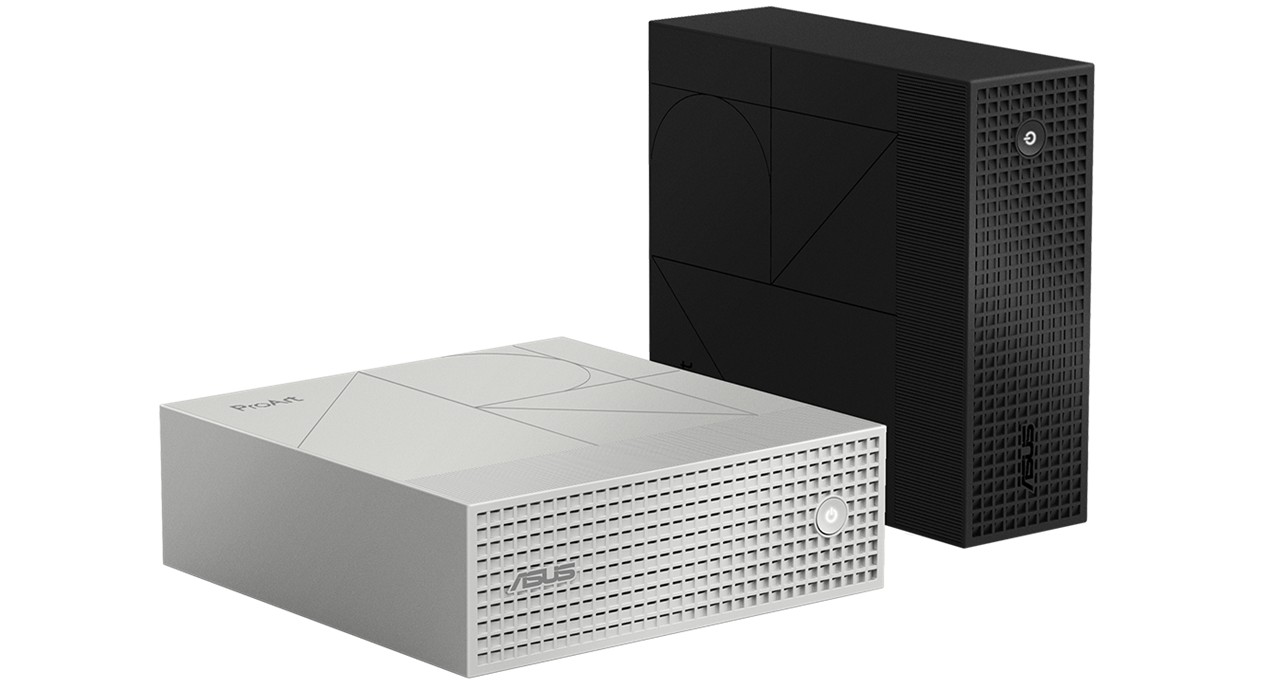
RTX Spark, specifically, is Nvidia’s small-form-factor personal AI PC platform built around the same RTX 50 Series-class silicon used in GeForce gaming GPUs, which is why it shows up alongside desktop and laptop GPUs on every DLSS 5 compatibility list rather than being treated as a separate product category. Anyone shopping for an RTX Spark system expecting it to double as a DLSS 5-capable gaming machine is on solid ground, at least on paper — though, as with any first-party claim, actual gaming performance on RTX Spark hardware is worth checking against independent reviews rather than Nvidia’s own benchmarks alone.
Which games support DLSS 5 right now?
DLSS 5 rolled out gradually rather than all at once:
- NBA 2K27 — the launch game for 3D-Guided Neural Rendering, available since September 1, 2026, on all GeForce RTX 50 Series GPUs and GeForce NOW.
- Hogwarts Legacy — added November 5, 2026. Avalanche Software worked directly with Nvidia to tune the feature. “The team at Avalanche Software worked closely with NVIDIA to add DLSS 5 Neural Rendering technology into Hogwarts Legacy for PC to ensure the best visual results while maintaining our artistic intent,” said Jose Villeta, the studio’s Director of Software Engineering, adding that the goal was to keep the game true to its original vision while enhancing environment detail, shadows, character texture, lighting and reflections throughout Hogsmeade and the wider game world.
- War Thunder — coming in War Thunder’s “Eagle’s Shadow” major update in mid-November 2026, alongside new planes, ships, tanks and visual effects. Developer Gaijin Entertainment says the feature delivers improved highlights, refined shadows and a new level of microcontrast not previously possible in the game.
- Where Winds Meet — scheduled for late November 2026, adding 3D-Guided Neural Rendering on top of the game’s existing DLSS Multi Frame Generation and Super Resolution support.
How to turn on DLSS 5 in a supported game
In Hogwarts Legacy, Nvidia’s documented steps are straightforward: download the game’s latest update, open the in-game graphics options, and activate the “Neural Rendering” setting. For the fullest effect, Nvidia recommends pairing it with the game’s other DLSS options — Super Resolution under “Upscale Type,” Multi Frame Generation under “Frame Generation,” NVIDIA Reflex under “Low Latency Mode,” and DLSS Ray Reconstruction if ray-traced effects are also enabled. Other supported games are expected to expose the same “Neural Rendering” style toggle once their respective updates land. If a game doesn’t show the option yet, the most likely explanation is simply that its DLSS 5 update hasn’t shipped — War Thunder and Where Winds Meet players, for instance, won’t see it until their respective November updates go live, even though both titles already support other DLSS features today. Checking a game’s own patch notes or official store page is the most reliable way to confirm whether 3D-Guided Neural Rendering has actually arrived, rather than assuming a general DLSS driver update brings it automatically.
What kind of performance does it deliver?
Nvidia’s own benchmarks for Hogwarts Legacy with every DLSS 5 feature active — 3D-Guided Neural Rendering, 6x Multi Frame Generation, Ray Reconstruction, NVIDIA Reflex and ray tracing all turned on at max settings — show:
| Resolution | GPU | Frame rate with full DLSS 5 stack |
|---|---|---|
| 4K (3840x2160) | GeForce RTX 5090 | Up to 300 fps |
| 1440p (2560x1440) | GeForce RTX 50 Series | Up to 370 fps |
| 1080p (1920x1080) | GeForce RTX 50 Series | Ray tracing and max settings maintained at high frame rates |
Those numbers come from Nvidia’s own first-party testing rather than independent benchmarks, so treat them as the manufacturer’s best-case figures for its own hardware rather than a guaranteed result on every system — actual frame rates will vary with CPU, RAM and the specific area of the game being tested, as with any first-party performance claim.
How DLSS 5 compares to AMD and Intel’s upscaling tech
3D-Guided Neural Rendering has no direct equivalent yet from Nvidia’s competitors. AMD’s FSR and Intel’s XeSS both focus on upscaling and frame generation — the same category as Nvidia’s Super Resolution and Multi Frame Generation — rather than on regenerating a scene’s lighting and materials with AI. Intel’s most recent push, XeSS 3 with multi-frame generation, narrows the frame-generation gap with Nvidia, but neither AMD nor Intel has announced a neural lighting feature comparable to 3D-Guided Neural Rendering. For now, it remains a GeForce RTX 50 Series exclusive in more ways than one. That gap matters most for shoppers deciding between GPU brands for a new build: a buyer choosing between a GeForce RTX 50 Series card and an equivalent AMD or Intel card today isn’t just weighing raw frame rates, but also whether neural-lighting features like 3D-Guided Neural Rendering will matter to the specific games they play — a harder calculation than the frame-generation comparisons that dominated the previous GPU generation.
What to watch next
Expect DLSS 5 support to keep expanding game by game rather than through one big platform update — that’s how NBA 2K27 and Hogwarts Legacy rolled out, and it’s the same pattern War Thunder and Where Winds Meet are following this November. Nvidia has said developer feedback continues to shape how it refines the underlying models and the controls studios get over them, so later games may expose more granular neural-lighting options than Hogwarts Legacy’s single toggle. Whether 3D-Guided Neural Rendering eventually comes to older RTX 20, 30 or 40 Series cards in any form hasn’t been addressed by Nvidia, and nothing in the current rollout suggests that’s planned. For players deciding whether a GeForce RTX 50 Series upgrade is worth it specifically for DLSS 5, the clearest signal will be how many additional games pick it up over the next few months — a short list of four titles is a promising start, but it’s still a small fraction of the games most RTX owners actually play day to day.
Frequently asked questions
What is DLSS 5?
DLSS 5 is Nvidia's newest AI rendering technology, built around a feature called 3D-Guided Neural Rendering that uses AI to generate lifelike lighting and materials in a game scene, tuned by developers to match their artistic intent.
Which GPUs support DLSS 5?
Only GeForce RTX 50 Series desktop and laptop GPUs, RTX Spark PCs, and GeForce NOW Ultimate streaming from RTX 5080-powered servers. RTX 20, 30 and 40 Series cards cannot run it.
Which games support DLSS 5 right now?
NBA 2K27 (since September 1, 2026) and Hogwarts Legacy (since November 5, 2026) support it today. War Thunder gets it in mid-November 2026 and Where Winds Meet in late November 2026.
How is DLSS 5 different from DLSS 4.5?
DLSS 4.5 focused on Dynamic Multi Frame Generation, which improves frame rate. DLSS 5's 3D-Guided Neural Rendering instead changes a scene's lighting and materials using AI, targeting visual fidelity rather than frame rate.
How do I turn on DLSS 5 in a supported game?
In Hogwarts Legacy, download the latest game update and enable the ‘Neural Rendering’ option in the graphics settings. Other supported games are expected to use a similar toggle once their DLSS 5 updates ship.
Sources
Mara Lindqvist edits the hardware desk. She covers graphics cards, processors, memory and storage, the foundries and chip designers behind them, and what the numbers on a spec sheet mean for people choosing a PC. Specifications in her stories come from manufacturer spec pages and datasheets.