Nvidia Pours Billions Into Its Vera Rubin Supply Chain
Nvidia confirmed expanded, multiyear supply-chain deals worth billions to keep its next-gen Vera Rubin AI chip platform shipping at scale.
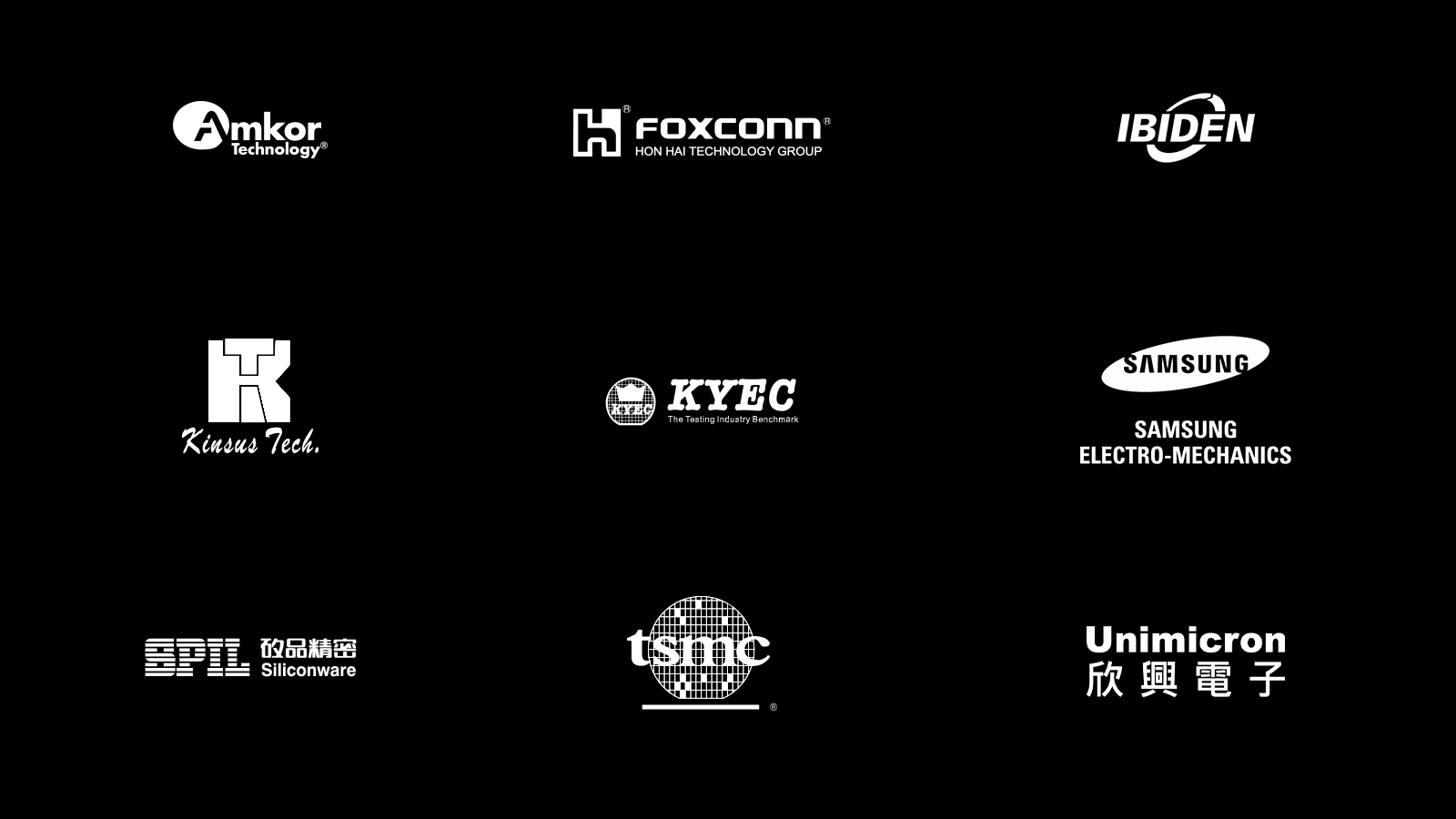
Nvidia announced expanded commitments with six supply-chain partners on November 17, 2026, locking in years of additional substrate, packaging and testing capacity dedicated specifically to its Vera Rubin AI chip platform. The deal follows Nvidia's own confirmation that Vera Rubin NVL72 racks and Vera CPUs are now shipping in volume, with the company framing the expansion as the infrastructure needed to keep up with demand for its next-generation AI data center hardware.
- Nvidia named six supply-chain partners in a November 17, 2026 announcement: Amkor, Foxconn, Kinsus, Samsung Electro-Mechanics, SPIL and TSMC.
- Kinsus will expand advanced substrate capacity dedicated to Nvidia by more than 3.5x over current levels.
- Amkor's multiyear packaging deals, announced across July and October 2026, total close to $3 billion including prepayments.
- Vera Rubin NVL72 and Vera CPU first volume shipments are expected in Q3, using TSMC's 5nm and 3nm nodes with CoWoS advanced packaging.
- A single Vera Rubin NVL72 rack packs 72 Rubin GPUs and 36 Vera CPUs, with 20.7 TB of HBM4 memory and up to 3,600 PFLOPS of NVFP4 inference performance, per Nvidia's own spec sheet.
What Nvidia actually announced
Nvidia's November 17 release describes new and expanded agreements across substrate manufacturing, advanced packaging and chip testing — the less visible, capital-intensive steps between a finished chip design and a rack that customers can actually buy. Kinsus Interconnect Technology agreed to expand advanced ABF package substrate capacity dedicated to Nvidia by more than 3.5x over current levels at its Youth campus in Taoyuan, Taiwan, with production starting in the second half of 2027 and the added capacity targeted for the third quarter of 2028 — a multiyear horizon that underlines how far in advance chipmakers now have to commit factory capacity to keep pace with AI demand. Samsung Electro-Mechanics separately amended its existing substrate agreement to improve throughput at its Sejong and Busan facilities in South Korea.
On the packaging side, Amkor Technology's multiyear agreements — announced across July and October 2026 — now total close to $3 billion including prepayments, funding expanded packaging capacity in Arizona and South Korea. Siliconware Precision Industries (SPIL) is expanding packaging lines in Taiwan with Nvidia funding described as "multibillion-dollar," adding capacity for bumping, interposer wafer fabrication, assembly and testing. Foxconn's role is described more broadly as deepening its work on next-generation GPU and networking platforms across its production network in Asia, North America and Europe.
| Partner | What's expanding | Timeline |
|---|---|---|
| Kinsus Interconnect Technology | Advanced ABF substrate capacity, 3.5x+ increase | Production starts 2H 2027; capacity target Q3 2028 |
| Amkor Technology | Packaging capacity in Arizona and South Korea, ~$3B total | Deals announced July and October 2026 |
| SPIL | Bumping, interposer, assembly and testing lines in Taiwan | Contracted capacity rises through mid-2029 |
| Samsung Electro-Mechanics | Amended substrate supply deal, Sejong/Busan plants | Ongoing |
| TSMC | 5nm/3nm wafers and CoWoS packaging for Vera Rubin NVL72 and Vera CPU | First volume shipments targeted Q3 |
| Foxconn | Next-gen GPU and networking platform production | Ongoing, global production network |
Why a supply-chain press release is the story
Nvidia doesn't typically issue a dedicated press release just to confirm it's paying suppliers — the fact that it did here, on the same day it reported quarterly earnings, is itself informative. Debora Shoquist, Nvidia's EVP of Operations, framed the expansions as evidence that "our supply chain is a strategic advantage," language that positions capacity commitments as a competitive moat rather than routine procurement. For a company whose GPUs have spent much of the last three years supply-constrained relative to demand, headline chip announcements matter less than whether the surrounding substrate, packaging and testing capacity actually exists to turn those chip designs into shippable racks — which is the specific gap this round of agreements is aimed at closing.
The timing also lines up with Nvidia's broader AI infrastructure push: the same week, the company separately reported record quarterly data center revenue, underlining that the commercial pressure to keep Vera Rubin production scaling is coming from real, booked demand rather than speculative capacity-building.
What Vera Rubin NVL72 actually is
Vera Rubin is Nvidia's next-generation AI data center platform, succeeding the current Blackwell-based Grace Blackwell (GB200/GB300) generation. According to Nvidia's own product page, a single Vera Rubin NVL72 rack packs 72 Rubin GPUs and 36 Vera CPUs into one liquid-cooled system, with 20.7 TB of total HBM4 GPU memory delivering up to 1,400 TB/s of bandwidth, and sixth-generation NVLink interconnects providing 216 TB/s of bandwidth between GPUs in the rack. On raw throughput, Nvidia rates the full rack at up to 3,600 PFLOPS of sparse NVFP4 inference performance and 2,520 PFLOPS of NVFP4 training performance — each Vera CPU, meanwhile, packs 88 custom Arm-based Olympus cores per Superchip, for 3,168 cores across the full 72-GPU rack.
Nvidia first detailed the platform at GTC Taipei in May 2026, where CEO Jensen Huang described it as "an AI factory engine that delivers intelligence at scale," and the company has said Vera Rubin NVL72 delivers roughly 10x the tokens generated per megawatt of power compared with the current Grace Blackwell NVL72 generation — a power-efficiency framing that reflects how much AI data center buildouts are now constrained by electricity supply and cooling capacity as much as by chip output itself. Nvidia's product page currently lists Vera Rubin NVL72 as "Available Now," describing the platform as "ramping into full production" with Taiwanese server makers already shipping Vera Rubin-based systems, though the company directs prospective buyers to contact sales directly rather than listing public per-unit pricing.
The rest of the Vera Rubin platform, beyond the NVL72 rack
NVL72 is the headline rack configuration, but Nvidia's May 2026 unveiling described five purpose-built rack types built around the same Vera Rubin generation: the Vera Rubin NVL72 compute rack itself, a Vera CPU rack, a Groq 3 LPX rack, a Vera BlueField-4 STX storage rack, and a Spectrum-6 SPX Ethernet networking rack. Nvidia describes Vera Rubin as the third generation of its MGX rack-scale design, an open-source reference architecture that lets server makers build compatible systems without starting from scratch on cooling, power delivery and chassis layout — part of why so many of the system builders named in Nvidia's announcements build on the same base design rather than competing architectures.
Networking is a significant part of the platform's story on its own. Nvidia's BlueField-4 DPUs handle software-defined networking at up to 800Gb/s per rack, while Spectrum-X Ethernet Photonics — now in production, per Nvidia — uses co-packaged optics to cut power use and improve uptime compared with racks wired using traditional optical transceivers. Nvidia credits that photonics approach with roughly 5x better power efficiency and 5x longer AI system uptime versus traditional transceiver-based networking, which matters at the scale Nvidia is now targeting: the company says the platform is designed to support AI factories built around a million or more GPUs working together, a scale where networking failures and power losses compound quickly across that many simultaneous links.
Security is built into the rack-scale design as well. Nvidia's confidential computing implementation extends a trusted execution environment across the entire rack rather than just individual chips, encrypting data as it moves across the high-speed interconnects between GPUs and attesting at the hardware level that a given rack hasn't been tampered with — a feature aimed squarely at cloud providers running workloads for multiple AI customers on shared infrastructure, where one tenant's data needs to stay provably isolated from another's even though they're sharing the same physical hardware.
Making sense of two different "full production" announcements
It's worth being precise about what's new here versus what Nvidia already said back in May. Nvidia's original Vera Rubin unveiling at GTC Taipei in May 2026 described the platform in detail and said production shipments were expected to begin "in the fall" of 2026 — at that point, shipments hadn't started yet. The November 17 announcement is a different, later development: it's Nvidia locking in expanded multiyear supply-chain capacity specifically to support the ramp that was already underway, with concrete capacity targets stretching out to 2027, 2028 and even mid-2029 for some partners. Nvidia's product page statement that Vera Rubin NVL72 is now "Available Now" and "ramping into full production," with Taiwanese server makers already shipping systems, reflects that the fall 2026 shipping target referenced back in May has since been met — this new announcement is about scaling that production further, not about the platform shipping for the first time.
Why this matters beyond Nvidia's balance sheet
For PC and consumer hardware buyers, Vera Rubin NVL72 isn't a product that will ever show up on a store shelf — it's data center infrastructure sold directly to cloud providers and large AI labs, not a graphics card or workstation part. Its relevance to a broader hardware audience is indirect but real: the GPUs, memory and compute capacity Nvidia is racing to build for Vera Rubin compete for the same advanced packaging lines, HBM4 memory supply and TSMC wafer capacity that also feed Nvidia's consumer GeForce lineup and other companies' data center chips. When Nvidia locks in multiyear, multibillion-dollar capacity commitments at suppliers like Amkor and SPIL specifically for Vera Rubin, that capacity is, by definition, not available for other products competing for the same factories, which is one reason advanced packaging and substrate supply has become as closely watched by industry analysts as GPU wafer output itself over the past two years.
It's also a useful real-time signal for anyone tracking the broader AI buildout: named partners spanning substrate makers, packaging specialists and system builders across Taiwan, South Korea, the US and beyond illustrate just how globally distributed the physical supply chain behind a single AI chip platform actually is, and how far in advance — in Kinsus's case, into 2028 — that supply chain has to be planned to keep pace with projected AI compute demand. Executives from several of the named partners used similar language in their own quotes accompanying the announcement, describing the arrangements as multi-generation planning rather than a one-off order, which is consistent with the multiyear capacity targets attached to each individual deal.
What to do next
If you're tracking Nvidia's AI data center roadmap rather than its consumer graphics cards, Vera Rubin NVL72's official specifications and ordering process are detailed on Nvidia's Vera Rubin NVL72 product page, and the full list of supply-chain partners and deal terms from this announcement is in Nvidia's official newsroom release. For background on how Nvidia first positioned the platform, Nvidia's original GTC Taipei announcement on its investor relations site covers the platform's full feature set. Readers who want the Oracle cloud deployment angle on this same platform can see our earlier coverage of Vera Rubin's release, specs and the Oracle deal, and for background on Nvidia as a company, Nvidia's Wikipedia entry covers its history in the GPU and AI accelerator markets.
Frequently asked questions
What did Nvidia announce about its supply chain on November 17?
Nvidia announced expanded, multiyear agreements with six partners — Amkor, Foxconn, Kinsus, Samsung Electro-Mechanics, SPIL and TSMC — to add substrate, advanced packaging and testing capacity dedicated to its Vera Rubin AI chip platform.
What is Vera Rubin NVL72?
It's Nvidia's next-generation AI data center rack, packing 72 Rubin GPUs and 36 Vera CPUs into one liquid-cooled system with 20.7 TB of HBM4 memory, succeeding the current Grace Blackwell (GB200/GB300) generation.
When does Vera Rubin ship in volume?
Nvidia's November 17 release says first volume shipments of Vera Rubin NVL72 and Vera CPU are expected in the third quarter, and Nvidia's product page already lists the platform as ‘Available Now’ and ramping into full production.
How much is Nvidia spending on supply chain expansion?
Amkor's multiyear packaging deals alone total close to $3 billion including prepayments. Other deals, including Kinsus's substrate expansion and SPIL's packaging buildout, are described as multibillion-dollar but without a disclosed total figure.
Can consumers buy Vera Rubin NVL72?
No. It's a data center product sold directly to cloud providers and AI labs through Nvidia's sales team, not a retail graphics card or workstation part.
Sources
- NVIDIA Newsroom: NVIDIA Expands Commitments With Supply Chain Partners to Support AI Infrastructure Buildoutnvidianews.nvidia.com
- NVIDIA: Vera Rubin NVL72 product and specifications pagenvidia.com
- NVIDIA Investor Relations: Vera Rubin Ramps Into Full Production to Power Agentic AI Factories Worldwideinvestor.nvidia.com
- Wikipedia: Nvidiaen.wikipedia.org
Mara Lindqvist edits the hardware desk. She covers graphics cards, processors, memory and storage, the foundries and chip designers behind them, and what the numbers on a spec sheet mean for people choosing a PC. Specifications in her stories come from manufacturer spec pages and datasheets.