Galaxy Z Fold8 vs Z Flip8: Which Samsung Foldable to Buy?
Samsung's two 2026 foldables share a chip and a hinge design but differ sharply in size, price, and battery life. Here's how the Z Fold8 and Z Flip8 compare.
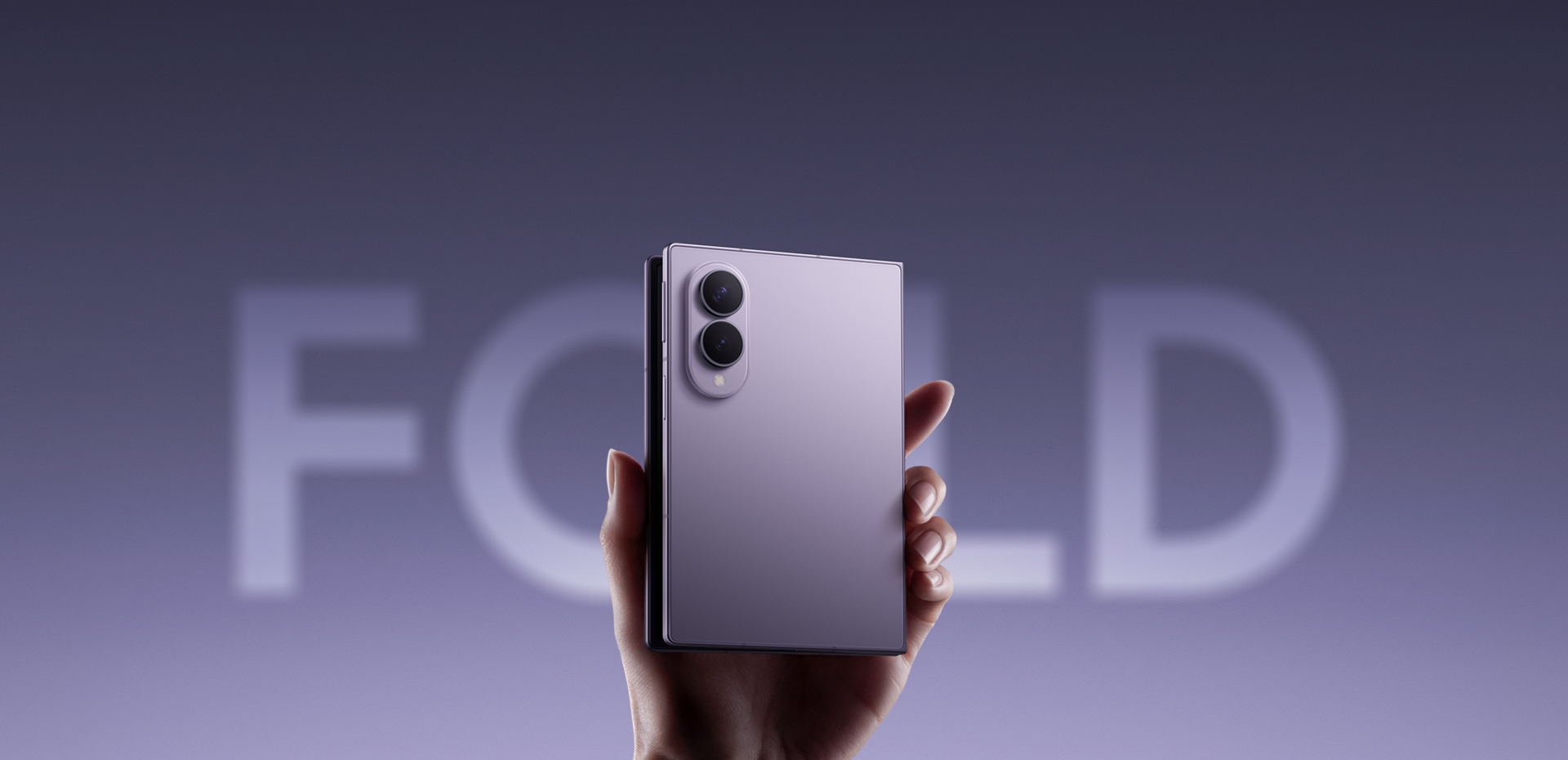
The Galaxy Z Fold8 starts at $1,899.99 and the Galaxy Z Flip8 starts at $1,199.99 — a $700 gap that buys a bigger book-style screen, a third rear camera, and a larger battery. Both run the same Snapdragon 8 Elite Gen 5 for Galaxy chip and share Samsung's Armor FlexHinge and Armor Aluminum frame, so the real choice comes down to size, cameras, and how much screen you actually want to carry in your pocket.
Quick take: Pick the Z Fold8 if you want a tablet-sized 7.6" inner display, a 50 MP triple-camera system, and all-day battery life for productivity. Pick the Z Flip8 if you want a compact phone that fits in a small pocket, a bigger 4.1" cover screen than past Flip models, and you don't mind a smaller 6.9" unfolded display and two rear cameras instead of three.
Price and release date
Samsung unveiled both foldables together at Galaxy Unpacked on July 22, 2026, and they went on sale August 7, 2026. The Galaxy Z Fold8 starts at $1,899.99 for the base 256 GB configuration, with 512 GB and 1 TB options above that; a higher-end Z Fold8 Ultra variant has also been reported starting near $2,099. The Galaxy Z Flip8 starts at $1,199.99, also in 256 GB or 512 GB configurations. Samsung is offering up to $800 in trade-in credit toward the Fold8 and up to $400 toward the Flip8, plus carrier-specific deals that can cut either price further depending on your carrier and existing device.
Neither price is an entry-level ask, and both sit well above a typical slab flagship like the standard Galaxy S26. That premium buys the folding mechanism itself, plus the cover-screen hardware that a normal phone doesn't need — so if the fold format isn't something you specifically want, Samsung's non-folding Galaxy S line remains the better value on raw specs per dollar.
Displays: 7.6-inch tablet vs. 6.9-inch compact
This is the single biggest difference between the two phones. The Z Fold8 opens into a 7.6" main display with a near-square 4:3 aspect ratio built for split-screen multitasking, backed by a 5.5" cover screen (10:16) for quick tasks when it's closed. The Z Flip8 opens into a more conventional 6.9" display and uses a notably larger 4.1" cover screen — Samsung's biggest FlexWindow yet — that can run full apps, not just widgets, without unfolding the phone.
If you read, browse, or multitask heavily, the Fold8's bigger canvas is the bigger upgrade. If you mostly want a phone that's easier to glance at and pocket, the Flip8's cover screen does more of the day-to-day work than the Fold8's ever will.
Performance
In the US, both phones use the exact same silicon: the Snapdragon 8 Elite Gen 5 for Galaxy, Qualcomm's custom-tuned chip built for Samsung's 2026 flagship line. Neither foldable is faster than the other on paper in this market — the performance ceiling is identical, so the decision here really comes down to how each chassis manages heat and battery rather than raw speed. (Outside the US and China, Samsung ships the Z Flip8 with an Exynos 2600 chip instead, so check which processor your region's unit uses before comparing benchmarks.)
Where the two phones do differ is thermal headroom. The Fold8's larger chassis and bigger battery give it more surface area to dissipate heat, which matters if you're using the phone's multi-window mode to run several demanding apps at once. The Flip8's smaller body has less room to spread that heat, so under sustained heavy load — long gaming sessions or extended video capture — it's more likely to throttle slightly sooner than the Fold8, even though both start from the same chip.
Cameras
The Z Fold8 has the more capable camera array: a 50 MP wide, 50 MP ultrawide, and 50 MP telephoto lens with 2x optical-quality zoom on the back, plus 10 MP selfie cameras on both the cover and inner screens and up to 10x digital zoom. The Z Flip8 drops to two rear cameras — a 50 MP wide with 2x optical-quality zoom and a 12 MP ultrawide — with a single 10 MP camera built into the main screen for selfies, also topping out at 10x digital zoom.
In practice, the Fold8's dedicated telephoto and extra ultrawide resolution make it the better choice for anyone who shoots a lot of zoomed or wide shots. The Flip8's camera is still solid for everyday photos, just with less reach.
The Flip8's FlexCam setup still has one advantage the Fold8 can't match: because the phone can prop itself up half-folded on its own hinge, you can frame a shot with the rear cameras and the cover screen acting as a viewfinder without holding the phone or using a tripod — handy for group photos or short selfie videos shot with the higher-resolution rear camera instead of the front one. Both phones record up to 10x digital zoom video, and both support the same computational photography features Samsung ships across its 2026 lineup, including night mode and AI-assisted scene optimization carried over from the standard Galaxy S26 camera software.
| Spec | Galaxy Z Fold8 | Galaxy Z Flip8 |
|---|---|---|
| Price (starting) | $1,899.99 | $1,199.99 |
| Main display | 7.6" (4:3) | 6.9" |
| Cover display | 5.5" (10:16) | 4.1" FlexWindow |
| Chip | Snapdragon 8 Elite Gen 5 for Galaxy | Snapdragon 8 Elite Gen 5 for Galaxy |
| Rear cameras | 50 MP wide, 50 MP ultrawide, 50 MP 2x telephoto | 50 MP wide (2x optical-quality), 12 MP ultrawide |
| Front/cover cameras | 10 MP cover, 10 MP inner | 10 MP main-screen |
| Battery | 4,800 mAh (~26 hrs video) | 4,300 mAh (~31 hrs video) |
| Weight | 201 g | 180 g |
| Thickness (unfolded) | 4.5 mm | 6.1 mm |
| Frame / glass | Armor Aluminum, Gorilla Glass Victus 2 | Armor Aluminum, Gorilla Glass Victus 2 (cover) |
| Storage options | 256 GB / 512 GB / 1 TB | 256 GB / 512 GB |
| Software support | Up to 7 years of OS and security updates | Up to 7 years of OS and security updates |
Battery life
Despite its smaller body, the Z Flip8 actually edges out the Fold8 on rated video playback — about 31 hours versus 26 hours — thanks to its smaller, lower-resolution main display drawing less power. In real-world mixed use, expect the Fold8's bigger 4,800 mAh cell to still comfortably last a full day of heavier multitasking, while the Flip8's 4,300 mAh battery is tuned to outlast it specifically on passive tasks like video.
Durability and design
Both phones share Samsung's Armor FlexHinge and Armor Aluminum frame, and Samsung says the Flip line is now rated #1 in durability by the ACSI. The Fold8 adds a dual-layer titanium reinforcement under its larger inner display to help protect the crease on the bigger panel, where the stress of folding is spread across more screen area. At 201 g and 4.5 mm unfolded, the Fold8 is noticeably heavier and only marginally thicker than the 180 g, 6.1 mm Flip8 — the Flip8's thickness number looks higher because it's measuring a single-hinge compact phone rather than a half-unfolded tablet. Folded shut, the comparison flips: the Flip8 becomes a small square block that fits in a jeans pocket, while the Fold8 folded shut is still roughly the footprint and thickness of two stacked regular phones.
Neither phone uses a physical kickstand or latch — both rely entirely on the hinge's friction to hold any angle between fully open and fully closed, a design Samsung has refined generation over generation to resist loosening with repeated folding. Samsung doesn't publish an official fold-cycle rating for either device, so if long-term hinge durability is your main worry, the safest approach is the same for both phones: keep the crease area free of debris and avoid pressing hard objects like keys or coins against the folded screen in a bag or pocket.
Software updates
Samsung is backing both phones with up to seven years of OS upgrades and security updates, matching the policy Samsung has extended across its 2026 Galaxy flagship lineup. That means both the Z Fold8 and Z Flip8 should keep receiving major Android version updates into roughly 2033, so neither phone has a longevity disadvantage over the other — this is purely a size, price, and camera decision.
Multitasking, One UI, and cover-screen features
Software is where the two shapes diverge the most, even running the identical One UI build on top of Android. The Fold8's 4:3 inner display is built for Samsung's multi-window layout, letting you run two or three apps side by side, drag and drop content between them, and pin a floating app over whatever else is open — the kind of workflow a 6.9" slab screen simply can't fit. The Flip8's standout software feature is its 4.1" FlexWindow, which is now large enough to run full third-party apps (not just Samsung's own widgets) without unfolding the phone, so you can reply to messages, check a map, or skim an article from the cover screen alone.
Both phones also support Samsung's Flex Mode, which splits the UI and keeps a video or camera viewfinder active in the top half of the screen when the phone is folded to roughly 90 degrees — useful for propping the Fold8 up as a small laptop-style screen, or using the Flip8 as a mini tripod-mounted camera.
Accessories and ecosystem
The Fold8's larger inner display supports S Pen input with a compatible case-style pen (it isn't a built-in slot), which matters if you plan to use the phone for notes or sketching — something the Flip8's narrower screen isn't really designed for. Both phones use the same charging and case ecosystem as the rest of Samsung's 2026 lineup, and both are IP-rated for water and dust resistance, so neither one requires you to buy a different category of case or charger than you'd use with a standard Galaxy phone.
Who should skip both
If you don't specifically want a folding phone, neither of these is the best value pick. A standard Galaxy S26 or Galaxy S26 Ultra gets you the same chip generation, a comparable or better primary camera, and a lower price without the fold mechanism's long-term hinge wear or the cover-screen compromises. Foldables are worth the premium specifically for buyers who want either the Fold8's tablet-sized screen or the Flip8's pocketable form factor — not simply as an upgrade path from a regular Galaxy phone.
Which should you buy?
Buy the Galaxy Z Fold8 if you want the biggest screen Samsung sells in a foldable, a three-camera system with real optical-quality zoom, and you're willing to pay $700 more and carry a heavier phone for it. Buy the Galaxy Z Flip8 if you want a compact phone that's easier to pocket, a cover screen big enough to actually use without unfolding, and you're fine with two rear cameras instead of three. Readers coming from an older Fold can see exactly what changed between the Z Fold8 and the Z Fold7, and anyone cross-shopping outside Samsung's own lineup can check how the Fold8 stacks up against Apple's iPhone Duo or Vivo's X Fold 6.
What's next
Expect Samsung to keep both foldables as its flagship book-style and clamshell options through at least mid-2027, with the next refresh likely arriving at the following Galaxy Unpacked event. Trade-in and carrier promotions on both phones also tend to improve around Black Friday and early in the new year, so if price is the deciding factor, it's worth waiting to see how those offers move before buying either model.
Frequently asked questions
How much does the Galaxy Z Fold8 cost compared to the Galaxy Z Flip8?
The Galaxy Z Fold8 starts at $1,899.99 and the Galaxy Z Flip8 starts at $1,199.99 for their base 256 GB storage configurations, a $700 difference.
Do the Galaxy Z Fold8 and Z Flip8 use the same processor?
In the US, both use the Snapdragon 8 Elite Gen 5 for Galaxy. In some other regions, Samsung ships the Z Flip8 with an Exynos 2600 chip instead.
Which has better battery life, the Z Fold8 or the Z Flip8?
The Z Flip8 is rated for about 31 hours of video playback versus about 26 hours for the Z Fold8, though the Fold8's larger 4,800 mAh battery holds up better under heavy multitasking.
How many years of software updates do the Z Fold8 and Z Flip8 get?
Samsung backs both phones with up to seven years of OS upgrades and security updates, through roughly 2033.
Is the Galaxy Z Fold8 Ultra a different phone from the standard Z Fold8?
Yes. The Z Fold8 Ultra is a higher-end variant reported to start near $2,099, above the standard Z Fold8's $1,899.99 starting price.
Sources
- Samsung: Galaxy Z Fold8 specssamsung.com
- Samsung: Galaxy Z Flip8 specssamsung.com
- Wikipedia: Samsung Galaxy Z Fold 8en.wikipedia.org
- Wikipedia: Samsung Galaxy Z Flip 8en.wikipedia.org
Nadia Osei covers mobile and consumer gadgets for Pandromeda: smartphones, tablets, smartwatches, earbuds and smart-home devices. She tracks launches, software updates and pricing across Apple, Google, Samsung and the rest, and builds comparisons from the manufacturers' published specifications.