RTX 5070 vs RX 9070 XT: Which GPU Should You Buy?
Nvidia and AMD both price their latest mid-range GPU near $549 to $599, so here is how the RTX 5070 and RX 9070 XT compare on specs, power, and features.
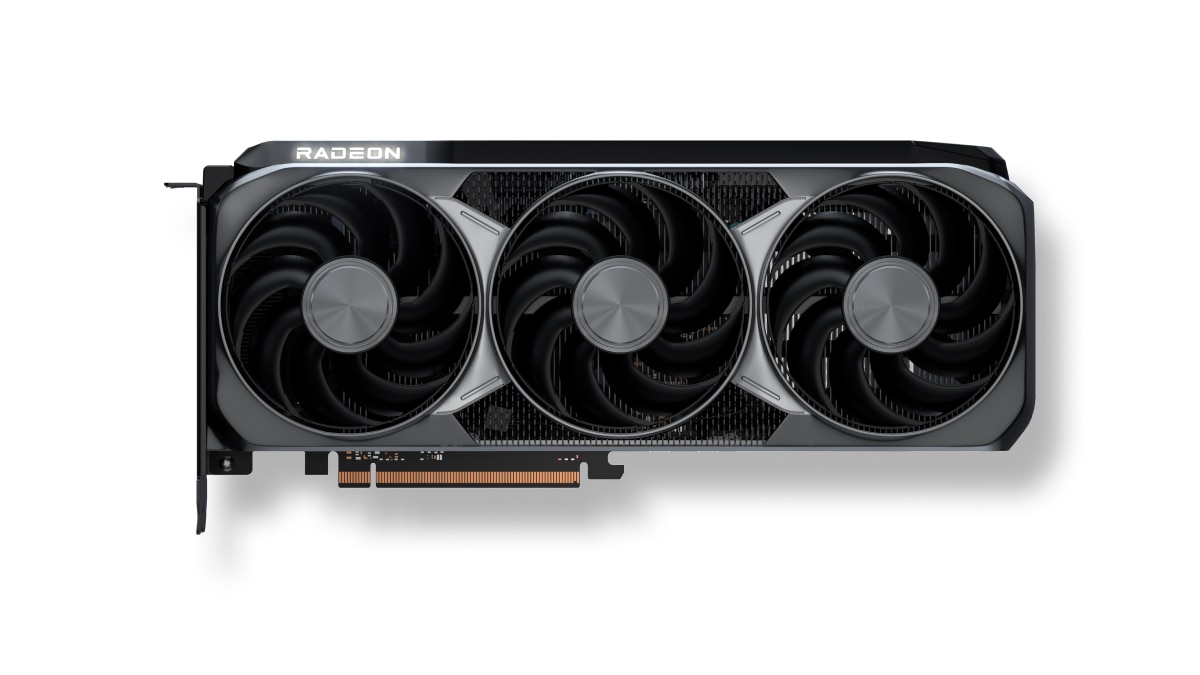
Nvidia's GeForce RTX 5070 and AMD's Radeon RX 9070 XT both launched in the first quarter of 2025 at official starting prices of $549 and $599, and nearly two years later they remain the two cards most shoppers cross-check against each other in the $500-$600 GPU bracket. The short answer: the RX 9070 XT has more raw compute, more memory, and a wider memory bus, while the RTX 5070 draws less power, costs less at its official starting price, and plugs into Nvidia's deeper DLSS 4 feature set. Neither card is a clean upgrade over the other — they trade off differently depending on whether a buyer is chasing raw frame rate, ray tracing headroom, or the lowest power bill. The rest of this comparison lines up the official specification sheets from Nvidia and AMD directly, section by section, so the trade-offs are easy to see without digging through two separate product pages.
RTX 5070 vs RX 9070 XT at a Glance
Both cards sit in the same generation and the same rough price class, but Nvidia and AMD took different routes to get there. The RTX 5070 uses a smaller, more power-efficient Blackwell die with less memory, while the RX 9070 XT uses a larger RDNA 4 die with a wider bus and more VRAM. The table below pulls every figure directly from Nvidia's official RTX 5070 product page and AMD's official RX 9070 XT product page.
| Spec | GeForce RTX 5070 | Radeon RX 9070 XT |
|---|---|---|
| Architecture | Blackwell (GB205) | RDNA 4 (Navi 48) |
| Shader units | 6,144 CUDA cores | 4,096 stream processors (64 CUs) |
| Boost clock | 2.51 GHz | Up to 2.97 GHz |
| Memory | 12GB GDDR7 | 16GB GDDR6 |
| Memory bus | 192-bit | 256-bit |
| Memory bandwidth | 672 GB/s | Up to 640 GB/s |
| Infinity Cache / L2 | N/A (on-die cache) | 64MB Infinity Cache |
| Peak FP32 compute | Not separately published | 48.7 TFLOPs |
| AI acceleration | 988 AI TOPS (5th-gen Tensor Cores) | 128 AI Accelerators |
| Total graphics / board power | 250W TGP | 304W TBP |
| Recommended PSU | 650W | 750W |
| Launch MSRP | $549 | $599 |
| Launch window | February 2025 | March 2025 |
Architecture: Blackwell vs RDNA 4
The RTX 5070 is built on Nvidia's Blackwell architecture, the same family that powers the rest of the GeForce RTX 50 series, from the flagship RTX 5090 down through the budget-focused cards. Nvidia's own RTX 50 series launch announcement frames Blackwell around neural rendering: fifth-generation Tensor Cores, fourth-generation RT Cores, and a redesigned display and media engine. The RTX 5070 specifically uses the GB205 die, the smallest Blackwell chip to ship in a desktop card at this tier, which is how Nvidia keeps its board power down to 250W.
AMD's RX 9070 XT runs on RDNA 4, built around the Navi 48 die on what AMD and its RDNA 4 launch press release describe as a TSMC 4nm-class process, packing 53.9 billion transistors into a 357mm² die. RDNA 4 is AMD's first architecture to add dedicated AI accelerators to every compute unit (128 across the card) specifically to drive its FSR 4 upscaler and improve ray tracing throughput, which had been RDNA's weak point against Nvidia's RT Cores in prior generations. Readers who want deeper background on how modern GPU architectures schedule ray and AI workloads can see the memory section below, which covers how memory choice interacts with die size and cost.
The two architectures also differ in display and media hardware, which matters more than it used to now that both brands push creators as hard as gamers. Nvidia's RTX 50 series carries a ninth-generation NVENC encoder and sixth-generation NVDEC decoder on the RTX 5070, per Nvidia's own specification sheet, supporting up to four simultaneous displays. AMD's RX 9070 XT supports DisplayPort 2.1a with UHBR13.5 signaling and HDMI 2.1b, per AMD's product page, giving it slightly newer display-output headroom for high-refresh monitors even though its encoder stack is generally considered the weaker of the two for streaming and video export workloads, a gap that predates this generation and that AMD has been closing gradually rather than erasing outright. Further background on how the broader GeForce RTX 50 series fits together, including the flagship cards above this tier, is available on Wikipedia's GeForce RTX 50 series overview, while the equivalent AMD architecture summary is on Wikipedia's RDNA 4 page.
Core Counts and Clock Speeds
On paper, the RX 9070 XT looks like the bigger chip: 64 compute units translating to 4,096 stream processors, with a game clock of 2,400 MHz and a boost clock rated up to 2,970 MHz by AMD. The RTX 5070 counters with 6,144 CUDA cores, more shader units in absolute count, but with a lower boost clock of 2.51 GHz and a 2.33 GHz base clock, both figures taken directly from Nvidia's spec sheet.
These numbers don't translate directly into performance because CUDA cores and stream processors aren't architecturally equivalent, and AMD's own materials cite 48.7 TFLOPs of peak FP32 vector throughput for the RX 9070 XT, a figure Nvidia does not publish in the same form for the RTX 5070. Shoppers comparing raw TFLOPs between the two brands should treat cross-vendor TFLOPs figures as a rough proxy at best; real-world frame rates depend heavily on driver optimization, game engine, and resolution, none of which a spec sheet alone can settle.
Memory: GDDR7 vs GDDR6, and Bandwidth
This is where the two cards diverge most clearly. Nvidia equips the RTX 5070 with 12GB of GDDR7 on a 192-bit bus, officially rated at 672 GB/s of bandwidth — up from 504 GB/s on the outgoing RTX 4070, per Nvidia's own generational comparison. AMD instead sticks with 16GB of GDDR6 on a wider 256-bit bus, officially rated at up to 640 GB/s, backed by a 64MB Infinity Cache that AMD uses to reduce how often the GPU has to reach out to that off-chip memory at all.
In practical terms, the RX 9070 XT has more total VRAM, which matters for texture-heavy games at 1440p and 4K, and for creative workloads that load large scenes or models into memory. The RTX 5070's narrower 192-bit bus is offset by GDDR7's higher per-pin data rate, which is why its raw bandwidth figure edges out the RX 9070 XT's despite the narrower bus. For a deeper technical breakdown of exactly how GDDR7's signaling and encoding changes raise bandwidth per pin, see our dedicated GDDR7 vs GDDR6 explainer.
Power Draw and PSU Requirements
Nvidia rates the RTX 5070 at 250W total graphics power with a minimum recommended 650W system power supply. AMD rates the RX 9070 XT at 304W typical board power with a minimum recommended 750W power supply, both figures taken from each company's own product pages. That's a 54W gap at the card level and a full 100W gap in AMD's own PSU recommendation, which matters for anyone building around a smaller case, a lower-wattage power supply they already own, or a system with a power-hungry CPU sharing the same PSU headroom.
The RTX 5070 can run on either a pair of PCIe 8-pin connectors (via Nvidia's included adapter) or a single 16-pin PCIe Gen 5 connector rated for 360W or more, per Nvidia's quick start documentation. The RX 9070 XT uses a more conventional dual 8-pin layout, per AMD's spec sheet, which can simplify compatibility with older power supplies that don't include a 12V-2x6 (ATX 3.0/3.1 style) cable.
Ray Tracing and AI Upscaling: DLSS 4 vs FSR 4
This is the other major fork between the two cards. The RTX 5070 inherits Nvidia's full DLSS 4 stack, including Multi Frame Generation, which Nvidia detailed in its RTX 50 series launch materials as generating multiple AI frames per rendered frame to boost perceived frame rates. Nvidia has continued to iterate on the controls around that feature since launch; our coverage of what DLSS 4.5's new controls do on GeForce NOW walks through how those settings have evolved for cloud and local play alike.
AMD's answer is FSR 4, which the company's RDNA 4 launch materials describe as a machine-learning-based upscaler, a shift from the more traditional algorithmic approach of FSR 3.1. AMD's press release notes that FSR 4 can be combined with existing FSR 3.1 frame generation and Radeon Anti-Lag 2 on RX 9070-series cards specifically, since the dedicated AI accelerators needed to run FSR 4's model are new to this generation. In raw ray tracing hardware, the RX 9070 XT carries 64 Ray Accelerators per AMD's spec sheet, up substantially from the prior RDNA 3 generation, though Nvidia's RT Cores and years of DLSS refinement still generally hold an edge in ray-traced titles with Nvidia-specific optimizations.
Pricing and Value in 2026
At launch, the gap between the two cards was a clean $50: $549 for the RTX 5070 against $599 for the RX 9070 XT, both figures confirmed in each company's own launch pricing (Nvidia's product page lists the RTX 5070 at $549, and AMD's RDNA 4 press release lists the RX 9070 XT at $599 USD). Nearly two years on, street pricing for both cards fluctuates with retailer stock and regional availability, so shoppers should treat those figures as official reference points rather than a guarantee of what any specific retailer charges today.
Buyers who care primarily about budget and efficiency get more headroom with the RTX 5070's lower starting price and lower power draw. Buyers prioritizing memory capacity and raw compute at a modest premium get more card for roughly $50 more with the RX 9070 XT. Neither undercuts the other dramatically on price, which is why this comparison tends to come down to the feature-set questions above rather than sticker price alone. Shoppers weighing whether to skip this tier entirely and go further up Nvidia's stack can read our separate look at whether the RTX 5090 upgrade over the RTX 4090 is still worth it for context on how much more a flagship card costs relative to this mid-range pair.
Which GPU Should You Buy?
For 1440p gaming with ray tracing and upscaling in heavy use, especially in titles with mature DLSS 4 support, the RTX 5070's lower power draw and Multi Frame Generation support make it the easier recommendation at its $549 starting price. For gamers and creators who want more VRAM headroom for 4K textures, mod-heavy titles, or GPU-accelerated creative workloads, the RX 9070 XT's 16GB of GDDR6 and wider memory bus provide more working room for roughly $50 more at launch pricing. Power users building in a small-form-factor case with a lower-wattage PSU already installed should weigh AMD's 750W PSU recommendation against Nvidia's 650W figure before committing either way. Buyers already invested in an Nvidia-centric workflow, including Studio drivers or RTX Broadcast tools, generally gain less by switching brands than the raw spec sheet alone would suggest, since driver-level feature lock-in often matters as much as the silicon underneath it.
It's also worth sizing this decision against the rest of a build rather than in isolation. A GPU this size typically pairs with a mid-range CPU and a single high-speed NVMe drive, and the bottleneck in day-to-day use is just as likely to be storage transfer speed or display connectivity as it is the graphics card itself. Readers building a new desktop around either GPU may also want to check how fast their motherboard's external connectivity actually is before assuming the GPU is the only bottleneck, since port selection can matter as much as the graphics card choice for overall system throughput.
What to Check Before You Buy
Specs sheets settle the architectural trade-offs, but they don't settle what a specific card costs at a specific retailer this week, or whether a given game patch has shifted FSR 4 or DLSS 4 support since launch. Before buying either card, check current listings against each company's official MSRP cited above to see whether street pricing has drifted, confirm your power supply meets the higher of the two PSU recommendations if you might swap GPUs later, and check the specific game list each upscaler supports if frame generation is a deciding factor for you. Both the RTX 5070 and RX 9070 XT remain current, actively supported cards from Nvidia and AMD as of this writing, with driver updates continuing to refine FSR 4 and DLSS 4 behavior on both platforms.
Frequently asked questions
Is the RTX 5070 or RX 9070 XT better for 1440p gaming?
Both handle 1440p well. The RTX 5070 pairs its lower 250W power draw with Nvidia's full DLSS 4 Multi Frame Generation suite, while the RX 9070 XT offers more VRAM (16GB vs 12GB) and a wider memory bus, which helps more in texture-heavy or ray-tracing-intensive titles.
How much does the RTX 5070 cost compared to the RX 9070 XT?
Nvidia launched the RTX 5070 at $549 and AMD launched the RX 9070 XT at $599, according to each company's own launch pricing. Street prices vary by retailer and region.
Does the RX 9070 XT support DLSS?
No. DLSS is an Nvidia-exclusive feature set available only on GeForce RTX cards. The RX 9070 XT instead uses AMD's FSR 4, a machine-learning-based upscaler introduced alongside the RDNA 4 architecture.
Which card uses less power, the RTX 5070 or RX 9070 XT?
The RTX 5070 draws less power. Nvidia rates it at 250W total graphics power with a 650W recommended power supply, versus AMD's 304W typical board power and 750W recommended power supply for the RX 9070 XT.
How much VRAM do the RTX 5070 and RX 9070 XT have?
The RTX 5070 has 12GB of GDDR7 memory on a 192-bit bus. The RX 9070 XT has 16GB of GDDR6 memory on a wider 256-bit bus, plus a 64MB Infinity Cache.
What power supply do I need for the RTX 5070 or RX 9070 XT?
Nvidia recommends a minimum 650W power supply for the RTX 5070. AMD recommends a minimum 750W power supply for the RX 9070 XT.
Sources
- NVIDIA: GeForce RTX 5070 Family official specificationsnvidia.com
- NVIDIA: GeForce RTX 50 Series launch announcementnvidia.com
- AMD: Radeon RX 9070 XT official product pageamd.com
- AMD: RDNA 4 and Radeon RX 9000 Series launch press releaseir.amd.com
- Wikipedia: GeForce RTX 50 seriesen.wikipedia.org
- Wikipedia: RDNA 4en.wikipedia.org
Mara Lindqvist edits the hardware desk. She covers graphics cards, processors, memory and storage, the foundries and chip designers behind them, and what the numbers on a spec sheet mean for people choosing a PC. Specifications in her stories come from manufacturer spec pages and datasheets.