Intel Nova Lake vs AMD Zen 6: What's Actually Confirmed
Three weeks after the first leaks, here's exactly what Intel and AMD have confirmed about Nova Lake and Zen 6 desktop CPUs — and what's still rumor.
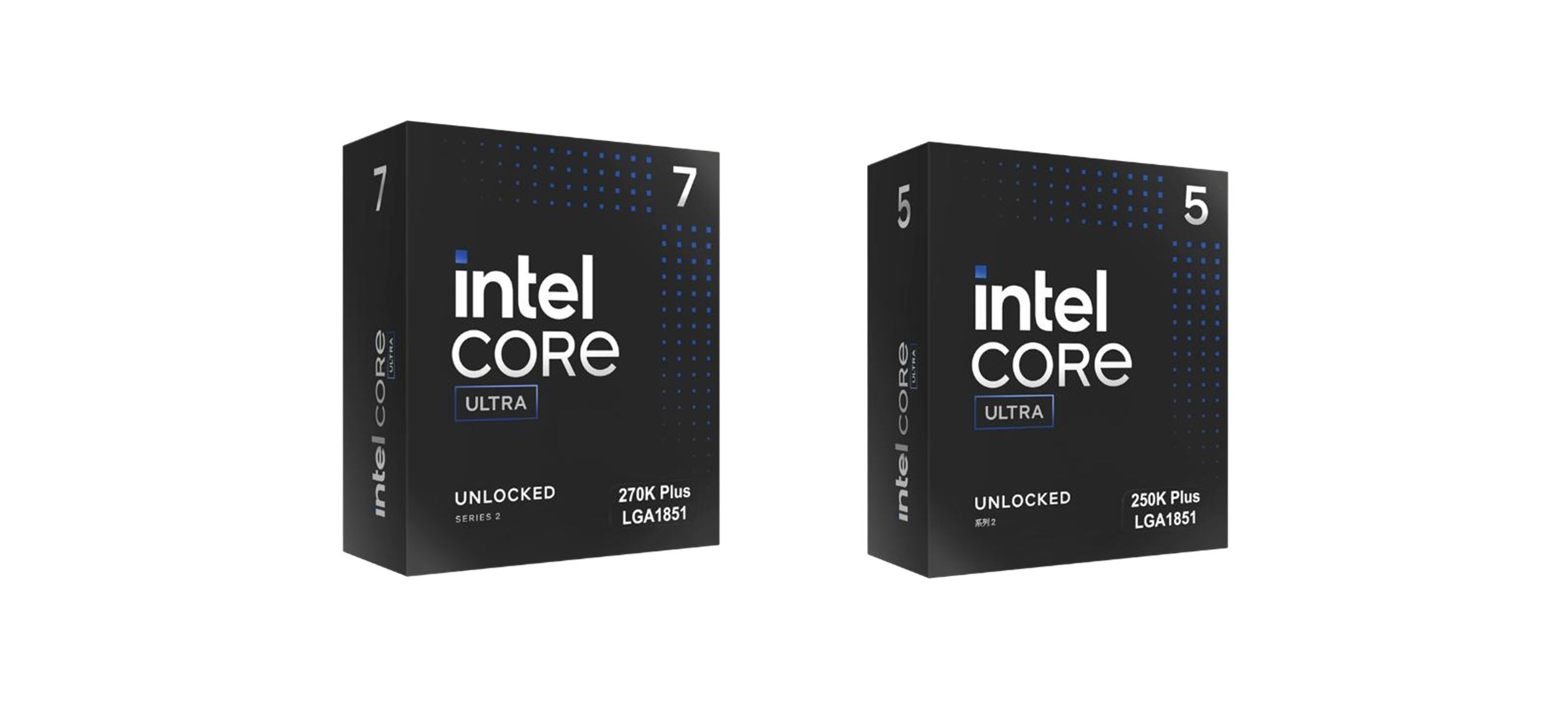
Three weeks after the first wave of leaks, there is still no official spec sheet for either Intel's Nova Lake or AMD's Zen 6 desktop chips — what has changed is that both companies have now put more of the broad strokes on record in their own words, even as the core counts, pricing and exact launch dates remain leak territory. This follow-up separates what Intel and AMD have actually confirmed through their own earnings calls, newsrooms and technical documentation from what is still rumor, and flags the two dates that matter most for the next real update: Intel's Q3 2026 earnings call on October 29 and AMD's on November 3.
Pandromeda's earlier comparison of Nova Lake and Zen 6 was built almost entirely on leaked roadmap slides and partner documents. That hasn't disappeared — most of the specific numbers still trace back to the same leak chains — but it's worth being explicit about which parts of the picture now rest on something closer to an official statement.
What's actually new since the October leaks
Very little has moved at the "official spec sheet" level. Checking both companies' own press-release archives directly: Intel's investor relations newsroom has published nothing about Nova Lake since its last quarterly results, and AMD's newsroom has published nothing about desktop Zen 6 at all — its only Zen 6-related release this year covers the server-focused EPYC "Venice" family. What has changed is the calendar. Intel has confirmed it will report third-quarter 2026 results on October 29, and AMD has confirmed its own Q3 2026 report for November 3, which means the next genuinely official word on either company's client roadmap is now days away rather than weeks away.
That makes this a good moment to draw a clean line between company-confirmed facts and leak-sourced ones, rather than to repeat specification claims that haven't actually changed since early October.
It's also worth being specific about method here: the only way to know whether a detail is "confirmed" is to check the primary source directly rather than take a headline's word for it. For this piece, that meant pulling Intel's and AMD's press-release archives on intc.com and ir.amd.com directly, reading the AMD newsroom's own production-ramp announcement for EPYC "Venice," and cross-checking the desktop-side claims against Wikipedia's sourced entries for Zen 6 and the LGA 1954 socket rather than against another news outlet's paraphrase of a leak.
Intel Nova Lake: confirmed vs. still a leak
What Intel has put on record, in its own earnings calls and investor materials, is narrow: Nova Lake is Intel's next-generation client platform, it follows the Core Ultra 200S Plus ("Arrow Lake Refresh") desktop parts Intel formally launched in March 2026, and executives have repeatedly pointed to a 2026 arrival window on quarterly calls. Intel has not published a Nova Lake press release, product brief, architecture day deck or spec sheet of its own.
Everything more specific than that is still sourced to leaks: the "Core Ultra Series 4" branding, the Coyote Cove performance-core and Arctic Wolf efficiency-core names, Xe3-class graphics, a reported 52-core ceiling (16P+32E+4LPE), and the new LGA1954 socket. The socket detail is the best-sourced of the group — it surfaced in Intel's own engineering-validation tooling catalogue rather than from a slide deck — but Intel has not issued a statement confirming it, and that catalogue listing has been described by the outlets that found it as informative about compatibility, not about launch timing or final specifications. Wikipedia's entry on the LGA 1954 socket reflects the same caveat, noting that its sourcing is tech-press reporting rather than an Intel announcement.
- Nova Lake is the client platform following Core Ultra 200S Plus, targeted for a 2026 arrival, per repeated earnings-call commentary.
- Intel's Q3 2026 results and management commentary arrive October 29, 2026 — the next scheduled opportunity for Intel to update this guidance.
- "Core Ultra Series 4" naming, exact core configurations (up to 52 cores), Coyote Cove/Arctic Wolf core names, Xe3 graphics, and the LGA1954 socket's launch timing.
AMD Zen 6: confirmed vs. still a leak
AMD's own newsroom is more specific, but about the wrong product for this comparison: on May 21, 2026, AMD announced that its next-generation EPYC processor, codenamed "Venice," was ramping production on TSMC's 2nm (N2) process, calling it the first high-performance computing product in the industry to reach that node. CEO Lisa Su described the milestone as "an important step forward" for AI infrastructure build-outs. AMD then formally unveiled the resulting EPYC 9006-series "Venice" and "Venice-X" server chips at its Advancing AI event in July 2026. Every one of those facts is about Zen 6 silicon built for the data center. For a closer look at that timeline on the desktop side, see our rundown of what's confirmed so far for Zen 6.
AMD has not announced a desktop Zen 6 product, a name, a socket or a release date. The "Olympic Ridge" desktop codename, its reported pairing with the existing AM5 socket, and reported core counts up to 24 all trace back to a listing that briefly appeared in AMD's own Technical Information Portal and was captured by hardware trackers before it came down — useful as a strong signal of AMD's internal planning, but not a product announcement AMD has stood behind. Wikipedia's Zen 6 entry catalogues this gap clearly: it lists the EPYC Venice specifications as sourced to AMD's own announcement, and flags Olympic Ridge's core counts and release window as "expected" rather than confirmed.
- Zen 6-based EPYC "Venice" and "Venice-X" server processors are real, in production ramp on TSMC 2nm, and were formally unveiled at Advancing AI in July 2026.
- AMD's Q3 2026 results and management commentary arrive November 3, 2026.
- Any desktop Zen 6 product name ("Olympic Ridge"), its AM5 socket pairing, core counts, TDP ranges, and launch date.
Nova Lake vs. Zen 6: spec comparison at a glance
Because neither company has published desktop specs, the table below marks every cell that isn't sourced to an official statement. Treat the "Leak" rows as directional, not final.
| Category | Intel Nova Lake (desktop) | AMD Zen 6 desktop ("Olympic Ridge") | Status |
|---|---|---|---|
| Confirmed successor to | Core Ultra 200S Plus (Arrow Lake Refresh) | Ryzen 9000 (Zen 5) | Confirmed |
| Process node | Not disclosed for client; Intel 18A referenced for other products | TSMC 2nm (N2), per the EPYC Venice server announcement | Confirmed for AMD server only |
| Socket | Reportedly LGA1954 (new socket) | Reportedly AM5 (existing socket) | Leak |
| Core counts | Reportedly up to 52 (16P+32E+4LPE) | Reportedly up to 24 | Leak |
| Branding | Reportedly "Core Ultra Series 4" | Reportedly Ryzen 10000 series | Leak |
| Target launch window | Guided to 2026 by Intel execs; leaks suggest slippage toward early-to-mid 2027 | No date given by AMD; leaks suggest late 2026 to 2027 | Mixed |
| Pricing | Not disclosed | Not disclosed | Unknown |
| Next official checkpoint | Q3 2026 earnings call, October 29, 2026 | Q3 2026 earnings call, November 3, 2026 | Confirmed (dates only) |
Release date outlook: late 2026 or early 2027?
Intel executives have guided to a 2026 launch window for Nova Lake on multiple quarterly calls, without narrowing it to a specific quarter or event. Leaked partner roadmaps, by contrast, have increasingly pointed to a staggered rollout: smaller monolithic dies arriving first, with the larger multi-die flagship parts landing later, into early 2027. Those two pictures aren't necessarily contradictory — a late-2026 debut for some SKUs with broader availability sliding into 2027 is a pattern Intel has used before — but until Intel says so directly, the exact split between "2026" and "2027" chips is a leak detail, not a confirmed one.
AMD hasn't given desktop Zen 6 a date at all. The firmest AMD has been is about the platform, not the silicon: the company's long-running AM5 support commitments (extended at Computex events as its Ryzen roadmap has evolved) are the reason most reporting expects Olympic Ridge to land on existing AM5 boards rather than a new socket. That expectation is reasonable, but it's still built on AMD's socket-longevity messaging plus the leaked documentation listing, not a desktop Zen 6 announcement.
Process node and platform: the one area with real AMD confirmation
The clearest piece of new ground, relative to where things stood on October 4, is process-node confirmation on the AMD side — just not for the chip most desktop buyers care about. AMD's EPYC Venice announcement locks in TSMC 2nm (N2) as the node for server-class Zen 6 silicon, which is the strongest public signal yet about the node family desktop Zen 6 is expected to inherit, even though AMD has not said so explicitly for Olympic Ridge. Intel, meanwhile, has not disclosed which process node Nova Lake's desktop dies will use in any earnings release or newsroom post; outside reporting has pointed to a mix of Intel's own 18A and external foundry capacity, but that detail isn't yet something Intel has put on the record itself.
Pricing: still a complete unknown
Neither company has said anything, officially or through leaks with real traction, about Nova Lake or Olympic Ridge pricing. Any number attached to either chip right now — including figures that circulated around the October leak cycle — is speculation dressed up as a forecast. The most useful anchor point is each company's current-generation pricing: Intel's Core Ultra 200S Plus desktop chips launched at $199 and $299 for the Core Ultra 5 250K Plus and Core Ultra 7 270K Plus respectively, which at least sets a baseline for where mainstream Nova Lake SKUs would need to land to stay competitive. AMD has not published equivalent current-generation anchor pricing in this cycle.
Why this matters for your next build
If you're planning a desktop upgrade around either chip, the practical takeaway hasn't changed much since the leak-stage coverage: nothing here is close enough to shipping to plan a purchase around. The platform question is the one place the confirmed-vs-leak distinction actually changes your decision-making. A reported new socket for Nova Lake (LGA1954) versus a reported continuation of AM5 for Olympic Ridge is still leak-sourced, but it lines up with AMD's own repeated public commitments to AM5 longevity and with Intel's documented habit of introducing new sockets alongside major architecture changes. If that pattern holds, upgraders already on AM5 boards would have an easier, cheaper path to Zen 6 than LGA1851 owners would have to Nova Lake. For a broader framework on how to weigh that kind of platform decision, see our CPU buying guide comparing Intel and AMD for 2026.
There's also a budgeting angle worth flagging now, even without final pricing. A new socket generally means a new motherboard, new cooler mounting hardware in some cases, and sometimes a memory-platform change on top of the CPU itself, which is a materially different upgrade bill than dropping a new chip into an existing board. If the leaked LGA1954 socket claim for Nova Lake holds up, buyers should expect to budget for a full platform refresh rather than a drop-in CPU swap; if Olympic Ridge does land on AM5 as AMD's own socket-longevity messaging suggests, the upgrade math for existing Ryzen desktops looks considerably cheaper. Neither path is locked in, but it's the single biggest practical difference between the two leak-stage roadmaps right now.
What to watch next
Two dates are worth putting on a calendar. Intel reports third-quarter 2026 financial results on October 29, 2026, with a conference call where executives have historically discussed Nova Lake's timing directly. AMD reports its own third-quarter 2026 results on November 3, 2026, where any update on desktop Zen 6/Olympic Ridge would most plausibly surface first, given that AMD has so far only confirmed the server side of the Zen 6 family. Until one or both of those calls happen, or either company publishes a dedicated product announcement, the specifications in wide circulation — including the ones repeated in this article's comparison table — remain leaks, not facts.
Pandromeda will revisit both the Nova Lake and Zen 6 desktop timelines again once either earnings call produces new on-record guidance, or once either company publishes an actual architecture brief, press kit or product page for its next desktop CPU family. Until then, the most reliable version of this story is the narrow one: two confirmed codenames, one confirmed process node for AMD's server chips only, two confirmed earnings-call dates, and a long list of reported specs that still haven't been put on the record by the companies building them.
Frequently asked questions
Has Intel officially confirmed Nova Lake's release date?
Not a specific date. Intel executives have pointed to a 2026 arrival window for Nova Lake on multiple earnings calls, but Intel has not issued a dedicated press release, product brief or spec sheet, and the company's Q3 2026 earnings call on October 29, 2026 is the next scheduled opportunity to narrow that guidance.
Has AMD confirmed Zen 6 for desktop PCs?
No. AMD has only confirmed the server side of Zen 6 so far: the EPYC 'Venice' and 'Venice-X' processors it unveiled at its Advancing AI event in July 2026 on TSMC's 2nm process. A desktop Zen 6 family, reportedly codenamed 'Olympic Ridge,' has not been formally announced by AMD.
What socket will Nova Lake use?
Reportedly LGA1954, a new socket distinct from the current LGA1851. That detail traces back to Intel's own engineering-validation tooling catalogue rather than a formal announcement, so treat it as well-sourced but not yet Intel-confirmed.
Will AMD's Zen 6 desktop chips work in existing AM5 motherboards?
That's the expectation, based on a listing that briefly appeared in AMD's Technical Information Portal pairing the 'Olympic Ridge' codename with Socket AM5, plus AMD's repeated public commitments to AM5 longevity. AMD has not made a desktop Zen 6 socket announcement of its own.
How much will Nova Lake or Zen 6 desktop chips cost?
Neither company has disclosed pricing. Intel's current Core Ultra 200S Plus desktop chips launched at $199 and $299, which is the closest available reference point, but no Nova Lake or Olympic Ridge pricing has been confirmed or meaningfully leaked.
When will we get real, official specs for both chips?
The next scheduled checkpoints are Intel's Q3 2026 earnings call on October 29, 2026, and AMD's on November 3, 2026. A dedicated architecture day, press kit or product page from either company would be the first point with genuinely official specifications.
Sources
- Intel Investor Relations: Intel to Report Third-Quarter 2026 Financial Resultsintc.com
- AMD Investor Relations: AMD to Report Fiscal Third Quarter 2026 Financial Resultsir.amd.com
- AMD Newsroom: AMD Announces Production Ramp of Next-Generation AMD EPYC Processor 'Venice' on TSMC 2nm Process Technologynewsroom.amd.com
- Intel Newsroom: Intel Announces New Intel Core Ultra 200S Plus Series Desktop Processorsintel.com
- Wikipedia: Zen 6en.wikipedia.org
- Wikipedia: LGA 1954en.wikipedia.org
Mara Lindqvist edits the hardware desk. She covers graphics cards, processors, memory and storage, the foundries and chip designers behind them, and what the numbers on a spec sheet mean for people choosing a PC. Specifications in her stories come from manufacturer spec pages and datasheets.