AMD EPYC 9996 Launches: Price, Specs and Benchmarks Confirmed
AMD confirmed pricing, specs and benchmark claims for its 256-core EPYC 9996 and 384-core EPYC 9965 as the 6th Gen EPYC lineup reaches general availability.
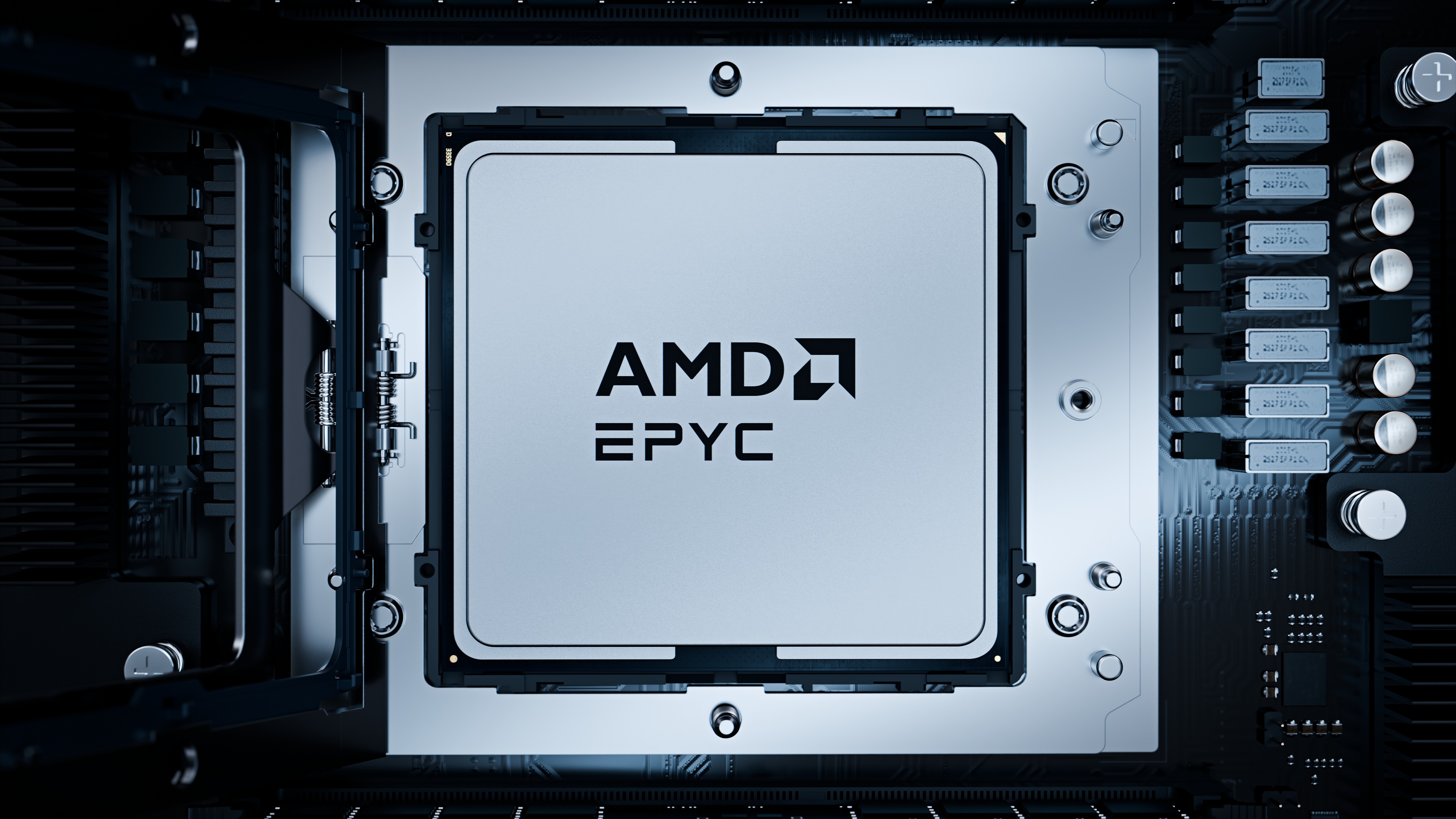
AMD's 6th Gen EPYC server processors are now generally available, with the flagship 256-core EPYC 9996 priced at $14,904 and the 384-core-per-2-socket EPYC 9965 at $11,988, according to AMD's own November 10, 2026 announcement. The Zen 6-based SP7 chips are shipping from AMD's server partners now, with Microsoft Azure and Oracle Cloud Infrastructure confirming instances built on the new silicon are coming soon, and Meta named as the lead customer validating the platform ahead of large-scale deployment.
What AMD actually announced
On November 10, AMD declared general availability for its 6th Generation AMD EPYC server processors, built around the new SP7 socket and the "Zen 6" core architecture. The announcement, posted simultaneously to AMD's newsroom and investor relations site, covers two headline parts — the EPYC 9996 and EPYC 9965 — plus a family of "Helion" rack-scale systems designed to pair the new CPUs with AMD's GPUs for agentic AI workloads. AMD also announced a separate embedded variant, the 6th Gen EPYC Embedded 9006 series, aimed at edge and infrastructure hardware rather than data-center racks.
AMD frames the launch around a shift in what server CPUs are for. Dan McNamara, senior vice president and general manager of AMD's Compute and Enterprise AI group, said in the release that "AI is significantly expanding the role of the CPU across every layer of the data center" — positioning the EPYC 9006 series not just as a general-purpose processor family but as the orchestration layer underneath GPU-heavy AI infrastructure, handling everything from data preprocessing to running AI agents directly on the CPU.
- General availability: November 10, 2026
- Flagship chip: EPYC 9996 — 256 cores, 600W default CPU power, $14,904 list price
- Second SKU: EPYC 9965 — up to 384 cores in a 2-socket system, 500W, $11,988
- Socket: SP7; architecture: "Zen 6"
- Lead customer: Meta, validating platforms ahead of large-scale rollout
- Cloud: Microsoft Azure (HDv2, HXv2, ND MI455X v7) and Oracle Cloud Infrastructure (Compute E7) instances "coming soon"
EPYC 9996 and EPYC 9965: specs and prices
The EPYC 9996 is AMD's new flagship part, with 256 cores per socket and a 600W default CPU power figure — a new power metric AMD is introducing with this generation in place of the usual TDP rating, measured as total power draw across both the compute and I/O dies. AMD's own marketing calls it "the world's best general-purpose processor." The EPYC 9965 sits a step down, reaching 384 total cores when configured in a two-socket server at 500W.
AMD's published footnotes also reference a high-frequency "host-node" part running at up to 5.3GHz (with a 96-core model specifically clocked at 5GHz cited as an example) aimed at workloads that need fast single-thread performance to feed GPUs, plus a separate 256-core, 400W high-density part for AI host-node duty. Pricing for the two named SKUs, as listed in AMD's own benchmark footnotes dated November 5, 2026, is $14,904 for the EPYC 9996 and $11,988 for the EPYC 9965 — AMD's comparison set lists competing Intel Xeon 6990E+ and Xeon 6980P chips at $14,995 and $13,955 respectively.
| Processor (2-socket) | Cores | Default/rated power | SPECrate2017_int_base | List price |
|---|---|---|---|---|
| AMD EPYC 9996 | 512 | 600W | 5470 | $14,904 |
| AMD EPYC 9965 | 384 | 500W | 3260 | $11,988 |
| Intel Xeon 6990E+ | 576 | 450W | 3050 | $14,995 |
| Intel Xeon 6980P | 256 | 500W | 2510 | $13,955 |
| Nvidia Vera (AMD estimate) | 176 | 450W | 1459 | not published |
| Arm AGI (AMD estimate) | 272 | 300W | 1944 | not published |
AMD's footnotes flag that the Nvidia Vera and Arm AGI scores are AMD's own estimates rather than independently run benchmarks, with the Vera figure derived from published Phoronix testing rather than AMD's lab. SPECrate2017_int_base is an industry-standard, rate-based integer throughput benchmark maintained by the Standard Performance Evaluation Corporation, and AMD's footnotes note results can vary by system configuration, software and BIOS settings.
A new power metric: "Default CPU Power"
Starting with this generation, AMD is retiring the familiar TDP (thermal design power) rating it has used on EPYC chips for years and replacing it with what the company calls "Default CPU Power." According to AMD's own footnotes, the new figure represents total power draw across both the compute dies and the I/O die on a given chip, rather than a single thermal design target. In practice that means the 600W rating on the EPYC 9996 and the 500W rating on the EPYC 9965 are not directly comparable to the TDP figures AMD quoted for earlier EPYC generations, and buyers used to planning power and cooling budgets around TDP numbers will need to treat Default CPU Power as a distinct metric when sizing racks for the new chips. AMD's footnotes also describe a "UPP" (user power profile) setting that lets operators run chips like the 9996 at a reduced per-socket power limit — AMD says cutting socket and DIMM power by roughly 15% in a 35kW rack can still deliver about 1.18 times as many concurrent AI agents as running at default power, trading a small amount of per-chip headroom for better rack-level density.
AMD also used the same announcement to launch a separate embedded line, the 6th Gen AMD EPYC Embedded 9006 series, aimed at networking, storage and other infrastructure hardware that embeds a server-class CPU directly into purpose-built equipment rather than a general data-center rack. AMD's newsroom media library lists product photography for the embedded SP7 parts separately from the data-center launch imagery, suggesting AMD is treating the embedded line as a distinct, parallel announcement built on the same underlying Zen 6 silicon rather than simply a rebadged version of the rack-oriented chips.
AMD's performance claims against Intel and Nvidia
AMD is pitching the 9996 primarily against Nvidia's Vera CPU and Intel's Xeon 6980P, rather than against its own prior-generation EPYC chips. According to AMD's launch materials, a 9996-based system delivers "up to" 3.7x the performance of a Nvidia Vera-based system, and up to 2.2x the performance — with up to 2.0x the performance-per-dollar — of an Intel Xeon 6980P system. AMD also claims the high-frequency host-node processors can lift large-language-model output throughput by up to 1.8x versus the previous EPYC generation, a figure AMD's own footnotes describe as a projection tied to the jump from PCIe Gen 5 to PCIe Gen 6 bandwidth rather than a measured result.
For agentic AI workloads specifically — AMD's chosen framing for this launch — the company cites roughly 3.3x more "agents per CPU watt" than a Nvidia Vera system and about 2.5x more than an Intel Xeon 6980P system, using CPU thread counts as a proxy for agent capacity. AMD also claims that running a 9996-based rack within a 35kW power envelope, using a lower per-socket power limit, yields about 1.18x more agents per rack than default power settings. As with the SPECrate figures, AMD labels all of these "up to" or approximate figures that depend on configuration and workload, and the Vera and Arm comparisons are AMD's own estimates rather than third-party test results.
The Helion rack-scale systems
Alongside the chips themselves, AMD introduced three rack-scale product lines under the "Helion" name, intended to pair 6th Gen EPYC CPUs with AMD's GPUs for full-rack AI deployments. AMD Helion Liquid targets large-scale, liquid-cooled agentic AI deployments and is positioned alongside AMD's existing Helios rack-scale platform. AMD Helion Air is the air-cooled counterpart for data centers that haven't moved to liquid cooling, and AMD Helion Air Inference combines CPU execution and local GPU inference within a single rack. AMD says some high-density Helion configurations can reach up to 73,728 threads in a single rack — a figure that reflects the aggregate thread count across many CPUs and GPUs in the rack rather than a single chip.
Who is actually shipping it
AMD's release says systems built on the new SP7 processors are "shipping from leading server vendors," though the company's own announcement does not name specific OEMs or ODMs by name — a notable gap given AMD typically lists hardware partners at launch. Meta is named explicitly as the lead customer, described as validating the 6th Gen platforms ahead of deployment at scale, though AMD does not say Meta's deployment has begun shipping yet.
On the cloud side, AMD lists two confirmed providers with specific instance names. Microsoft Azure is bringing three new instance families built on 6th Gen EPYC: Azure HDv2 (in preview, aimed at AI data processing, agentic AI and HPC workloads), Azure HXv2 (targeting EDA and other technical computing), and Azure ND MI455X v7, which pairs the new EPYC CPUs with AMD's Helios rack-scale GPU platform for production AI inference. Oracle Cloud Infrastructure is bringing OCI Compute E7 instances built on the same processors. AMD describes both Azure's and OCI's instances as "coming soon" rather than already live, and says more broadly that it expects 6th Gen EPYC to eventually power instances "across all major, global cloud service providers," without naming further providers.
How this fits AMD's bigger AI push
This launch follows the Venice-codename specs AMD previewed earlier this year, which outlined the broad strokes of the Zen 6 EPYC family before pricing and general availability were confirmed. It also arrives with AMD's EPYC line already running in production elsewhere — AMD EPYC chips are the host CPUs behind Google Cloud's confidential TPU instances, underlining how deeply AMD's server CPUs are now embedded in other companies' AI infrastructure stacks, not just AMD's own GPU platforms. For buyers evaluating where EPYC fits below the flagship tier, Pandromeda's existing look at how Ryzen 9000 and EPYC 4005 chips compare for smaller servers remains a useful reference point for the lower end of AMD's current server lineup, even though the 9006 series targets a different, much higher tier of deployment.
The launch also lands in the middle of AMD's broader data-center AI buildout, which has included large compute and cash commitments well beyond CPUs alone this year. AMD has framed the EPYC 9006 series explicitly as a CPU companion to its GPU roadmap rather than a standalone product line — the Helion racks pairing EPYC CPUs with AMD GPUs is the clearest expression of that strategy, and AMD's performance claims throughout the launch are framed around agentic AI and LLM inference workloads rather than traditional enterprise computing benchmarks.
What it means for buyers and competitors
For enterprise buyers, the practical story is that AMD now has a priced, shipping answer to Intel's Xeon 6 line and Nvidia's Vera CPU at the high end of the server market, with AMD's own benchmarks claiming a lead on both raw throughput and performance-per-dollar against Intel's flagship Xeon 6980P. Whether that lead holds up outside AMD's own labs will depend on independent testing once review units and production systems reach customers — none of the SPECrate or "agents per watt" figures in this launch have yet been independently verified, and AMD's footnotes themselves flag the Nvidia and Arm comparison points as AMD's own estimates rather than measured results.
For cloud customers specifically, the near-term impact is limited: both of AMD's named cloud partners, Azure and Oracle, describe their 6th Gen EPYC instances as upcoming rather than available today, so enterprises wanting to actually provision EPYC 9006-series capacity in the public cloud will need to wait for those previews to open and then reach general availability. On-premises buyers who want new hardware now have a clearer path, since AMD says SP7-based systems are already shipping from server vendors, though AMD's own release does not specify which vendors or when their systems reach broad retail or OEM-direct availability.
What to watch next
A few concrete things to track from here: which specific OEMs and ODMs confirm shipping EPYC 9006-series systems, since AMD's own release left that detail out; when Azure's HDv2 and HXv2 previews and OCI's Compute E7 instances actually open for customers, since both are currently described only as "coming soon"; and whether independent benchmarking outlets reproduce AMD's SPECrate2017 and "agents per watt" figures once review hardware is available, particularly the Nvidia Vera and Arm AGI comparisons that are currently AMD's own estimates rather than measured third-party results. Meta's progress moving from "validating" the platform to actual large-scale deployment is also worth watching as the clearest real-world signal of how the new chips perform at scale.
Frequently asked questions
When did AMD's 6th Gen EPYC processors become available?
AMD announced general availability for its 6th Gen EPYC server SP7 processors on November 10, 2026, saying systems built on the new chips are shipping from leading server vendors, with Microsoft Azure and Oracle Cloud Infrastructure instances described as coming soon.
What is the AMD EPYC 9996 and how much does it cost?
The EPYC 9996 is AMD's new flagship 6th Gen EPYC processor, with 256 cores per socket and a 600W Default CPU Power rating. AMD's own launch footnotes list its 1Ku price as $14,904.
What is the AMD EPYC 9965?
The EPYC 9965 is the second named SKU in the 6th Gen EPYC lineup, reaching 384 total cores in a two-socket server configuration at 500W Default CPU Power, with a listed price of $11,988 according to AMD.
Which cloud providers will offer 6th Gen EPYC instances?
AMD named Microsoft Azure (HDv2, HXv2 and ND MI455X v7) and Oracle Cloud Infrastructure (Compute E7) as launch cloud partners, with both describing their new instances as coming soon rather than already live. AMD said it expects the chips to eventually power instances at other major cloud providers too.
How does the EPYC 9996 compare to Intel's Xeon 6980P and Nvidia's Vera CPU, according to AMD?
AMD claims a 9996-based system delivers up to 3.7x the performance of a Nvidia Vera-based system and up to 2.2x the performance, with up to 2.0x the performance-per-dollar, of an Intel Xeon 6980P system. AMD's own footnotes note the Nvidia and Arm comparison figures are AMD's internal estimates rather than independently measured results.
What are AMD's Helion rack-scale systems?
Helion is AMD's new family of rack-scale products that pair 6th Gen EPYC CPUs with AMD GPUs for agentic AI deployments. It includes AMD Helion Liquid for liquid-cooled large-scale deployments, Helion Air for air-cooled data centers, and Helion Air Inference, which combines CPU execution and local GPU inference in one rack.
Sources
- AMD Newsroom: 6th Gen AMD EPYC Processors Lead Next Era of AI and Enterprise Computingnewsroom.amd.com
- AMD Investor Relations: Press release on 6th Gen EPYC general availabilityir.amd.com
- AMD EPYC 9006 Series product pageamd.com
- AMD Helion rack-scale solutionsamd.com
- SPEC CPU2017 benchmark suite (Standard Performance Evaluation Corporation)spec.org
Mara Lindqvist edits the hardware desk. She covers graphics cards, processors, memory and storage, the foundries and chip designers behind them, and what the numbers on a spec sheet mean for people choosing a PC. Specifications in her stories come from manufacturer spec pages and datasheets.