Intel Nova Lake vs AMD Zen 6: Specs and Price Leaks
Neither Intel nor AMD has confirmed final specs, pricing, or dates for Nova Lake or Zen 6. Here is how the leaked roadmaps, core counts, and rumored CES 2027 delay compare.
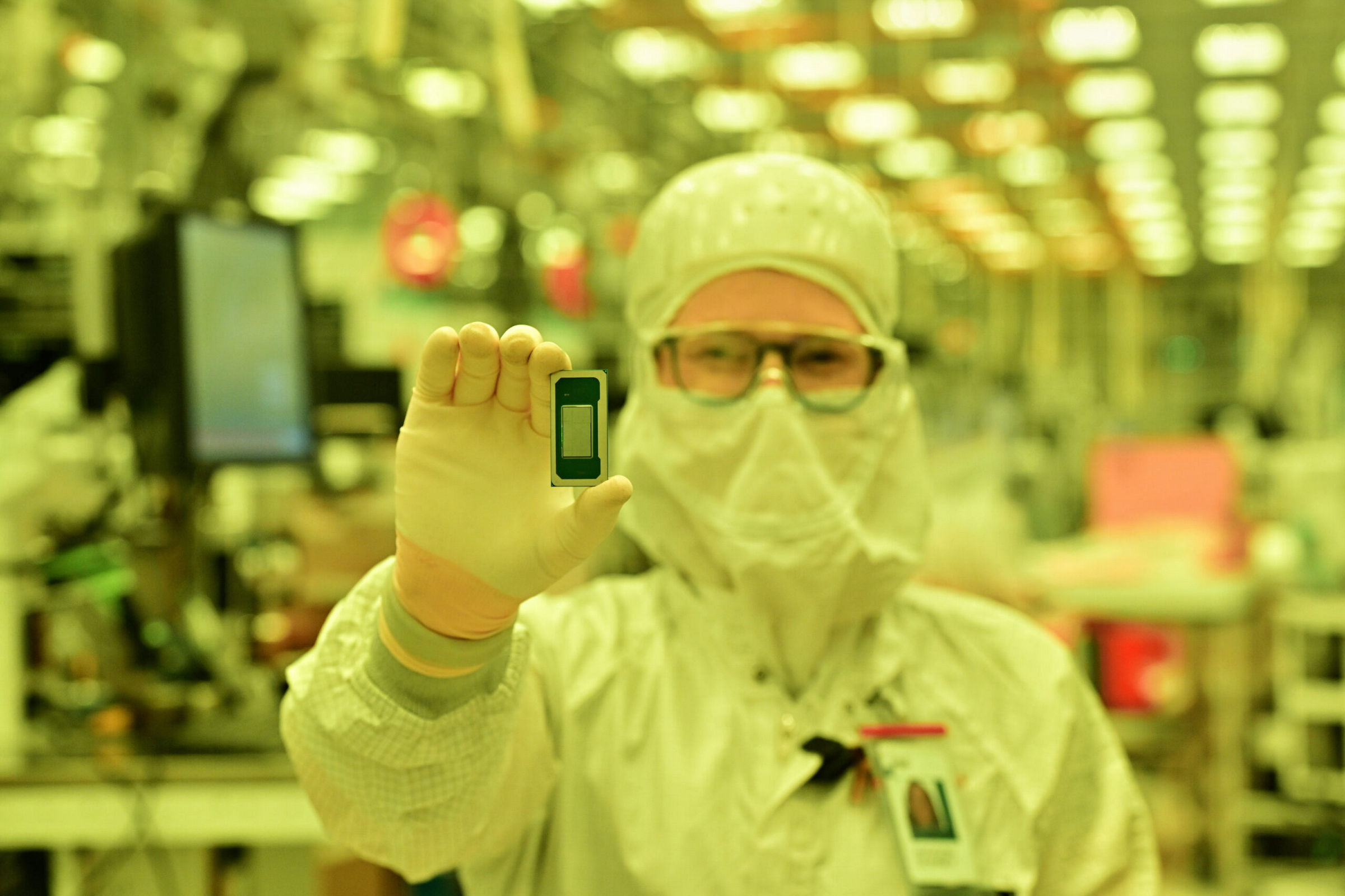
Intel's Nova Lake and AMD's Zen 6 are the next-generation desktop CPU platforms both companies are expected to ship after their current Core Ultra 200S and Ryzen 9000 lineups, and as of today neither company has officially confirmed final specifications, pricing, or an exact launch date for either one. Everything below involving core counts, cache sizes, socket changes, and the increasingly common claim that both platforms are slipping toward a CES 2027 launch window comes from leaked roadmap slides, supply-chain reports, and unconfirmed rumors unless it is explicitly attributed to an Intel or AMD earnings call, press release, or public roadmap statement.
That distinction matters because "nova lake vs zen 6," "nova lake vs amd," and "nova lake vs olympic ridge" (AMD's internal codename for the Zen 6 desktop chips) have become some of the most-searched next-gen CPU comparisons, and most of what's circulating is still rumor layered on top of a thin set of real corporate statements. Here is what each company has actually said, what's leaked, and what it means if you're deciding whether to buy a current-generation chip now or wait.
- Confirmed by Intel: Nova Lake is Intel's next-generation client CPU family, built in part on Intel's own 18A process, with CEO Lip-Bu Tan telling investors on an earnings call that it remains part of Intel's near-term client roadmap. Intel has not published a specific launch date, core count, or price.
- Confirmed by AMD: At its Financial Analyst Day, AMD put Zen 6 on its public roadmap for 2026, with the EPYC "Venice" server chips as the lead product on TSMC's 2nm-class process. AMD has not published a specific Ryzen desktop ("Olympic Ridge") launch date, core count, or price.
- Rumored/leaked only: A CES 2027 launch window for both companies' desktop chips, Nova Lake's LGA1954 socket and up-to-52-core configurations, and Zen 6 desktop's up-to-24-core chiplet layout all come from leaks and industry reporting, not from Intel or AMD directly.
What Intel and AMD have actually said
Start with the part of this story that isn't a leak. Intel's next-generation client family, internally codenamed Nova Lake, has been acknowledged by Intel's own leadership on quarterly earnings calls as part of the company's client roadmap, positioned as the successor to the current Arrow Lake-based Core Ultra 200S desktop chips and the Panther Lake mobile chips that began shipping in Intel's Core Ultra Series 3 line. Intel's public financial disclosures confirm the company is continuing to ramp its 18A manufacturing process, which outside reporting and Intel's own commentary tie to the Nova Lake generation, but Intel's own newsroom and investor materials do not list a specific ship date, SKU lineup, or pricing for Nova Lake.
AMD's side of the record is similarly real but similarly limited in detail. At its most recent Financial Analyst Day, AMD laid out an updated CPU roadmap that put Zen 6 on track for a 2026 debut, led by the EPYC "Venice" server processors built on a 2-nanometer-class TSMC node, with AMD CEO Lisa Su reiterating on subsequent earnings calls that Venice silicon was in the lab and performing well. AMD's own roadmap also names "Olympic Ridge" as the Zen 6 desktop Ryzen codename and "Medusa Point" as the Zen 6 mobile codename, continuing the AM5 socket. But as with Intel, AMD has not published an exact Ryzen desktop launch date, final core configuration, or pricing for Olympic Ridge.
In other words, both companies have put Zen 6 and Nova Lake on the record as real, in-development platforms headed for roughly the same calendar window. Nearly everything more specific than that — the exact month, the top-end core count, the socket's full feature set, and pricing — is still attributed to leaks.
The CES 2027 delay rumors
Through much of 2026, industry reporting converged on a timeline in which Nova Lake-S desktop chips and AMD's Olympic Ridge desktop chips would both launch around the end of 2026 or very early 2027, likely timed to Intel and AMD's traditional CES keynote slots. More recent leaks have pushed that window later, with multiple outlets reporting that Nova Lake-S's full desktop lineup may not be fully unveiled until CES 2027 itself (January), with some early or partial SKUs possibly arriving in the preceding months. Reporting on AMD's side has followed a similar pattern: Zen 6's EPYC Venice server chips are still framed as on track for a 2026 launch per AMD's own roadmap commentary, but the Ryzen desktop Olympic Ridge chips are now widely rumored to land in the CES 2027 window rather than before the end of 2026, pushed in part by reported memory and foundry capacity constraints across the broader chip industry.
None of this has been confirmed by either company as a delay in the formal sense — Intel has not said Nova Lake missed a date it originally promised, and AMD has not said Olympic Ridge missed a date it originally promised, because neither company ever committed publicly to a specific launch month for either chip. What's happened instead is that the window implied by earlier roadmap commentary and leaks has narrowed, with "late 2026" increasingly replaced by "CES 2027" in leak coverage for both platforms' desktop variants.
Nova Lake: what's rumored on the specs side
Unconfirmed leaks describe Nova Lake-S as a bigger architectural break from Arrow Lake than any Intel desktop generation in recent memory. According to widely circulated leaks and Intel documents that have surfaced through partner and validation channels, the flagship Nova Lake-S configuration pairs new "Coyote Cove" performance cores with new "Arctic Wolf" efficiency cores, in a leaked top-end layout of up to 16 P-cores and 32 E-cores plus additional low-power efficiency cores, for a widely reported maximum core count in the neighborhood of 52 cores — more than double Arrow Lake's current top-end core count. Leaked internal Intel materials also point to a new "big Last Level Cache" (bLLC) design intended as Intel's answer to AMD's 3D V-Cache approach on gaming-focused SKUs, though exact cache sizes remain unconfirmed.
On the platform side, unconfirmed reports and socket leaks consistently point to a new LGA1954 socket for Nova Lake-S, replacing the current LGA1851 socket used by Arrow Lake — meaning existing Z890/B860 motherboards would not support Nova Lake even as a drop-in upgrade. Leaks also describe support for DDR5 memory at higher rated speeds than current platforms and a new 900-series chipset family. None of these platform details have been confirmed directly by Intel as of this writing.
Zen 6 desktop: what's rumored on the specs side
On the AMD side, leaks describe Zen 6 desktop chiplets (CCDs) scaling up to 12 cores each, compared with 8 cores per CCD on current Zen 5 Ryzen chips, paired with reported L3 cache increases to roughly 48MB per CCD. Combined with AMD's existing dual-CCD approach, unconfirmed leaks put the top Olympic Ridge configuration at up to 24 cores, which would be the highest core count ever offered on a mainstream AM5 desktop Ryzen chip. Other leaked configurations reportedly span down to 6-, 8-, 10-, and 12-core single-CCD variants. Leaks also describe a double-digit percentage IPC (instructions-per-clock) improvement over Zen 5 and continued use of a TSMC 2-nanometer-class process for the CCDs, consistent with the process node AMD has publicly attached to the broader Zen 6 generation at its Financial Analyst Day.
Unlike Intel's rumored socket change, the one platform detail that looks most solid on AMD's side — and is backed by AMD's own public AM5 longevity commitments as well as leaked AMD documentation — is that Olympic Ridge is expected to remain on the existing AM5 socket rather than requiring a new motherboard platform. If that holds, it would be a meaningful practical difference from Nova Lake's rumored full platform change.
| Category | Intel Nova Lake (desktop, "Nova Lake-S") | AMD Zen 6 desktop ("Olympic Ridge") |
|---|---|---|
| Status | Acknowledged by Intel on earnings calls as part of the client roadmap; no official date/specs (confirmed) | Zen 6 on AMD's public 2026 roadmap via Financial Analyst Day, led by EPYC "Venice"; no official desktop date/specs (confirmed) |
| Process node | Intel 18A, with some tiles reportedly built externally (rumored detail on external tiles) | TSMC N2-class (~2nm) process for CCDs (consistent with AMD's own roadmap node claims) |
| Core layout (rumored) | Up to 16 P-cores ("Coyote Cove") + 32 E-cores ("Arctic Wolf") + low-power cores, ~52 cores max (leaked) | Up to 12 cores per CCD, two CCDs for up to 24 cores max (leaked) |
| Platform/socket | New LGA1954 socket rumored, replacing LGA1851 (leaked, unconfirmed) | Continues AM5 socket, consistent with AMD's stated long-term AM5 support (more consistently reported) |
| Memory support | DDR5 at higher rated speeds reported; exact spec unconfirmed | DDR5, exact rated speeds unconfirmed |
| Rumored launch window | Increasingly reported as CES 2027 for the full desktop lineup, vs. earlier "late 2026" leak coverage | EPYC Venice still tracking 2026 per AMD's own commentary; Olympic Ridge desktop increasingly reported as CES 2027 |
Why both platforms reportedly keep slipping
Reporting on both companies' rumored timeline slips points to similar pressures rather than chip-specific problems: broader semiconductor and memory (DRAM) supply tightness across the industry in 2026, the logistical complexity of standing up new sockets and chipset families (on Intel's side) or new chiplet configurations (on AMD's side), and the normal incentive both companies have to anchor major consumer platform launches to CES, where they get a guaranteed global media spotlight rather than a quieter mid-quarter launch. None of this has been confirmed as the specific cause of either company's roadmap by Intel or AMD themselves — it's the explanation offered by industry reporting, and it should be read as informed speculation rather than fact.
Should you buy a current-gen chip now, or wait?
For anyone shopping today, the practical question is less about Nova Lake or Zen 6 themselves and more about how long the wait might be. If the CES 2027 reports hold up, that's still several months away, and "available at CES" historically has not meant "shelves are stocked that week" for either company's flagship SKUs. Current-generation chips like AMD's Ryzen 7 9800X3D and Ryzen 9 9850X3D, or Intel's Core Ultra 200S-series parts, remain the actual shipping options today, and how those current chips compare on specs and price is a more concrete basis for a near-term purchase than any Nova Lake or Zen 6 leak.
Buyers who specifically want next-gen features — Nova Lake's rumored new socket and much higher core counts, or Zen 6's rumored higher per-CCD core counts on the existing AM5 socket — have a real incentive to wait if their current system is still functional, simply because so many of the headline numbers remain unconfirmed and could still change before launch. Buyers who need a machine now, or whose current CPU is a genuine bottleneck, are better served treating today's Ryzen and Core Ultra chips as the real decision set, not the leaked future ones. It's also worth factoring in that component pricing has been volatile industry-wide; recent reported price increases on both AMD and Intel chips are a separate, more immediate pressure on that decision than the next-gen launch timing.
One platform wrinkle worth watching: memory
Both next-gen platforms arrive during a period of broader change in memory technology, and while Nova Lake and Zen 6 desktop chips are expected to use conventional DDR5 system memory rather than HBM, the same supply pressures reshaping high-bandwidth memory production are part of the backdrop reporters cite for component delays generally. For readers curious about that side of the story — which affects AI accelerators and some workstation-class parts more directly than mainstream desktop CPUs — our separate HBM4 explainer covers the makers and bandwidth figures in more detail.
Where to go for a deeper Nova Lake breakdown
This piece focuses on the head-to-head framing against Zen 6. For a closer look at Nova Lake on its own — including the fuller set of leaked SKUs, benchmark rumors, and the broader Intel 18A production context — our dedicated Nova Lake release date and specs report goes deeper into Intel's side of this generational jump.
Bottom line
Intel and AMD have both put Nova Lake and Zen 6 on the public record as real, in-development next-generation desktop platforms — that much is confirmed, directly from each company's own earnings commentary and roadmap events. Everything past that point, including the specific core counts, cache sizes, socket details, and especially the increasingly common CES 2027 launch framing for both companies' desktop chips, remains leaked or rumored, and neither Intel nor AMD has officially confirmed exact specs, pricing, or dates as of today. Treat every specific number in this space, including the ones above, as subject to change until one of the two companies says it directly. If you need a new desktop CPU now, current-generation Ryzen and Core Ultra chips remain the only fully confirmed, shipping option — Nova Lake and Zen 6 are worth planning around, not waiting on indefinitely.
Frequently asked questions
Has Intel officially confirmed a Nova Lake release date?
No. Intel executives have acknowledged Nova Lake as part of the company's client CPU roadmap on earnings calls, but Intel has not published an exact launch date, final specifications, or pricing. Reports of a CES 2027 launch window for the full Nova Lake-S desktop lineup are based on industry leaks, not an Intel announcement.
Has AMD officially confirmed a Zen 6 desktop release date?
AMD confirmed Zen 6 as part of its public roadmap at its Financial Analyst Day, with the EPYC Venice server chips as the lead product targeted for 2026. AMD has not given an official date for the Zen 6 desktop chips, codenamed Olympic Ridge; a CES 2027 window for Olympic Ridge is a widely reported rumor, not a confirmed AMD date.
Will Nova Lake need a new motherboard?
Unconfirmed leaks consistently point to a new LGA1954 socket for Nova Lake-S, which would replace the current LGA1851 socket and require a new motherboard. Intel has not officially confirmed the socket change, though it has been reported consistently enough across leaked documentation that it's considered likely.
Will AMD's Zen 6 desktop chips work in current AM5 motherboards?
That's the current expectation. AMD's own long-term AM5 platform commitments, combined with leaked AMD documentation, point to the Zen 6 desktop chips (Olympic Ridge) continuing to use the existing AM5 socket rather than requiring a new platform, unlike Intel's rumored socket change for Nova Lake.
How many cores will Nova Lake and Zen 6 desktop chips have?
Neither figure is confirmed. Leaked Intel documents describe a Nova Lake-S flagship with up to roughly 52 cores (a mix of performance, efficiency, and low-power cores). Leaked AMD roadmaps describe a Zen 6 desktop flagship with up to 24 cores across two 12-core chiplets. Both numbers should be treated as unconfirmed until each company states them directly.
Should I buy a Ryzen 9800X3D or Core Ultra 200S chip now, or wait for Zen 6 and Nova Lake?
If you need a desktop CPU now and your current system is a genuine bottleneck, today's Ryzen 9000-series and Core Ultra 200S chips are the only fully confirmed, shipping option. If your system still works and you specifically want next-gen features like Nova Lake's rumored new socket or Zen 6's rumored higher per-chiplet core counts, waiting makes sense, but exact specs, pricing, and timing could still change before either platform actually ships.
Sources
- Intel Reports Second-Quarter 2026 Financial Resultsintel.com
- Intel: Introducing Panther Lake by the Numbersintel.com
- AMD Reports Second Quarter 2026 Financial Resultsir.amd.com
- AMD to Host Financial Analyst Day on November 11, 2025amd.com
- Wikipedia: Zen 6en.wikipedia.org
- Wikipedia: Nova Lakeen.wikipedia.org
Mara Lindqvist edits the hardware desk. She covers graphics cards, processors, memory and storage, the foundries and chip designers behind them, and what the numbers on a spec sheet mean for people choosing a PC. Specifications in her stories come from manufacturer spec pages and datasheets.