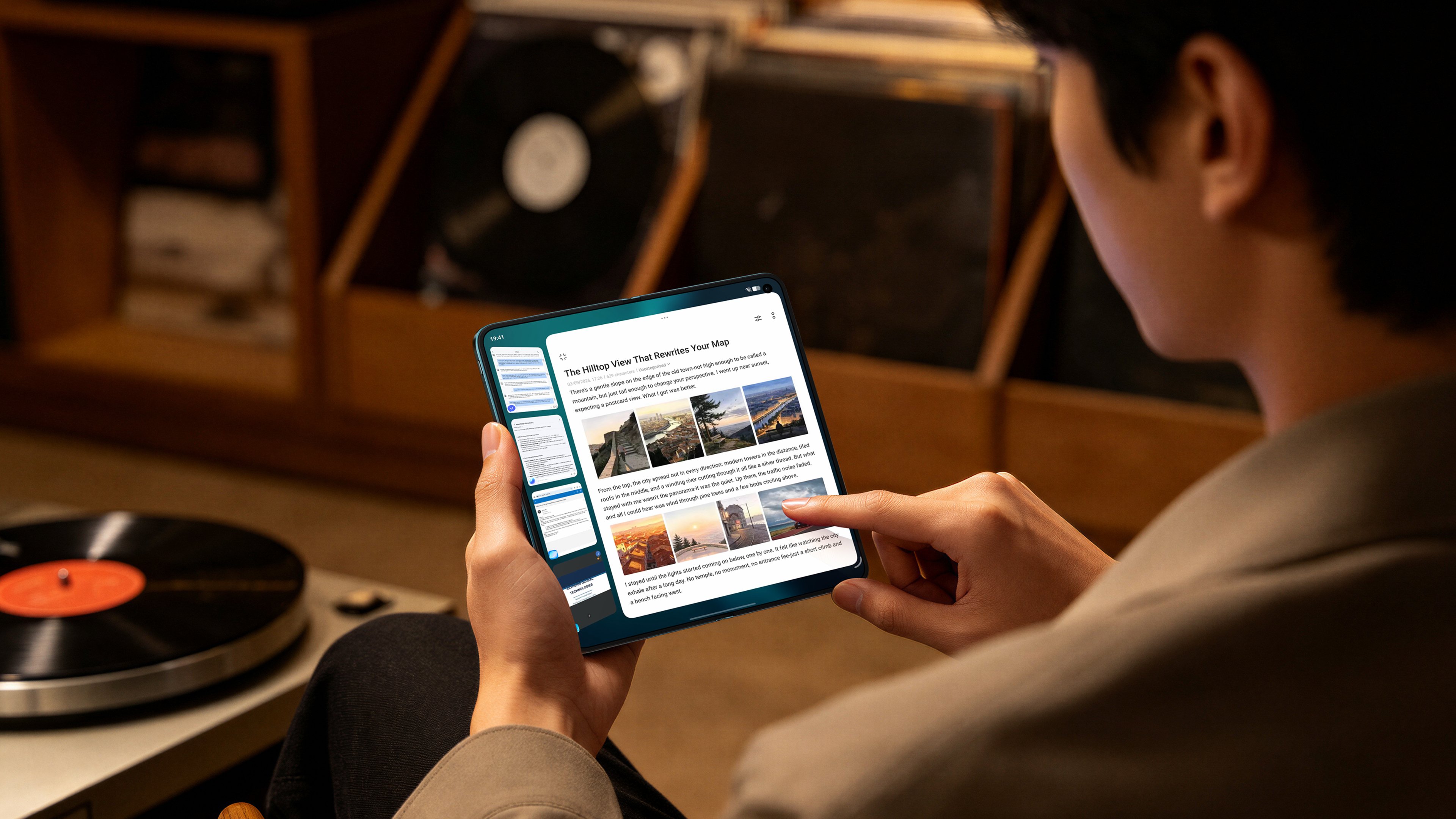
Xiaomi 18 Fold vs iPhone Duo: Specs, Price and Availability Compared
Xiaomi's 200MP triple-camera foldable undercuts Apple's titanium iPhone Duo on price and specs — but only one of them you can actually buy outside China.
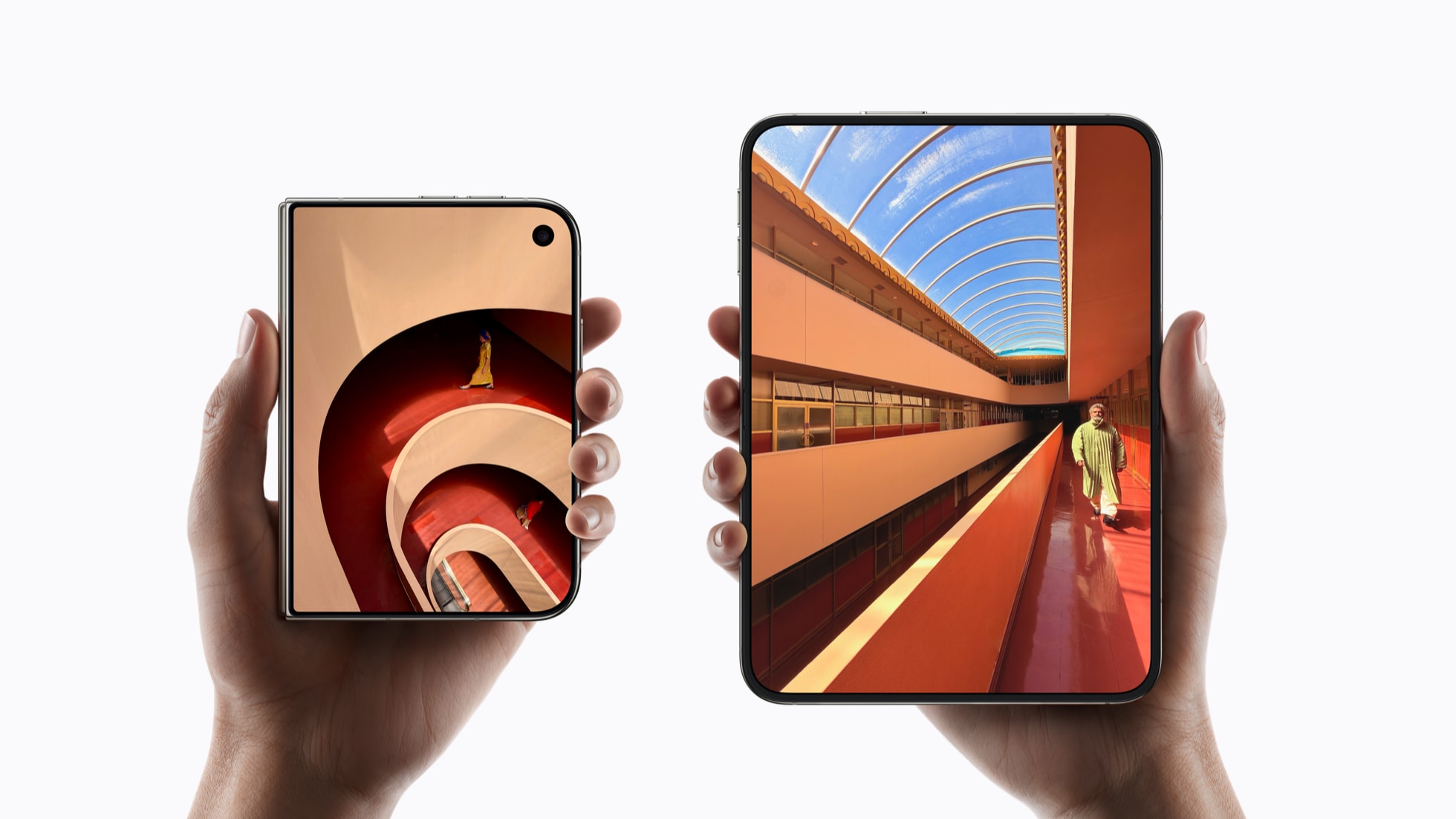
Two of 2026's most talked-about foldables are both book-style phones that open into a tablet-like inner screen, and both landed within weeks of each other: Xiaomi's 18 Fold, which went on sale in China on September 10, and Apple's iPhone Duo, whose pre-orders open October 16 ahead of an October 23 launch. The short version: the Xiaomi 18 Fold is the more powerful and more affordable spec sheet on paper, but it is a China-only phone, while the iPhone Duo costs far more and ships to more than 70 countries. Below is a full, source-checked comparison of chipset, display, hinge, cameras, battery, software, price and — the part shoppers outside China actually need to know — availability.
Key takeaways
- Xiaomi 18 Fold: 7.58-inch inner display, XRING O3 (3nm) chip, 200MP Leica main camera, 6,000mAh battery, HyperOS 4 — China only, from CNY 10,999 (roughly $1,540).
- iPhone Duo: 7.6-inch inner display, A20 Pro chip, 48MP dual-camera system, dual-battery design, iOS 27 — sold in 70+ countries from October 23, starting at $1,999 (256GB).
- Both are book-style folders with a passport-shaped outer screen; neither maker claims its hinge is fully crease-free.
- If you are outside China, this is not really a head-to-head purchase decision — it is a spec comparison, since the 18 Fold has no official international price or release date.
Price and availability: China-only vs a 70-country global launch
The biggest practical difference between these two phones has nothing to do with silicon. The Xiaomi 18 Fold launched exclusively in mainland China on September 10, 2026, with five configurations: 12GB+256GB for CNY 10,999, 12GB+512GB for CNY 11,999, 16GB+512GB for CNY 12,999, 16GB+1TB (with newer LPDDR6 memory) for CNY 14,999, and a 16GB+1TB "Ceramic Special Edition" for CNY 15,999. At current exchange rates that base price works out to roughly $1,540 — but that figure is a currency conversion only, not a retail price anywhere outside China. Xiaomi has not announced a global release date, and reporting around the launch (including clues in HyperOS's own code and regional IMEI registrations) points to the 18 Fold staying a China-exclusive model, even as the standard Xiaomi 18 Pro and Pro Max are expected to sell internationally.
Apple's iPhone Duo takes the opposite approach. Per Apple's own newsroom announcement, pre-orders open October 16 at 5:00 a.m. PT, the phone goes on sale October 23 in the first wave of markets — including the US, UK, Australia, Japan, India, Singapore and Malaysia — with additional "secondary markets" following on October 30, for more than 70 countries and regions in total. US pricing starts at $1,999 for 256GB, rising to $2,199 for 512GB, $2,599 for 1TB and $3,199 for 2TB; Malaysia's launch pricing starts at RM9,499. For the full breakdown of tiers and dates, see our iPhone Duo release date and price guide.
In practice, that makes this comparison academic for most readers: if you live outside China, the iPhone Duo is the only one of these two phones you can actually buy through official channels.
Design, hinge and crease
Both phones are "book-style" foldables — they open sideways like a hardback, rather than flipping like a clamshell — and both have gone out of their way to look and feel less like a slab with a hinge bolted on. The Xiaomi 18 Fold is built around what Xiaomi calls its "Dragon Bone" hinge, which the company says received 492 individual structural changes from the previous generation to allow a more rounded, book-like profile than rivals such as Samsung's Galaxy Z Fold. Folded, the 18 Fold measures 117.8 x 83.6 x 10.68mm and weighs 219g; unfolded it thins out to 5.02mm.
The iPhone Duo's hinge, per Apple's specifications, is "engineered from more than 100 components" and is designed to physically support the center of the display when the phone is open, which Apple says helps the screen sit flatter. The chassis is precision-machined, mirror-polished Grade 5 titanium, with a 3D-printed titanium hinge cover, and the front glass is Ceramic Shield 2, which Apple rates at three times better scratch resistance than standard glass. Neither company markets either phone as "crease-free" — both use a soft, foldable cover layer over the inner display, and neither Apple's specs page nor Xiaomi's launch materials make an explicit no-crease claim, so expect a visible (if minimized) crease on both, consistent with every foldable on the market today.
Displays compared
Display size is close, but not identical. The Xiaomi 18 Fold pairs a 5.38-inch outer AMOLED cover screen (1712 x 1168) with a 7.58-inch inner AMOLED (2364 x 1672); both run LTPO panels at up to 120Hz and Xiaomi quotes up to 4,000 nits of peak brightness, with the cover screen protected by the company's Dragon Crystal Glass 3.0.
The iPhone Duo's outer screen is a 5.4-inch Super Retina XDR OLED panel (1398 x 2034 at 460ppi), which Apple says covers about 90 percent of the front-screen area of a standard iPhone 18 Pro. The inner display is a 7.6-inch Super Retina XDR OLED (1878 x 2670 at 430ppi) — Apple's official iPhone Duo specifications page describes it as roughly 50 percent larger than the iPhone 18 Pro Max screen. Both inner and outer displays support ProMotion up to 120Hz, Always-On, HDR, True Tone and wide color (P3), and Apple quotes up to 3,000 nits of peak brightness with an optional nano-texture finish to cut glare.
On paper, Xiaomi's brightness figure is higher and its inner screen resolution is denser in absolute pixel count, while Apple's panels edge it on measured pixel density (ppi) and add features like nano-texture and Apple's usual color-calibration tuning. Neither company has published independent lab measurements, so these are manufacturer-quoted figures rather than third-party test results.
Chipset and performance: XRING O3 vs A20 Pro
This is where the 18 Fold stakes its biggest claim. It is the debut device for Xiaomi's second in-house flagship chip, the XRING O3, built on a 3nm process with a 10-core CPU and a 16-core "G2-Ultra NX" GPU, plus a dedicated NPU that Xiaomi rates at 200 TOPS. Depending on configuration, the 18 Fold pairs that chip with either LPDDR5X memory (256GB/512GB models) or newer LPDDR6 memory on the 1TB tier.
The iPhone Duo runs Apple's A20 Pro — the same silicon family used in the iPhone 18 Pro line — with a 6-core CPU (2 performance cores, 4 efficiency cores), a 7-core GPU with hardware-accelerated ray tracing and Neural Accelerators, and a dual 16-core Neural Engine. Apple's own newsroom claims the A20 Pro delivers "35 percent better sustained performance" than the iPhone 17 Pro's chip, alongside a CPU that's "up to 20 percent faster" and a GPU "up to 40 percent faster" than its predecessor. As with the display figures, both sets of performance claims come from each manufacturer's own materials rather than a shared, neutral benchmark — Xiaomi and Apple have not been tested head-to-head by either company.
Cameras compared
Xiaomi goes wide on camera count and resolution: a Leica-tuned triple system built around a 200MP main sensor (f/1.7, OIS), a 50MP periscope telephoto (f/2.8) with 3.5x optical zoom and OIS, and a 50MP ultrawide (f/2.4), plus a 16MP selfie camera on both the cover and inner screens.
Apple's iPhone Duo uses a simpler dual-camera array shared with its non-folding siblings: a 48MP Fusion Main camera (26mm equivalent) and a 48MP Fusion Ultra Wide (13mm equivalent), with the Fusion Main sensor providing a built-in 2x "optical-quality" telephoto crop for a combined "4x optical-quality zoom range," per Apple's specifications. Selfies come from a 12MP outer Center Stage camera, while the inner display uses an under-display FaceTime camera that Apple says stays hidden until it's activated, preserving an uninterrupted screen. Both phones support 4K video, though Apple specifically quotes 4K120 fps Dolby Vision recording with "zero shutter lag" photo capture.
On raw specs, Xiaomi's camera array is the more ambitious of the two — three lenses versus two, and a far higher-resolution main sensor — while Apple leans on computational photography and its established Fusion camera pipeline rather than a resolution race.
Battery and charging
The Xiaomi 18 Fold packs a single 6,000mAh battery — a large capacity for a foldable — with 67W wired charging (with 50W PPS support) and 50W wireless charging.
Apple's iPhone Duo instead uses a dual-battery architecture, with one cell on each side of the hinge. Apple quotes up to 24 hours of typical mixed use, up to 31 hours of video playback using the inner display, or up to 44 hours of video using the more power-efficient outer display. Wired charging reaches 50 percent in about 20 minutes with a 60W adapter, or in about 30 minutes wirelessly with a 35W MagSafe or Qi2 charger. Apple does not publish a raw battery capacity figure (a consistent policy across its lineup), so the two batteries can't be compared cell-for-cell — only by the manufacturers' own usage-time claims.
Software: HyperOS 4 vs iOS 27
The 18 Fold ships with Xiaomi's HyperOS 4, the company's Android-based system, with foldable-specific features such as multi-window layouts and app continuity between the cover and inner screens, alongside Xiaomi's usual AI and cross-device tools.
The iPhone Duo ships with iOS 27 (specifically iOS 27.1), which Apple has adapted for a folding form factor: a Split View mode for running two apps side-by-side on the inner display, a Dynamic Island that reorients for the taller outer screen, and a StandBy mode usable on either display. Apple has also confirmed Apple Pencil support over USB-C is coming to the iPhone Duo later in 2026. Readers weighing whether to update an existing iPhone can check our separate write-up on what's new in iOS 27 and which iPhones support it.
Xiaomi 18 Fold vs iPhone Duo: full spec comparison
| Spec | Xiaomi 18 Fold | iPhone Duo |
|---|---|---|
| Announced / on sale | Sept 7 / Sept 10, 2026 (China) | Sept 9, 2026 / Oct 23, 2026 (70+ markets) |
| Outer display | 5.38-in AMOLED, 1712x1168, 120Hz, 4,000 nits | 5.4-in Super Retina XDR OLED, 1398x2034, 120Hz ProMotion, 3,000 nits |
| Inner display | 7.58-in AMOLED, 2364x1672, 120Hz, 4,000 nits | 7.6-in Super Retina XDR OLED, 1878x2670, 120Hz ProMotion, 3,000 nits |
| Chipset | Xiaomi XRING O3 (3nm, 10-core CPU, 16-core GPU) | Apple A20 Pro (6-core CPU, 7-core GPU) |
| RAM / storage | 12GB/256GB to 16GB/1TB (LPDDR5X or LPDDR6) | 256GB, 512GB, 1TB, 2TB |
| Rear cameras | 200MP main + 50MP periscope (3.5x) + 50MP ultrawide | 48MP Fusion Main + 48MP Fusion Ultra Wide (2x tele crop) |
| Front cameras | 16MP (cover) + 16MP (inner) | 12MP Center Stage (outer) + under-display (inner) |
| Battery | 6,000mAh, 67W wired / 50W wireless | Dual-cell, up to 24h mixed use, 60W wired / 35W MagSafe |
| Build | "Dragon Bone" hinge, 219g | Titanium hinge (100+ parts), Ceramic Shield 2 |
| IP rating | Not specified in launch materials | IP68 (6m / 30 min) |
| Software | HyperOS 4 (Android-based) | iOS 27.1 |
| Starting price | CNY 10,999 (~$1,540; China only) | $1,999 / 256GB (US) |
| Availability | Mainland China only | 70+ countries and regions |
Which foldable should you actually buy?
For the overwhelming majority of people outside China, this isn't really a choice — it's the iPhone Duo or a non-folding phone, because the Xiaomi 18 Fold simply isn't for sale in most of the world and Xiaomi has given no indication that will change. If you already live in mainland China and can buy either import or domestic hardware, the 18 Fold undercuts the iPhone Duo's price dramatically while matching or beating it on paper specs like camera resolution, peak brightness and raw battery capacity.
If you're an iPhone user deciding whether the Duo is worth the jump from a standard iPhone 18 Pro or Pro Max, the calculus is different: you're paying a substantial premium — starting at $1,999, roughly double a standard flagship iPhone — largely for the folding inner screen, the dual-battery endurance claims, and Apple's first real attempt at a genuinely new iPhone form factor since 2007. Our iPhone 18 Pro vs iPhone 17 Pro comparison is a useful reference if you're deciding whether a folding phone is worth the money at all versus sticking with a conventional flagship.
Frequently asked questions
Can I buy the Xiaomi 18 Fold outside China? Not officially. Xiaomi has only launched it in mainland China and has not announced international pricing, carriers or a release date, and reporting suggests it may stay China-exclusive even as other Xiaomi 18-series phones go global.
When can I pre-order the iPhone Duo? Pre-orders open October 16, 2026, with the phone arriving in stores October 23 in the first wave of over 70 countries and regions, and in additional "secondary markets" from October 30.
Which phone has the bigger screen? They're close: the iPhone Duo's inner display is slightly larger at 7.6 inches versus the Xiaomi 18 Fold's 7.58 inches — a difference of roughly a fifth of an inch that won't be noticeable in daily use.
Does either phone avoid the foldable crease? No. Neither Apple nor Xiaomi claims a crease-free display; both companies describe engineering aimed at reducing and smoothing the crease (Apple's multi-part hinge and stiffer cover layer, Xiaomi's redesigned "Dragon Bone" hinge), not eliminating it.
Which chip is faster, the XRING O3 or the A20 Pro? There's no independent, third-party benchmark comparing the two as of this comparison's publication. Each company only publishes internal comparisons against its own previous-generation chip, so a fair head-to-head will have to wait for neutral testing.
What's next
Watch two dates: October 16, when iPhone Duo pre-orders open worldwide, and whatever Xiaomi eventually says (or doesn't say) about a global 18 Fold release alongside the rest of its 18-series lineup. If you want the details on either launch individually, our guides on the iPhone Duo's release date, price and specs and the Xiaomi 18 Fold's launch in China go deeper on each phone individually. We'll update this comparison if Xiaomi confirms international pricing or a wider release for the 18 Fold.
Frequently asked questions
Can I buy the Xiaomi 18 Fold outside China?
Not officially. Xiaomi has only launched it in mainland China and has not announced international pricing, carriers or a release date, and reporting suggests it may stay China-exclusive even as other Xiaomi 18-series phones go global.
When can I pre-order the iPhone Duo?
Pre-orders open October 16, 2026, with the phone arriving in stores October 23 in the first wave of over 70 countries and regions, and in additional secondary markets from October 30.
Which phone has the bigger screen?
They're close: the iPhone Duo's inner display is slightly larger at 7.6 inches versus the Xiaomi 18 Fold's 7.58 inches, a difference that won't be noticeable in daily use.
Does either phone avoid the foldable crease?
No. Neither Apple nor Xiaomi claims a crease-free display; both describe engineering aimed at reducing and smoothing the crease, not eliminating it.
Which chip is faster, the XRING O3 or the A20 Pro?
There is no independent, third-party benchmark comparing the two yet. Each company only publishes internal comparisons against its own previous-generation chip.
How much does the Xiaomi 18 Fold cost compared to the iPhone Duo?
The Xiaomi 18 Fold starts at CNY 10,999 in China (roughly $1,540), while the iPhone Duo starts at $1,999 in the US for 256GB, rising to $3,199 for 2TB.
Sources
- Apple Newsroom: Apple Unveils iPhone Duoapple.com
- Apple: iPhone Duo Technical Specificationsapple.com
- Apple: iPhone Duoapple.com
- Xiaomi: HyperOSmi.com
- Xiaomi Globalmi.com
- Xiaomi Corporation Investor Relationsir.mi.com
Nadia Osei covers mobile and consumer gadgets for Pandromeda: smartphones, tablets, smartwatches, earbuds and smart-home devices. She tracks launches, software updates and pricing across Apple, Google, Samsung and the rest, and builds comparisons from the manufacturers' published specifications.