Xiaomi 18 Fold Release Date, Price and Specs Explained
Xiaomi's first wide foldable is official: a 5.38-inch cover screen, 7.58-inch inner display, XRing O3 chip, 6,000mAh battery, and China pricing from ¥10,999.
The Xiaomi 18 Fold is official: Xiaomi unveiled its first "wide" foldable phone in Beijing on September 7, 2026, pairing a short, landscape-shaped inner screen with the company's new in-house XRing O3 chip and a 6,000mAh battery. Chinese sales opened on September 10 with the entry 12GB/256GB configuration priced at ¥10,999 (roughly $1,540), rising to ¥15,999 (roughly $2,240) for a limited ceramic-back edition. This is a separate device from the Xiaomi 18 Pro and Pro Max slab phones Xiaomi launched weeks earlier — the 18 Fold is the company's book-style foldable, replacing the old Mix Fold line, and as of launch it is confirmed for China only.
Xiaomi 18 Fold at a glance
- Announced: September 7, 2026, in Beijing; China sales started September 10
- Price: ¥10,999–¥15,999 (about $1,540–$2,240), China only so far
- Chip: Xiaomi XRing O3, in-house 3nm processor
- Battery: 6,000mAh silicon-carbon cell, 67W wired / 50W wireless charging
- Displays: 5.38-inch outer, 7.58-inch inner, both 120Hz AMOLED
- Weight: 219g — Xiaomi's lightest foldable to date
Xiaomi 18 Fold release date and availability
Xiaomi confirmed the 18 Fold's name and launch window ahead of time, then formally introduced the phone at a Beijing launch event on September 7, 2026, alongside updates to its wider "18" series. Pre-orders opened the same day, with general sales in China beginning September 10 at 10:00 local time. The phone is listed for sale directly through Xiaomi's official product page and the Xiaomi Mall storefront.
So far, every confirmed price and configuration for the 18 Fold has been for the Chinese market. Xiaomi has not announced a global release date, international pricing, or a Google-certified version with the Play Store — all details that would typically accompany a wider rollout. Xiaomi's earlier Mix Fold devices also stayed largely China-exclusive, so buyers outside China should not assume an international version is coming soon, even though Xiaomi has shipped some other 18-series phones more broadly.
That timing also puts the 18 Fold in an unusually crowded stretch of foldable news. It arrived in the same general window that Apple confirmed its own first foldable iPhone, and it followed Xiaomi's own regular-slab 18 series by only a few weeks — so anyone tracking Xiaomi's 2026 roadmap saw two very different "18" phones land close together: one a conventional flagship, the other a foldable with its own separate name, price ladder, and launch event.
Xiaomi 18 Fold price and configurations
The Xiaomi 18 Fold launched in five configurations, split across four RAM/storage tiers plus a limited ceramic special edition. All prices below are Xiaomi's official Chinese retail prices, with approximate dollar conversions for reference only — Xiaomi has not set official pricing in any other currency.
| Configuration | Price (CNY) | Approx. price (USD) |
|---|---|---|
| 12GB + 256GB | ¥10,999 | ~$1,540 |
| 12GB + 512GB | ¥11,999 | ~$1,680 |
| 16GB + 512GB | ¥12,999 | ~$1,820 |
| 16GB + 1TB (LPDDR6) | ¥14,999 | ~$2,100 |
| 16GB + 1TB, ceramic edition (limited to 1,500 units) | ¥15,999 | ~$2,240 |
Storage uses UFS 4.1 with no microSD expansion slot, matching what Xiaomi's full specification sheet lists for the range. Xiaomi is selling the standard version in a handful of finishes — Xiaomi has shown the 18 Fold in black, silver/gray, and a red colorway some outlets have nicknamed "Xi Ye Red" — with the ceramic edition offered as a separate, more limited run.
Design: Xiaomi's first "wide" foldable
The defining change with the 18 Fold isn't a spec, it's the shape. Xiaomi's previous Mix Fold phones, like most book-style foldables from Samsung and others, opened into a tall, narrow inner screen closer to a small tablet in portrait orientation. The 18 Fold instead opens into a shorter, wider inner display — closer to a small tablet held in landscape, or two phone screens side by side. Xiaomi is marketing this as a genuinely new form factor for the company rather than an incremental update to Mix Fold, which is also why it carries the "18" numbering shared with the company's flagship slab phones instead of a Mix Fold name.
Unfolded, the phone measures 163.8 x 117.8 x 5.0mm and folds down to 83.6 x 117.8 x 10.7mm, at a weight of 219g — which Xiaomi says makes it the lightest foldable phone the company has built. The frame is aluminum with Xiaomi's Dragon Crystal Glass 3 on the cover screen, and the phone carries an IP58/IP59 rating for water resistance, unusual for a foldable.
Xiaomi is also leaning on durability messaging for the inner screen and hinge. The 18 Fold uses a new "Dragon Bone" hinge built around a three-stage linkage structure, paired with a dual-layer ultra-thin glass (UTG) panel — Xiaomi describes one 50-micron layer as adding 178% more strength and a second 30-micron layer as improving impact resistance by 29%. In comments shared through Xiaomi's own community platform, company chairman Lei Jun said the 18 Fold's drop resistance was designed to rival that of a normal, non-folding flagship phone, citing in-house testing to roughly a 1.2-meter drop height — a manufacturer claim, not an independently verified result, so treat the specific figure as Xiaomi's own testing rather than third-party benchmarking.
None of that durability work would matter much if the hinge left a deep, obvious crease down the middle of the inner screen, which has been a recurring complaint about book-style foldables generally. Xiaomi has not published independent third-party crease measurements for the 18 Fold, so we can't quantify how visible the fold line is in daily use; what Xiaomi has confirmed is the underlying hardware approach — the three-stage linkage hinge and dual-layer UTG glass described above — rather than a specific crease-depth number.
Displays: 5.38-inch cover, 7.58-inch inner screen
The Xiaomi 18 Fold's cover display is 5.38 inches, running at 1712 x 1168 with a 120Hz refresh rate — sized and shaped close to a normal phone screen, so the 18 Fold is meant to be usable folded shut rather than treated as a fallback display. Unfolded, the inner display grows to 7.58 inches at 2364 x 1672, also at 120Hz. Both panels are AMOLED with HDR10+ and Dolby Vision support, and Xiaomi rates peak brightness at up to 4,000 nits according to GSMArena's spec listing for the device, which cross-checks Xiaomi's own published figures.
Because the inner screen is wider and shorter than a typical foldable's tablet-style panel, Xiaomi is positioning multitasking — split-screen apps side by side — as one of the 18 Fold's main selling points, rather than a single large canvas for one app at a time.
XRing O3 chip and performance
The Xiaomi 18 Fold is the debut device for XRing O3, Xiaomi's own in-house flagship chip, built on a 3nm process. Xiaomi's specifications describe a 10-core CPU alongside a 16-core Arm-based GPU and a dedicated four-core NPU for on-device AI processing. Bringing its own silicon to a foldable — rather than reaching for a Qualcomm or MediaTek chip, as Xiaomi still does on some other phones — is itself part of the announcement: Xiaomi is using the 18 Fold to show XRing O3 can handle a flagship-tier device rather than a mid-range one. Full technical details, including memory and storage bandwidth, are listed on Xiaomi's specifications page.
RAM options run from 12GB up to 16GB, with the top storage tier using newer LPDDR6 memory according to Xiaomi's own configuration listings, while lower tiers use UFS 4.1 storage without expansion.
On connectivity, Xiaomi's specifications list 5G, Wi-Fi 7, Bluetooth 6.0, NFC, and multi-band GPS positioning, according to the spec sheet GSMArena has published for the device. Xiaomi has not detailed satellite-messaging support separately from the "Xiaomi Xingchen" communications branding mentioned below, so we're not listing satellite connectivity as a confirmed, standalone feature here.
Camera system
Xiaomi kept its Leica partnership for the 18 Fold's camera setup. The rear system is a triple-camera array led by a 200-megapixel main sensor at f/1.7 with optical image stabilization, joined by a 50-megapixel periscope telephoto offering roughly 3.5x optical zoom at f/2.8, and a 50-megapixel ultra-wide at f/2.4. Selfie duties are handled by matching 16-megapixel sensors on both the inner and cover displays, so the phone can be used as its own tripod-style selfie camera when folded — framing a shot on the cover screen, then shooting with the higher-resolution rear array instead of a dedicated front sensor. Video capture tops out at 8K at 24fps, with 4K at 30 or 60fps and Dolby Vision support, per the spec sheet GSMArena has published for the device.
Xiaomi has not published a separate camera-only press deck with lab-style scoring for the 18 Fold, so any comparisons to Xiaomi's own non-folding flagships, or to other manufacturers' foldables, should wait for independent camera testing rather than the spec sheet alone. What's confirmed is the sensor and lens hardware described above, which puts the 18 Fold's rear camera hardware closer to Xiaomi's flagship slab phones than to a typical foldable's usually-compromised camera stack.
Battery and charging
The 18 Fold packs a 6,000mAh silicon-carbon battery — a notably large capacity for a foldable this thin — with 67W wired charging (PD3.0, 50W PPS) and 50W wireless charging, plus reverse wired charging support for topping up other accessories. Xiaomi has not published an official fast-charging time-to-full figure for this specific model on its consumer-facing pages, so treat any specific "X minutes to Y%" figures circulating elsewhere as third-party estimates rather than an Xiaomi claim.
Software: HyperOS 4 and AI features
The Xiaomi 18 Fold ships on Xiaomi HyperOS 4, built on Android 17, and includes an updated version of Xiaomi's AI assistant, which Xiaomi is marketing under a "Super Xiao Ai 2.0" branding for this generation. Xiaomi's own product listing also references a proprietary "Xiaomi Xingchen" communications system, which Xiaomi describes as part of its signal and connectivity stack for the phone; Xiaomi has not published a detailed independent explainer of exactly what that system adds over standard 5G/Wi-Fi hardware, so we're describing it here as Xiaomi's own named feature rather than translating it into a specific new capability.
How the Xiaomi 18 Fold fits into 2026's foldable and folding-phone field
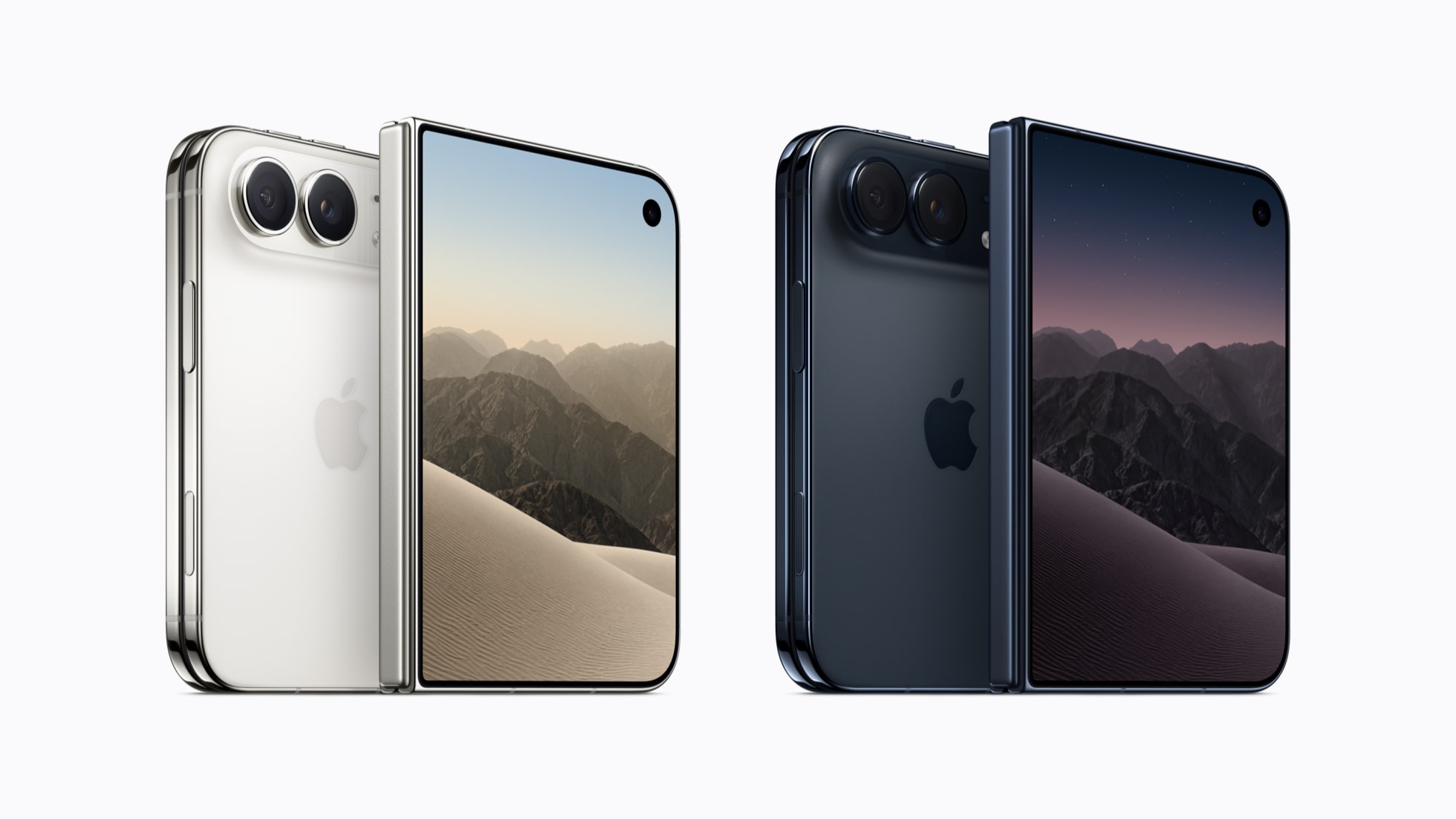
The 18 Fold's September 7 unveiling landed in the same general window as Apple's own first foldable, the iPhone Duo, which is a different kind of device — Apple's phone folds book-style into a tall inner screen closer to the format Xiaomi is moving away from, rather than the shorter, wider shape Xiaomi chose for the 18 Fold. The two aren't direct competitors on shape alone, and the iPhone Duo is not sold in the configurations or price points the 18 Fold uses in China, so any head-to-head comparison mostly comes down to ecosystem (iOS versus HyperOS/Android) rather than matching hardware tiers. Within Xiaomi's own lineup, the 18 Fold is a distinct product from the Xiaomi 18 Pro and Pro Max: those are conventional non-folding flagships with their own display and privacy-screen features, while the 18 Fold is the company's foldable-specific model built around XRing O3 and the new hinge and wide-display design described above.
What's next for the Xiaomi 18 Fold
With Chinese sales underway, the near-term questions are whether Xiaomi extends any version of the 18 Fold beyond China — something it has not done consistently with past Mix Fold generations — and how XRing O3's performance in a foldable chassis holds up against Qualcomm and MediaTek's flagship chips once more independent testing and reviews arrive. We'll update this piece if Xiaomi announces international pricing, additional color options, or a wider retail rollout for the Xiaomi 18 Fold.
Frequently asked questions
When was the Xiaomi 18 Fold released?
Xiaomi announced the 18 Fold at a launch event in Beijing on September 7, 2026, with pre-orders opening the same day and general sales in China starting September 10, 2026.
How much does the Xiaomi 18 Fold cost?
In China, the Xiaomi 18 Fold starts at ¥10,999 (roughly $1,540) for 12GB/256GB and rises to ¥14,999 (roughly $2,100) for 16GB/1TB, plus a limited ceramic-back edition at ¥15,999 (roughly $2,240) for 1,500 units.
Will the Xiaomi 18 Fold be sold outside China?
Xiaomi has not confirmed an international release. So far, every price and configuration announced has been for the Chinese market only, continuing the pattern set by earlier Mix Fold models.
What chip does the Xiaomi 18 Fold use?
It runs on the XRing O3, Xiaomi's own in-house 3nm chip, with a 10-core CPU, a 16-core GPU, and a four-core NPU for on-device AI tasks, as listed on Xiaomi's official specifications page.
Is the Xiaomi 18 Fold the same as the Xiaomi 18 Pro?
No. The Xiaomi 18 Fold is a separate, foldable device with its own hinge, dual displays, and price ladder. The Xiaomi 18 Pro and Pro Max are conventional non-folding flagships with a different display and camera setup.
How does the Xiaomi 18 Fold compare to the iPhone Duo?
They're both recent first-generation foldables, but with different shapes: the iPhone Duo folds into a taller inner screen, while the Xiaomi 18 Fold uses a shorter, wider 7.58-inch inner display. The iPhone Duo also isn't sold at the Xiaomi 18 Fold's China-only price points, so the two are not direct like-for-like competitors yet.
Sources
Nadia Osei covers mobile and consumer gadgets for Pandromeda: smartphones, tablets, smartwatches, earbuds and smart-home devices. She tracks launches, software updates and pricing across Apple, Google, Samsung and the rest, and builds comparisons from the manufacturers' published specifications.