Apple Watch Series 12 vs Galaxy Watch9 vs Pixel Watch 5: Which to Buy
A side-by-side look at price, battery life, health sensors, and ecosystem lock-in across the three current smartwatch flagships.
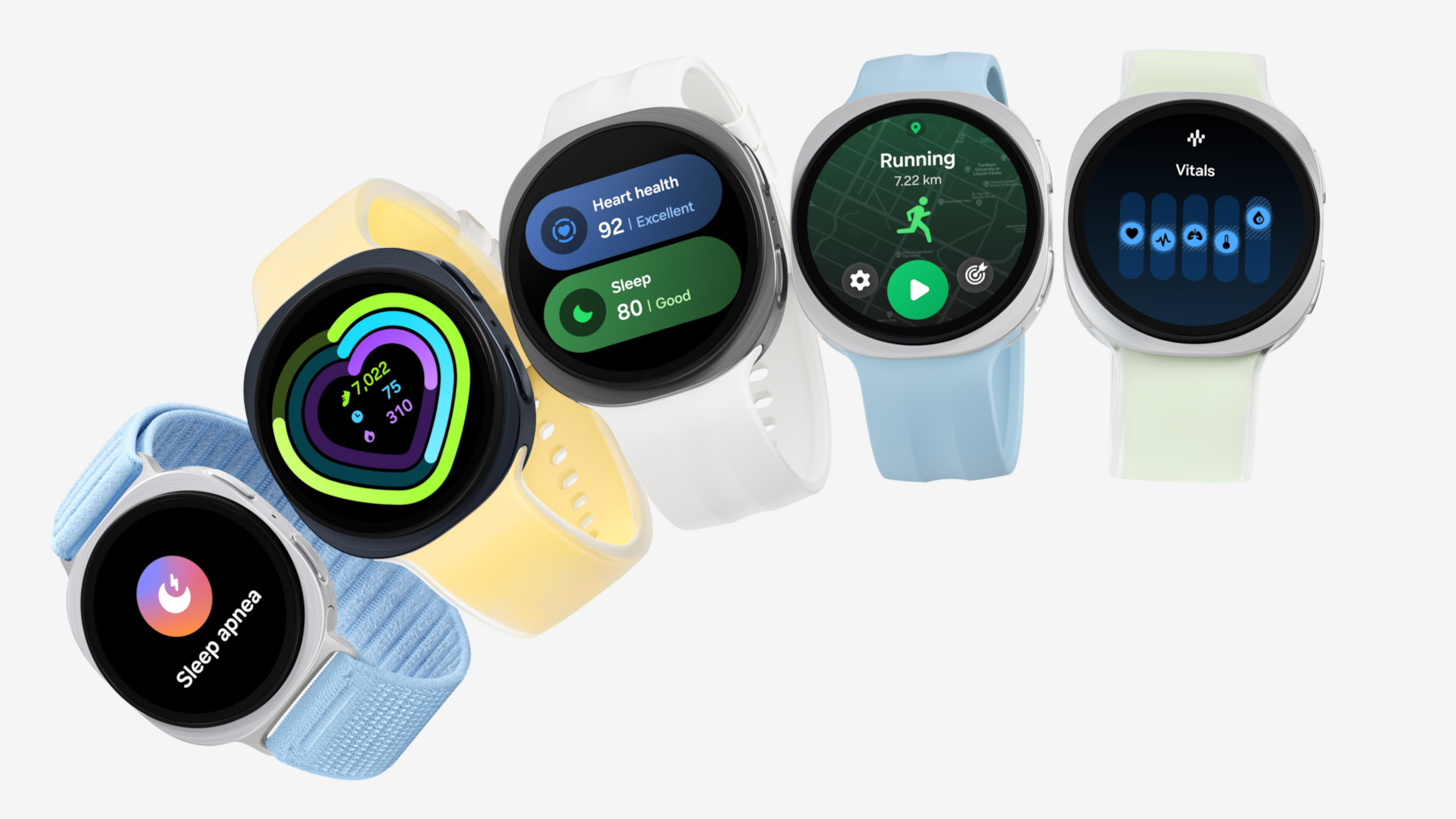
If you're picking one smartwatch today, the short version is this: the Apple Watch Series 12 (from $399) is the best all-rounder if you carry an iPhone, the Samsung Galaxy Watch9 (from $379.99) is the strongest choice for Android and Galaxy phone owners who want the deepest health data, and the Google Pixel Watch 5 (from $399.99) is the most phone-agnostic option, pairing with almost any Android 12 or later device while still claiming the longest battery life of the three. None of this year's models are hard to tell apart on paper, but the software ecosystem each one locks you into matters more than any single spec.
- Cheapest to start: Galaxy Watch9, from $379.99, per Samsung's product page.
- Longest claimed battery: Pixel Watch 5, "up to 40 hours," per Google's store listing.
- Toughest build on offer: Apple Watch Ultra 4 (100m water resistance, MIL-STD-810H) or Samsung's Galaxy Watch Ultra2, if you want a rugged tier above the standard models.
- Least phone lock-in: Galaxy Watch9 and Pixel Watch 5 both run on Android 12+ generally; the Apple Watch Series 12 requires an iPhone running iOS 27 or later.
What's actually current right now
Comparisons of this trio go stale fast, so it's worth being precise about which models are actually for sale today. Apple's own site no longer lists the Apple Watch Series 11 or Ultra 3 as purchasable; both product pages now redirect to the Series 12 and Ultra 4 listings, which Apple's shop confirms start at $399 and $799 respectively. Samsung still sells the Galaxy Watch9 lineup (regular, Classic, and the Galaxy Watch Ultra2) directly from its watches page, with the base 40mm model starting at $379.99. Google's store lists the Pixel Watch 5 at $399.99 and up, while the Pixel Watch 4 page remains live mainly as a legacy listing. This piece compares the three current flagships: Series 12, Galaxy Watch9, and Pixel Watch 5, with notes on each brand's rugged Ultra-tier option where it changes the calculus.
Price and tiers
Apple's Watch lineup starts with the Apple Watch SE 3 at $249, moves to the Series 12 from $399 for the 42mm GPS aluminum model, and tops out with the Apple Watch Ultra 4 from $799, according to Apple's buy page. Case material upgrades (titanium, ceramic) and cellular connectivity add to that base Series 12 price. Samsung's Galaxy Watch9 starts at $379.99 for the 40mm model, with the Galaxy Watch9 Classic and Galaxy Watch Ultra2 sitting above it in Samsung's own lineup; Samsung's listing also notes a financing option around $15.83 a month before any trade-in credit. Google prices the Pixel Watch 5 from $399.99 (about $33.33 a month on its own financing math), covering both the 41mm and 45mm case sizes at launch.
Design and case sizes
Apple's Series 12 ships in 42mm and 46mm aluminum and titanium cases (the ceramic version is very slightly larger, at 43mm and 47mm), while the Ultra 4 is a single 49mm titanium case built for all-day outdoor use. Samsung's Galaxy Watch9 comes in 40mm and 44mm aluminum cases, with the Watch9 Classic adding a rotating bezel in larger sizes and the Watch Ultra2 built from titanium. Google keeps the Pixel Watch 5 to two sizes, 41mm and 45mm, continuing the circular, domed-glass design it has used since the original Pixel Watch. If wrist size or case shape is a dealbreaker, Apple and Samsung both offer more size permutations across their tiers than Google does.
Display and durability
All three watches use OLED panels that get genuinely bright outdoors. Apple's spec page lists the Series 12 display at up to 2,000 nits peak brightness with an Always-On LTPO3 panel, while the Ultra 4 pushes that to 3,000 nits on a flat sapphire crystal. Samsung's Galaxy Watch9 family spans roughly 3,000 to 5,000 nits depending on tier, per the specs embedded in Samsung's comparison tool. Google states the Pixel Watch 5 display also peaks at 3,000 nits. On toughness, the Series 12 carries 50-meter water resistance and IP6X dust resistance; the Ultra 4's specs jump to 100-meter water resistance, recreational dive certification to 40 meters, and MIL-STD-810H testing. Samsung's base Galaxy Watch9 is rated 5 ATM plus IP68, with the Classic and Ultra2 stepping up to 10 ATM and, on the Ultra2, IP69K. Google rates the Pixel Watch 5 at 5 ATM and IP68, in line with the Apple Watch Series 12 rather than either brand's rugged Ultra tier.
Battery life
This is where the Pixel Watch 5 pulls ahead on paper: Google's product page headlines "up to 40 hours of battery," a real jump for a watch this size. Apple's Series 12 specs page lists "up to 24 hours of normal use" and "up to 38 hours in Low Power Mode," which narrows the gap if you're willing to trade some always-on features for runtime. The Apple Watch Ultra 4 is built for multi-day use regardless, rated at up to 50 hours of normal use and up to 84 hours in Low Power Mode. Samsung's Galaxy Watch9 page emphasizes a larger 390mAh cell (up sized from the prior generation) and frames it as an "increased" capacity, but Samsung's own page doesn't publish a specific hours-of-use figure the way Apple and Google do, so it's hard to put an exact number against the other two from official sources alone.
Health and fitness sensors
All three brands have converged on the same core sensor set — ECG, heart rate, sleep tracking — but each layers on its own extras. The Apple Watch Series 12 adds blood oxygen monitoring, a wrist temperature sensor, sleep apnea notifications, and hypertension notifications, plus Apple's newer cycle-tracking features for perimenopause and menopause, all per Apple's specs page. Samsung's Galaxy Watch9 pairs ECG with a blood pressure trend feature (which still needs periodic calibration against a cuff), an Antioxidant Index reading taken through a sensor on the case back, sleep apnea detection, and an AI-driven Energy Score that rolls sleep, activity, and heart data into one daily number. Google's Pixel Watch 5 includes an ECG app with irregular heart rhythm notifications, skin temperature variation tracking, resting heart rate, and Loss of Pulse Detection, a safety feature that can call for help if it detects your heart has stopped — Google's store page is explicit that the feature "may not detect every instance of a loss of pulse" and isn't a medical device. If you want the most clinical-feeling dashboard, Samsung's Antioxidant Index and Energy Score are the most distinctive extras; if you want the most safety-net-focused design, Pixel Watch 5's Loss of Pulse Detection and satellite SOS stand out.
Software and ecosystem lock-in
This is the part of the decision that outlasts any single spec sheet. The Apple Watch Series 12 runs watchOS 27 and, per Apple's own buy page, requires an iPhone 11 or later running iOS 27 or later to set up and use — there is no version of the Apple Watch that pairs with Android. If you're weighing a new iPhone alongside a new watch, it's worth checking how this year's models stack up in our iPhone 18 Pro vs iPhone 17 Pro comparison before you commit to the platform.
Samsung's Galaxy Watch9 runs Google's Wear OS with Samsung's One UI Watch layer on top, which Samsung's own product page says gives you "access to the Google Play Store and a world of apps." Critically, the Galaxy Watch9 pairs with any Android 12 or later phone, not just Samsung's — though some Galaxy AI health features are reserved for Galaxy phone owners. If you're shopping phones at the same time, our Galaxy S26 Ultra vs iPhone 17 Pro Max comparison covers how Samsung's current flagship stacks up outside the watch question entirely.
Google's Pixel Watch 5 store listing also confirms it runs Wear OS 7.0 and explicitly supports "most Google Pixel and Android phones running Android 12.0 or newer" — it is not locked to Pixel phones, even though Google brands it alongside its own hardware and leans on Gemini and the Fitbit app for health and assistant features. For anyone cross-shopping a Pixel phone and watch together, our Pixel 11 Pro vs iPhone 17 Pro breakdown is a useful companion read. In short: Apple's platform is the most closed, Samsung's is open to any Android phone but richest with a Galaxy, and Google's is the most broadly compatible Wear OS option of the three.
Spec comparison at a glance
| Spec | Apple Watch Series 12 | Samsung Galaxy Watch9 | Google Pixel Watch 5 |
|---|---|---|---|
| Starting price | $399 (GPS, 42mm aluminum) | $379.99 (40mm) | $399.99 (41mm) |
| Case sizes | 42mm / 46mm (43mm / 47mm ceramic) | 40mm / 44mm (Classic 46mm / 47mm) | 41mm / 45mm |
| Display brightness | Up to 2,000 nits | ~3,000–5,000 nits by tier | Up to 3,000 nits |
| Battery life (claimed) | Up to 24h / 38h Low Power Mode | 390mAh+ (no hours figure published) | Up to 40 hours |
| Water/dust resistance | 50m + IP6X | 5 ATM + IP68 (base) | 5 ATM + IP68 |
| Chip | Apple S11 | 3nm, 5-core processor | Not published by Google |
| Key health extras | ECG, SpO2, temperature, sleep apnea and hypertension notifications | ECG, blood pressure trend, Antioxidant Index, Energy Score | ECG, skin temperature variation, Loss of Pulse Detection |
| Operating system | watchOS 27 | Wear OS + One UI Watch 8 | Wear OS 7.0 |
| Phone requirement | iPhone with iOS 27+ | Android 12+ (any brand) | Android 12+ (any brand) |
| Rugged tier available | Apple Watch Ultra 4, from $799 | Galaxy Watch Ultra2 | None |
Which one should you actually buy
If you already own an iPhone, this isn't really a three-way decision — the Apple Watch Series 12 is the only one of the three that will pair with it at all, and at $399 it's a reasonable, well-rounded default unless you specifically need the Ultra 4's extra battery life and ruggedness for $799. The harder choice is between the Galaxy Watch9 and Pixel Watch 5, since both run Wear OS and both work with any recent Android phone. Pick the Galaxy Watch9 if you want the deepest, most clinical-feeling health dashboard — the Antioxidant Index, blood pressure trend, and Energy Score are genuinely distinctive — and especially if you're already carrying a Galaxy phone, since some Galaxy AI insights are gated to Samsung's own hardware. Pick the Pixel Watch 5 if battery life is your top priority (Google's 40-hour claim is the longest of the three on paper), if you want Loss of Pulse Detection and satellite SOS as a safety net, or if you'd rather not be tied to any single phone brand at all, since Google explicitly positions it as compatible with "most" Android 12+ devices rather than just its own.
One more consideration that doesn't show up in any spec sheet: switching costs. Apple Watch health history lives in Apple Health and doesn't export cleanly to Android; Samsung Health and Google's Fitbit-powered health stack have their own walls too. Whichever one you buy this year is likely to shape which phone you buy next, not just the other way around.
Common questions
We've rounded up the most-asked questions about this comparison into the FAQ section below the article.
Bottom line
There's no universally "best" watch among the Apple Watch Series 12, Galaxy Watch9, and Pixel Watch 5 — there's only the one that matches the phone in your pocket and the health features you'll actually use. iPhone owners should default to the Series 12 (or the Ultra 4 if they want more battery and ruggedness for $799). Android owners who want the richest sensor suite and don't mind a Samsung-flavored interface should look at the Galaxy Watch9. Android owners who want the longest battery life, the most phone-agnostic pairing, and Google's safety features should lean toward the Pixel Watch 5. Expect all three companies to refresh these lines again on roughly their usual yearly cycle, so if your current watch still works, there's no urgency to switch mid-cycle.
Frequently asked questions
Does the Samsung Galaxy Watch9 work with an iPhone?
No. The Galaxy Watch9 runs Wear OS with Samsung's One UI Watch layer and is designed to pair with Android phones running Android 12 or later, per Samsung's product page; it does not support iPhone pairing.
Does the Google Pixel Watch 5 require a Pixel phone?
No. Google's own store listing says the Pixel Watch 5 is compatible with most Google Pixel and Android phones running Android 12.0 or newer, so it is not limited to Pixel hardware.
Which of these three smartwatches has the longest battery life?
On manufacturer claims, the Pixel Watch 5 leads with 'up to 40 hours' per Google's store page, ahead of the Apple Watch Series 12's rated 24 hours of normal use (38 hours in Low Power Mode). Samsung does not publish an hours figure for the Galaxy Watch9 on its product page.
How much more does the Apple Watch Ultra 4 cost than the Series 12?
Per Apple's buy page, the Apple Watch Ultra 4 starts at $799 versus $399 for the Series 12, a $400 premium for the Ultra 4's larger titanium case, brighter display, longer battery life, and satellite connectivity.
Can the Apple Watch Series 12 pair with an Android phone?
No. Apple's buy page states the Apple Watch Series 12 requires an iPhone 11 or later running iOS 27 or later; there is no Android-compatible version of any Apple Watch.
Which smartwatch is the cheapest to buy new right now?
The Samsung Galaxy Watch9 has the lowest starting price of the three at $379.99, per Samsung's product page, just ahead of the Apple Watch Series 12 and Google Pixel Watch 5, which both start at just under $400.
Sources
- Apple Watch Series 12 — Technical Specifications (Apple)apple.com
- Apple Watch Ultra 4 — Technical Specifications (Apple)apple.com
- Apple Watch — Buy (Apple)apple.com
- Galaxy Watch9 (Samsung US)samsung.com
- Google Pixel Watch 5 (Google Store)store.google.com
Nadia Osei covers mobile and consumer gadgets for Pandromeda: smartphones, tablets, smartwatches, earbuds and smart-home devices. She tracks launches, software updates and pricing across Apple, Google, Samsung and the rest, and builds comparisons from the manufacturers' published specifications.