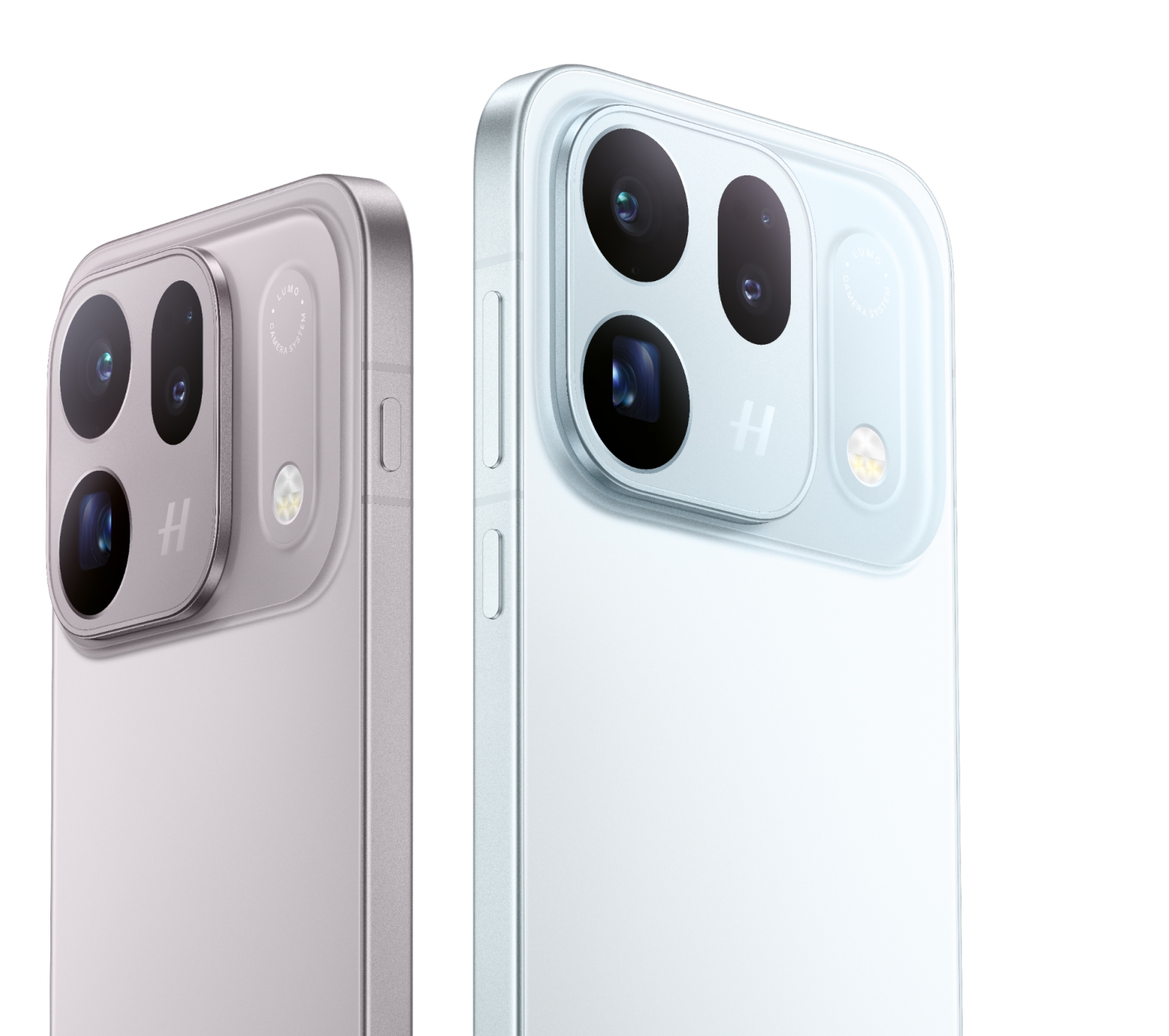
Pixel 11 Pro vs iPhone 17 Pro: Specs, Camera, Battery, Price
Same $1,099 starting price, very different trade-offs: we compare Pixel 11 Pro and iPhone 17 Pro on display, camera, battery and official pricing.

Pixel 11 Pro and iPhone 17 Pro both start at the same $1,099 price for 256GB, but they get there in different ways: Google leans on a 5x telephoto with up to 120x Pro Zoom, a 30+ hour battery claim and seven years of guaranteed OS updates, while Apple leans on an all-new 8x tetraprism telephoto, Ceramic Shield 2 on the front and back, and an A19 Pro chip it calls the fastest CPU in any smartphone. One important caveat up front: Apple has already moved its flagship line on to iPhone 18 Pro, so iPhone 17 Pro no longer appears in Apple's own online storefront — this comparison uses Apple's official launch-day specs and pricing, with that availability change flagged clearly below.
Pixel 11 Pro vs iPhone 17 Pro at a glance
Both phones are the smaller, non-Max/XL model in their respective Pro lineups, which makes them a fair match-up: similar screen size, similar starting price, same core compact-flagship positioning. Here's the short version before the full breakdown.
- Price: Both start at $1,099 for 256GB, per Google's Pixel 11 Pro store page and Apple's iPhone 17 Pro launch release.
- Display: Both are 6.3-inch 120Hz OLED panels, but Google's peaks higher on paper (3,600 vs 3,000 nits).
- Camera: Pixel's telephoto tops out at 5x optical with a 120x "Pro Zoom" assist; iPhone's new tetraprism telephoto reaches 8x optical, the longest Apple has shipped.
- Battery: Google claims "30+ hours"; Apple's own compare tool lists iPhone 17 Pro at up to 33 hours of video playback.
- Software support: Google commits to 7 years of OS, security and Pixel Drop updates; Apple does not publish an equivalent fixed-year guarantee.
- Catch: iPhone 17 Pro has been discontinued from Apple's own store now that iPhone 18 Pro is current — see the availability section below.
Price and storage
Pixel 11 Pro starts at $1,099 for 256GB with 12GB of RAM, rising to $1,099-plus configurations for 512GB and 1TB, both of which bump RAM to 16GB and add Zoned UFS storage for faster read/write speeds, according to Google's official tech-specs page. Google is also advertising the phone as "From $619 after eligible trade-in," which works out to $17.19 a month over 36 months of financing — the $1,099 figure is the actual retail price without a trade-in.
iPhone 17 Pro also starts at $1,099 in the US (or $45.79 a month), confirmed in Apple's September 9, 2025 press release, and is available in 256GB, 512GB and 1TB — Apple doubled the entry storage tier from the prior generation's base. Apple doesn't publish RAM figures for any iPhone. For readers also weighing Apple's larger model, the related iPhone Air vs iPhone 17 Pro comparison covers that trade-off in more depth.
| Spec | Pixel 11 Pro | iPhone 17 Pro |
|---|---|---|
| Starting price (256GB) | $1,099 | $1,099 |
| Storage options | 256GB / 512GB / 1TB | 256GB / 512GB / 1TB |
| RAM | 12GB (256GB) / 16GB (512GB, 1TB) | Not disclosed by Apple |
| Chip | Google Tensor G6 + Titan M3 | Apple A19 Pro |
| Display | 6.3-inch LTPO OLED, 1280×2856, 495 PPI, up to 3,600 nits peak | 6.3-inch (6.27-inch actual) Super Retina XDR OLED, ProMotion 120Hz, up to 3,000 nits peak outdoor brightness |
| Rear cameras | 50MP wide (f/1.68) + 48MP ultrawide (f/1.7) + 48MP telephoto, 5x optical, Pro Zoom to 120x | 48MP Fusion Main + 48MP Fusion Ultra Wide + 48MP tetraprism telephoto, 4x/8x optical, up to 40x digital |
| Front camera | 42MP, f/2.2, 103° field of view | 18MP Center Stage, square sensor |
| Battery claim | "30+ hour battery life," 4,850 mAh typical | Up to 33 hours video playback (Apple compare tool) |
| Wired charging | Up to 55% in ~30 min with 30W charger | 50% in 20 min with optional 40W+ adapter |
| Wireless charging | Pixelsnap, Qi2.2, up to 25W | Qi2-certified MagSafe, up to 25W (Apple's own charger) |
| Colors | Canyon, Olive, Fog, Obsidian (matte) | Cosmic Orange, Deep Blue, Silver |
| OS at launch | Android 17, 7 years of OS/security/Pixel Drop updates | iOS 26 |
Design and display
Pixel 11 Pro uses a 6.3-inch "Super Actua" LTPO OLED panel at 1280×2856 (495 PPI) with a 1-120Hz refresh range, Corning Gorilla Glass Victus 2 on the front, and Google quotes up to 3,600 nits of peak brightness alongside a 2,000,000:1 contrast ratio. It's rated IP68 for dust and water resistance.
iPhone 17 Pro's 6.3-inch Super Retina XDR display (6.27 inches measured as a standard rectangle, per Apple's own footnote) also runs ProMotion up to 120Hz with an Always-On option, and Apple says it reaches 3,000 nits of peak outdoor brightness with "2x better outdoor contrast" than the prior generation. The bigger change is structural: Apple's Ceramic Shield 2 now covers the back of the phone as well as the front — a first for iPhone — which Apple says gives 4x better crack resistance than the previous glass back, on top of 3x better scratch resistance up front. Both phones moved to a new chassis this generation; Apple's is a forged 7000-series aluminum unibody with an internal vapor chamber for heat dissipation, built specifically to sustain the A19 Pro's performance under load.
Performance: Tensor G6 vs A19 Pro
Google's Tensor G6 is paired with a Titan M3 security coprocessor; Google's spec sheet doesn't quote CPU/GPU core counts or a specific performance uplift versus Tensor G5. Apple's A19 Pro, by contrast, is described in detail in its launch materials: a 6-core CPU that Apple calls "the fastest CPU in any smartphone," a 6-core GPU with per-core Neural Accelerators, a larger cache, and a 16-core Neural Engine, delivering what Apple describes as up to 40% better sustained performance than the previous generation thanks to the new vapor-chamber cooling.
Neither company has published independent, third-party benchmark scores (Geekbench, AnTuTu or similar) for these exact models as part of their official materials, and we haven't run or verified any ourselves — so despite "pixel 11 pro vs iphone 17 pro benchmark" showing up in search suggestions, there's no official number to report here. Treat any benchmark figures you see elsewhere as third-party claims until Google or Apple publishes their own.
Camera systems compared
Pixel 11 Pro keeps Google's familiar triple-camera layout: a 50MP Octa PD wide (f/1.68, 1/1.3-inch sensor), a 48MP Quad PD ultrawide with autofocus and Macro Focus (f/1.7, 123° field of view), and a 48MP Quad PD telephoto with optical image stabilization (f/2.8, 5x optical zoom). Google's "Pro Zoom" software assist extends that to a claimed 120x, with what it calls "optical quality" preserved at 0.5x, 1x, 2x, 5x and 10x. The 42MP front camera shoots at f/2.2 with a 103° field of view. Video tops out at 8K/24-30fps using Video Boost, plus the usual Magic Eraser, Add Me, Best Take and Night Sight software suite.
iPhone 17 Pro's headline camera change is the telephoto: a new tetraprism design with a sensor Apple says is 56% larger than the previous generation, enabling a 4x optical zoom at an effective 100mm and an 8x optical zoom at 200mm — the longest optical-quality zoom Apple has shipped on iPhone. Digital zoom extends to 40x. All three rear cameras (Main, Ultra Wide, Telephoto) are 48MP "Fusion" sensors. The front camera jumps to an 18MP Center Stage sensor that's square rather than the usual rectangular shape, letting it capture a wider field of view and reframe automatically between portrait and landscape — useful for group selfies and vertical video. On the video side, iPhone 17 Pro is first to support ProRes RAW, Apple Log 2 and genlock, aimed squarely at creators working with external recording rigs.
In short: Pixel's advantage is reach (120x Pro Zoom vs 40x digital) and a wider macro-capable ultrawide; iPhone's advantage is true optical zoom length (8x vs 5x) and pro-video codecs Google doesn't offer.
Battery life and charging
Google's only published battery figure for Pixel 11 Pro is the qualitative "30+ hour battery life" claim, backed by a 4,850 mAh typical cell (4,707 mAh minimum). Charging is rated at up to 55% in about 30 minutes with a 30W-or-higher USB-C PPS charger (sold separately), plus Pixelsnap wireless charging — Google's Qi2.2-certified magnetic system — at up to 25W.
Apple's compare tool lists iPhone 17 Pro at up to 33 hours of video playback (iPhone 17 Pro Max reaches 39 hours in the same table). Apple's press release frames this generation as delivering "an enormous leap in battery life" thanks to the larger cell made possible by the new unibody design and the A19 Pro's efficiency. Wired charging reaches 50% in 20 minutes with an optional high-wattage adapter such as Apple's own 40W Dynamic Power Adapter with 60W Max (sold separately, $39); wireless charging uses Qi2-certified MagSafe, and Apple sells its own 25W MagSafe Charger alongside the phone — matching Pixel's wireless ceiling almost exactly.
Software, AI and update support
Pixel 11 Pro ships with Android 17 and Google's Gemini stack built in — Gemini Intelligence, Gemini Nano for on-device tasks, Gemini Live, and the full Gemini apps suite — plus Pixel-exclusive extras like Circle to Search, Live Translate and Call Assist. Google commits to 7 years of OS, security and Pixel Drop feature updates, a specific, published figure.
iPhone 17 Pro launched with iOS 26, which introduced the Liquid Glass redesign, on-device Live Translation in Messages/FaceTime/Phone, and expanded Apple Intelligence visual-search features, per Apple's launch release. Apple does not publish a fixed, multi-year software-support guarantee the way Google does for Pixel; in practice, recent iPhones have continued receiving major iOS updates for roughly five to six years, but that's an observed pattern rather than an official Apple commitment, and we're flagging it as such rather than stating it as a guaranteed number.
Colors, availability and the iPhone 18 Pro wrinkle
Pixel 11 Pro is sold in four finishes — Canyon, Olive, Fog and a matte Obsidian — directly through the Google Store and carrier partners, and it's Google's current flagship.
iPhone 17 Pro launched in cosmic orange, deep blue and silver, with pre-orders opening September 12, 2025 and sales starting September 19, 2025, per Apple's press release. The wrinkle for anyone comparing phones in October 2026: Apple's own online store no longer lists iPhone 17 Pro for sale — the current Pro-tier flagship on apple.com is iPhone 18 Pro, and Apple's buy-iPhone page now shows iPhone Duo, iPhone 18 Pro/Pro Max, iPhone Air, iPhone 17, iPhone 17e and iPhone 16, with iPhone 17 Pro absent from that lineup. If you specifically want a 17 Pro rather than Apple's newer model, you'll need to look at carrier inventory, authorized resellers or the secondhand/refurbished market rather than Apple's own storefront — so treat the $1,099 launch price here as the original MSRP, not necessarily what you'll pay today. If you're deciding between generations rather than hunting for a specific one, the iPhone 17 vs iPhone 16 breakdown covers Apple's non-Pro step-up in the same way this piece covers the Pro tier.
Which should you buy?
If you want the longest true optical zoom available on either platform, pro-grade video codecs (ProRes RAW, Log 2, genlock), and a back panel that's now Ceramic Shield-protected rather than plain glass, iPhone 17 Pro's camera and durability upgrades are hard to match — provided you can still find one in stock now that Apple has moved on to iPhone 18 Pro. If you'd rather have a brighter display on paper, a wider macro-capable ultrawide, a software-zoom ceiling that reaches further (even if it's not true optical glass past 5x), and a guaranteed seven years of updates spelled out by the manufacturer rather than inferred from past behavior, Pixel 11 Pro is the more straightforward buy, and it's still the current model being actively sold by its maker. Shoppers who haven't ruled out Samsung should also see our Pixel 11 vs Galaxy S26 comparison, which covers the same Pixel generation against Samsung's current flagship.
What's next
With iPhone 18 Pro now Apple's current flagship and Pixel 11 Pro still fresh from Google, expect two things over the next few months: retailers and carriers discounting remaining iPhone 17 Pro stock as it's phased out, and Google pushing its first post-launch Pixel Drop update to Pixel 11 Pro, which typically lands within a few months of release and is when features previewed at launch but not yet live tend to arrive. We'll update this comparison if Google or Apple publish any additional official specs, revised pricing, or new benchmark data for either model.
Frequently asked questions
Is Pixel 11 Pro or iPhone 17 Pro more expensive?
They start at the same price: $1,099 (US) for 256GB, confirmed by Google's Pixel 11 Pro store page and Apple's iPhone 17 Pro launch press release. Pricing diverges at higher storage tiers and with trade-in offers from each company.
Which has the better camera, Pixel 11 Pro or iPhone 17 Pro?
It depends what you shoot. Pixel 11 Pro's true optical telephoto tops out at 5x with a 120x software-assisted 'Pro Zoom', plus a wider, macro-capable ultrawide. iPhone 17 Pro's new tetraprism telephoto reaches 8x true optical zoom, the longest Apple has shipped, and adds pro video formats (ProRes RAW, Log 2, genlock) that Pixel doesn't offer.
How long does each phone's battery last?
Google only publishes a qualitative '30+ hour battery life' claim for Pixel 11 Pro, backed by a 4,850 mAh typical cell. Apple's own compare tool lists iPhone 17 Pro at up to 33 hours of video playback, with the larger iPhone 17 Pro Max reaching 39 hours.
Can you still buy iPhone 17 Pro from Apple?
No. As of October 2026, Apple's online store no longer lists iPhone 17 Pro; it has been replaced by iPhone 18 Pro as Apple's current Pro-tier flagship. Shoppers specifically wanting a 17 Pro will need to check carriers, authorized resellers, or the refurbished market.
Which phone gets longer software support?
Google publishes a specific commitment: 7 years of OS, security, and Pixel Drop feature updates for Pixel 11 Pro. Apple does not publish an equivalent fixed-year guarantee for iPhone, though recent models have historically received major iOS updates for roughly five to six years.
Are there official benchmark scores comparing Pixel 11 Pro and iPhone 17 Pro?
No. Neither Google nor Apple has published independent third-party benchmark results (such as Geekbench or AnTuTu) for these models as part of their official specs, and this article has not run or verified any such benchmarks itself.
Sources
- Google Store: Pixel 11 Prostore.google.com
- Google Store: Pixel 11 Pro technical specificationsstore.google.com
- Apple Newsroom: Apple unveils iPhone 17 Pro and iPhone 17 Pro Maxapple.com
- Apple: iPhone 17 Pro vs iPhone 18 Pro compare toolapple.com
- Apple: Buy iPhone (current lineup)apple.com
Nadia Osei covers mobile and consumer gadgets for Pandromeda: smartphones, tablets, smartwatches, earbuds and smart-home devices. She tracks launches, software updates and pricing across Apple, Google, Samsung and the rest, and builds comparisons from the manufacturers' published specifications.