Surface Laptop Ultra: RTX Spark Specs Confirmed, No Price Yet
Microsoft and NVIDIA confirmed the 15-inch RTX Spark laptop's chip, display and memory specs today. Pricing and a ship date are still unannounced.
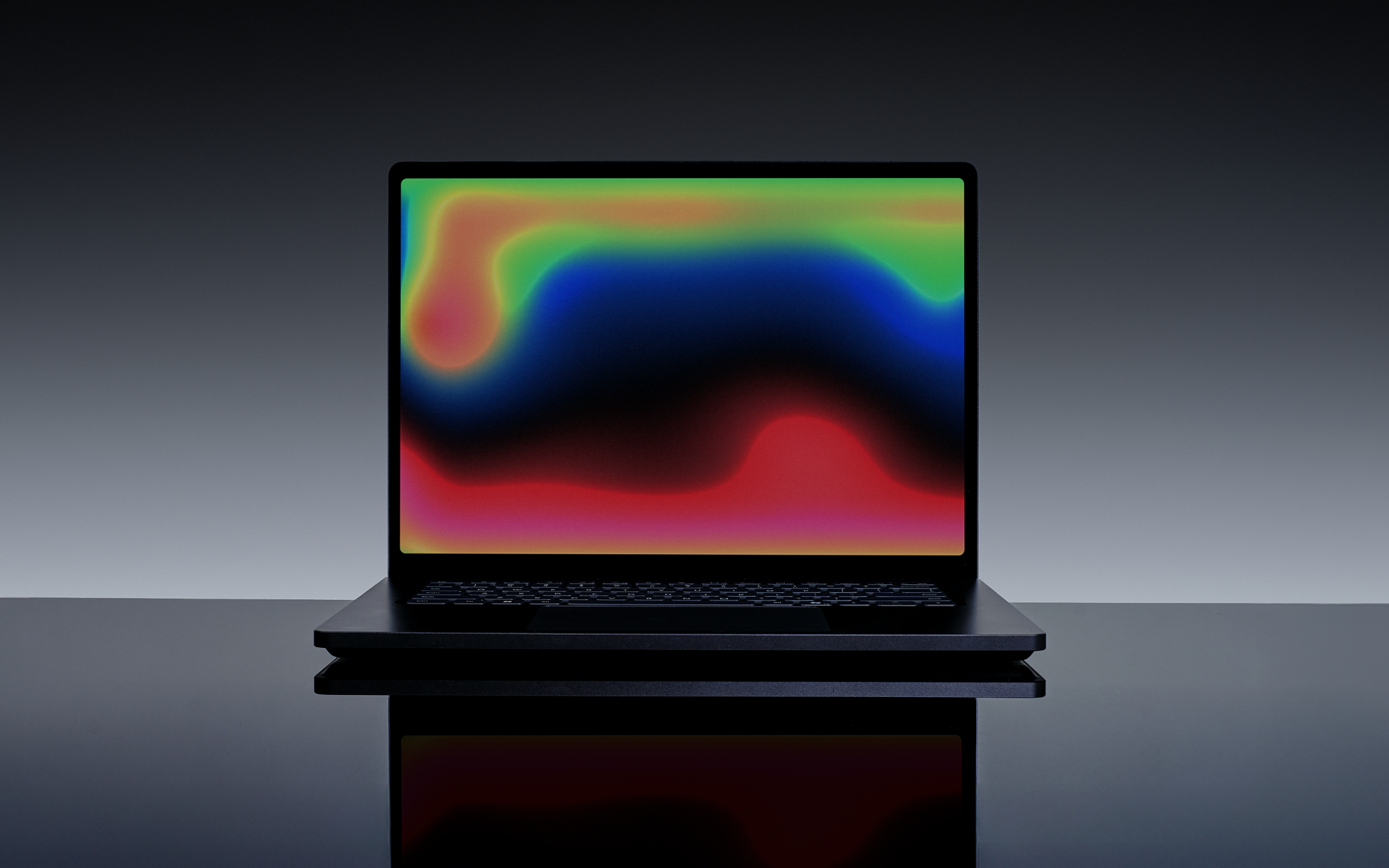
Microsoft and NVIDIA used a joint San Francisco event on October 7 to put real engineering detail behind the Surface Laptop Ultra, the 15-inch Windows laptop built around NVIDIA's new RTX Spark platform. Satya Nadella, Windows and Devices chief Pavan Davuluri, and NVIDIA CEO Jensen Huang shared the stage to frame it as the first all-new category of Windows hardware since Copilot+ PCs: a laptop with an NVIDIA chip that fuses a 20-core Arm-based Grace CPU with a 6,144-core Blackwell RTX GPU and up to 128GB of unified LPDDR5X memory, all pooled for AI, creative and development workloads rather than split between separate CPU and GPU memory banks. What the event did not settle is the question most people actually type into Google: how much it costs and exactly when it ships. As of publication, Microsoft's own Surface Laptop Ultra product page carries no price and no "buy" or "preorder" button — only a "get updates" sign-up — and the page still notes the device "is subject to FCC regulations and has not yet been authorized," with shipment conditioned on that approval going through.
Surface Laptop Ultra — what's confirmed vs. still open
- Chip: NVIDIA RTX Spark (N1X), a 20-core Arm-based Grace CPU fused with a 6,144-core Blackwell RTX GPU, confirmed on both Microsoft's and NVIDIA's official spec pages.
- Memory: Up to 128GB of unified LPDDR5X, shared dynamically between CPU and GPU.
- AI compute: Up to 1 petaflop of FP4 performance; Microsoft says it's enough to run AI models up to roughly 120 billion parameters locally.
- Display: 15-inch mini-LED PixelSense Ultra touchscreen, 3:2 aspect ratio, 262 ppi, up to 2,000 nits peak HDR brightness.
- Price: Not disclosed by Microsoft as of publication. Treat any specific dollar figure circulating online as unofficial.
- Preorder / ship date: Not confirmed. Microsoft's product page says only "available later this year" and flags pending FCC equipment authorization.
What Microsoft and NVIDIA actually confirmed today
The Surface Laptop Ultra isn't new as a name — Microsoft first teased it back in late May, when Surface corporate vice president Brett Ostrum introduced it on the Windows blog as "the most powerful Surface Laptop ever built," engineered with NVIDIA "from the silicon up." That post described the broad strokes — an NVIDIA Blackwell RTX GPU, up to 128GB of unified memory, full CUDA support — but left pricing and a firm ship date for later. Today's event, bringing Nadella, Davuluri and Huang on stage together, was Microsoft's and NVIDIA's chance to close that gap with hard specifications tied to NVIDIA's now-official RTX Spark platform.
Today's event was billed by Microsoft as a conversation about "how local AI will shape the next chapter of the PC," with Nadella, Davuluri and Huang sharing a San Francisco stage rather than issuing separate statements — itself a signal of how central the Microsoft-NVIDIA partnership has become to Windows hardware strategy.
What changed between May and now is that the platform itself has a name, a spec sheet and a short list of launch partners. NVIDIA's RTX Spark product page lists the Surface Laptop Ultra alongside the ASUS ProArt P16, Dell XPS 16, HP OmniBook Ultra 16, Lenovo Yoga Pro 9n and MSI Prestige N16 Flip AI as the first wave of RTX Spark laptops, all sharing the same "N1X" superchip. That's useful context for anyone trying to figure out whether the Laptop Ultra is a one-off or part of a broader hardware wave: it's the latter, and Microsoft is positioning its version as the flagship.
Surface Laptop Ultra specs at a glance
Here's what Microsoft's and NVIDIA's own pages confirm today, combined into a single reference table.
| Spec | Surface Laptop Ultra |
|---|---|
| Chip | NVIDIA RTX Spark (N1X superchip) |
| CPU | Up to 20-core NVIDIA Grace CPU (Arm-based) |
| GPU | Up to 6,144-core NVIDIA Blackwell RTX GPU |
| Memory | Up to 128GB unified LPDDR5X |
| AI performance | Up to 1 petaflop FP4 (theoretical, with sparsity) |
| Display | 15-inch mini-LED PixelSense Ultra touchscreen, 3:2, 262 ppi, up to 2,000 nits peak HDR |
| Ports | USB-C, USB-A, HDMI, headphone jack, full-size SD card reader |
| Dimensions / weight | Less than 18mm thick, under 4.5 lb (2kg) |
| Colors | Platinum, Nightfall |
| Storage | User-serviceable, replaceable SSD |
| Battery | Rated "all-day," based on Microsoft's internal testing of pre-release units |
| Price | Not announced |
| Availability | "Later this year," pending FCC equipment authorization |
Those CPU and GPU core counts are worth double-checking against the source, because they're easy to get wrong: NVIDIA's own spec table for the laptop variant of RTX Spark lists "20-core NVIDIA Grace CPU" and "6144-core NVIDIA Blackwell RTX GPU" at a 45-80W power envelope, distinct from the desktop RTX Spark variant, which tops out at an 18-core CPU and 5,120-core GPU at 140W. In other words, the laptop chip in the Surface Laptop Ultra is not a cut-down version of the desktop part — NVIDIA actually gave the laptop SKU the larger GPU.
Inside the RTX Spark chip
RTX Spark is NVIDIA's attempt to put a miniaturized version of its Grace Blackwell data-center architecture into a laptop chassis. The Grace CPU side handles general compute with an Arm instruction set rather than x86, while the Blackwell RTX GPU side carries fourth-generation ray tracing cores, fifth-generation Tensor Cores, and support for DLSS 5 and Reflex 2. Crucially, the CPU and GPU share one pool of LPDDR5X memory instead of each having its own dedicated allocation — the same unified-memory approach NVIDIA uses in its Grace Blackwell data-center superchips and in the desktop-class DGX Spark, which Pandromeda has covered separately as a desktop AI development box. RTX Spark and DGX Spark are related in lineage but aimed at different jobs: DGX Spark is a dedicated, deskside AI development appliance, while RTX Spark is meant to go inside mainstream laptops and small desktops that also need to run Windows, play games and handle everyday creative work.
NVIDIA's spec sheet also confirms full CUDA capability on RTX Spark, meaning developers can prototype AI workloads on the laptop using the same software stack NVIDIA's data-center GPUs run, then move the same code to the cloud without rewriting it. That's the pitch Microsoft is making too: build and test locally, scale up only when you actually need to.
A 15-inch mini-LED display built for color-critical work
Microsoft's repeated description of Surface Laptop Ultra is "the brightest display we've ever shipped." The 15-inch mini-LED PixelSense Ultra touchscreen uses a 3:2 aspect ratio — taller than the 16:10 or 16:9 panels common on competing laptops — at 262 pixels per inch, with peak HDR brightness up to 2,000 nits. Mini-LED backlighting lets the panel dim in zones for deeper black levels than a conventional LED-backlit LCD, which Microsoft is positioning toward photographers, video editors and other users who make "critical color and exposure decisions," in the company's own phrasing.
The chassis itself is thin for what's packed inside: Microsoft lists it at under 18mm thick and under 4.5 pounds (2kg), available in Platinum or a new dark "Nightfall" finish. The touchpad is described as more than 30% larger than the previous generation's, with haptic feedback in supported apps rather than a traditional mechanical click.
128GB of unified memory and what it's actually for
The headline spec for AI-curious buyers is memory, not raw GPU core count. Up to 128GB of unified LPDDR5X means the CPU and GPU draw from the same pool rather than splitting, say, 32GB of system RAM from 16GB of dedicated VRAM the way a traditional discrete-GPU laptop does. Microsoft's pitch is that this lets a single machine load large local AI models — the company cites models "up to 120B parameters" running entirely on-device — alongside normal creative or development work, without constantly swapping data between separate memory banks.
That much memory in one machine also puts the Surface Laptop Ultra squarely inside a memory market that's been getting more expensive, not less — DRAM and LPDDR pricing has been climbing through the back half of 2026, something Pandromeda reported on in detail when memory makers signaled another round of increases for Q4. A 128GB unified memory configuration, in particular, is going to be an expensive bill of materials regardless of what Microsoft ultimately charges for it.
Ports, battery and repairability
Microsoft is marketing the port selection as a return to "no dongles necessary": USB-C, USB-A, HDMI, a headphone jack and a full-size SD card reader are all built in. NVIDIA's RTX Spark spec sheet separately confirms the platform supports PCI Express Gen 5 internally and external display output over HDMI 2.1b and DisplayPort 2.1, the latter rated for up to 4K at 480Hz or 8K at 120Hz with compression, depending on how a given laptop maker wires it up — Microsoft hasn't published Surface Laptop Ultra's specific external-display limits yet.
On repairability, Microsoft says the storage drive is user-serviceable and that replacement components will be available through the Microsoft Store and iFixit, following a published service guide. That's a continuation of the repairability push Microsoft has made with recent Surface hardware, and notable given how tightly packed a 128GB unified-memory, 6,144-core GPU chassis has to be to stay under 18mm thick. Battery life is described only as "all-day" and based on Microsoft's internal testing of pre-release units — there's no stated hour figure yet, and Microsoft's own disclaimer warns real-world battery life "will vary significantly with final software, usage, settings, and other factors."
How much does it cost? Still unknown
This is the part Microsoft didn't lock down, at least not on its public-facing pages as of this writing. The Surface Laptop Ultra product page has a "get updates" email signup in place of a price or a buy button, and NVIDIA's own RTX Spark page uses the same "notify me" pattern rather than listing configurations and prices for its six named laptop partners. Numbers in the $3,000-to-$7,000 range have circulated in the trade press for weeks, tied to unverified claims about specific memory and storage tiers, but none of that has been confirmed by Microsoft or NVIDIA, and Pandromeda isn't going to repeat a specific figure as fact until one of them actually publishes one. If you're searching for "Surface Laptop Ultra price" right now, the honest answer is: nobody outside Microsoft and NVIDIA knows yet, and anyone stating an exact number with confidence is guessing.
What we can say with more confidence is the shape of the pricing problem. A 128GB unified-memory configuration built around a 6,144-core Blackwell GPU is a fundamentally premium part, closer in spirit to a high-end discrete-GPU workstation than to a mainstream integrated-graphics laptop. Whatever Microsoft ends up charging for the top Surface Laptop Ultra configuration, it's unlikely to be positioned as an entry-level Surface.
When can you actually buy one?
Microsoft's own language has been consistent and consistently vague: both the May blog post and today's product page say Surface Laptop Ultra will be "available later this year," without a specific preorder date or ship date. The product page's footnotes add a regulatory wrinkle worth taking seriously: "This product is subject to FCC regulations and has not yet been authorized. Shipment is conditioned on successful FCC equipment authorization." That's standard language for hardware that's been announced ahead of final certification, but it does mean Microsoft can't promise a firm ship date until that approval clears — which may explain why, even at a dedicated launch event, the company stopped short of opening preorders or naming a date.
Surface Laptop Ultra vs. MacBook Pro and NVIDIA's own DGX Spark
Two comparisons are going to come up constantly now that specs are official. The first is Apple's MacBook Pro, which Microsoft is clearly aiming at with the 15-inch mini-LED display, the unified-memory architecture and the "for world makers" creator-focused pitch — all echoes of how Apple talks about its own Pro laptops. Until Microsoft publishes pricing, a direct dollar-for-dollar comparison isn't possible, but the specs alone put the Surface Laptop Ultra in MacBook Pro territory rather than against mainstream Windows ultrabooks.
The second comparison, and one worth being precise about, is NVIDIA's own DGX Spark — a different product Pandromeda has already covered. DGX Spark is a small desktop appliance built specifically for AI developers who want a dedicated, always-on local inference and fine-tuning box; it isn't a laptop and doesn't run a conventional Windows desktop experience the way Surface Laptop Ultra does. RTX Spark, the chip inside the Surface Laptop Ultra, borrows architectural DNA from the same Grace Blackwell lineage as DGX Spark's chip, but the two are aimed at different buyers and different form factors. If you're choosing between them, DGX Spark is the pick for a dedicated AI dev box that stays on a desk; Surface Laptop Ultra is the pick if you need one portable machine that also has to be a real laptop.
What's next
With specs now locked in on both Microsoft's and NVIDIA's official pages, the remaining open questions are the ones that actually decide whether most people buy this thing: price, configurations, and a real ship date. Those typically follow within weeks of a hardware reveal like this one, once FCC authorization clears and Microsoft is ready to open preorders through the Microsoft Store. Pandromeda will update this story, and publish follow-up coverage, as soon as Microsoft or NVIDIA posts official pricing, configuration tiers, or a confirmed preorder date — and will flag clearly if those numbers change between a preorder announcement and general availability, which has happened with past Surface launches. In the meantime, the safest move for anyone comparing options is to treat every price floating around online as a rumor until it appears on microsoft.com with a real "buy" button next to it.
Frequently asked questions
What is the Surface Laptop Ultra?
It's a 15-inch Windows laptop from Microsoft built around NVIDIA's new RTX Spark platform, combining a 20-core Grace CPU and a 6,144-core Blackwell RTX GPU with up to 128GB of unified memory. Microsoft and NVIDIA detailed the specs at a joint event on October 7, 2026.
How much does the Surface Laptop Ultra cost?
Microsoft has not announced pricing. As of publication, the official product page has a "get updates" signup instead of a price or a buy button, and any specific dollar figures circulating online are unconfirmed estimates, not official numbers.
When will the Surface Laptop Ultra be available?
Microsoft says only that it will ship "later this year." The product page also notes the device has not yet received FCC equipment authorization, which shipment is conditioned on.
What chip is inside the Surface Laptop Ultra?
NVIDIA's RTX Spark platform, specifically the N1X superchip, which pairs a 20-core Arm-based Grace CPU with a 6,144-core Blackwell RTX GPU and delivers up to 1 petaflop of FP4 AI performance.
How much memory does the Surface Laptop Ultra have?
Up to 128GB of unified LPDDR5X memory, shared dynamically between the CPU and GPU rather than split into separate system RAM and video memory pools.
Is the Surface Laptop Ultra the same as NVIDIA's DGX Spark?
No. DGX Spark is a separate NVIDIA desktop appliance built for AI development. Surface Laptop Ultra is a Windows laptop that uses NVIDIA's related RTX Spark chip platform, not DGX Spark itself.
Sources
- Surface Laptop Ultra product page — Microsoftmicrosoft.com
- Introducing Surface Laptop Ultra — Windows Blogblogs.windows.com
- RTX Spark platform specifications — NVIDIAnvidia.com
- Windows and Surface October 2026 event — Microsoft Newsnews.microsoft.com
Mara Lindqvist edits the hardware desk. She covers graphics cards, processors, memory and storage, the foundries and chip designers behind them, and what the numbers on a spec sheet mean for people choosing a PC. Specifications in her stories come from manufacturer spec pages and datasheets.