Nvidia RTX Spark Release Date, Specs and Price: What to Know
Nvidia's Arm-based AI PC pairs a 20-core Grace CPU with a Blackwell RTX GPU and up to 128GB of unified memory. Here's what's confirmed and what isn't.
Nvidia's RTX Spark is a new Arm-based "AI PC" platform that pairs a 20-core Nvidia Grace CPU with a Blackwell RTX GPU and up to 128GB of unified memory in a single superchip, delivering up to 1 petaflop of local AI compute. Nvidia confirmed on September 3, 2026 that RTX Spark laptops and compact desktops begin shipping worldwide in October 2026, with launch machines from Asus, Dell, HP, Lenovo, Microsoft Surface and MSI. Official U.S. pricing has not been announced.
RTX Spark at a glance
- What it is: A superchip combining a 20-core Nvidia Grace CPU (Arm-based) with a Blackwell RTX GPU over NVLink-C2C, built into slim Windows laptops and compact desktops
- Shipping window: October 2026, confirmed by Nvidia on September 3, 2026
- Launch partners: Asus, Dell, HP, Lenovo, Microsoft Surface and MSI, with Acer and Gigabyte models to follow
- Key specs: Up to 6,144 CUDA cores, up to 128GB unified LPDDR5X memory, up to 1 petaflop of FP4 AI performance
- Gaming: Nvidia says RTX Spark laptops can run AAA games at 1440p at over 100fps
- Price: Not officially announced as of this writing
What is Nvidia RTX Spark?
RTX Spark is Nvidia's name for a new class of Windows PC built around a custom superchip rather than a conventional x86 processor and a separate discrete GPU. According to Nvidia's official RTX Spark product page, the chip fuses a 20-core Nvidia Grace CPU with a Blackwell RTX GPU, connected by Nvidia's NVLink-C2C chip-to-chip interconnect, plus a shared pool of unified memory that both the CPU and GPU can draw from. Nvidia positions RTX Spark as a machine that "moves from tool to teammate," designed to run AI agents, large language models and creative applications locally on the device instead of relying entirely on the cloud.
The platform was first unveiled at Computex 2026 as part of a joint announcement with Microsoft, detailed in Nvidia's newsroom post "NVIDIA and Microsoft Reinvent Windows PCs for the Age of Personal AI". Nvidia CEO Jensen Huang described it as bringing "everything NVIDIA has built — CUDA, RTX, our AI platform — into a single superchip," while Microsoft CEO Satya Nadella called it "a real breakthrough towards delivering unmetered intelligence" for Windows.
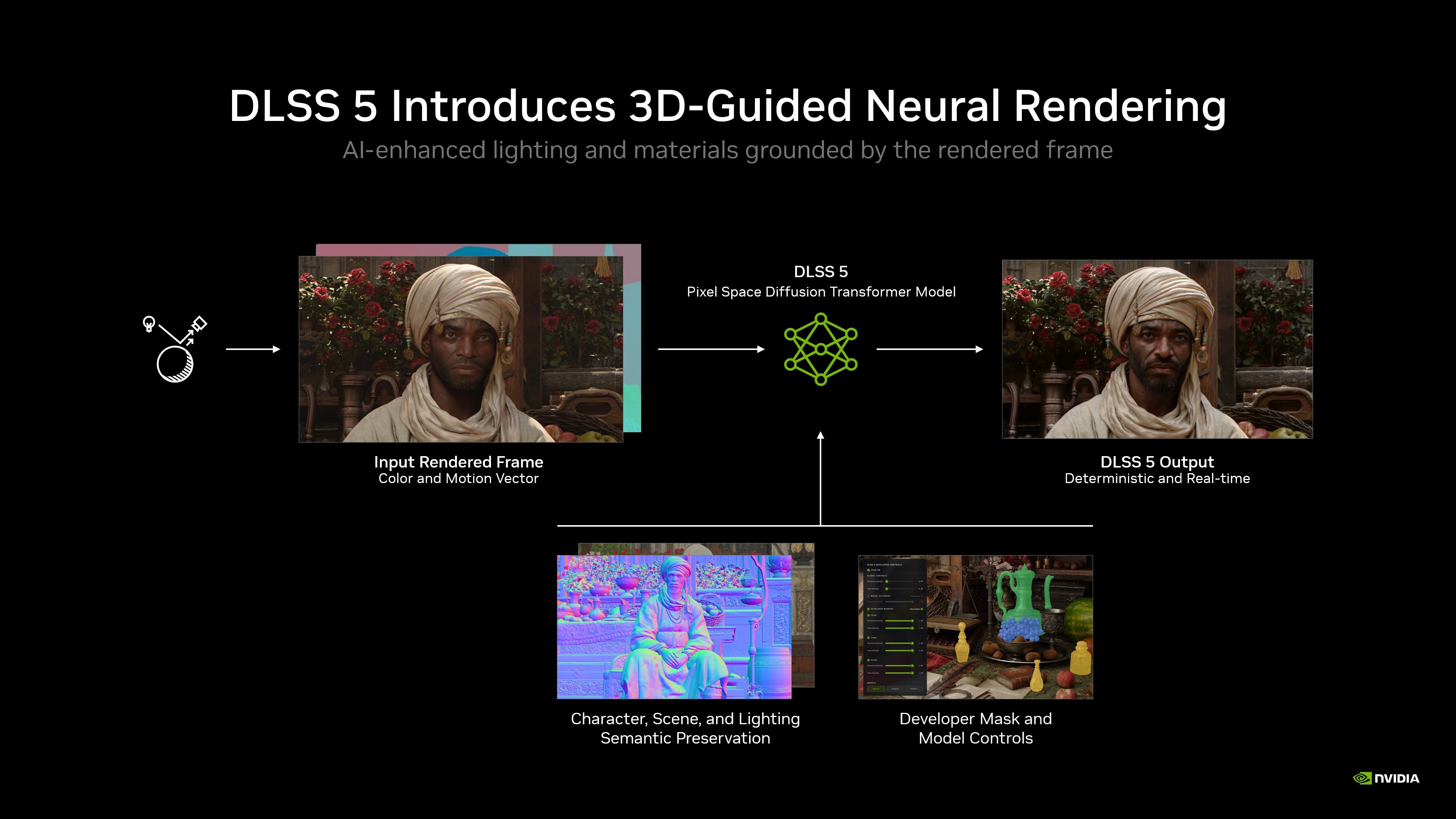
It sits alongside, but is distinct from, Nvidia's developer-focused DGX Spark "personal AI supercomputer," and it is a completely different product from Nvidia's DLSS 5 upscaling software or its regular GeForce driver updates — RTX Spark is a full system platform, not a software feature or a discrete gaming graphics card.
RTX Spark also marks a notable architecture shift for mainstream Windows hardware. Rather than pairing a conventional x86 processor from Intel or AMD with a separate Nvidia GPU, the Grace CPU inside RTX Spark is Arm-based, developed with help from MediaTek. Nvidia and Microsoft have both framed the launch as a joint effort to make sure Windows 11, its driver stack and its most demanding creative and gaming applications run natively and efficiently on that Arm silicon, rather than relying on emulation — a piece of the platform Nvidia and Microsoft called out specifically in their original joint announcement.
RTX Spark vs. DGX Spark: what's the difference?
Nvidia sells two very differently positioned "Spark" products, and it's easy to conflate them. DGX Spark is a specialized, Linux-based developer desktop that Nvidia markets as a "personal AI supercomputer," aimed squarely at AI researchers and engineers who need a dedicated local box for model development. RTX Spark, by contrast, is built into mainstream consumer and prosumer Windows laptops and small desktops sold by Asus, Dell, HP, Lenovo, Microsoft and MSI — machines meant to also handle everyday creative work, general computing and gaming, with local AI capability layered on top rather than being the machine's sole purpose. Both use Nvidia's Grace-Blackwell superchip approach and unified memory design, but they target different buyers and run different operating systems.
RTX Spark specs: CPU, GPU, memory and AI performance
The core RTX Spark configuration that Nvidia has detailed for launch machines includes:
| Spec | RTX Spark (flagship configuration) |
|---|---|
| CPU | 20-core Nvidia Grace CPU (Arm-based) |
| GPU | Blackwell RTX GPU, up to 6,144 CUDA cores, 5th-gen Tensor Cores with FP4 precision |
| Interconnect | NVIDIA NVLink-C2C chip-to-chip link between CPU and GPU |
| Memory | Up to 128GB unified LPDDR5X memory, shared by CPU and GPU |
| AI performance | Up to 1 petaflop of FP4 AI compute |
| Form factors | Laptops as slim as 14mm and as light as 3 pounds (14–16 inch screens); compact desktops |
| Ports/display tech | DisplayPort and HDMI outputs, PCIe Gen 5, DLSS 5 and Nvidia Reflex 2 support for gaming |
| Price | Not officially announced |
Nvidia is explicit that the 1-petaflop figure is a 4-bit (FP4) Tensor Core AI performance number, not a general-purpose compute benchmark — the kind of low-precision throughput used to accelerate local large language model inference rather than traditional gaming shader work. Nvidia says the flagship configuration can locally run large language models with well over 100 billion parameters and long context windows, in addition to creative workloads like editing high-resolution video and rendering large 3D scenes.
Because the GPU, CPU and memory pool sit on one superchip, RTX Spark machines can allocate more of that 128GB pool to a single large model than a typical laptop with a separate GPU and a much smaller slice of dedicated video memory — the same unified-memory approach Nvidia has also used to help address the kind of capacity crunch covered in our explainer on why RAM prices have been so high in 2026.
Nvidia's product page also lists RTX Spark laptops as capable of rendering 3D scenes larger than 90GB, editing high-resolution 12K video, and running local large language models with context windows spanning roughly a million tokens — all workloads that benefit directly from having a large, shared memory pool rather than a GPU with its own, separate and more limited video memory. On the connectivity side, Nvidia lists support for PCI Express Gen 5 internally, along with modern DisplayPort and HDMI outputs capable of driving high-refresh external monitors, and the same fifth-generation Tensor Cores and fourth-generation ray tracing cores found across Nvidia's current Blackwell RTX generation.
Nvidia is also positioning software compatibility as a selling point: the company says RTX Spark supports well over 1,000 GPU-accelerated applications and games already optimized for its CUDA and RTX software stack, meaning existing Nvidia-accelerated creative tools, AI frameworks and games should run on RTX Spark machines without needing to be rebuilt from scratch, alongside newly announced native rebuilds of specific creative applications.
Can RTX Spark play games?
Despite being pitched primarily as an AI machine, RTX Spark is also built to game. Nvidia's own materials state that RTX Spark laptops are capable of playing AAA titles at 1440p resolution at more than 100 frames per second, using the same Blackwell RTX GPU architecture, ray tracing cores and DLSS upscaling technology found in Nvidia's discrete GeForce RTX products. RTX Spark supports DLSS 5 and Nvidia Reflex 2, the same latency and frame-generation technologies Nvidia has rolled out across its current GeForce lineup — see our coverage of what changed in DLSS 5 for more on how that upscaling stack works.
That said, Nvidia has not published detailed game-by-game benchmark numbers, and RTX Spark's 6,144 CUDA cores put it closer to a mid-range discrete mobile GPU than to Nvidia's highest-end gaming cards. Buyers deciding between a gaming-first laptop and an AI-first machine like RTX Spark may want to weigh it against dedicated discrete GPU options, the way we compared desktop cards in our RTX 5080 vs. RX 9070 XT breakdown.
RTX Spark release date: when does it ship?
Nvidia confirmed on September 3, 2026 that RTX Spark-powered laptops and desktops begin shipping worldwide in October 2026. That confirmation came alongside Nvidia's IFA 2026 blog post, "Sparks Fly: NVIDIA Accelerates Local AI at IFA 2026," which reiterated the October shipping window and confirmed that additional OEMs, including Acer, would join the roster of manufacturers building RTX Spark machines after the initial launch.
Nvidia has described RTX Spark's release as staggered across its launch partners rather than a single simultaneous date, with each manufacturer setting its own on-sale timing for its specific laptop or desktop model within the October window.
Who is making RTX Spark PCs?
Six manufacturers are confirmed as launch partners for RTX Spark, each building its own laptop or desktop design around the superchip:
| OEM | Confirmed RTX Spark device |
|---|---|
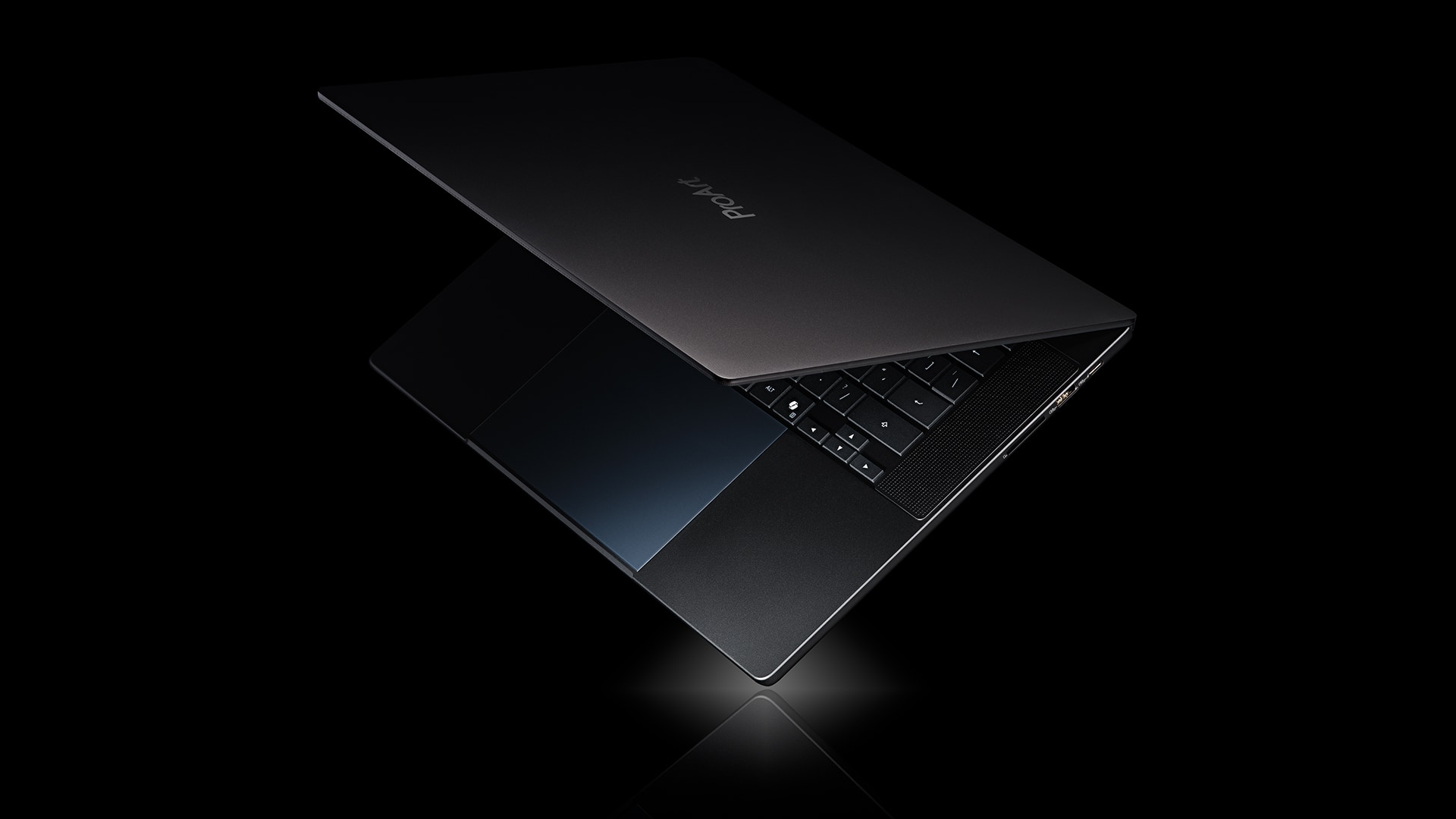
| Asus | ProArt P16 |
| Dell | XPS 16 |
| HP | OmniBook Ultra 16 |
| Lenovo | Yoga Pro 9n |
| Microsoft | Surface Laptop Ultra |
| MSI | Prestige N16 Flip AI+ |
Nvidia says Acer and Gigabyte are also developing RTX Spark hardware, with Acer showing a compact desktop concept at IFA 2026, though neither company was part of the original six-OEM launch lineup that Nvidia named when RTX Spark first shipped-timeline details were confirmed.
How much will Nvidia RTX Spark cost?
Nvidia has not published official U.S. retail pricing for any RTX Spark laptop or desktop as of this writing. Neither Nvidia's newsroom posts nor its official RTX Spark product page list a starting price or per-model MSRP, and none of the six confirmed launch partners have posted final consumer pricing for their RTX Spark machines either.
In the absence of an official number, unofficial estimates have circulated in the tech press, citing analyst research: some reports have pointed to prices in roughly the $2,500–$3,000 range for the flagship, higher-memory RTX Spark configuration, based on analyst cost modeling rather than any Nvidia or OEM announcement. Those figures are rumored, not confirmed, and should be treated as speculative until Asus, Dell, HP, Lenovo, Microsoft and MSI post their own official prices ahead of the October launch.
Who is RTX Spark actually for?
Nvidia is marketing RTX Spark at three overlapping audiences: AI developers and power users who want to prototype, fine-tune or run large language models locally without paying for cloud GPU time; creative professionals who need to render large 3D scenes or edit high-resolution video on a thin laptop; and gamers who want RTX-class graphics in a smaller, lighter machine than a traditional gaming laptop. Because RTX Spark's unified memory can be dedicated almost entirely to a single AI workload when needed, Nvidia is framing it as a way to keep sensitive data and long-running "always-on" AI agents on-device rather than in the cloud — a use case Nvidia and Microsoft emphasized jointly in their original RTX Spark announcement.
That framing also explains why Nvidia and its OEM partners are shipping RTX Spark in both laptop and compact desktop form factors rather than as a single device type. A desktop version, described by Nvidia as small and "always-on," is aimed at users who want a dedicated local AI box sitting on a desk continuously running agents or serving models, similar in spirit to a home server. The laptop versions — built by Asus, Dell, HP, Lenovo, Microsoft and MSI into 14- to 16-inch, sub-3-pound designs with all-day battery life — are aimed at people who want that same local AI and creative horsepower while remaining portable, alongside enough graphics performance to also use the machine as a primary gaming laptop.
Buyers who mainly want the best possible frame rates for AAA gaming, rather than local AI capability, may still be better served by a laptop or desktop built around one of Nvidia's higher-end discrete GeForce RTX 50-series GPUs, since RTX Spark's 6,144-core Blackwell GPU is designed to balance AI throughput and graphics rather than to maximize gaming performance alone.
What's next for RTX Spark
With the October 2026 shipping window now confirmed, the next milestones to watch are the individual on-sale dates and official pricing from each of the six launch partners, plus any additional configuration or spec details Nvidia publishes closer to launch. Independent, hands-on performance reviews of specific RTX Spark laptops and desktops should also start appearing once retail units ship, which will be the first real test of Nvidia's local-AI and 1440p gaming performance claims outside of Nvidia's own demonstrations. Buyers who don't need a machine immediately may want to wait for those official prices and independent reviews before ordering.
Nvidia RTX Spark FAQ
See the frequently asked questions below for quick answers on release date, pricing and specs.
Frequently asked questions
What is Nvidia RTX Spark?
RTX Spark is Nvidia's superchip platform for a new class of Windows AI PC. It pairs a 20-core Nvidia Grace CPU with a Blackwell RTX GPU and up to 128GB of unified memory to deliver up to 1 petaflop of local AI compute, built into slim laptops and compact desktops from Asus, Dell, HP, Lenovo, Microsoft Surface and MSI.
When does Nvidia RTX Spark release?
Nvidia confirmed on September 3, 2026 that RTX Spark laptops and desktops begin shipping worldwide in October 2026, with exact on-sale dates set individually by each launch partner.
How much will Nvidia RTX Spark cost?
Nvidia has not announced official pricing. Unofficial analyst estimates put the flagship configuration at roughly $2,500 to $3,000, but that figure is a rumored, unconfirmed estimate, not an Nvidia or OEM price.
Can Nvidia RTX Spark play games?
Yes. Nvidia says RTX Spark laptops can run AAA games at 1440p resolution above 100fps using their Blackwell RTX GPU, DLSS 5 and Nvidia Reflex 2, though Nvidia has not published detailed per-game benchmarks.
Which companies are making RTX Spark PCs?
Asus, Dell, HP, Lenovo, Microsoft Surface and MSI are confirmed launch partners, with Acer and Gigabyte developing additional RTX Spark models to follow.
How is RTX Spark different from DGX Spark?
DGX Spark is a Linux-based developer desktop Nvidia markets as a personal AI supercomputer for AI researchers. RTX Spark is built into mainstream Windows laptops and desktops for AI, creative work and gaming, sold through consumer PC makers.
Sources
- Nvidia Newsroom: NVIDIA and Microsoft Reinvent Windows PCs for the Age of Personal AInvidianews.nvidia.com
- Nvidia: RTX Spark official product pagenvidia.com
- Nvidia Blog: Sparks Fly - NVIDIA Accelerates Local AI at IFA 2026blogs.nvidia.com
- Nvidia: NVIDIA RTX Spark Unveiled (Computex 2026)nvidia.com
- Nvidia: DGX Spark product pagenvidia.com
Mara Lindqvist edits the hardware desk. She covers graphics cards, processors, memory and storage, the foundries and chip designers behind them, and what the numbers on a spec sheet mean for people choosing a PC. Specifications in her stories come from manufacturer spec pages and datasheets.