Intel Core Ultra 9 285K vs Ryzen 9 9950X3D: Which to Buy?
A spec-by-spec, price-by-price look at Intel's 24-core flagship against AMD's 3D V-Cache champion, using only official Intel and AMD data.
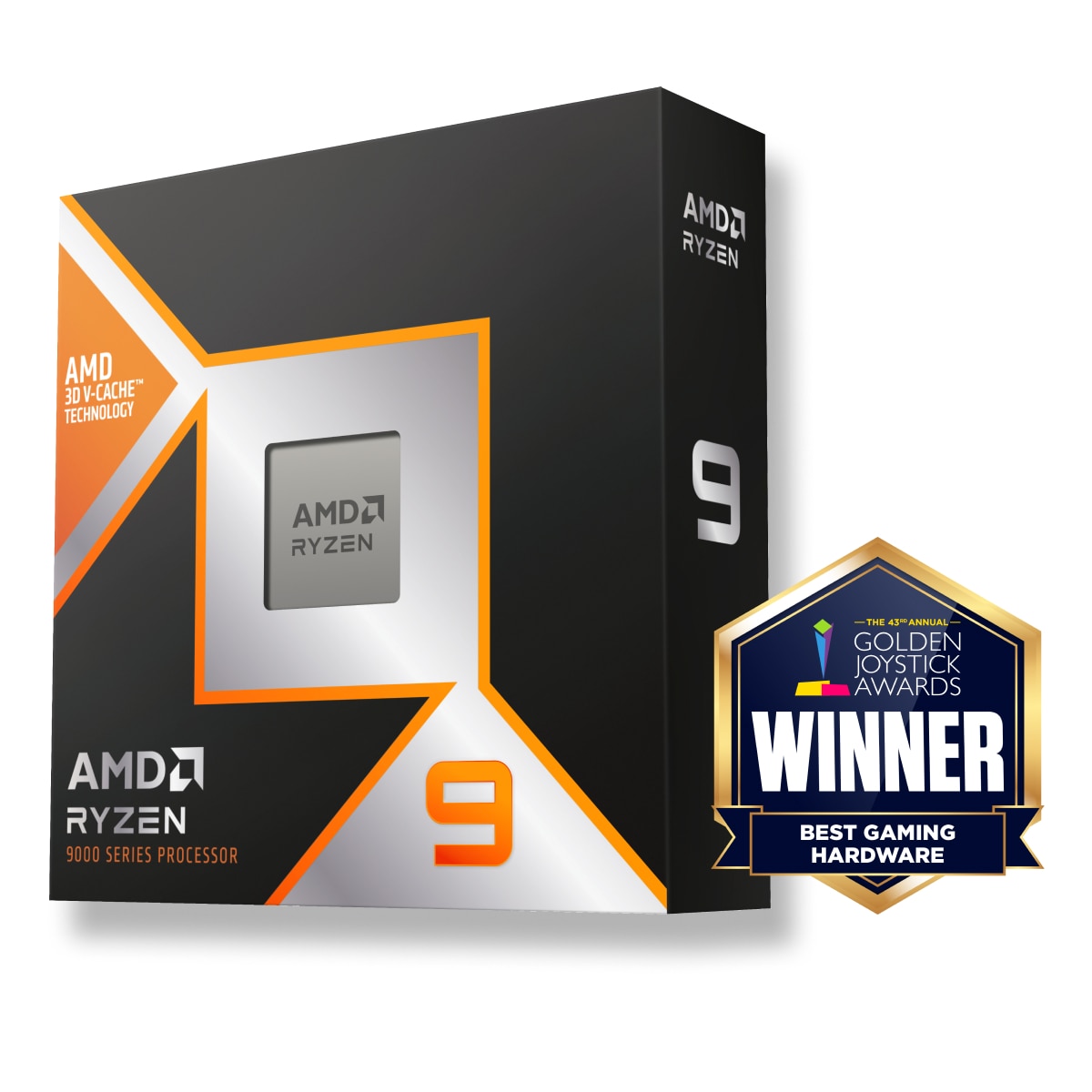
Quick verdict: AMD's Ryzen 9 9950X3D is the better buy for gaming, thanks to its 128MB of 3D V-Cache, while Intel's Core Ultra 9 285K is the better buy for heavily multi-threaded productivity work, thanks to its 24-core/24-thread layout and lower official price.
- Intel Core Ultra 9 285K: 24 cores (8P+16E) / 24 threads, up to 5.7GHz, 36MB cache, 125W base / 250W turbo power, $589–$599 recommended price
- AMD Ryzen 9 9950X3D: 16 cores / 32 threads, up to 5.7GHz, 144MB total cache (128MB L3 with 3D V-Cache), 170W default TDP, $699 launch MSRP
If you're choosing between Intel's flagship desktop chip and AMD's 3D V-Cache flagship, the short answer is this: the Intel Core Ultra 9 285K and the AMD Ryzen 9 9950X3D are not really built to beat each other at the same job. The 285K packs more cores and threads for a lower official price, while the 9950X3D packs AMD's stacked 3D V-Cache memory to feed games data faster than almost anything else on the market. Which one you should buy depends on whether your PC spends most of its life rendering video and running virtual machines, or loading levels and pushing frame rates.
We pulled every spec in this piece directly from Intel's official Core Ultra 9 285K specification page and AMD's official Ryzen 9 9950X3D product page, so what follows is Intel's and AMD's own published numbers, not third-party estimates. Where a claim — like independent benchmark results — comes from somewhere other than Intel or AMD directly, we've flagged it as reported and named the outlet.
Intel Core Ultra 9 285K vs AMD Ryzen 9 9950X3D: full spec comparison
Here's how the two chips stack up on paper, straight from each company's own spec sheet.
| Spec | Intel Core Ultra 9 285K | AMD Ryzen 9 9950X3D |
|---|---|---|
| Architecture | Arrow Lake-S (Lion Cove P-cores, Skymont E-cores) | Zen 5 ("Granite Ridge") |
| Cores / threads | 24 cores (8 P-cores + 16 E-cores) / 24 threads | 16 cores / 32 threads |
| Base clock | 3.7GHz (P-core) / 3.2GHz (E-core) | 4.3GHz |
| Max boost/turbo clock | Up to 5.7GHz | Up to 5.7GHz |
| Cache | 36MB Intel Smart Cache (L3) + 40MB total L2 | 16MB L2 + 128MB L3 (incl. 3D V-Cache) = 144MB total |
| 3D-stacked cache | No | Yes — 2nd-gen AMD 3D V-Cache |
| TDP / power | 125W processor base power, 250W max turbo power | 170W default TDP |
| Socket | LGA1851 (Intel 800 series chipset) | AM5 |
| Memory support | DDR5-6400, up to 256GB, 2 channels | DDR5 (AM5 platform), AMD EXPO support |
| Process | TSMC N3B (compute tile) | TSMC 4nm FinFET (CCDs), 6nm (I/O die) |
| Official price | $589–$599 recommended customer price | $699 launch MSRP |
| Best suited for | Multi-threaded productivity, content creation, mixed workloads | Gaming, cache-sensitive workloads |
Cores and threads: 24 cores vs 32 threads
The core-count story on these two chips is almost a mirror image of each other. Intel's Core Ultra 9 285K specification page lists 24 total cores split between 8 Performance-cores (P-cores) built on the Lion Cove architecture and 16 Efficient-cores (E-cores) built on Skymont, part of Intel's Arrow Lake desktop generation. Arrow Lake desktop chips, including the 285K, do not support Hyper-Threading, so Intel's total thread count is also 24 — one thread per core, across both core types. AMD's 9950X3D takes a smaller-but-wider approach: 16 cores built on AMD's Zen 5 microarchitecture, each with simultaneous multithreading (SMT) enabled, for 32 total threads. On raw thread count, AMD's chip has the edge, which matters for workloads that scale cleanly across many parallel threads, like video encoding queues, 3D rendering, and compiling large codebases.
In practice, Intel's hybrid design means the 285K's 16 E-cores are optimized for background and multi-threaded throughput work rather than peak single-thread speed, while its 8 P-cores handle latency-sensitive tasks like games and interactive apps. AMD's 9950X3D, by contrast, has no E-cores at all — every one of its 16 cores is a full Zen 5 core capable of the chip's top boost clock, which keeps scheduling simpler for Windows and reduces the odds of a game thread landing on a slower core.
Cache and 3D V-Cache: the real reason these chips feel so different in games
This is where the two processors diverge the most. According to AMD's own listing, the Ryzen 9 9950X3D has 16MB of L2 cache and 128MB of L3 cache, for 144MB of total on-chip cache. That 128MB L3 figure includes AMD's second-generation 3D V-Cache: extra cache silicon stacked directly on top of (or beneath) the Zen 5 compute dies, dramatically increasing the amount of data the CPU can keep close to its cores instead of fetching from system memory. Games are often cache-sensitive rather than core-count-sensitive — a bigger, faster L3 cache can cut down the number of trips to main memory needed to simulate a game world, which is why AMD's X3D chips have consistently led AMD's own gaming-focused marketing for this generation.
Intel's Core Ultra 9 285K, per its spec page, carries 36MB of Intel Smart Cache (L3) alongside 40MB of total L2 cache — a different cache hierarchy that leans more heavily on L2 than L3 and does not use any 3D-stacked cache technology. Total addressable cache (L2+L3) actually comes out fairly close between the two chips (76MB for the 285K vs. 144MB for the 9950X3D when you add both levels together), but the way that cache is organized and how close it sits to the cores is a bigger factor in gaming performance than the raw megabyte count on a spec sheet.
Clock speeds: both chips top out at 5.7GHz, but differently
Both chips can officially reach a maximum boost frequency of 5.7GHz, according to their respective spec pages — close enough that clock speed alone won't decide this comparison. The details behind that number differ, though. Intel's 285K hits 5.7GHz only on its best Performance-core (via Intel's turbo-boost logic), with the general P-core max turbo frequency listed at 5.5GHz and P-core base frequency at 3.7GHz; the E-cores are rated for a 4.6GHz max turbo and a 3.2GHz base. AMD's 9950X3D, meanwhile, lists a flat 4.3GHz base clock and "up to 5.7GHz" max boost across its Zen 5 cores, with AMD's own listing noting that actual boost behavior depends on cooling, motherboard, and chipset drivers — standard caveats AMD applies to every Ryzen SKU.
The practical takeaway: Intel's base clocks are lower because background work gets handed off to the slower E-cores, while AMD's uniform 16-core design keeps every core's floor relatively high. Neither company's number tells you real-world gaming or application frame times on its own — that only comes from independent testing, which we address further down.
Power, TDP, and cooling needs
Intel's spec sheet lists the 285K's processor base power at 125W, with a maximum turbo power of 250W — meaning the chip can legitimately pull up to 250 watts under full sustained load with an unlocked motherboard power profile, which is typical for Intel's unlocked "K" desktop parts. AMD lists the 9950X3D's default TDP at a flat 170W, a single number AMD uses to describe sustained power draw rather than separate base/turbo figures. Those numbers aren't directly comparable one-to-one, since Intel and AMD measure and report power differently, but the practical implication is similar either way: both chips want a serious tower cooler or an AIO liquid cooler, and a motherboard VRM built for high-end desktop CPUs, to hit their rated boost clocks consistently.
Pricing: $589–$599 vs $699
On price, Intel has the clearer advantage. Intel's official specification page lists a recommended customer price of $589.00–$599.00 for the Core Ultra 9 285K. AMD's launch pricing for the Ryzen 9 9950X3D was announced at $699, matching the launch price AMD set for its previous-generation 7950X3D, with the smaller-cache Ryzen 9 9900X3D (12 cores, 24 threads) launched alongside it as a $599 sibling on AMD's own 9900X3D product page. Street prices for both chips move around with retailer promotions, so treat the manufacturer figures as a starting point rather than what you'll necessarily pay today. At roughly $100–$110 more than the 285K's official price, the 9950X3D is asking you to pay a premium specifically for its 3D V-Cache gaming advantage — a trade that makes sense if gaming performance is your main priority, and less sense if you mostly run productivity software that doesn't especially benefit from extra L3 cache.
Gaming performance: what's confirmed vs. what's reported
Neither Intel nor AMD publishes independent, apples-to-apples gaming benchmarks comparing their own chip directly against the competitor's part, so we can't respond to "which one is faster in [specific game]" with a sourced, official number. What we can say with confidence, directly from the specs above, is the underlying architecture: AMD's 9950X3D carries a much larger L3 cache with 3D V-Cache specifically engineered to accelerate game logic, and AMD's X3D line has built its entire market reputation — and earlier-generation review results reported by independent outlets such as Tom's Hardware and Phoronix — on leading non-X3D Ryzen and competing Intel chips in CPU-bound gaming scenarios. Any specific frame-rate or percentage claims you see elsewhere online should be treated as reported/unconfirmed third-party benchmark results until you check the methodology and test date yourself; benchmark gaps between specific chip generations shift as BIOS, Windows scheduler, and driver updates roll out.
Productivity and content creation
For heavily threaded work — video transcoding, 3D rendering, large compile jobs, running multiple virtual machines — raw core and thread count tends to matter more than cache size. On paper, the Core Ultra 9 285K's 24 cores give it more total execution units than the 9950X3D's 16 cores, even though AMD's chip answers back with SMT for 32 total threads. How those two approaches compare in any specific render or encode job again comes down to independent, software-specific testing rather than anything Intel or AMD states directly on a spec sheet, so we won't assign a winner here without that data. What the spec pages do support is the general positioning: Intel has historically pitched the Core Ultra 9 as a mixed productivity-and-gaming flagship, while AMD pitches the X3D line first as a gaming chip and second as a workstation part.
Platform, motherboard, and memory considerations
These two chips also commit you to different platforms. The Core Ultra 9 285K uses Intel's new LGA1851 socket and requires an Intel 800-series motherboard — it is not compatible with older Intel 700-series boards. The Ryzen 9 9950X3D uses AMD's AM5 socket, the same socket AMD has used since the Ryzen 7000 series, so it drops into a wider range of existing AM5 motherboards (subject to a BIOS update) if you're upgrading from an older Ryzen chip rather than building fresh. Both platforms support DDR5 memory exclusively — DDR4 is not an option on either chip. If you're also weighing what's coming next on either roadmap, our deep dive on Intel's next-generation Nova Lake desktop chips and the side-by-side look at Nova Lake vs. AMD's Zen 6 cover what each company has signaled publicly about successors to these platforms.
Which CPU should you buy?
Based strictly on the official specs and pricing above: choose the AMD Ryzen 9 9950X3D if gaming is your main use case and you're comfortable paying roughly $100 more for AMD's 3D V-Cache advantage, or if you're already on an AM5 motherboard and want to upgrade without a platform change. Choose the Intel Core Ultra 9 285K if you split your time between gaming and heavily multi-threaded productivity work, want the higher total core count, and prefer Intel's lower official price. If neither chip's price-to-performance trade-off feels right for your build, it's also worth stepping back and asking whether now is even the moment to lock in a platform, since pricing cycles and upcoming launches change the calculus from one quarter to the next.
What to do next
Before you buy either chip, check current retailer pricing against the official MSRPs listed above — street prices fluctuate with promotions and regional availability. If you're also shopping for a new graphics card to pair with whichever CPU you pick, our RTX 5070 vs. RX 9070 XT comparison covers the GPU side of a matching build. And if independent lab reviews of the 285K and 9950X3D have published gaming and productivity benchmarks since this article went live, treat those third-party numbers — not marketing specs from either company — as the deciding factor for your specific use case.
Frequently asked questions
Which is faster for gaming, the Intel Core Ultra 9 285K or the AMD Ryzen 9 9950X3D?
Neither Intel nor AMD publishes head-to-head gaming benchmarks against each other. The 9950X3D's 128MB of 3D V-Cache is specifically designed to accelerate cache-sensitive game workloads, which is why AMD's X3D chips have generally led in CPU-bound gaming scenarios reported by independent reviewers. Treat any specific frame-rate claims you see elsewhere as third-party test results, not official figures from either company.
What is the official price of the Intel Core Ultra 9 285K?
Intel's own specification page lists a recommended customer price of $589.00–$599.00 for the Core Ultra 9 285K.
How much does the AMD Ryzen 9 9950X3D cost?
AMD launched the Ryzen 9 9950X3D at $699, the same MSRP AMD set for the previous-generation Ryzen 9 7950X3D.
Does the Intel Core Ultra 9 285K support Hyper-Threading?
No. Arrow Lake desktop chips, including the Core Ultra 9 285K, do not support Hyper-Threading, so its 24 cores produce 24 threads rather than 48.
What socket and motherboard does each CPU need?
The Core Ultra 9 285K uses Intel's LGA1851 socket and requires an Intel 800-series motherboard. The Ryzen 9 9950X3D uses AMD's AM5 socket, which is compatible with many existing AM5 motherboards after a BIOS update.
What is 3D V-Cache, and why does only the AMD chip have it?
3D V-Cache is AMD's technology for stacking extra cache silicon on top of the processor die to dramatically increase L3 cache size. AMD's spec page lists 128MB of L3 cache (144MB total with L2) for the 9950X3D; Intel's Core Ultra 9 285K uses a conventional, non-stacked 36MB L3 cache instead.
Sources
- Intel Core Ultra 9 285K — Official Specifications (Intel)intel.com
- AMD Ryzen 9 9950X3D — Official Product Page (AMD)amd.com
- AMD Ryzen 9 9900X3D — Official Product Page (AMD)amd.com
- Arrow Lake (microprocessor) — Wikipediaen.wikipedia.org
- Zen 5 — Wikipediaen.wikipedia.org
Mara Lindqvist edits the hardware desk. She covers graphics cards, processors, memory and storage, the foundries and chip designers behind them, and what the numbers on a spec sheet mean for people choosing a PC. Specifications in her stories come from manufacturer spec pages and datasheets.