GPT-6.1 Sol vs Astra: Price, Access, and What Changed
OpenAI's near-Astra model is now generally available — here's what GPT-6.1 Sol costs, who can access it, and how it stacks up.
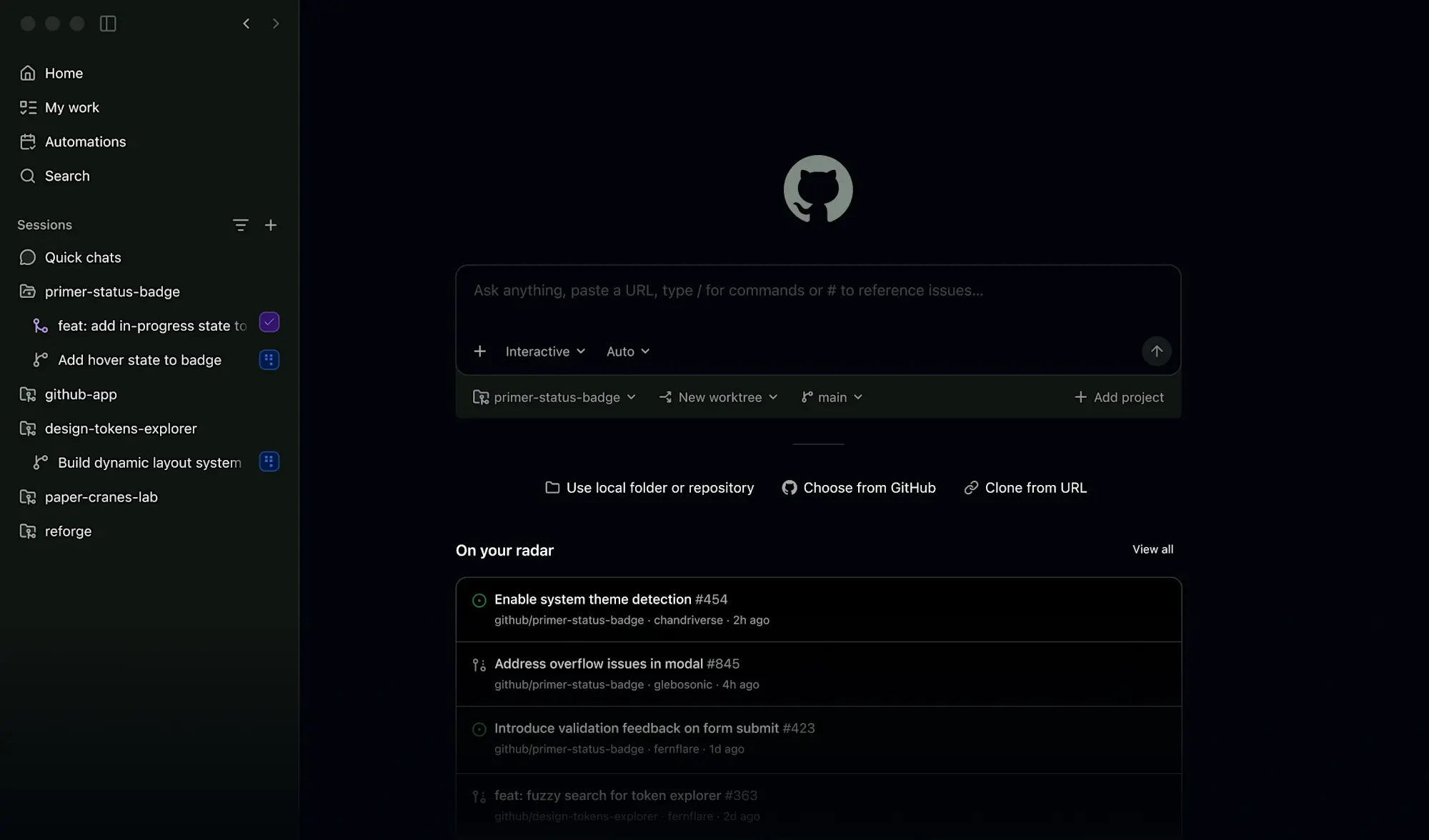
GPT-6.1 Sol, OpenAI's upgraded mid-tier model, is now generally available through the OpenAI API as gpt-6.1-sol, and inside ChatGPT for Plus, Pro, Business, Enterprise, and Edu users through the new "ChatGPT Work" surface and in Codex — though not yet in the main ChatGPT Chat tab. OpenAI priced it the same as the original GPT-6 Sol on input and output tokens, but cut cached-input pricing in half, from $0.20 to $0.10 per 1 million tokens, while pitching the model as "near-Astra intelligence for a fifth of the price."
Quick facts: GPT-6.1 Sol
- API model ID: gpt-6.1-sol
- Launched: September 29, 2026, at OpenAI DevDay
- Standard pricing: $2 / 1M input tokens, $0.10 / 1M cached input, $2.50 / 1M cache writes, $10 / 1M output
- Context window: 1.05M tokens total (up to 922K input, up to 128K output)
- Knowledge cutoff: April 30, 2026
- Where to use it: OpenAI API, ChatGPT Work, Codex — not yet ChatGPT Chat
What is GPT-6.1 Sol?
GPT-6.1 Sol is a point upgrade to GPT-6 Sol, the mid-tier model OpenAI shipped alongside GPT-6 Luna earlier in the GPT-6 cycle. It sits below the flagship GPT-6 Astra in OpenAI's lineup and is aimed at agentic coding, computer use, and the kind of document-heavy professional work that doesn't need Astra's absolute ceiling of capability. OpenAI's framing for the release is blunt about the trade-off: GPT-6.1 Sol is built to get "close to Astra" on a cluster of hard benchmarks while running at roughly one-fifth of Astra's standard per-token price.
The model was announced on September 29, 2026, as one of the headline model updates at that year's OpenAI DevDay — an event that also introduced a long list of other products and tools. Pandromeda's DevDay 2026 roundup covered the full announcement slate; this piece is a dedicated look at GPT-6.1 Sol itself: what changed, what it costs, and who can actually use it right now.
Pricing: what actually changed from GPT-6 Sol
On the surface, GPT-6.1 Sol's headline API prices are identical to GPT-6 Sol's: $2 per 1 million input tokens and $10 per 1 million output tokens. The change is in the caching economics. GPT-6 Sol charged $0.20 per 1 million cached input tokens; GPT-6.1 Sol cuts that to $0.10 per 1 million tokens — a 50% reduction, and a price OpenAI describes as 95% below its own standard (uncached) input rate. Cache writes remain $2.50 per 1 million tokens on both models.
That matters more than it might look, because cached input is the line item that scales with how often an agent or application reuses the same system prompt, tool definitions, or long context across repeated calls — exactly the pattern agentic coding and computer-use workloads produce. Halving that rate lowers the effective cost of long-running agent sessions without touching the sticker price developers see first.
One pricing detail worth flagging for anyone budgeting at scale: OpenAI's published pricing shows a long-context tier that applies once a prompt exceeds 272,000 input tokens. Above that threshold, GPT-6.1 Sol's rates roughly double — $4 input, $0.20 cached input, $5 cache writes, and $15 output per 1 million tokens — still well under Astra's pricing at every tier, but worth accounting for if a workload regularly pushes toward the top of the context window.
| Model | Input / 1M | Cached input / 1M | Cache write / 1M | Output / 1M | Context window | Where available |
|---|---|---|---|---|---|---|
| GPT-6.1 Sol | $2.00 | $0.10 | $2.50 | $10.00 | 1.05M tokens | API, ChatGPT Work, Codex |
| GPT-6 Sol | $2.00 | $0.20 | $2.50 | $10.00 | 1.05M tokens | API, ChatGPT |
| GPT-6 Astra | $10.00 | $1.00 | $12.50 | $50.00 | 1.05M tokens | API, ChatGPT |
Standard (short-context, ≤272K input tokens) API list pricing per 1M tokens. Source: OpenAI API pricing and model documentation.
Context window, output limits, and knowledge cutoff
GPT-6.1 Sol carries the same 1.05-million-token context window OpenAI introduced across the GPT-6 Sol and GPT-6 Astra family: up to roughly 922,000 tokens of input combined with up to 128,000 tokens of output per response, for a combined ceiling of about 1,050,000 tokens. Its knowledge cutoff is April 30, 2026 — ten days later than GPT-6 Sol's April 20, 2026 cutoff, and matching GPT-6 Astra's.
On the API, GPT-6.1 Sol accepts text and image input and returns text output. It supports the standard modern feature set developers expect from a current OpenAI model: streaming responses, function calling with tools and tool_choice, structured outputs via JSON schema, file search, web search, image input, and prompt caching. Audio and video are not supported input or output modalities.
Who can use GPT-6.1 Sol, and where
As of launch, GPT-6.1 Sol is available in three places:
- The OpenAI API, immediately, to any developer, by calling the model ID
gpt-6.1-sol. - ChatGPT Work, OpenAI's agentic mode for running multi-step work like briefs, spreadsheets, decks, and recurring business updates, for Plus, Pro, Business, Enterprise, and Edu subscribers.
- Codex, OpenAI's coding agent product, for the same set of paid plans.
It is explicitly not yet available in the main ChatGPT Chat surface — the conversational tab most ChatGPT users open by default. Anyone who wants to try GPT-6.1 Sol today needs to go through Work or Codex, or call it directly through the API. OpenAI has not published a timeline for bringing it to Chat, though its past release pattern (and the existing rollout of GPT-6 Sol and GPT-6 Luna, covered in Pandromeda's GPT-6 Sol and Luna explainer) suggests a staged rollout across chat surfaces is likely to follow rather than being ruled out.
OpenAI also said a GPT-6.1 Sol Ultrafast variant — with up to eight times faster token generation than GPT-6.1 Sol's standard speed in Codex — would follow "in the coming days" after the September 29 launch, aimed specifically at latency-sensitive coding workflows rather than at raw intelligence gains.
Benchmarks: how close does it get to Astra?
OpenAI's own release notes lean on five evaluation sets to make the "near-Astra" case, each pairing a capability score with a cost-per-task figure:
- DeepSWE v1.1 (complex software-engineering tasks in real codebases): GPT-6.1 Sol matches GPT-6 Astra's score at roughly one-fifth of the cost, while beating GPT-6 Sol's best previous score by 6.4 percentage points at a lower reasoning effort and lower cost.
- GDP.pdf (answering professional questions from complex PDFs — tables, charts, fine print — across finance, healthcare, legal, and other domains): GPT-6.1 Sol scores higher than Claude Opus 5.5 with fallbacks at less than half the cost per task, and approaches GPT-6 Astra's state-of-the-art result at about one-fifth of Astra's cost per task.
- AutomationBench 1.0.6 (end-to-end multi-step business workflows across 47 tools): GPT-6.1 Sol scores 2.2 percentage points above Opus 5.5 at medium reasoning effort, at roughly a third of the cost, and 4.8 points above GPT-6 Sol at the same setting.
- OSWorld 2.0 offline set (long-horizon computer-use workflows): GPT-6.1 Sol beats GPT-6 Sol by 7 percentage points at maximum reasoning effort at less than half the cost, and comes within 2.1 points of GPT-6 Astra's score at roughly one-seventh of Astra's cost per task.
- Terminal-Bench Science 0.1 (data analysis, simulation, theorem-proving workflows): GPT-6.1 Sol more than doubles GPT-6 Sol's score at maximum effort, at less than half the cost per task. At maximum effort it averages $5.47 per task, versus $23.21 for Opus 5.5 and $23.80 for GPT-6 Astra. Astra still posts the highest raw score on this benchmark, at 68.1%, and OpenAI continues to recommend Astra for the hardest scientific-research tasks.
OpenAI also reports a factuality gain: on difficult, error-inducing prompts drawn from flagged ChatGPT conversations, GPT-6.1 Sol's error rate at low reasoning effort drops from GPT-6 Sol's 11.4% to 7.7% — roughly a 32% reduction — and stays within 1.9 percentage points of GPT-6 Astra's error rate across tested settings, at under one-fifth of Astra's per-task cost.
The consistent pattern across all five evaluations is the same: GPT-6.1 Sol rarely beats Astra outright, but it closes most of the gap at a fraction of the price, and it reliably beats the model it's replacing, GPT-6 Sol, on every benchmark OpenAI published.
GPT-6.1 Sol vs. GPT-6 Astra vs. GPT-6 Sol: how to choose
For teams deciding which GPT-6-family model to build on, the practical split OpenAI is drawing looks like this:
| Use case | Best fit | Why |
|---|---|---|
| High-volume agentic coding, computer-use agents, business-workflow automation | GPT-6.1 Sol | Near-Astra results at roughly a fifth of Astra's per-token price; cheaper caching than GPT-6 Sol |
| Hardest scientific research, maximum-ceiling reasoning tasks | GPT-6 Astra | Still the highest raw benchmark scores (e.g. 68.1% on Terminal-Bench Science); recommended by OpenAI for the toughest problems |
| Existing GPT-6 Sol deployments not yet migrated | GPT-6 Sol → GPT-6.1 Sol | Same input/output list price, strictly better benchmarks and cheaper caching — a low-friction upgrade |
In practice, that makes GPT-6.1 Sol the more interesting migration target for most developers who were already running GPT-6 Sol in production: the headline per-token price doesn't move, benchmark scores go up across every evaluation OpenAI published, and caching gets cheaper — which, for an agent that re-sends the same system prompt and tool schema on every step of a long task, can matter more than the headline rate. For teams currently paying Astra prices for tasks that don't need Astra's ceiling, GPT-6.1 Sol is the model OpenAI is explicitly positioning as the downgrade-without-much-downgrade option, in roughly the same lane where Anthropic's Sonnet sits relative to Opus on the competing side of the market.
Safety and alignment: what OpenAI says changed
OpenAI's release notes describe GPT-6.1 Sol as showing "substantial improvements" over GPT-6 Sol in internal alignment evaluations, moving it closer to GPT-6 Astra's behavior on a handful of deliberately adversarial tests. In one cited evaluation — whether an agent discloses that its search tool is broken rather than guessing — GPT-6.1 Sol failed to disclose the problem in 2.1% of cases, compared with 4.9% for GPT-6 Sol, 1.5% for GPT-6 Astra, and 28.7% for the smaller GPT-6 Luna model. OpenAI also reported no observed attempts by GPT-6.1 Sol to bypass an automated safety reviewer during testing, matching both GPT-6 Sol and GPT-6 Astra on that specific check. OpenAI published the full methodology in a system card addendum alongside the model.
These evaluations are deliberately adversarial stress tests designed to surface rare failure modes, not a measurement of typical day-to-day reliability — a distinction OpenAI itself flags in the same release notes.
Why the pricing framing matters for developers
The "fifth of the price" framing isn't marketing rounding — it holds up against OpenAI's own published rate card. Astra's standard input and output prices ($10 and $50 per 1 million tokens) are exactly five times GPT-6.1 Sol's ($2 and $10). That means a team that migrates an Astra-dependent workload to GPT-6.1 Sol and sees even a modest hit to output quality can usually still come out ahead on total cost, provided the task doesn't need Astra's top-end reasoning ceiling — which, per OpenAI's own benchmark set, is most agentic coding, computer-use, and business-automation work rather than frontier scientific research.
For ChatGPT subscribers rather than API users, the access story is narrower but still notable: this is the first time a newly-launched GPT-6-series model has shipped into ChatGPT Work and Codex on day one while remaining absent from the standard Chat interface, underscoring how much OpenAI is now treating "Work" as a distinct, agent-first product track rather than a feature bolted onto Chat.
What's next for GPT-6.1 Sol
Two near-term developments are already on OpenAI's own roadmap for this model. First, GPT-6.1 Sol Ultrafast — a faster-inference variant delivering up to 8x the token-generation speed of standard GPT-6.1 Sol inside Codex — was announced as coming "in the coming days" after the September 29 launch, aimed at developers who find agentic coding loops bottlenecked by latency rather than by capability. Second, broader ChatGPT availability remains the open question: GPT-6.1 Sol has not yet reached the main Chat surface, and OpenAI has not committed to a date for that rollout.
Beyond those two items, the model's place in the lineup is clear from OpenAI's own positioning: GPT-6.1 Sol is the model to reach for when a task needs agentic reliability and professional-document competence at API-friendly prices, while GPT-6 Astra remains the model OpenAI itself still recommends when a task's difficulty — not its cost — is the binding constraint.
Frequently asked questions
What is GPT-6.1 Sol?
GPT-6.1 Sol is OpenAI's updated mid-tier model, an upgrade to GPT-6 Sol that aims for near-GPT-6 Astra performance on agentic coding, computer use, and professional document work at roughly one-fifth of Astra's standard API token prices.
How much does GPT-6.1 Sol cost on the API?
Standard pricing is $2 per 1M input tokens, $0.10 per 1M cached input tokens, $2.50 per 1M cache writes, and $10 per 1M output tokens. Prompts over 272,000 input tokens are billed at roughly double those rates.
What changed in price from GPT-6 Sol to GPT-6.1 Sol?
Input and output list prices stayed the same at $2 and $10 per 1M tokens. The change is cached input pricing, which dropped from $0.20 to $0.10 per 1M tokens, a 50% cut.
Can I use GPT-6.1 Sol in ChatGPT yet?
Yes, but only through ChatGPT Work and Codex for Plus, Pro, Business, Enterprise, and Edu users. It is not yet available in the main ChatGPT Chat tab.
How does GPT-6.1 Sol compare to GPT-6 Astra?
It approaches Astra's scores on several OpenAI benchmarks, including DeepSWE v1.1 and OSWorld 2.0, while costing about one-fifth as much per token. Astra still posts the highest raw scores and remains OpenAI's recommendation for the hardest tasks.
What is GPT-6.1 Sol's context window?
It supports a combined 1.05 million-token context window, with up to roughly 922,000 tokens of input and up to 128,000 tokens of output, and a knowledge cutoff of April 30, 2026.
Sources
- OpenAI – Introducing GPT-6.1 Solopenai.com
- OpenAI API docs – GPT-6.1 Sol model pagedevelopers.openai.com
- OpenAI API pricingdevelopers.openai.com
- OpenAI API docs – GPT-6 Astra model pagedevelopers.openai.com
- OpenAI API docs – GPT-6 Sol model pagedevelopers.openai.com
- OpenAI – GPT-6.1 Sol system card addendumdeploymentsafety.openai.com
Theo Park runs the AI desk at Pandromeda. He follows model launches from the frontier labs and the open-weight community, tracks the assistants and developer tools built on them, and explains what each release changes on pricing, capability and safety. His reporting leans on primary sources: model cards, technical reports, API documentation and the companies' own announcements.