OpenAI DevDay 2026 Announcements: Dots, GPT-6.1 Sol and Ultrafast
Sam Altman's September 29 keynote introduced always-on dots agents, a cheaper GPT-6.1 Sol model, a new $500 ChatGPT Pro tier and an Ultrafast speed option.
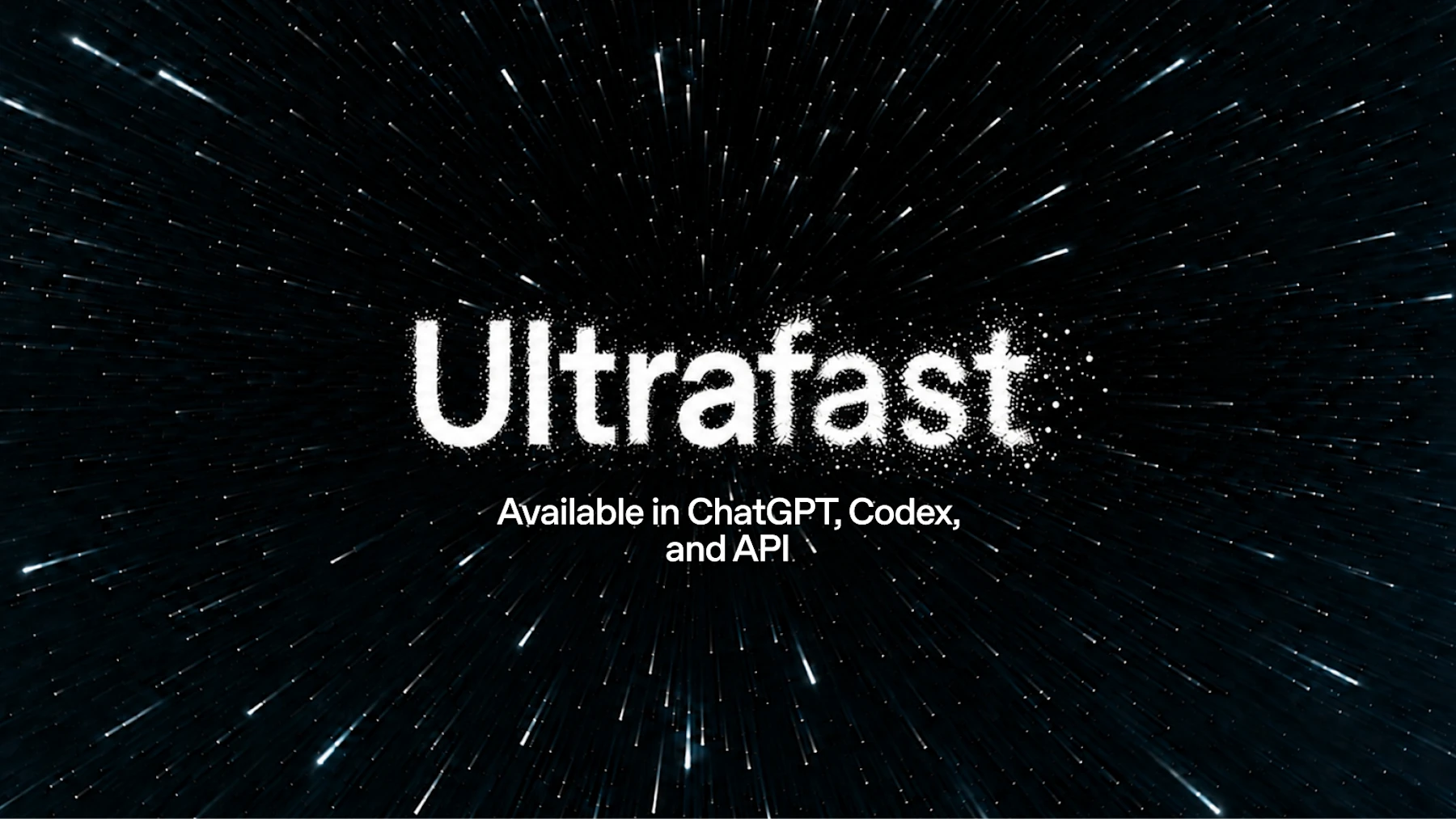
OpenAI used DevDay 2026, its annual developer conference, to introduce dots — always-on AI agents that run on their own cloud computers — alongside a cheaper GPT-6.1 Sol model, a new $500-a-month ChatGPT Pro tier, and an Ultrafast speed option for ChatGPT, Codex and the API. Chief executive Sam Altman opened the keynote on September 29 in San Francisco, and OpenAI followed up with a recap post listing more than 20 product changes across ChatGPT, Codex and its developer platform.
Below is what OpenAI actually confirmed on its own pages, what is still a separate (and earlier) announcement being folded into the DevDay narrative, and what remains unconfirmed.
DevDay 2026 at a glance
- Date and place: September 29, 2026, San Francisco; keynote by Sam Altman.
- Headline launch: dots, always-on agents that run on their own cloud computer and can connect to more than 4,000 apps.
- New model: GPT-6.1 Sol, an updated, cheaper version of the GPT-6 Sol model OpenAI shipped on September 22.
- New plan: a $500-a-month ChatGPT Pro tier built around Ultrafast access to Astra and Sol.
- New speed tier: Ultrafast, which OpenAI says runs GPT-6.1 Sol up to 8x faster in Codex.
- Global follow-up: eight DevDay Exchange events running October 16 through November 10 in Bengaluru, Tokyo, Seoul, Berlin, Paris, London, São Paulo and Mexico City.
What OpenAI announced at DevDay 2026
According to OpenAI's own DevDay 2026 recap, the company used the keynote and a wave of same-day blog posts to ship product changes across four areas: a new always-on agent product (dots), a refreshed cheap-tier model (GPT-6.1 Sol), a new ChatGPT pricing tier built around a faster inference option (Ultrafast), and a long list of smaller platform updates — including Codex running from a browser, phone or cloud environment, an Agents API, ChatGPT "Spaces" for team collaboration, sign-in with ChatGPT across 16 partner apps such as Notion and Vercel, and an OpenAI Marketplace for managing usage allowances across partner tools. OpenAI says ChatGPT now has 1.2 billion weekly users, which it is positioning as the shared surface where people and agents now work together.
Not every figure that circulated before the event held up. Reports ahead of DevDay cited an Ultrafast speed-up of "14x" based on an earlier preview; OpenAI's own GPT-6.1 Sol announcement instead specifies up to 8x faster token generation in Codex for the new model, and does not give a separate API multiplier. We've used OpenAI's exact figure rather than the earlier preview number.
Dots: always-on agents with their own cloud computer
The biggest new product is dots, which OpenAI describes as "remarkably capable, always-on agents built to handle everything." Each dot runs on GPT-6 Astra, operates on its own cloud computer with a personal browser, and can connect to more than 4,000 apps to find information and take action. Unlike a chat session that ends when you close the tab, a dot is meant to keep working in the background: following up on open tasks, handling recurring work, and — per OpenAI — delegating pieces of a job to sub-agents.
Users set boundaries through "Custom Rules," which decide when a dot can act on its own versus when it needs approval first, and OpenAI says an auto-review step checks a dot's actions against those instructions and its safety policies before anything ships. You can currently reach a dot through ChatGPT on desktop, web and mobile, through Slack and Microsoft Teams, or by voice call; OpenAI says texting access is "coming soon" but has not given a date. For a broader look at how this category of product works, see our explainer on what an AI agent actually does.
Dots are rolling out first to ChatGPT Pro and Business Premium subscribers "in eligible markets," with one dot included at no extra cost beyond the subscription. Enterprise, Education and Healthcare customers can get beta access once a workspace administrator turns it on. OpenAI has not published separate per-dot or per-task pricing beyond that baseline.
GPT-6.1 Sol: a cheaper, slightly different Sol
OpenAI also introduced GPT-6.1 Sol, which it describes as "nearly matching GPT-6 Astra's intelligence on agentic coding, computer use, and professional work" at a fraction of the cost. This is a genuinely new release rather than a rebrand: OpenAI's own numbers put GPT-6.1 Sol 6.4 points ahead of the original GPT-6 Sol on the DeepSWE v1.1 coding benchmark, 7 points ahead on the OSWorld 2.0 computer-use benchmark, and more than double GPT-6 Sol's score on a scientific-tasks benchmark, while cutting factual-error rates at low reasoning effort from 11.4% to 7.7%.
If that sounds like a lot of version numbers to track, it is. We covered the original GPT-6 Sol and its sibling Luna when OpenAI launched them on September 22 — see our GPT-6 Sol and Luna pricing and access guide — and GPT-6.1 Sol is OpenAI's update to that same Sol line just a week later, not a separate model family. OpenAI's own naming makes the relationship explicit in the announcement text, but it is still a fast turnaround that will confuse anyone who only saw the September 22 launch.
On pricing, GPT-6.1 Sol costs $2 per million input tokens and $10 per million output tokens through the API (model ID gpt-6-1-sol), with cached input priced at $0.10 per million tokens — a figure OpenAI says is 95% cheaper than standard input pricing and 50% cheaper than the prior Sol release's cached rate. It's available immediately in ChatGPT Plus, Pro, Business, Enterprise and Edu (inside ChatGPT Work and Codex), as well as via the API.
A new $500-a-month ChatGPT Pro tier
OpenAI's DevDay recap includes a section built around the label "Pro 500" paired with Ultrafast branding, confirming reports from the weeks before the event that a new, higher-priced ChatGPT Pro tier was coming. OpenAI's public ChatGPT pricing page now lists Pro as starting "from" a price rather than a single flat number, consistent with a new top tier sitting above the existing $200-a-month Pro plan rather than replacing it. The pitch, per OpenAI's own materials, is Ultrafast-speed access to its top models for the heaviest users of ChatGPT and Codex.
OpenAI has not published a detailed features list separating the $500 tier from the existing $200 Pro plan beyond the Ultrafast speed upgrade, so treat specifics like usage limits as unconfirmed until OpenAI's pricing page or help center spells them out. For a side-by-side of how this compares with what Anthropic and Google charge for their top tiers, see our ChatGPT vs. Claude vs. Gemini plan comparison.
Ultrafast: a faster way to run the same models
Ultrafast is not a new model — it's a service tier that runs an existing model, such as GPT-6.1 Sol, at much higher token-generation speed, aimed at latency-sensitive uses like voice, customer support and coding agents. OpenAI first previewed Ultrafast in August 2026 for the (now superseded) GPT-5.6 Sol model, citing speeds "up to 14x" faster than standard processing and throughput up to 750 output tokens per second, running on Cerebras hardware rather than the GPU clusters that serve standard traffic.
At DevDay, OpenAI's GPT-6.1 Sol announcement gives the up-to-date figure for the current model: Ultrafast will offer "up to 8x faster token generation compared to its standard speed in Codex," arriving "in the coming days" after the keynote. OpenAI's recap also lists Ultrafast as becoming available across ChatGPT, Codex and the API, but its own posts don't give a separate confirmed multiplier for API-only traffic — so we're not repeating the unconfirmed "6x in the API" figure that circulated in some pre-event coverage. If OpenAI publishes a specific API number, we'll update this.
| Tier / plan | What changed at DevDay 2026 | Price |
|---|---|---|
| ChatGPT Pro (existing) | Unchanged base tier; sign-ups were paused Sept. 10 due to GPT-6 Astra demand | $200/month |
| ChatGPT Pro (new tier) | New top tier built around Ultrafast access; shown on OpenAI's recap as "Pro 500" | $500/month (reported) |
| GPT-6.1 Sol (API) | New model, cheaper and faster than Sept. 22's GPT-6 Sol | $2/$10 per million input/output tokens; cached input $0.10/million |
| Ultrafast speed tier | Up to 8x faster token generation for GPT-6.1 Sol in Codex, rolling out "in the coming days" | No separate price published yet |
| dots (first agent) | Always-on agent with its own cloud computer; included with eligible plans | Included with ChatGPT Pro / Business Premium |
The "research intern" and 100+ math problems: important context, not DevDay news
Some pre-DevDay coverage folded two separate OpenAI research announcements into DevDay itself. They're genuine OpenAI claims, but both predate the keynote by one to three weeks and are worth separating out so they aren't misread as September 29 news.
On September 6, OpenAI published a post on research acceleration inside the company saying it had reached a goal Altman set in October 2025: fielding what it calls an "automated research intern" — a system that can carry out well-defined research tasks under human direction, including tasks that would otherwise take a skilled researcher a few days. The specific metric OpenAI gave is that its research organization now logs 3.1 "agent-workdays" of AI effort (measured in standard eight-hour blocks) for every workday of human labor, up from a ratio below 1 before June 2026. That is a measure of aggregate agent runtime, not literal headcount-equivalent output, and OpenAI is explicit that humans still set priorities and evaluate results. We can't verify the brief's claim that models "complete a third of day-long research tasks unsupervised" against OpenAI's own wording, so we're not repeating that specific framing here.
Separately, on September 21, OpenAI announced an Advisory Group on Mathematics and Artificial Intelligence, hosted with the Institute for Advanced Study, after saying an internal model had resolved more than 100 long-standing open problems across most of mathematics. OpenAI has not published the underlying proofs or a problem list alongside that claim, so — as OpenAI's own announcement and the advisory group's own framing make clear — this remains a company claim pending independent verification, not a peer-reviewed result.
DevDay Exchange: the eight-city follow-up tour
OpenAI is extending DevDay beyond San Francisco with DevDay Exchange, a series of regional developer events. Per OpenAI's own event page, the confirmed stops and start dates are: Bengaluru (October 16), Tokyo (October 20), Seoul (October 22), Berlin (October 26), Paris (October 28), London (November 3), São Paulo (November 6) and Mexico City (November 10). Each event starts at 2pm local time; OpenAI says venue details and full agendas go out once applications are approved, and the page notes applications were still being reviewed as of publication.
Codex and developer-platform changes
Away from the consumer-facing launches, OpenAI's recap lists a run of developer tooling updates: Codex now runs from a cloud environment, a CLI, or a browser-based code-review flow, with a new "Codex Security Cloud" findings dashboard; an Agents API and a "Decisions API" for building more autonomous workflows; a partnership letting customers run OpenAI's managed agents on AWS; and "plugin extensions" that let developers build interactive sidebar panels and custom file viewers inside ChatGPT. OpenAI also announced ChatGPT "Spaces," shared team task scheduling, and deeper ChatGPT integration inside Slack and Microsoft Teams — part of the same push to make ChatGPT, rather than a single chat window, the place teams coordinate work.
Why this DevDay is different from past ones
Previous DevDay keynotes were mostly about new models and new API primitives. This year's event is OpenAI explicitly pitching infrastructure for agents that act without a person driving every step — a dot that keeps working after you close the app, a $500 tier sold on speed rather than new capability, and a developer platform (Agents API, Decisions API, Codex Security Cloud) built to support agents running unsupervised for longer stretches. Whether that's a meaningful shift or a repackaging of existing ChatGPT features depends on how reliably dots behave once they're out of OpenAI's own demos — something that's genuinely untested outside the keynote stage right now.
What's next
Several pieces of this announcement are still rolling out rather than fully live. Ultrafast for GPT-6.1 Sol was described as arriving "in the coming days" after DevDay, not at the keynote itself. OpenAI hasn't published final, itemized terms for the $500 Pro tier beyond the Ultrafast pitch. Texting access for dots is "coming soon" with no date attached. And the eight DevDay Exchange stops run from mid-October through early November, so expect a second wave of smaller, regional product news through the rest of the year. We'll update this piece as OpenAI's own pricing and docs pages catch up with what was shown on stage.
Frequently asked questions
What is dots in ChatGPT? Dots are OpenAI's new always-on AI agents, powered by GPT-6 Astra, that run on their own cloud computer, connect to more than 4,000 apps, and keep working on tasks in the background instead of stopping when you close a chat.
Is GPT-6.1 Sol different from GPT-6 Sol? Yes. GPT-6.1 Sol, announced at DevDay on September 29, is an updated version of the GPT-6 Sol model OpenAI launched on September 22, with better coding, computer-use and factuality scores and a lower cached-input price.
How much does the new ChatGPT Pro tier cost? OpenAI's DevDay materials point to a new $500-a-month Pro tier built around Ultrafast speed, sitting above the existing $200-a-month Pro plan. OpenAI has not published a full, itemized feature list for it yet.
How much faster is Ultrafast? OpenAI says Ultrafast will make GPT-6.1 Sol generate tokens up to 8x faster than standard speed in Codex. An earlier August preview of Ultrafast for the older GPT-5.6 Sol model cited up to 14x faster API throughput; OpenAI hasn't given a matching API-specific multiplier for GPT-6.1 Sol.
Where are the DevDay Exchange events happening? Bengaluru, Tokyo, Seoul, Berlin, Paris, London, São Paulo and Mexico City, running from October 16 through November 10, 2026, according to OpenAI's event page.
Did OpenAI really solve 100+ math problems with AI? OpenAI claimed this on September 21, 2026 — before DevDay — and formed an outside Advisory Group on Mathematics and AI around the claim. OpenAI has not published the underlying proofs, so the claim remains unverified by outside mathematicians as of publication.
Frequently asked questions
What is dots in ChatGPT?
Dots are OpenAI's new always-on AI agents, powered by GPT-6 Astra, that run on their own cloud computer, connect to more than 4,000 apps, and keep working on tasks in the background instead of stopping when you close a chat.
Is GPT-6.1 Sol different from GPT-6 Sol?
Yes. GPT-6.1 Sol, announced at DevDay on September 29, is an updated version of the GPT-6 Sol model OpenAI launched on September 22, with better coding, computer-use and factuality scores and a lower cached-input price.
How much does the new ChatGPT Pro tier cost?
OpenAI's DevDay materials point to a new $500-a-month Pro tier built around Ultrafast speed, sitting above the existing $200-a-month Pro plan. OpenAI has not published a full, itemized feature list for it yet.
How much faster is Ultrafast?
OpenAI says Ultrafast will make GPT-6.1 Sol generate tokens up to 8x faster than standard speed in Codex. An earlier August preview of Ultrafast for the older GPT-5.6 Sol model cited up to 14x faster API throughput; OpenAI hasn't given a matching API-specific multiplier for GPT-6.1 Sol.
Where are the DevDay Exchange events happening?
Bengaluru, Tokyo, Seoul, Berlin, Paris, London, São Paulo and Mexico City, running from October 16 through November 10, 2026, according to OpenAI's event page.
Did OpenAI really solve 100+ math problems with AI?
OpenAI claimed this on September 21, 2026 - before DevDay - and formed an outside Advisory Group on Mathematics and AI around the claim. OpenAI has not published the underlying proofs, so the claim remains unverified by outside mathematicians as of publication.
Sources
- OpenAI: DevDay 2026 Recapopenai.com
- OpenAI: Introducing dotsopenai.com
- OpenAI: Introducing GPT-6.1 Solopenai.com
- OpenAI: DevDay Exchange 2026events.openai.com
- OpenAI: Research acceleration, a view inside OpenAIopenai.com
- OpenAI: Advisory Group on Mathematics and AIopenai.com
Theo Park runs the AI desk at Pandromeda. He follows model launches from the frontier labs and the open-weight community, tracks the assistants and developer tools built on them, and explains what each release changes on pricing, capability and safety. His reporting leans on primary sources: model cards, technical reports, API documentation and the companies' own announcements.