Claude Meetings: Anthropic’s AI Now Joins Your Google Meet Calls
Anthropic’s beta lets Claude sit in on your Google Meet calls, answer questions live, and turn discussion into notes, plans and whiteboards for Team and Enterprise users.
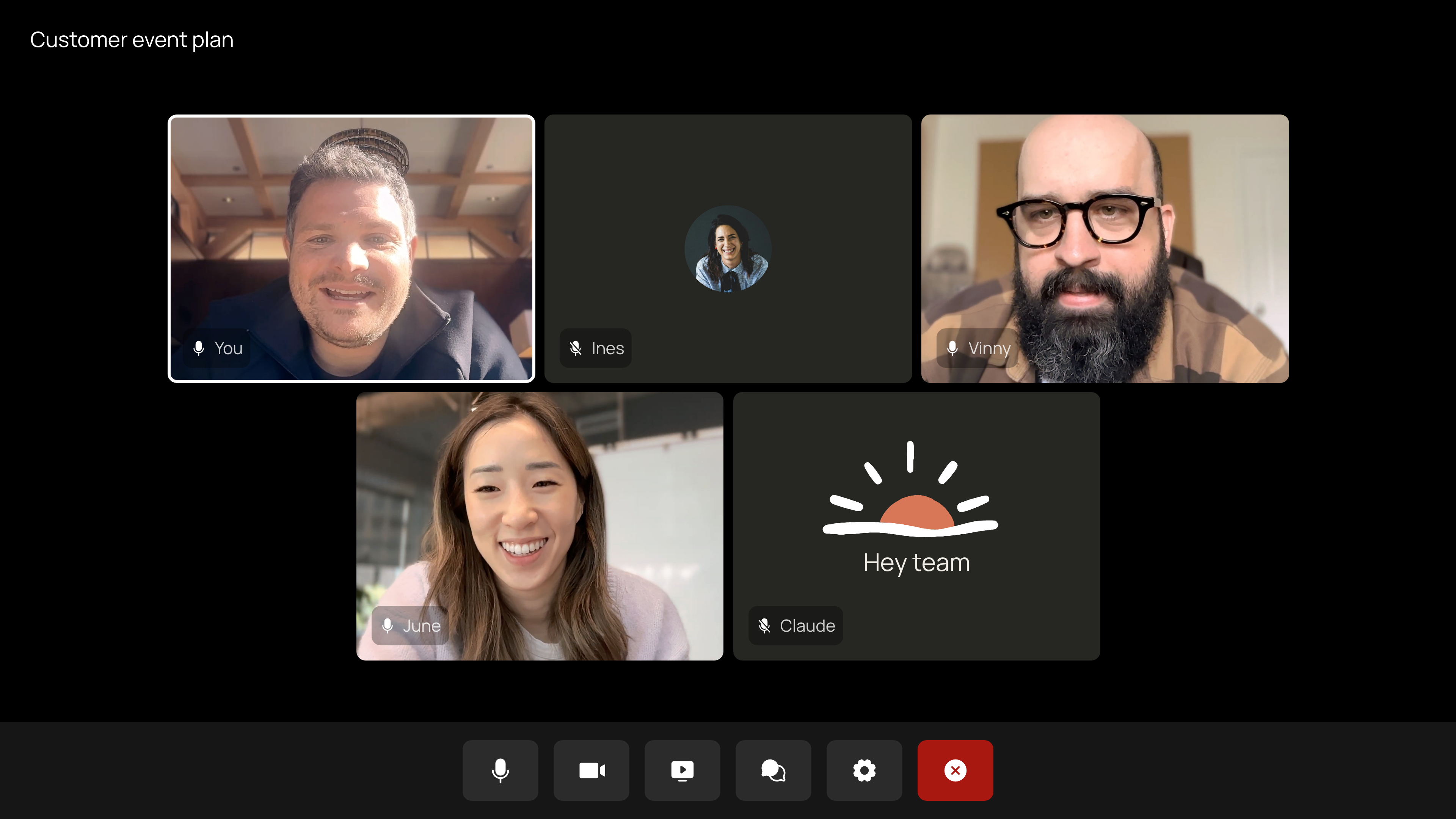
Claude Meetings is Anthropic's new beta feature that lets the Claude AI assistant join a video call as a visible participant, listen to the conversation, and start producing notes, plans, and work products before the call even ends. It began rolling out on November 12, 2026, in beta for Claude's Team and Enterprise plans, and for now it only works with Google Meet.
- What it is: Claude joins a video call as a named participant, follows the discussion, and can answer questions, draft plans, and build whiteboards in real time.
- Availability: Beta on Team and Enterprise plans only, starting November 12, 2026.
- Supported platform: Google Meet at launch; other video tools are "coming soon," per Anthropic.
- Not available: Organizations using zero data retention (ZDR), HIPAA-ready configurations, or customer-managed encryption keys (CMEK).
- Disclosure: Claude posts a notice in the call's chat when it joins and stays out of calls with outside guests by default.
- Pricing during beta: Notes and transcripts are free; artifacts like docs and whiteboards made in a call are free through February 10, 2027.
What is Claude Meetings?
Claude Meetings is Anthropic's attempt to move its AI assistant out of the post-meeting summary business and into the meeting itself. According to Anthropic's own product announcement, Claude can be added to a Google Meet call where it appears as a participant, follows what is being said, and can be asked questions out loud or in the call's chat. By default it answers in writing in the chat, and with permission it can pull in information from a person's connected tools to answer more specifically.
During the call, Claude can also build artifacts live alongside the team — documents, whiteboards, or other work products — and keep running notes and action items as the discussion unfolds. Once the meeting ends, everything Claude produced — notes, action items, a plan, and any whiteboard — lands on that meeting's own page inside claude.ai, where it can be reviewed, edited, and shared with others in the organization who were on the invite.
Users can also ask Claude questions about meetings it previously attended, or schedule it in advance by adding it to an upcoming meeting from their calendar inside claude.ai, according to the same announcement.
How to use Claude Meetings
Setup differs slightly by plan type, per Anthropic's rollout notes:
- Team plans: Claude Meetings is turned on for members by default, though an admin can disable it for the workspace.
- Enterprise plans: An admin must explicitly enable the feature for all users or a subset of the organization.
Once it's enabled, a user can add Claude to a Google Meet call directly, or turn on auto-join so Claude attends automatically. Step-by-step setup instructions are published in Anthropic's Claude Meetings help center article. For readers comparing this to other assistant-driven workflows, our explainer on Claude Cowork versus Microsoft 365 Copilot covers how Anthropic's agent tooling fits into broader office work.
Disclosure, guests, and privacy
Anthropic built in several guardrails around how Claude shows up on a call. When Claude joins — whether added manually or through auto-join — it appears as a named participant and posts a notice in the meeting's chat announcing its presence. The company's own guidance to admins is blunt about consent: "Before you add Claude or turn on auto-join, make sure everyone on your calls is OK with being transcribed."
Guest handling is more restrictive by default. If anyone from outside the organization is on the call, Claude stays out unless an admin has explicitly allowed it. If an external guest joins partway through an otherwise-internal call, Claude leaves. When an admin does allow Claude on calls with outside guests, it still posts its joining notice in the chat but will not reply there — though guest statements are still captured in the notes and transcript.
On the data side, Claude saves a transcript, a summary, and descriptions of what appeared on screen, but Anthropic's announcement specifies it does not save audio. Each meeting gets its own page in claude.ai that people from the host organization who were on the invite can view and edit, and that page can be shared internally. The feature is not offered at all to organizations running zero data retention, HIPAA-ready, or customer-managed encryption key configurations — a sign Anthropic is treating the always-listening nature of the feature cautiously for its most regulated customers.
What it costs during the beta
Anthropic has not published a standalone price for Claude Meetings; instead, it is bundling usage into existing Team and Enterprise plan allowances during the beta period. Per the company's announcement:
| Activity | Cost during beta |
|---|---|
| Notes and transcripts | Free on Team and Enterprise plans |
| Answers in call chat (no connected tool used) | Free |
| Answers that use a connected tool | Counts toward the plan's normal usage |
| Docs, whiteboards, and other artifacts made in a call | Free through February 10, 2027 |
That February 10, 2027 cutoff suggests Anthropic plans to start charging for in-meeting artifact generation once the beta period ends, though it has not said what that will cost.
Part of a bigger workplace push
Claude Meetings didn't launch in isolation. Two days earlier, on November 10, 2026, Anthropic rolled out a cluster of related workplace tools aimed squarely at office software incumbents. According to the company's announcement covering Sheets, Whiteboards, and Interactive Connectors, that release included:
- Claude Sheets: lets a team and Claude build spreadsheets together, write and edit formulas, and work across multiple tabs.
- Claude Whiteboards: a shared digital whiteboard for laying out and organizing ideas, which Claude can later summarize or turn into a document or slide deck — and which ties directly into Claude Meetings.
- Claude Data (formerly branded Claude Dashboards): now generally available, connecting to tools like Snowflake and Salesforce to build dashboards and data narratives from definitions a company's data team certifies.
Alongside those, Anthropic also introduced Interactive Connectors, which let partner applications open directly inside the Claude interface rather than requiring users to switch tabs. At launch, the directory includes Asana, Canva, Carta, Dropbox, monday.com, Smartsheet, Vercel, and Webflow, with Adobe and Atlassian highlighted as use-case examples — Adobe for retouching and redacting documents, Atlassian for writing and editing Confluence pages with live review. Figma, Harvey, and Shopify integrations are listed as in development. The connectors are built on MCP Apps, an open extension to the Model Context Protocol, and Anthropic says its Claude Marketplace now lists more than 9,000 connectors and plugins in total, including community-built ones.
For context on how Anthropic's broader agent strategy has evolved this year, see our coverage of how Claude Cowork stacks up against Microsoft 365 Copilot and our explainer on small language models versus large ones, which touches on how Anthropic positions different Claude tiers for enterprise work.
Enterprise controls and security
Because Claude Meetings and the connected-tool features that feed it touch sensitive calendars, documents, and business systems, Anthropic has paired the rollout with a set of admin-side controls. Per the company's announcement, workspace admins can choose which users get access to which products and connectors, and can set granular spend limits per team or per tool. Admins can also restrict what an individual connector is allowed to do — for example, permitting Claude to read messages in a connected Slack workspace without allowing it to send any.
Anthropic says Claude otherwise operates within each user's existing permissions rather than being granted broader access on its own, and that enterprise data moving through these features is encrypted both in transit and at rest. Security teams get audit logs and access to a Compliance API that Anthropic says works with more than 100 third-party tools, including Splunk and CrowdStrike. In the newer, unified Claude experience available to Enterprise customers, each cloud-based session runs inside its own isolated virtual machine, and credentials for connected tools are kept outside that sandbox — a design meant to limit what a compromised session could reach.
A related feature called Claude Auto-Connect, also in beta on eligible Team and Enterprise plans, lets an admin complete a one-time setup for apps such as Notion, Atlassian, or Dropbox; individual employees are then connected automatically the first time they use that tool inside Claude, without a separate authorization step per person.
How companies are already using the expanded toolkit
Anthropic's announcement included several customer accounts of the broader Sheets, Whiteboards, Data, and connector rollout that Claude Meetings is part of. Advantage Solutions' director of FP&A, Ash Gupta, is quoted saying the company's forecast assembly time dropped from roughly 10 hours to under 30 minutes using the new tools. Gusto said contract turnaround fell from more than a week to a matter of hours, with a team member still reviewing negotiated terms before signing. HubSpot's chief customer officer, Jon Dick, described live dashboards inside Claude that pull directly from HubSpot data to surface what matters ahead of each call. Datadog's chief product officer, Yanbing Li, framed the appeal in cultural terms: "When someone builds something good with Claude at Datadog, it spreads fast." Accenture's Mindy Lok said the tools are helping change how the firm's legal teams work. None of these customer quotes referenced Claude Meetings specifically, since it shipped two days after the rest of the toolkit, but they illustrate the kind of enterprise workflow Anthropic is trying to extend into the meeting itself.
Why it matters
Meeting-note tools have been one of the most crowded corners of applied AI for the past two years, but most of them — Otter, Fireflies.ai, Granola, and similar services — work after the fact: they transcribe and summarize a call once it's over. Claude Meetings' pitch is different: Anthropic wants the assistant doing useful work during the call, not just archiving it. Notably, Anthropic's announcement says transcripts will soon be exportable to several of those exact note-taking tools — Gong, Attention, Granola, Fireflies.ai, Otter, and Plaud — suggesting Anthropic sees Claude Meetings as complementary to, rather than a wholesale replacement for, the existing meeting-intelligence market.
The move also puts Anthropic in more direct competition with Google's own Gemini-in-Meet features and Microsoft's Copilot in Teams, both of which already offer in-call AI assistance to their respective productivity suites. Anthropic's bet is that enterprise customers who already pay for Claude Team or Enterprise seats will want one assistant that follows them from chat to documents to live meetings, rather than juggling separate AI layers from each software vendor.
Limitations and open questions
Several things remain unresolved as the beta rolls out. Anthropic has not published a date for when Claude Meetings will support platforms beyond Google Meet, despite competitors already supporting Zoom and Microsoft Teams more broadly. Pricing beyond the free beta window through February 10, 2027 hasn't been announced. And because the feature is explicitly withheld from organizations with the strictest compliance configurations (ZDR, HIPAA-ready, CMEK), the most regulated enterprise customers — often in healthcare, finance, and government-adjacent sectors — won't be able to use it at all for now.
There's also a practical wrinkle for mixed-vendor meetings: because Claude by default leaves any call that includes an external guest unless an admin overrides that setting, cross-company sales calls, vendor check-ins, and client meetings may not see Claude's live assistance unless IT teams specifically configure it to stay.
What's next
Anthropic says additional video conferencing platforms are coming, though without a timeline. The company has also signaled that transcript export to third-party meeting-intelligence tools is imminent. Given the beta pricing cutoff of February 10, 2027, expect Anthropic to announce standalone pricing for in-meeting artifact generation sometime before that date. For now, Claude Meetings remains limited to Team and Enterprise customers running Google Meet — anyone on a Claude Pro or Free plan, or using Zoom or Teams for calls, will need to wait for a wider rollout.
Frequently asked questions
What is Claude Meetings?
Claude Meetings is a beta feature from Anthropic that lets the Claude AI assistant join a video call as a visible participant, follow the discussion, answer questions, and build notes, plans, and whiteboards while the meeting is happening.
Is Claude Meetings available yet?
Yes, it began rolling out in beta on November 12, 2026, but only for Claude Team and Enterprise plan subscribers. It is not available on Claude Pro or Free plans.
Does Claude Meetings work with Zoom or Microsoft Teams?
Not yet. At launch, Claude Meetings only works with Google Meet. Anthropic says support for other video conferencing platforms is coming but has not given a date.
How do I use Claude Meetings?
On Team plans it is on by default, and you can add Claude to a Google Meet call or turn on auto-join. On Enterprise plans, an admin must first enable the feature. Anthropic publishes setup steps in its Claude Meetings help center article.
Does Claude Meetings record audio or notify people on the call?
Claude posts a visible notice in the call's chat when it joins. Anthropic says Claude saves a transcript, summary, and on-screen descriptions, but not audio, and advises getting everyone's consent before adding it or turning on auto-join.
What happens if an outside guest joins the call?
By default, Claude stays out of calls that include anyone from outside the organization, and it leaves if an external guest joins partway through. An admin can override this to allow Claude on calls with outside guests.
Sources
- Anthropic: Introducing Claude Meetingsclaude.com
- Anthropic: More ways to work with Claude — Sheets, Whiteboards, and Interactive Connectorsclaude.com
- Anthropic: Your apps can now open in Claude, and Claude can work in themclaude.com
- Claude Help Center: Use Claude Meetingssupport.claude.com
- Wikipedia: Anthropicen.wikipedia.org
Theo Park runs the AI desk at Pandromeda. He follows model launches from the frontier labs and the open-weight community, tracks the assistants and developer tools built on them, and explains what each release changes on pricing, capability and safety. His reporting leans on primary sources: model cards, technical reports, API documentation and the companies' own announcements.