Sora 2 vs Veo 3.1: Price, Features and Which One Wins
OpenAI shut down Sora 2 in 2026. Google Veo 3.1 is still live. Here is the full price, resolution, clip-length and audio comparison, and what to use now.
Short answer up front: there is no live "Sora 2 vs Veo 3.1" fight left to referee. OpenAI shut down the Sora 2 app on April 26, 2026, and switched off the Sora 2 API on September 24, 2026, with no replacement model named in its own developer documentation. Google's Veo 3.1 and Veo 3.1 Fast are still running today, through the Gemini API, Vertex AI, Google AI Studio, Google Flow, and the Gemini app. If you are choosing an AI video generator in October 2026, Veo 3.1 is the one you can actually sign up for and use. Below is the full spec and price breakdown for both models, including what Sora 2 cost and offered while it was live, so you understand what changed and why.
Key facts
- Sora 2 (consumer app) shut down April 26, 2026; the Sora 2 developer API was shut down September 24, 2026, per OpenAI's own documentation.
- Veo 3.1 is active now. It generates native audio (including dialogue) with every clip, up to 8 seconds at 1080p or 4K, or up to 148 seconds total using the Extend feature.
- Veo 3.1 API pricing on the Gemini API: $0.40/second (720p/1080p) and $0.60/second (4K) for the standard model; $0.10–$0.30/second for Veo 3.1 Fast; $0.05–$0.08/second for Veo 3.1 Lite.
- Consumer access to Veo 3.1 comes through Google AI Plus ($4.99/month), Google AI Pro ($19.99/month) and Google AI Ultra ($99.99 or $199.99/month) via Google Flow credits.
- While it was live, Sora 2 cost $0.10/second (720p) and Sora 2 Pro cost $0.30–$0.70/second depending on resolution, with clips up to 20 seconds extendable to 120 seconds.
What happened to Sora 2
OpenAI launched Sora 2 on September 30, 2025, alongside a standalone, TikTok-style Sora app built around text-to-video and "Cameo" clips that let people insert their own likeness into generated scenes. A developer-facing Sora 2 and Sora 2 Pro API followed shortly after inside the OpenAI platform, priced per second of rendered video.
Less than a year later, OpenAI reversed course. According to OpenAI's own developer documentation, the Sora 2 consumer app and the sora.chatgpt.com site were taken offline on April 26, 2026, and the Sora 2 and Sora 2 Pro models plus the Videos API endpoint were shut down entirely on September 24, 2026. OpenAI's model reference page for sora-2 states plainly that the models "were shut down on September 24, 2026 and are no longer available," and lists no successor model in the field that normally points to a migration path.
The practical result for anyone searching "Sora 2 vs Veo 3.1" today: one side of that comparison no longer exists as a product you can buy or build on. The specs and prices below for Sora 2 are preserved for reference, for teams that built on the API before the cutoff and need the historical numbers, and because the gap it leaves is exactly why Veo 3.1 has become the default answer.
Veo 3.1 and Veo 3.1 Fast: the current specs
Google's Veo 3.1 family is documented on the Gemini API's Veo page and is available through four surfaces: the Gemini API, Vertex AI, Google AI Studio, and the consumer tools Google Flow and the Gemini app. Per Google's own documentation:
- Resolution: 720p by default; 1080p and 4K are available, but only on 8-second clips.
- Clip length: a single generation runs 4, 6, or 8 seconds (8 seconds is required for 1080p or 4K output).
- Aspect ratio: 16:9 landscape or 9:16 portrait, at 24 frames per second.
- Audio: native audio generation is always on for every clip — dialogue, ambient sound, and sound effects, not an optional add-on. Writers can place dialogue in quotation marks inside the prompt to drive what characters say.
- Image-to-video: supported — an uploaded image can be used as the starting frame.
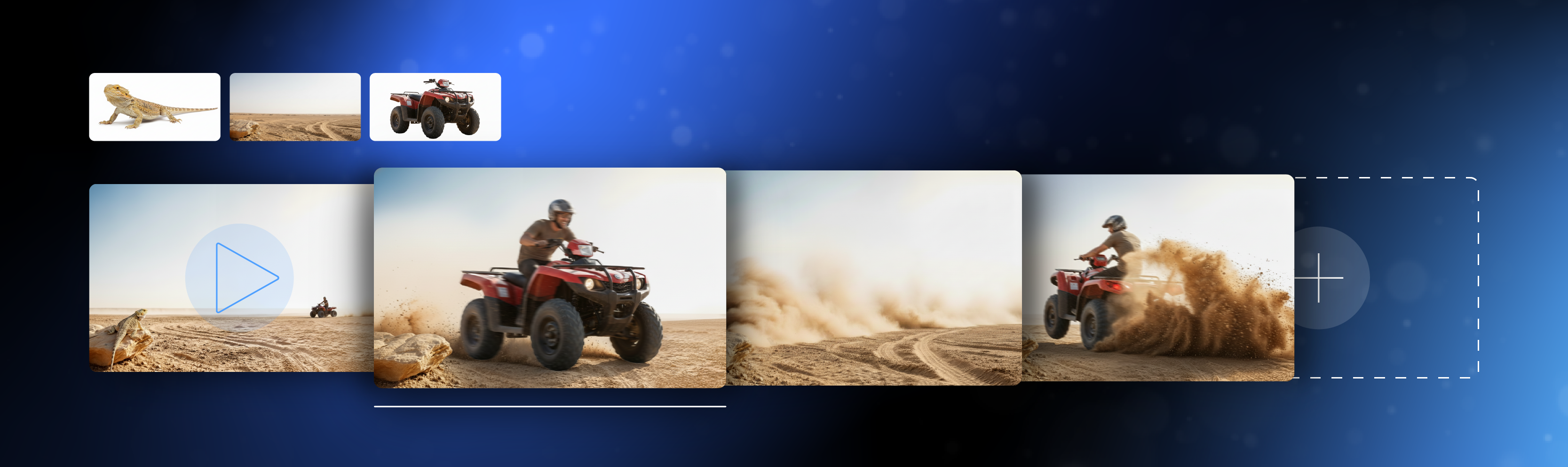
- Frames-to-video: supported — you can supply a first frame and a last frame and Veo 3.1 generates the transition between them.
- Extend: you can extend a previously generated Veo clip up to 20 times, adding roughly 7 seconds per extension, for a combined output of up to about 148 seconds.
- Output: one video per request.
Google's developer blog post introducing Veo 3.1 also highlights "Ingredients to Video" in Flow, which lets a creator feed in multiple reference images to lock down a character, object, or visual style across a generation — useful for anyone trying to keep a recurring character consistent across an ad or series of social clips.
One nuance worth flagging: Google is separately rolling out a newer unified model called Gemini Omni for video generation inside the Gemini app's chat interface, which its own documentation says "will replace Veo in the Gemini app." That transition affects the chat-based Gemini app experience specifically. Veo 3.1 itself remains the model developers call through the API and the model Flow is built around, and it's the one this comparison covers.
Sora 2's specs, for the record
For context on what the market is missing, here is what OpenAI's own (now-archived) API documentation specified for Sora 2 and Sora 2 Pro while they were active:
- Models: sora-2 (built for speed and iteration) and sora-2-pro (built for production-quality output).
- Resolution: sora-2 supported 720p (1280x720 or 720x1280). sora-2-pro added 1024p (1024x1792 or 1792x1024) and 1080p (1920x1080 or 1080x1920).
- Clip length: base generations of 16 or 20 seconds, extendable in increments of up to 20 seconds per extension, for a maximum of six extensions and roughly 120 seconds total.
- Audio: synchronized audio generated natively alongside the video, covering dialogue, ambient sound, and effects.
- Image-to-video: supported through an input_reference parameter that accepted an uploaded image as the first frame.
- Editing: an "edits" endpoint allowed targeted changes to an existing clip without a full regeneration; it replaced an earlier "remix" endpoint, which OpenAI had deprecated.
On paper, Sora 2 and Veo 3.1 were close rivals: both generated native audio and dialogue by default, both supported image-to-video, and both offered an extension mechanism for longer-than-native clips. Sora 2 pushed further on raw duration per extension and leaned on physics realism and its "Cameo" self-insertion feature; Veo 3.1 pushed further on resolution ceiling (4K) and production tooling like Frames-to-Video and multi-image "Ingredients to Video." That direct comparison is now moot for anyone trying to actually use the thing, since only one side is still accepting requests.
Pricing: API cost per second and consumer plans
Below is the official per-second API pricing, plus how each model was or is bundled into consumer subscriptions.
| Model | Resolution | API price per second | Status (Oct 6, 2026) |
|---|---|---|---|
| Sora 2 | 720p | $0.10 | Shut down (Sept 24, 2026) |
| Sora 2 Pro | 720p | $0.30 | Shut down (Sept 24, 2026) |
| Sora 2 Pro | 1024p | $0.50 | Shut down (Sept 24, 2026) |
| Sora 2 Pro | 1080p | $0.70 | Shut down (Sept 24, 2026) |
| Veo 3.1 Lite | 720p | $0.05 | Active |
| Veo 3.1 Lite | 1080p | $0.08 | Active |
| Veo 3.1 Fast | 720p | $0.10 | Active |
| Veo 3.1 Fast | 1080p | $0.12 | Active |
| Veo 3.1 Fast | 4K | $0.30 | Active |
| Veo 3.1 (standard) | 720p/1080p | $0.40 | Active |
| Veo 3.1 (standard) | 4K | $0.60 | Active |
On the consumer side, Sora 2 used to be reachable inside ChatGPT Plus and Pro subscriptions and through the free-standing Sora app; both access routes disappeared with the April and September 2026 shutdowns. Veo 3.1 is bundled into Google's tiered AI subscriptions, accessed through Google Flow:
- Google AI Plus — $4.99/month: includes a Flow credit allowance (200 credits/month) that covers Veo 3.1 video generation and Nano Banana Pro image generation.
- Google AI Pro — $19.99/month: 1,000 Flow credits/month, used across Veo video generation and other creative tools.
- Google AI Ultra — $99.99/month (5x usage) or $199.99/month (20x usage): 10,000 to 25,000 Flow credits/month, the highest usage ceiling and access to the top-quality Veo 3.1 tier rather than only the Fast variant.
Google does not publish a single fixed "credits per video" number that holds across every resolution and duration — cost in credits scales with the length and quality of the clip you request, the same way the API bills by the second. If you want a hard dollar figure, the API's per-second pricing above is the more predictable way to budget than guessing at Flow credits.
Image-to-video vs. text-to-video
Both models were built around the same two entry points, which is part of why this comparison exists at all:
- Text-to-video: both Sora 2 and Veo 3.1 could generate a clip from a written prompt alone, including spoken dialogue described or quoted in the prompt.
- Image-to-video: both accepted a reference image as the starting frame, useful for turning a product photo, a brand asset, or a single key frame into motion.
Veo 3.1 goes a step further on this front with two features Sora 2 never shipped at the API level: Frames-to-Video, which takes a first and a last image and generates the motion between them, and Flow's "Ingredients to Video," which takes several reference images at once to hold a character, product, or style consistent across a whole generation. For anyone doing branded or narrative work where visual consistency across clips matters — a recurring product shot, a consistent mascot, a character across a short series — that multi-image control is a meaningful practical edge, and it is live today.
Which should you use, by use case
- Social content (short-form, high volume): Veo 3.1 Fast or Veo 3.1 Lite through Google AI Plus or the Gemini API. The Fast and Lite tiers are priced for high-volume, lower-cost generation ($0.05–$0.12/second), and native audio means you are not bolting on a separate voice or sound-effects pass.
- Ads and branded work: Veo 3.1 standard, paid per second through the Gemini API or Vertex AI, using Frames-to-Video and Ingredients to Video to keep a product or character consistent across a cut-down set of clips. The 4K tier and 1080p ceiling matter more here than for throwaway social clips.
- Storytelling and longer-form narrative: Veo 3.1's Extend feature, chained up to 20 times, is the practical route to anything beyond a single 8-second shot, topping out around 148 seconds of continuous output. There is no remaining Sora 2 equivalent to compare it against.
In every one of these cases, the actual decision in October 2026 is not "Sora 2 or Veo 3.1" — it's which Veo 3.1 tier fits your budget and resolution needs, because Sora 2 is off the table. If you were specifically relying on Sora 2's longer native clip length (up to 20 seconds before extension) or its Cameo self-insertion feature, there is currently no direct replacement from either company; Veo 3.1's native clip ceiling is shorter at 8 seconds before you lean on Extend.
For more on how the current wave of AI apps stack up on price and features, see our ChatGPT vs. Gemini comparison and our look at what changed in GPT-6.1's pricing and access tiers. If you're also evaluating AI-assisted coding tools, our Cursor vs. Windsurf breakdown follows the same price-and-features format.
What next
Expect the "AI video generator" conversation to keep moving fast. Google is already layering a newer unified model, Gemini Omni, into the Gemini app's video generation, separate from the Veo 3.1 line covered here, and OpenAI has said Sora will continue internally as a research project on "world models" rather than as a consumer or developer product in its current form — with no stated date for any public return. Anyone building on Veo 3.1 today should watch Google's Gemini API pricing and model pages directly for changes, since both pricing and feature availability in this category have changed multiple times within a single year.
Frequently asked questions
Is Sora 2 still available in 2026?
No. OpenAI shut down the Sora 2 consumer app on April 26, 2026, and switched off the Sora 2 and Sora 2 Pro developer API, along with the Videos API endpoint, on September 24, 2026. OpenAI's own documentation lists no replacement model.
Why did OpenAI shut down Sora 2?
OpenAI has said it is redirecting compute toward coding tools and enterprise customers, and that Sora will continue only as an internal research project on world models rather than as a public app or API.
How much does Veo 3.1 cost through the API?
On the Gemini API, Veo 3.1 standard costs $0.40 per second at 720p or 1080p and $0.60 per second at 4K. Veo 3.1 Fast runs $0.10 to $0.30 per second depending on resolution, and Veo 3.1 Lite runs $0.05 to $0.08 per second.
Does Veo 3.1 generate audio and dialogue automatically?
Yes. Native audio generation is always on for every Veo 3.1 clip, covering ambient sound, effects, and dialogue written in quotation marks inside the prompt; there is no silent-only mode.
Can I use Veo 3.1 without a developer account?
Yes, through Google Flow, bundled into the Google AI Plus ($4.99/month), Google AI Pro ($19.99/month), and Google AI Ultra ($99.99 or $199.99/month) subscriptions, each with a monthly Flow credit allowance.
What is the best alternative now that Sora 2 is gone?
Veo 3.1, along with its faster and cheaper Fast and Lite tiers, is the active, officially supported option from a major lab with comparable native-audio and image-to-video features. Google is also separately introducing a newer model, Gemini Omni, for video generation inside the Gemini app's chat interface.
Sources
- OpenAI Developers – Sora 2 model referencedevelopers.openai.com
- OpenAI Developers – Sora 2 Pro model referencedevelopers.openai.com
- Google AI for Developers – Veo 3.1ai.google.dev
- Google AI for Developers – Gemini API pricingai.google.dev
- Google Developers Blog – Introducing Veo 3.1developers.googleblog.com
- Google – Gemini subscription plansgemini.google
Felix Moreau writes Pandromeda's software coverage and how-to guides. He covers Windows, macOS and Linux updates, the apps people rely on, emulators and developer tools, and turns official documentation into clear, numbered steps that work on the current version.