Advanced Persistent Threat (APT) Explained: Definition and Lifecycle
APTs are not smash-and-grab malware. They are patient, often state-backed campaigns built to stay hidden inside one target network for months while they move laterally and exfiltrate data.

An advanced persistent threat (APT) is not a single piece of malware — it is a sustained, human-directed intrusion campaign in which a well-resourced attacker, often but not always a nation-state, breaks into a specific target's network and works to stay there, undetected, for weeks, months or years while it maps the environment, moves between systems, and steals data or maintains access for future use. What separates an APT from an opportunistic ransomware crew or a mass-mailed phishing kit is not the tools involved — APT operators use plenty of ordinary malware too — but the intent, patience, and resourcing behind the campaign.
- Definition: NIST Special Publication 800-39 defines an APT as "an adversary that possesses sophisticated levels of expertise and significant resources" to pursue its objectives "repeatedly over an extended period of time," adapting to defenders as it goes.
- Not the same as ransomware: Ransomware crews usually want fast payment from any vulnerable victim; APT operators pick a specific target and optimize for staying hidden, not for speed.
- Typical sponsors: Nation-state intelligence services (Russia, China, Iran, North Korea are the most frequently named in Western government advisories) and, less often, well-funded criminal or activist groups.
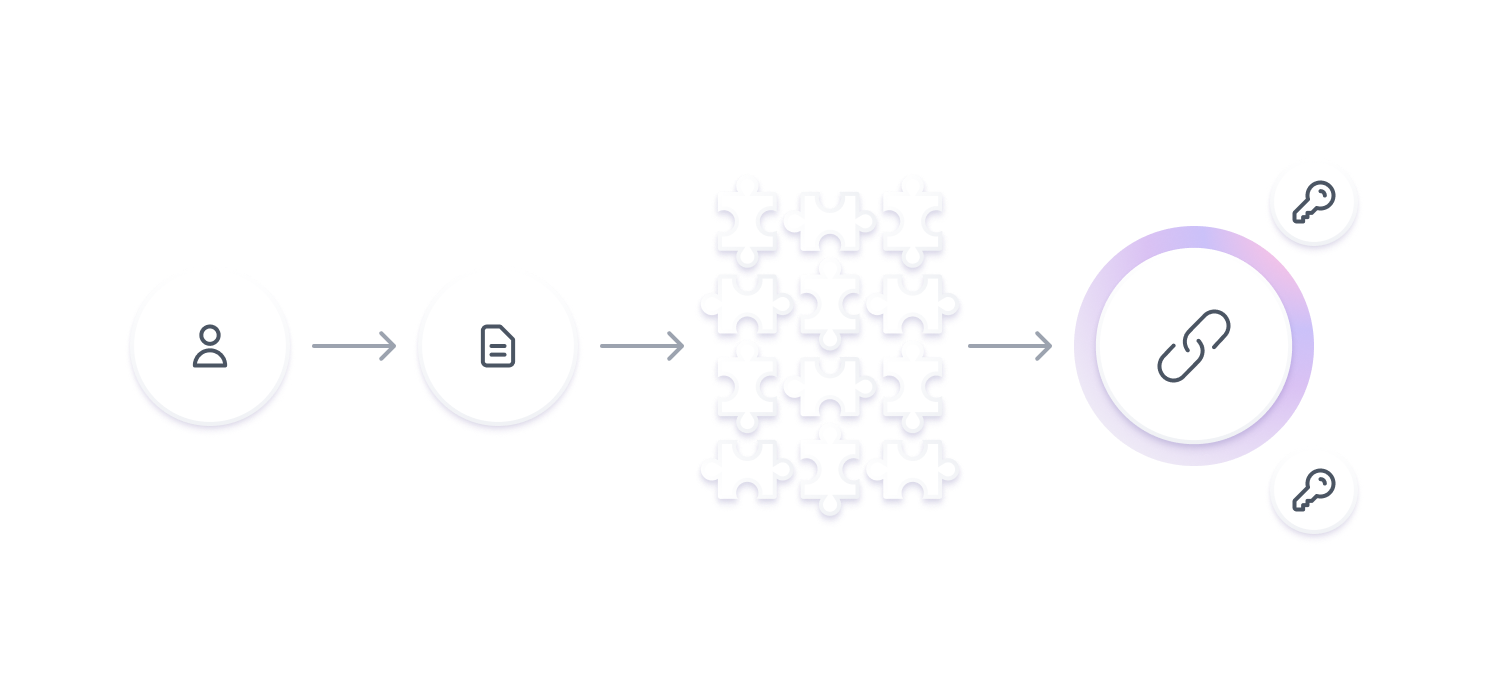
- Lifecycle: Initial access, persistence and privilege escalation, internal reconnaissance, lateral movement, and exfiltration — often repeated in cycles over a "dwell time" that has averaged close to a year in major incidents.
- Defense framework: CISA and NIST both point defenders to MITRE ATT&CK as the common reference for the tactics and techniques APT groups use at each stage.
What is an advanced persistent threat?
An advanced persistent threat describes both a type of attack campaign and the actor behind it. The U.S. National Institute of Standards and Technology (NIST) defines the term in Special Publication 800-39 as an adversary "that possesses sophisticated levels of expertise and significant resources which allow it to create opportunities to achieve its objectives by using multiple attack vectors (e.g., cyber, physical, and deception)." Crucially, NIST's definition says the threat "pursues its objectives repeatedly over an extended period of time," "adapts to efforts to resist it," and "is determined to maintain the level of interaction needed to execute its objectives" — in other words, if defenders kick the attacker out, a true APT tries again.
Breaking the term down explains why it has stuck as industry shorthand:
- Advanced — the group has, or can access, custom tooling, zero-day exploits, and skilled human operators, even if much of its day-to-day activity relies on ordinary techniques like phishing or stolen credentials.
- Persistent — the operation is goal-directed and long-running. The attacker checks in, waits, adapts, and re-establishes access if removed, rather than hitting a target once and moving on.
- Threat — there is both capability and intent. A skilled but aimless researcher is not a threat; a resourced group actively working toward espionage, sabotage, or theft against a chosen target is.
How an APT differs from ordinary malware or ransomware
Most cyberattacks that make headlines — mass phishing, commodity ransomware, credential-stuffing waves against login forms — are opportunistic. The attacker casts a wide net, exploits whoever is vulnerable, and monetizes quickly. An APT campaign inverts that logic:
| Characteristic | Opportunistic attack (e.g. mass ransomware) | Advanced persistent threat |
|---|---|---|
| Target selection | Anyone vulnerable; automated scanning | Specific organization, sector, or individual chosen in advance |
| Goal | Fast payout or disruption | Long-term espionage, IP theft, sabotage, or strategic access |
| Timeframe | Minutes to days | Weeks to years ("dwell time") |
| Stealth priority | Low — attacker wants to be noticed (ransom note) | High — detection ends the operation's value |
| Typical actor | Criminal affiliate, often via ransomware-as-a-service | Nation-state unit, intelligence proxy, or elite criminal group |
| Response to eviction | Usually abandons the target | Frequently attempts to regain access |
This doesn't mean APT operators never use ransomware or commodity malware — some do, either as a smokescreen for espionage or as a secondary monetization step. The distinguishing factor is the operating model: a brute-force credential attack or a botnet-driven DDoS campaign is typically broad and short-lived, while an APT intrusion is narrow, deliberate, and built to last.
Who runs APT campaigns?
CISA and allied agencies have repeatedly attributed major APT campaigns to intelligence services of specific states. The most frequently named sponsors in joint U.S./allied advisories are Russia (including units linked to the SVR and GRU), China (including People's Liberation Army and Ministry of State Security-linked units), Iran, and North Korea. Security vendors track individual groups under their own naming schemes — for example, Microsoft uses weather-themed names such as Midnight Blizzard and Star Blizzard, while other researchers use designations like APT28, APT29, or Cozy Bear for overlapping sets of activity — which is why the same intrusion is sometimes reported under several different group names.
Not every APT is state-run. Some are financially motivated crews with nation-state-level tradecraft (North Korea's Lazarus Group blends espionage and cryptocurrency theft), and a smaller number are well-funded hacktivist or mercenary operations. What they share is capability plus a willingness to commit it to one target for a long time.
The APT attack lifecycle
Security teams generally model an APT intrusion as a repeating sequence of stages, closely mirroring the "cyber kill chain" concept and the tactic categories in the MITRE ATT&CK framework, the industry-standard knowledge base of adversary techniques maintained by MITRE. CISA's advisory on the 2020 SolarWinds/SUNBURST campaign (AA20-352A), attributed to Russia's SVR, is one of the most thoroughly documented real-world walkthroughs of these stages.
1. Initial access
The attacker gets a foothold through spear-phishing, exploitation of an internet-facing vulnerability, a compromised third-party vendor, or — as in the SolarWinds case — a software supply-chain compromise. In that campaign, the actor inserted malicious code into SolarWinds' Orion software build process, so thousands of customers who installed a routine update unknowingly installed a backdoor signed with SolarWinds' own legitimate certificate. CISA also found the same actor using password spraying and exploiting weakly secured administrative credentials as alternate entry points.
2. Persistence and privilege escalation
Once inside, the operator works to ensure it can survive reboots, patches, and password resets, then escalates from a low-privilege foothold to administrative control. In the SolarWinds intrusion, CISA documented the actor adding credentials and certificates to cloud application service principals, creating new federation trusts, and compromising SAML token-signing certificates using escalated Active Directory privileges — techniques that let it mint trusted authentication tokens almost at will.
3. Internal reconnaissance and lateral movement
The attacker maps the internal network, identifies valuable systems and accounts, and moves between them — MITRE ATT&CK catalogs this as the Lateral Movement tactic (TA0008), covering techniques like abuse of remote services, reused or forged credentials, and exploitation of trust relationships between systems. This phase can resemble a far more deliberate, targeted version of the account-hopping seen in credential stuffing campaigns, except the APT operator is working inside one network rather than testing stolen passwords against many services at once.
4. Collection and exfiltration
The operator gathers the data or access it came for and moves it out of the network, frequently over channels designed to blend in with normal traffic (encrypted command-and-control domains, DNS tunneling, or abuse of legitimate cloud APIs). In the SolarWinds case, CISA noted the actor's apparent objective was intelligence collection, including exfiltrating data through authorized APIs in compromised email environments — meaning the "theft" traffic looked, on the wire, like ordinary application activity.
5. Maintain access and repeat
Unlike a smash-and-grab attacker, an APT group plans to come back. It leaves multiple backdoors, rotates infrastructure, and — per NIST's definition — adapts to whatever remediation defenders attempt. Mandiant's long-running analysis of Chinese APT activity found average "dwell time" (the gap between initial compromise and detection) measured in months, with some intrusions persisting for close to five years before discovery.
Real-world examples
A handful of publicly attributed campaigns illustrate how these stages play out:
- SolarWinds / SUNBURST (2020): A supply-chain compromise of SolarWinds' Orion network-monitoring software, attributed by CISA and the U.S. government to Russia's SVR, that reached U.S. federal agencies and private companies via a trojanized software update.
- Star Blizzard (ongoing): Microsoft's threat intelligence team tracks this Russia-linked group's long-running, highly targeted spear-phishing campaigns against government, defense, and civil-society targets, including a 2026 technique Microsoft dubbed "RedFlick" for refining phishing and malware delivery.
- APT1 / PLA Unit 61398: Mandiant's 2013 public report tied years of intellectual-property theft against U.S. companies to a specific Shanghai-based People's Liberation Army unit, one of the first times a private firm publicly attributed an APT to a named military unit.
- Stuxnet (discovered 2010): Malware that physically damaged centrifuges at Iran's Natanz nuclear facility, widely attributed in reporting to a joint U.S.-Israeli operation — an example of an APT campaign aimed at sabotage rather than data theft.
How organizations detect APT activity
Because APT operators deliberately avoid the loud, fast indicators that trip traditional antivirus or signature-based tools, detection leans on behavioral and architectural controls rather than any single product:
- Map techniques to MITRE ATT&CK. Security teams use ATT&CK's tactic and technique catalog to build detections and threat-hunting hypotheses around how real APT groups have behaved before, rather than only what malware signatures exist.
- Watch for anomalous identity and authentication activity. CISA's SolarWinds guidance specifically calls out "impossible travel" logins, tokens with unusual lifetimes, and authentication claims that don't match an identity provider's records as signs of token-based persistence.
- Extend log retention. CISA recommends retaining relevant logs for at least 180 days specifically because APT dwell times are long enough that shorter retention windows miss the initial compromise entirely.
- Segment networks and enforce least privilege. Limiting what a compromised account or system can reach slows lateral movement and narrows the blast radius if initial access succeeds.
- Monitor outbound and DNS traffic for exfiltration patterns. Unusual data volumes, DNS tunneling, and connections to newly registered or low-reputation domains are common exfiltration tells, even when the payload itself is encrypted.
- Threat-intelligence sharing. CISA, the FBI, and allied agencies (including the NSA and partners such as the UK's NCSC and Canada's Cyber Centre) regularly publish joint advisories naming specific APT indicators, tools, and infrastructure so other organizations can check their own environments.
How organizations defend against APTs
NIST's broader guidance on APT-grade threats (reflected across SP 800-39, SP 800-53, and the supply-chain-focused SP 800-161) emphasizes that no single control stops a sophisticated, persistent adversary — defense has to be layered and continuously adapted:
- Multi-factor authentication everywhere privileged, paired with phishing-resistant methods where possible, since credential theft and forged tokens are common APT entry and persistence techniques.
- Patch internet-facing and high-value systems quickly. CISA's post-SolarWinds guidance told organizations to apply updates within 48 hours once available, reflecting how fast APT actors operationalize known vulnerabilities.
- Supply-chain scrutiny. Vet software vendors' build and update processes, since a single compromised update (as with SolarWinds) can bypass perimeter defenses entirely.
- Assume breach, and plan for it. Incident-response plans should assume an attacker may already be inside, with pre-defined steps for isolating systems, resetting credentials at scale, and communicating out-of-band if internal email or chat may be compromised.
- Harden identity infrastructure. Because modern APT campaigns often target Active Directory, federation trusts, and cloud identity providers directly, protecting the identity layer — not just endpoints — is now considered core APT defense.
These same principles underpin related defenses against a narrower but related threat: business email compromise schemes, which sometimes serve as an APT group's initial foothold into a target organization.
What's next
APT tradecraft keeps shifting toward cloud identity abuse, trusted third-party software, and living-off-the-land techniques that blend into normal administrator activity — all aimed at extending dwell time rather than smashing through a single door. Expect continued joint advisories from CISA, the NSA, and allied agencies naming specific state-sponsored groups as new campaigns are uncovered, and expect MITRE ATT&CK's catalog of techniques to keep expanding as defenders document each new method. For organizations, the practical takeaway is that APT defense is less about buying one more tool and more about assuming a patient, adaptive adversary may already be inside — and building detection, segmentation, and identity controls accordingly.
Frequently asked questions
What does APT stand for?
APT stands for advanced persistent threat. It describes both a sophisticated, well-resourced cyberattack campaign and the actor group behind it, as formally defined in NIST Special Publication 800-39.
What is an example of an advanced persistent threat?
Publicly documented examples include the 2020 SolarWinds/SUNBURST supply-chain compromise (attributed by CISA to Russia's SVR), Microsoft's tracked Star Blizzard spear-phishing campaigns, the APT1 group tied by Mandiant to a Chinese military unit, and the Stuxnet malware that damaged centrifuges at Iran's Natanz nuclear facility.
How is an APT different from ransomware?
Ransomware typically targets any vulnerable victim and aims for a fast payout, while an APT campaign targets one chosen organization and optimizes for staying hidden over weeks, months, or years. Some APT groups do deploy ransomware, but usually as a secondary tool or smokescreen rather than the core objective.
How long do APT attackers typically stay inside a network?
This is often called "dwell time." Mandiant's long-running analysis of Chinese APT activity found average dwell times measured in months, with some intrusions persisting almost five years before discovery.
What is the typical APT attack lifecycle?
Security teams generally describe it as initial access, persistence and privilege escalation, internal reconnaissance, lateral movement, and data exfiltration — frequently repeated in cycles, since APT groups try to regain access if they're removed.
How do organizations detect and defend against APTs?
CISA and NIST guidance points to layered defenses: mapping detections to the MITRE ATT&CK framework, watching for anomalous authentication activity like impossible-travel logins, extending log retention to at least 180 days, enforcing network segmentation and least privilege, and hardening identity infrastructure such as Active Directory and cloud federation trusts.
Sources
- NIST SP 800-39 definition of advanced persistent threat (CSRC Glossary)csrc.nist.gov
- CISA Advisory AA20-352A: Advanced Persistent Threat Compromise of Government Agencies (SolarWinds)cisa.gov
- MITRE ATT&CK Enterprise Matrix and Tacticsattack.mitre.org
- Wikipedia: Advanced persistent threaten.wikipedia.org
- Microsoft Security Blog: Star Blizzard refines phishing and malware delivery with the RedFlick techniquemicrosoft.com
Sana Qureshi runs the security and privacy desk. She reports on actively exploited vulnerabilities, vendor patches and data breaches, and covers the password managers, VPNs and authentication tools readers use to protect themselves. Her alerts cite vendor advisories, CISA and the CVE record directly.