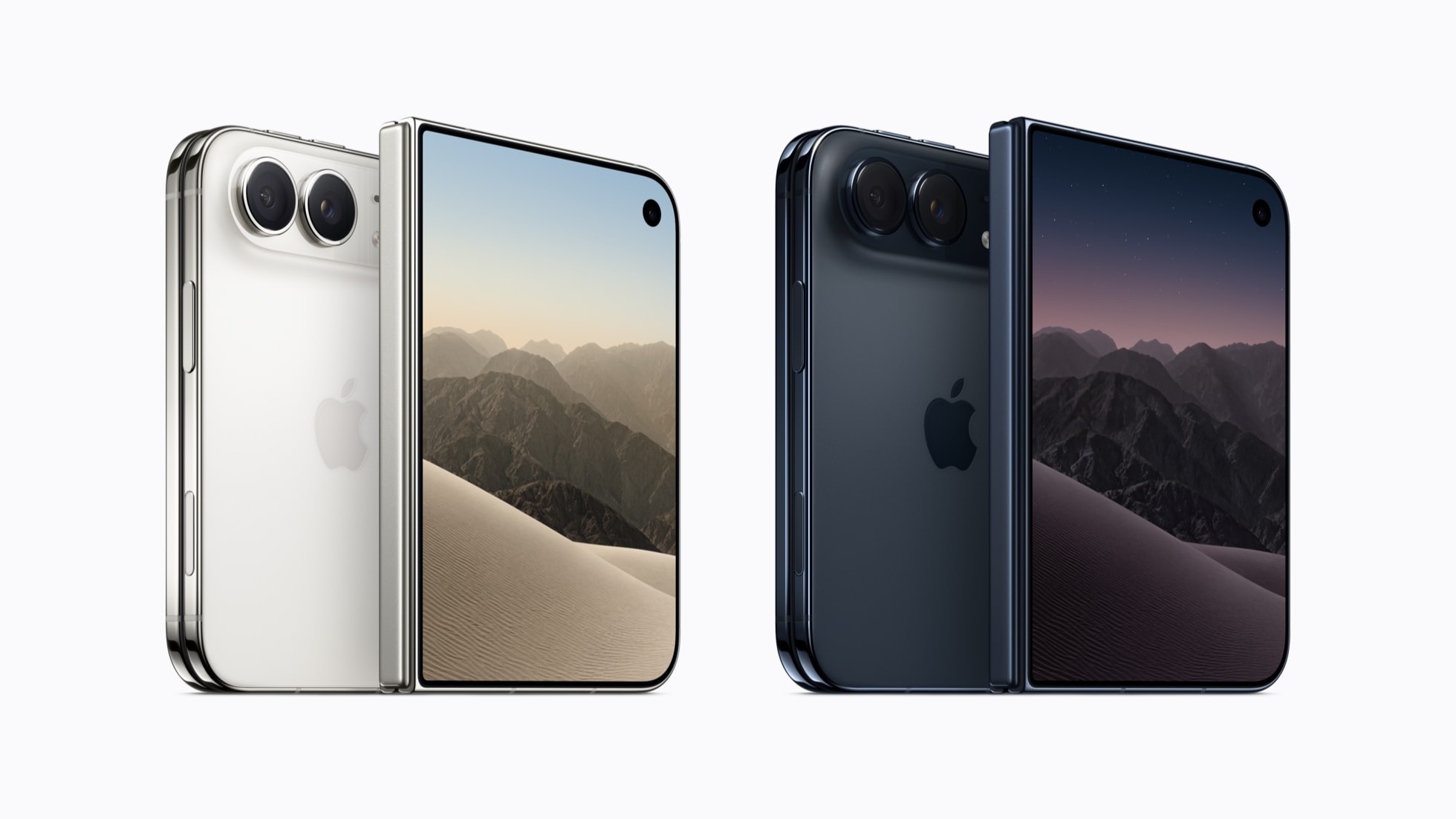
Xiaomi 18 Pro Max vs iPhone 18 Pro Max: Specs, Price and Which to Buy
Official specs and prices for Xiaomi's China-market flagship and Apple's global iPhone 18 Pro Max, compared feature by feature to help you decide which one to buy.
The Xiaomi 18 Pro Max and the Apple iPhone 18 Pro Max are both already-shipping flagships, but they are built for very different markets and very different ideas of what a "Pro Max" phone should do. The short version: Xiaomi's phone wins on raw hardware specs for the price — a bigger 8,500mAh battery, 100W wired charging, a customizable rear screen and a hardware privacy display, all for a Chinese starting price equivalent to roughly $985. Apple's phone wins on software longevity, camera consistency, build quality and the fact that it is officially sold and supported in essentially every market in the world, for a US starting price of $1,299. Which one is "better" depends almost entirely on whether you can actually buy the Xiaomi model where you live — and as of this writing, in most countries outside China, you still can't.
Key facts
- Price: Xiaomi 18 Pro Max from ¥6,999 (~$985) in China; iPhone 18 Pro Max from $1,299 in the US
- Battery: 8,500mAh (Xiaomi, China spec) vs Apple's "up to 30 hours typical use" claim (no mAh figure published)
- Charging: 100W wired / 50W wireless (Xiaomi) vs roughly 60W-class wired / 25W MagSafe (Apple)
- Chip: Snapdragon 8 Elite Extreme Gen 6 (Xiaomi) vs Apple A20 Pro (iPhone), both built on 2nm-class processes
- Standout feature: Xiaomi's hardware "Smart Privacy Screen" and customizable rear display vs Apple's Dynamic Island and Ceramic Shield 2 build
- Availability: Xiaomi 18 Pro Max is a China-market phone today; a global version has been publicly confirmed for 2026 but, as of this writing, Xiaomi has not published an international launch date, price or market list
Xiaomi 18 Pro Max vs iPhone 18 Pro Max at a glance
Both phones launched within weeks of each other in September 2026. Apple's iPhone 18 Pro Max technical specifications page lists a 6.9-inch Super Retina XDR display, the new A20 Pro chip, and a 48MP triple-camera system, sold globally from day one through Apple's own iPhone 18 Pro Max pricing page. Xiaomi's Xiaomi 18 Pro Max product page lists a similarly sized 6.9-inch OLED display, the Snapdragon 8 Elite Extreme Gen 6, and a triple-camera system built around two separate 200-megapixel Leica sensors — but, as our earlier piece on the Xiaomi 18 Pro series' confirmed global launch explained in detail, that phone is currently sold only in China.
That distinction matters more than any single spec. This comparison uses Xiaomi's official China-market specifications, since those are the only ones Xiaomi has published and the only configuration anyone can currently buy. Where global figures differ — and early regulatory filings suggest the international battery capacity will be smaller — we've flagged that clearly rather than guessing at a number Xiaomi hasn't confirmed.
Price and availability
The iPhone 18 Pro Max starts at $1,299 for 256GB of storage, rising to $1,499 for 512GB, $1,899 for 1TB and $2,499 for 2TB, according to Apple's own buy page. It has been available to order since mid-September 2026 in essentially every country Apple sells phones in.
The Xiaomi 18 Pro Max starts at ¥6,999 (roughly $985 at current exchange rates) for its base configuration in China, where it has been on sale since September 23, 2026. Higher-memory and higher-storage configurations are priced above that figure on Xiaomi's own store, though Xiaomi's public listing does not break out each RAM/storage tier individually in a way that can be independently confirmed here. Outside China, the picture is simpler to state plainly: Xiaomi's chief marketing officer and founder/CEO Lei Jun have both publicly said the Xiaomi 18 Pro series is "going global" in 2026, and multiple reports point to a launch event in November 2026. But as of this writing, Xiaomi has not published an official international launch date, a confirmed market list, or any non-China pricing. Anyone comparing a global Xiaomi 18 Pro Max price to the iPhone 18 Pro Max today is comparing a real number to one that doesn't officially exist yet.
| Spec | Xiaomi 18 Pro Max (China spec) | Apple iPhone 18 Pro Max |
|---|---|---|
| Launched | September 23, 2026 (China) | September 2026 (global) |
| Starting price | ¥6,999 (~$985) | $1,299 (256GB) |
| Storage options | Not fully published by Xiaomi | 256GB, 512GB, 1TB, 2TB |
| Display | 6.9", OLED, 1–120Hz adaptive, 4,000 nits peak | 6.9", Super Retina XDR OLED, 2868×1320, 460ppi, ProMotion up to 120Hz, 3,000 nits outdoor peak |
| Secondary screen | Customizable rear OLED display with AI widgets | None (Dynamic Island on front display only) |
| Chip | Snapdragon 8 Elite Extreme Gen 6 (2nm-class, Qualcomm Oryon CPU) | Apple A20 Pro (6-core CPU, 7-core GPU, dual 16-core Neural Engine) |
| Main camera | 200MP Leica, 1/1.28" sensor, ƒ/1.67 | 48MP Fusion Main, variable aperture ƒ/1.48–ƒ/4.0 |
| Telephoto | 200MP periscope, 1/1.56" sensor, ƒ/2.4, 3.2x optical | 48MP, 4x (100mm) and 8x optical-quality (200mm) |
| Ultra-wide | 50MP, 102° field of view | 48MP, ƒ/2.2, 120° field of view |
| Front camera | Not individually detailed by Xiaomi here | 18MP Center Stage, ƒ/1.9 |
| Battery | 8,500mAh (silicon-anode cell) | Not disclosed in mAh; Apple claims up to 30 hours typical use |
| Wired charging | 100W | 50% in ~15 minutes with a 60W-capable adapter |
| Wireless charging | 50W | Up to 25W (MagSafe / Qi2) |
| Signature feature | Hardware "Smart Privacy Screen" (Super Pixel 2.0) | Ceramic Shield 2 front glass, titanium-free aluminum unibody |
| Water resistance | Not independently confirmed here | IP68 (6m / 30 minutes) |
| Software | HyperOS 4, Super Xiao AI 2.0 (Android-based) | iOS 27 |
| Weight | Not published on the spec page reviewed | 249g |
Figures are drawn from Xiaomi's and Apple's own product and specification pages, as cited throughout this article. Rows marked "not disclosed" or "not published" reflect gaps in each company's own public spec sheet, not omissions on our part.
Design and display
Both phones use a 6.9-inch display and sit at the large end of the "Pro Max" class, but they get there differently. Apple's iPhone 18 Pro Max keeps the aluminum unibody design the company introduced with the iPhone 17 generation, with Ceramic Shield 2 on the front and Ceramic Shield on the back, and ships in Black, Silver, Glacier and Burgundy. Apple lists the phone at 249 grams and 8.75mm thick, with an IP68 rating good for six meters of water for up to 30 minutes.
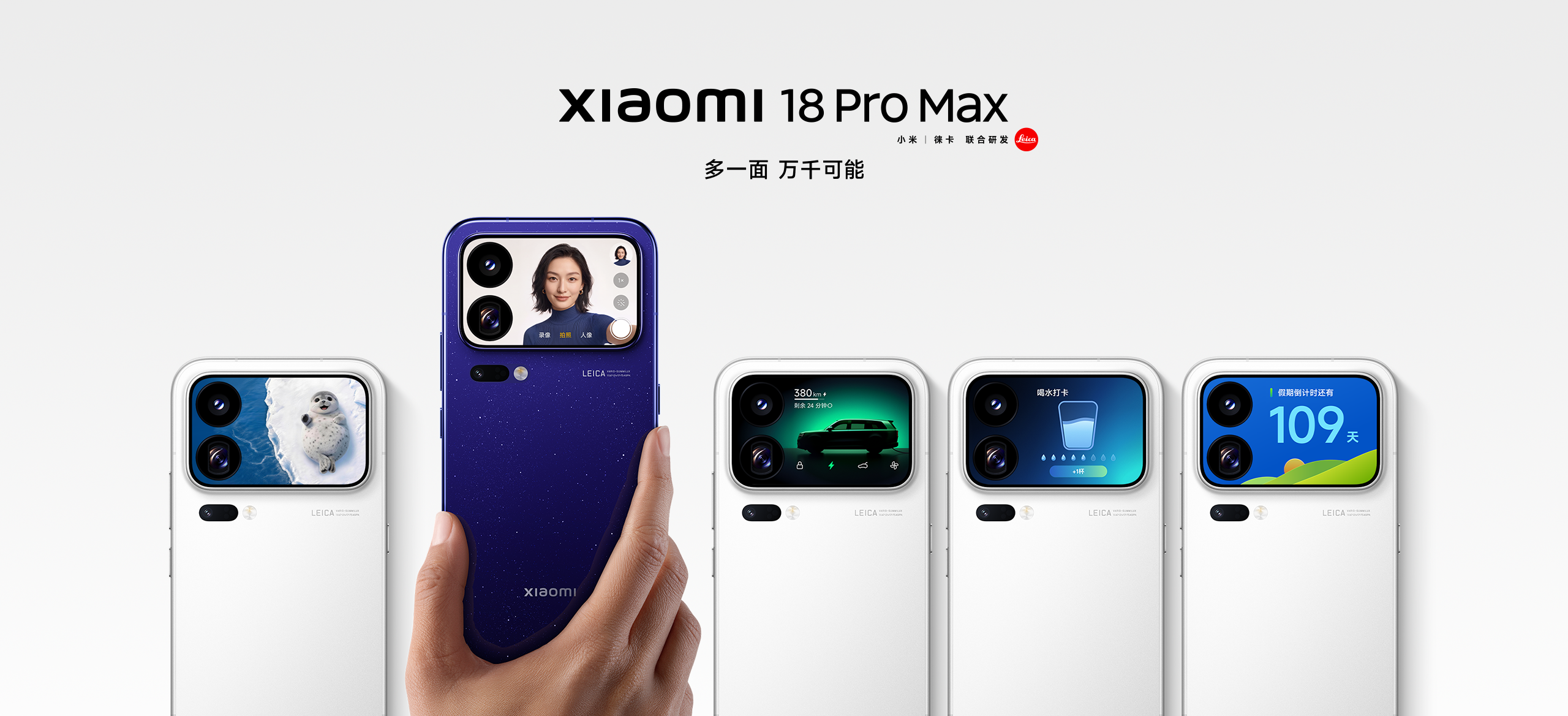
Xiaomi's 18 Pro Max uses a flat front display with what Xiaomi describes as 0.99mm bezels and a peak brightness of 4,000 nits — well above the iPhone's 3,000-nit outdoor peak, at least by the companies' own published figures, which aren't always measured the same way. The more distinctive design choice is on the back: instead of a plain camera bump, the Xiaomi 18 Pro Max carries a secondary OLED display that owners can fill with custom AI-generated wallpaper, pet or portrait avatars, and small "app card" widgets for things like timers or workout stats. The iPhone 18 Pro Max has no equivalent — Apple's version of an always-visible secondary display is the Dynamic Island on the front screen itself, which handles Live Activities and notifications rather than custom art.
Xiaomi's Smart Privacy Screen vs Apple's approach
The feature Xiaomi is leaning on hardest for the 18 Pro Max is a hardware-level anti-peeking display it calls the Smart Privacy Screen, built on a subpixel technology Xiaomi brands Super Pixel 2.0. According to Xiaomi's own description, the display physically narrows the light emitted at wide viewing angles rather than relying on a software blur or an applied film, so the screen looks normal when viewed head-on but darkens sharply from the side. It can be toggled manually, triggered automatically in banking and messaging apps, or controlled by voice through Xiaomi's Super Xiao AI assistant, and Xiaomi also describes a "privacy leak alert" that uses the front camera to flag when someone else appears to be looking at the screen.
Apple has no direct equivalent on the iPhone 18 Pro Max. Apple's privacy features are software- and account-level — Face ID, on-device processing, App Tracking Transparency — rather than a display that physically changes how light is emitted at an angle. If a hardware anti-peeking screen is a feature you specifically want, it's currently a Xiaomi (and, separately, Honor) story rather than an Apple one; our comparison of the iPhone 18 Pro against last year's iPhone 17 Pro covers how Apple has evolved its camera and chip instead of chasing this particular feature.
Performance: Snapdragon 8 Elite Extreme Gen 6 vs Apple A20 Pro
The Xiaomi 18 Pro Max uses Qualcomm's Snapdragon 8 Elite Extreme Gen 6, the higher of two new platforms Qualcomm introduced this cycle. Per Qualcomm's own announcement, both the standard Snapdragon 8 Elite Gen 6 and the Extreme variant are built on an advanced 2nm process with a custom Oryon CPU, a rearchitected Adreno GPU and an upgraded Hexagon NPU, and Qualcomm names Xiaomi as one of several launch partners across the Android ecosystem — this is not a Xiaomi-exclusive chip. Qualcomm's Snapdragon 8 Elite Extreme Gen 6 product page has the full architectural detail for readers who want it.
The iPhone 18 Pro Max runs Apple's A20 Pro, also built on a 2nm-class process, with a 6-core CPU (two performance cores, four efficiency cores), a 7-core GPU with Neural Accelerators and hardware-accelerated ray tracing, and a dual 16-core Neural Engine, per Apple's specifications page. Apple and Qualcomm don't publish directly comparable benchmark numbers, and neither company's own marketing claims substitute for independent, reproducible testing — so rather than declaring a winner on raw numbers neither company has published in comparable terms, the honest framing is that both chips represent each company's current top-tier silicon, built on similarly advanced process nodes, aimed at sustained AI workloads as much as raw clock speed.
Cameras: 200MP Leica vs 48MP Fusion
Xiaomi's camera story is built around resolution and its long-running Leica partnership. The Xiaomi 18 Pro Max uses a 200-megapixel main camera with a 1/1.28-inch sensor, a Leica-branded lens design, an ƒ/1.67 aperture and what Xiaomi calls LOFIC high-dynamic-range processing, paired with a second 200-megapixel periscope telephoto camera (1/1.56-inch sensor, ƒ/2.4, 3.2x optical zoom) and a 50-megapixel ultra-wide with a 102-degree field of view. Xiaomi also layers on an AI-assisted imaging pipeline it calls "Legendary Moment," including cloud-based enhancement and several film-style color presets — these are software and cloud-processing features described by Xiaomi rather than independently tested benchmarks, so they're best read as the company's own description of intent.
Apple's approach favors computational range over sensor resolution. The iPhone 18 Pro Max's 48MP Fusion Main camera uses a variable aperture from ƒ/1.48 to ƒ/4.0 and can double as a 12MP 2x telephoto; a 48MP Fusion Ultra Wide covers a 120-degree field of view; and a 48MP Fusion Telephoto reaches 4x optically (100mm) while also functioning as a 12MP 8x optical-quality lens (200mm), for a combined optical-quality zoom range of 16x and digital zoom up to 40x. The front camera is an 18MP Center Stage sensor at ƒ/1.9. On paper, Xiaomi's sensors capture far more raw resolution; Apple's system is built to cover a wider effective zoom range without swapping lenses as aggressively. Neither company's own camera claims have been independently verified here, so treat both descriptions as what each company says its hardware is designed to do rather than a tested result.
Battery life and charging
This is the Xiaomi phone's clearest advantage on paper, at least for the China-market model this article is based on. The Xiaomi 18 Pro Max packs an 8,500mAh battery, which Xiaomi says uses a silicon-anode cell design with 32% silicon content and retains at least 80% of its original capacity after 2,000 charge cycles in Xiaomi's own lab testing. It charges at up to 100W wired and 50W wireless — fast enough, per Xiaomi's figures, to take the phone from empty to a substantial charge in well under half an hour.
Apple doesn't publish a battery capacity in mAh for any iPhone, including the 18 Pro Max. Instead, Apple's own specifications page claims up to 30 hours of typical use, up to 45 hours of video playback, and up to 40 hours of streamed video playback. Charging is rated at 50% in about 15 minutes with a 60W-capable adapter and a USB-C cable, or 50% in 30 minutes using a 35W-or-higher MagSafe charger; both MagSafe and Qi2 wireless charging top out at 25W. In short: Xiaomi's figures suggest a bigger cell and meaningfully faster charging, while Apple's figures describe real-world usage hours rather than a raw capacity number, which makes a direct mAh-to-mAh comparison impossible using each company's own published data.
It's also worth flagging a caveat for anyone outside China specifically waiting on this phone: industry reports tracking European battery energy-label filings suggest the international version of the Xiaomi 18 Pro Max will ship with a smaller battery than the 8,500mAh China unit, closer to the 7,000mAh class, to meet different regional battery-certification rules. Xiaomi has not published that figure on an official global spec sheet as of this writing, so it should be read as a reported detail rather than a confirmed one.
Software and AI features
The Xiaomi 18 Pro Max runs HyperOS 4 on top of Android, with Xiaomi's newer "Super Xiao AI 2.0" assistant, which Xiaomi says supports an "expert mode" for multi-step requests and cross-device handoff with Xiaomi tablets and PCs on the same HyperOS version. Xiaomi also documents some interoperability with Apple hardware, including notification mirroring with iPhone, though the company notes that functionality is tied to specific software versions and a scheduled app release.
The iPhone 18 Pro Max ships on iOS 27, Apple's current software generation, which brings the usual multi-year update commitment Apple is known for and deep integration with Apple's other hardware — Mac, iPad, Apple Watch and AirPods — through continuity features like Handoff and Universal Clipboard. If you're weighing this against Apple's other current flagship, our breakdown of the iPhone Duo vs iPhone 18 Pro Max goes deeper on how Apple's own lineup splits between the foldable Duo and the more traditional Pro Max body this phone uses.
Global availability: what's confirmed and what isn't
To be direct about the one thing that actually limits this comparison: the iPhone 18 Pro Max is a global product you can order today in essentially any market Apple serves. The Xiaomi 18 Pro Max, as specified and priced in this article, is a China-market product. Xiaomi's own CMO and founder/CEO have publicly confirmed, through their own social accounts, that the Xiaomi 18 Pro series is coming to international markets within 2026, and industry reporting has repeatedly pointed to a likely November 2026 launch window — but at the time of writing, Xiaomi has not published an official date, confirmed country list, or non-China pricing for the global model. Readers outside China comparing these two phones today are, in effect, comparing a shipping global flagship against a shipping Chinese flagship that's expected to go global soon, not two phones available on equal footing in the same market yet.
Which should you buy?
If you're in China or can import and configure a device for your home network and regulatory requirements, the Xiaomi 18 Pro Max is the more aggressively specced phone for less money: a bigger battery, faster wired and wireless charging, a higher-resolution camera system, and a genuinely distinctive hardware privacy screen and customizable rear display that nothing in Apple's lineup matches. If you want a phone that is officially sold, warrantied, and software-supported wherever you live, works seamlessly with existing Apple hardware, and you're less interested in resolution numbers than in Apple's longer track record of software updates and camera consistency across lighting conditions, the iPhone 18 Pro Max is the safer, if pricier, pick. For most readers outside China right now, availability decides this comparison before specs do — and that won't change until Xiaomi actually sets a global date and price.
What happens next
The concrete things to watch for are an official Xiaomi announcement naming a specific global launch date, country list and non-China pricing for the 18 Pro Max, and confirmation of whether the international battery, RAM and storage configurations match the China model or are trimmed down, as some early reports suggest. On Apple's side, the iPhone 18 Pro Max's spec sheet is already final and public, so the next changes to watch for there are routine iOS 27 software updates rather than hardware revisions. We'll update this comparison once Xiaomi publishes official global specifications and pricing.
Frequently asked questions
Which phone has the bigger battery, the Xiaomi 18 Pro Max or the iPhone 18 Pro Max?
Xiaomi publishes an 8,500mAh battery capacity for the China-market Xiaomi 18 Pro Max. Apple does not publish a battery capacity in mAh for the iPhone 18 Pro Max; Apple instead claims up to 30 hours of typical use and up to 45 hours of video playback. The two figures aren't directly comparable using each company's own published data.
Does the iPhone 18 Pro Max have a rear screen like the Xiaomi 18 Pro Max?
No. The iPhone 18 Pro Max has a single front display and uses the Dynamic Island for glanceable information. The Xiaomi 18 Pro Max adds a separate, customizable OLED display on the back that can show AI-generated art, avatars and small widgets.
Is the Xiaomi 18 Pro Max available outside China?
Not officially yet, as of this writing. Xiaomi's CMO and CEO Lei Jun have publicly confirmed a global launch for the Xiaomi 18 Pro series within 2026, and reports point to a possible November 2026 event, but Xiaomi has not published an international launch date, price or market list.
How much does each phone cost at launch?
The Xiaomi 18 Pro Max starts at ¥6,999 (about $985) in China. The iPhone 18 Pro Max starts at $1,299 for 256GB in the US, rising to $2,499 for 2TB, per Apple's own pricing page.
Which phone charges faster?
The Xiaomi 18 Pro Max supports 100W wired and 50W wireless charging, according to Xiaomi. The iPhone 18 Pro Max is rated for 50% in about 15 minutes with a 60W-capable adapter and up to 25W wireless charging via MagSafe or Qi2, according to Apple. Xiaomi's published charging wattage is higher.
Which chip is more powerful, Snapdragon 8 Elite Extreme Gen 6 or Apple's A20 Pro?
Both are built on similarly advanced 2nm-class process nodes and represent each company's current flagship silicon. Qualcomm and Apple don't publish directly comparable benchmark figures, so there's no independently verified answer to which chip is faster overall.
Sources
- Xiaomi 18 Pro Max — official product pagemi.com
- Apple iPhone 18 Pro Max — technical specificationsapple.com
- Apple iPhone 18 Pro Max — official pricingapple.com
- Qualcomm: Snapdragon 8 Elite Extreme Gen 6 and Snapdragon 8 Elite Gen 6 announcementqualcomm.com
- Qualcomm: Snapdragon 8 Elite Extreme Gen 6 Mobile Platformqualcomm.com
Nadia Osei covers mobile and consumer gadgets for Pandromeda: smartphones, tablets, smartwatches, earbuds and smart-home devices. She tracks launches, software updates and pricing across Apple, Google, Samsung and the rest, and builds comparisons from the manufacturers' published specifications.