What Is Android XR? Galaxy XR and Google's Platform Explained
Android XR is the OS behind Samsung's Galaxy XR headset and upcoming smart glasses. Here's what it actually is, how it differs from a device, and what's coming next.
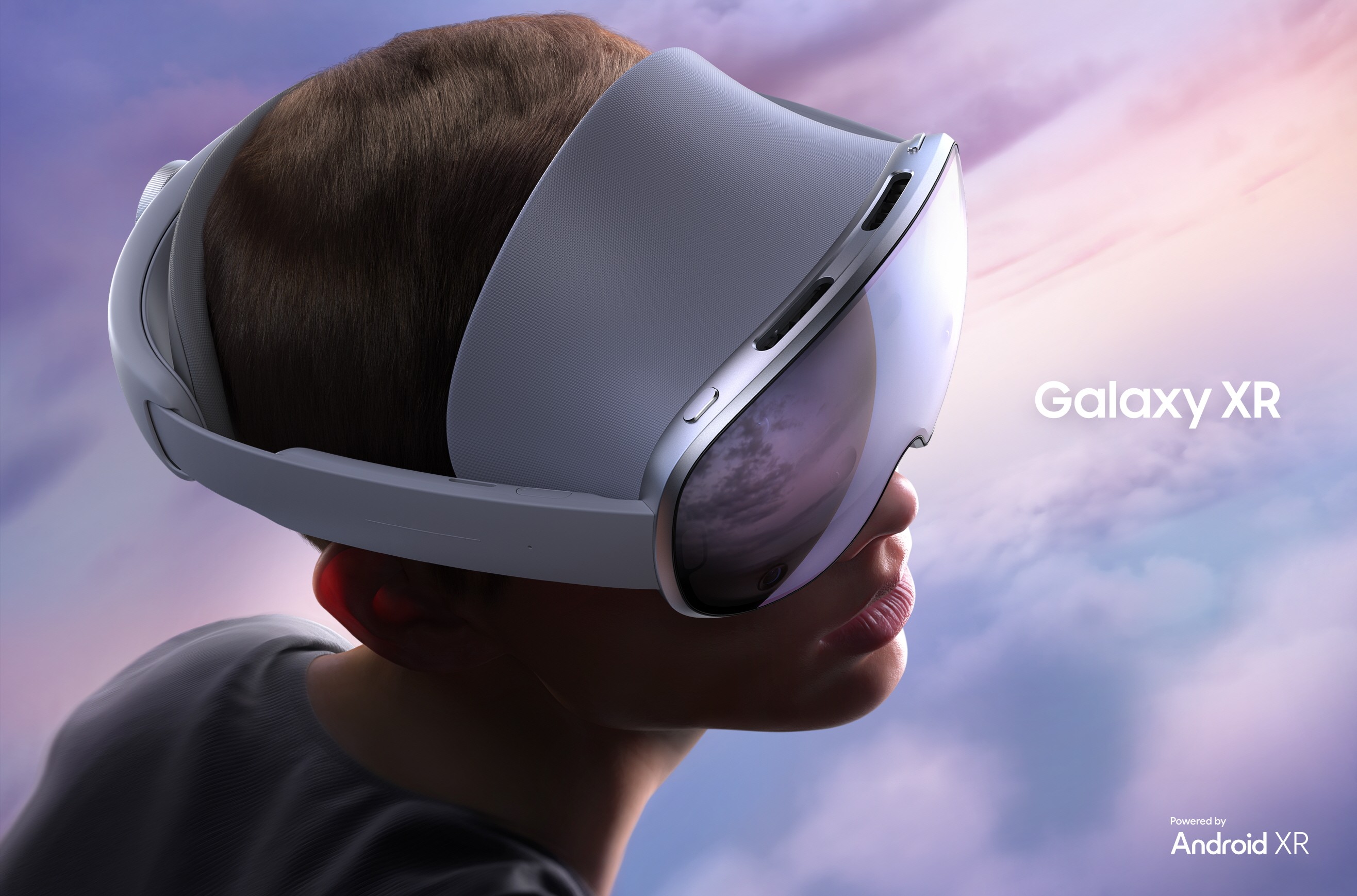
Android XR is the operating system Google built with Samsung and Qualcomm for headsets and smart glasses, and right now there's exactly one way to use it: Samsung's $1,799 Galaxy XR headset, which has been shipping since October 2025. Android XR itself isn't a product you buy — it's the software layer, built around the Gemini AI assistant, that device makers license the way phone makers license Android. Galaxy XR is simply the first hardware running it, with Google and Samsung's first Android XR smart glasses, made with Gentle Monster and Warby Parker, due to follow later this fall.
Key facts
- Android XR is a platform, not a device — built by Google, with hardware partners Samsung and Qualcomm.
- Galaxy XR is the only shipping Android XR device: $1,799, released October 2025, Snapdragon XR2+ Gen 2, Gemini built in.
- No hand controllers are required — Galaxy XR tracks hands and eyes by default; a $249 controller pair is optional.
- Android XR smart glasses (Samsung, with Gentle Monster and Warby Parker frames) are due "later this fall" 2026, per Google.
- Android XR has had two public software updates since launch: new features in December 2025 and Android Enterprise support in April 2026, with a five-year update commitment.
What is Android XR, exactly?
Android XR is Google's operating system for extended reality (XR) devices — a category that spans fully immersive headsets, passthrough mixed-reality headsets, and, eventually, everyday smart glasses. Google describes it as a platform built jointly with Samsung and Qualcomm, the same three-way structure that has defined the project since it was first confirmed under the codename "Project Moohan" in December 2024. Google supplies the operating system and the Gemini AI layer that sits on top of it; Qualcomm supplies the Snapdragon XR chips that power compatible devices; Samsung builds the first consumer hardware.
In practice, Android XR works the way Android itself does on phones: it's a shared foundation that different manufacturers can build devices on top of, rather than a single piece of hardware. According to Google's official Android XR developer documentation, the platform is organized around two broad categories of device — "immersive" hardware (headsets and wired XR glasses that can fully replace your view with virtual content or blend it with the real world) and "augmented" hardware (lightweight audio and display glasses meant for quick, everyday glances rather than sit-down sessions). Most existing Android phone and tablet apps are compatible with Android XR with no extra work from developers, and the platform also supports OpenXR, WebXR, and Unity for anyone building dedicated 3D experiences.
Android XR vs. a specific device: why the distinction matters
It's easy to conflate "Android XR" with "Galaxy XR" because, for now, they're the same purchase — there's only one Android XR device on the market. But the distinction matters for the same reason it matters with phones: Android the operating system is not the same thing as a Samsung Galaxy or a Google Pixel. Android XR is the software and developer platform; Galaxy XR is one manufacturer's headset built on top of it, with Samsung's own industrial design, Samsung's own sensor package, and Samsung's own price tag.
That separation is also what makes the roadmap make sense. Google has already confirmed a second category of Android XR hardware — smart glasses, co-designed with Samsung and eyewear brands Gentle Monster and Warby Parker — that will look nothing like Galaxy XR and won't share its form factor, price, or feature set, but will run the same underlying platform and the same Gemini assistant. Future headsets from other manufacturers are also technically possible under the same model, the way multiple phone makers build on Android, though none have been announced.
Who actually built Android XR?
Three companies, each with a defined role. Google leads development of the operating system itself and Gemini's integration into it. Qualcomm announced the Snapdragon XR2+ Gen 2 chip in January 2024 specifically to power this wave of headsets, promising support for up to 4.3K resolution per eye and more than a dozen simultaneous camera and sensor inputs, with roughly 15–20% higher GPU and CPU clocks than the standard XR2 Gen 2. Samsung designed and manufactures the first piece of hardware, Galaxy XR, drawing on the mobile and display expertise behind its Galaxy phone and tablet lineup — the same brand that has faced its own hardware security scrutiny, as seen when a Galaxy S26 was hacked six times at Pwn2Own Ireland 2026.
This three-way arrangement is why Android XR launched already carrying real backing, rather than starting from zero the way a brand-new VR platform usually does. Qualcomm's chip business gives it scale across many headset makers; Google's Android and Play Store ecosystem gives it an existing app library; Samsung's manufacturing and retail footprint gave the platform an actual product to ship on day one.
Galaxy XR: the first (and so far only) Android XR device
Samsung unveiled Galaxy XR on October 21, 2025, opening pre-orders the same day in the US and South Korea, with units shipping from October 31, 2025. Per Samsung's launch announcement, the company frames Galaxy XR as the start of "a new category of AI-native devices" and explicitly calls it the first product built on Android XR, with "AI glasses" already flagged as the next step even at launch. Despite the headline-grabbing debut a year ago, Galaxy XR has not been superseded or discontinued — it remains the only shipping Android XR headset as of October 2026, with Samsung and Google instead extending it through software updates rather than a second-generation device.
Galaxy XR price, release date and availability
Galaxy XR costs $1,799 in the US for its single configuration, sold directly through Samsung. That's roughly half the $3,499 launch price of Apple's Vision Pro, positioning Galaxy XR as a mid-tier option between Meta's Quest line and Apple's headset. Motion controllers, which aren't required for normal use, are sold separately for $249. In South Korea, Samsung priced the device at roughly 2.69 million won (about $1,880 at the time). The headset launched simultaneously in both markets and, more than a year on, is still Samsung's only XR product on sale, with no price cut or revised configuration announced.
Galaxy XR specs
The table below summarizes Galaxy XR's hardware, drawn from Samsung's official specifications and corroborated against its Wikipedia entry, which cites Samsung's own spec sheet.
| Spec | Galaxy XR |
|---|---|
| Price | $1,799 (controllers $249 extra) |
| Release date | Pre-orders Oct. 21, 2025; shipped Oct. 31, 2025 |
| Chip | Qualcomm Snapdragon XR2+ Gen 2 |
| Memory / storage | 16GB RAM, 256GB storage (fixed, not expandable) |
| Display | Dual micro-OLED, 3,552 x 3,840 pixels per eye, up to 90Hz (72Hz default) |
| Field of view | 109° horizontal, 100° vertical |
| Weight | 545g headset + 302g tethered battery pack |
| Battery life | ~2 hours general use, ~2.5 hours video playback |
| Input | Hand tracking and eye tracking by default; optional controllers |
| Connectivity | Wi-Fi 7, Bluetooth 5.4 |
| AI assistant | Gemini, built into the OS |
No controllers required: how you actually use Galaxy XR
Unlike most VR headsets, Galaxy XR doesn't ship with motion controllers in the box. Samsung built the default input method around camera-based hand tracking and eye tracking instead: six world-facing cameras and four eye-tracking cameras read your hand gestures and where you're looking, while Gemini handles voice commands. You pinch, point, and look to select things, closer to how Apple's Vision Pro works than a traditional Quest headset. Samsung does sell a $249 pair of motion controllers for people who want more precise input — useful for some games and creative apps — but they're an add-on, not a requirement.
Gemini AI on Android XR
Gemini is the single biggest differentiator Android XR has over the headsets that came before it. Rather than bolting a chatbot onto an existing VR interface, Samsung and Google built Galaxy XR's entire interaction model around Gemini Live, which can see what the headset's cameras see and respond to both voice and on-screen context at once. Ask Gemini about an object in the room, a document floating in a window, or a video you're watching, and it can answer using what it's actually looking at, then act — opening apps, pulling up information, or adjusting settings — without you touching a controller. It's a similar on-device-assistant philosophy to what Apple has pursued with its own AI layer; for a point of comparison, see our explainer on what Apple Intelligence is and how it works across iPhone, iPad and Mac.
Because Android XR shares its app foundation with regular Android, Galaxy XR can also run most existing Android phone and tablet apps in resizable floating windows alongside native spatial apps built with Google's Jetpack XR SDK, OpenXR, or Unity. Google's Play Store is the distribution channel for all of it, the same policy and review process — including the platform's broader push toward verified Android developers — carrying over to XR software.
What's changed since Galaxy XR launched
Android XR hasn't stood still in the year since launch, even without new hardware. Samsung shipped two notable software updates documented on its newsroom:
- December 2025: Samsung's "Android XR's Next Wave of Innovation" update added PC Connect, a beta feature that mirrors a Windows PC's full desktop or a single app into the headset, along with Likeness and Travel Mode features aimed at everyday usability rather than enterprise use.
- April 2026: Samsung announced Android Enterprise support for Galaxy XR, adding fully managed and dedicated device modes, zero-touch and QR code enrollment, and app management through Managed Google Play — aimed squarely at training, manufacturing, healthcare, and retail deployments rather than individual buyers. The same announcement confirmed Android XR devices will receive regular software and security updates for up to five years from Galaxy XR's October 2025 launch.
That five-year commitment is a meaningful signal on its own: it tells developers and enterprise buyers that Android XR is being treated as a long-term platform rather than a one-off experiment, which matters more than any single feature update when it's the only thing the whole ecosystem currently runs on.
The real roadmap: Android XR smart glasses
Galaxy XR was always framed as step one. At Google I/O in May 2026, Google and Samsung showed the next step publicly for the first time: Android XR smart glasses, built in partnership with eyewear brands Gentle Monster and Warby Parker rather than sold as bare reference hardware. Per Google's official announcement, Android XR eyewear comes in two forms: audio glasses, which give spoken Gemini assistance without any display, and display glasses, which surface visual information when needed. Audio glasses are coming first, which Google describes only as "later this fall" 2026; the post gives no firm date for the display version and no official pricing for either.
Two launch designs were previewed at I/O: a more understated Warby Parker frame and a bolder Gentle Monster design, both meant to be worn all day rather than look like obvious tech hardware — a direct answer to how Meta has marketed its Ray-Ban smart glasses. As of this writing, Samsung has not published full technical specifications (camera resolution, battery capacity, or chipset) for either model through its own newsroom, and no exact ship date or retail price has been confirmed in an official Google or Samsung post. Independent reporting throughout September and early October 2026 has pointed to a launch window as close as this November, but that timing has not been confirmed on Google's or Samsung's own channels as of October 10, 2026, so treat any specific date you see elsewhere as a reported estimate rather than a confirmed one.
How Android XR fits next to Vision Pro and Quest
Android XR enters a market that already has two very different incumbents. Apple's visionOS powers only Apple's own Vision Pro, at roughly double Galaxy XR's price, with an interaction model built around eye and hand tracking and no controllers at all — the closest philosophical match to how Galaxy XR works. Meta's Horizon OS, by contrast, powers a wide range of Quest headsets at lower price points, leans more heavily on physical controllers, and has the largest existing VR content library of the three. Android XR's pitch sits between them: Apple-like hands-free interaction and build quality, but backed by Google's Gemini assistant and the much larger existing library of Android apps, at a price below Vision Pro but above the cheapest Quest models.
What's next for Android XR
For the next few months, the platform's story is less about Galaxy XR itself and more about whether Android XR can become a real multi-device ecosystem rather than a single $1,799 headset with a long software roadmap. The audio glasses due this fall are the first real test of that: a far cheaper, far more mainstream form factor that could put Gemini-powered Android XR software on many more wrists, ears, and faces than any headset realistically will. Watch for Google's and Samsung's own announcements on pricing and an exact ship date, confirmation of display-glasses specs and timing, and whether Qualcomm or Google ever opens the platform to a second headset maker the way Android opened phones to manufacturers beyond Samsung.
Frequently asked questions
What is Android XR?
Android XR is Google's operating system for extended reality headsets and smart glasses, built jointly with hardware partners Samsung and Qualcomm. It isn't a device itself — it's the software platform, built around the Gemini AI assistant, that manufacturers build hardware on top of, similar to how phone makers build on Android.
Is Android XR the same thing as Galaxy XR?
No. Android XR is the operating system; Galaxy XR is Samsung's specific $1,799 headset that runs it. Galaxy XR is currently the only shipping Android XR device, but Android XR smart glasses from Samsung, Gentle Monster and Warby Parker are due later in 2026, and other manufacturers could build Android XR hardware in the future.
How much does the Samsung Galaxy XR headset cost?
Galaxy XR costs $1,799 in the US for its single 256GB configuration, sold directly through Samsung. Optional motion controllers cost an additional $249. In South Korea it launched at roughly 2.69 million won, about $1,880 at the time.
Does Galaxy XR require hand controllers?
No. Galaxy XR uses camera-based hand tracking and eye tracking as its default input method, supported by six world-facing cameras and four eye-tracking cameras, plus voice commands through Gemini. A $249 pair of motion controllers is sold separately for anyone who wants more precise input.
When do Android XR smart glasses come out?
Google says Android XR audio glasses, made with Samsung, Gentle Monster and Warby Parker, are coming "later this fall" 2026, with display glasses to follow after that. As of October 2026, neither Google nor Samsung has published an exact ship date or official price for either model.
What makes Android XR different from Apple's Vision Pro or Meta's Quest?
Android XR is built by Google with Samsung as its first hardware partner and Qualcomm supplying the chip, whereas visionOS only runs on Apple's own Vision Pro and Horizon OS only runs on Meta's Quest headsets. Android XR's Galaxy XR headset uses hands-free hand and eye tracking like Vision Pro, runs Android apps, and is priced roughly between Quest and Vision Pro, with Gemini built in as its AI assistant.
Sources
- Samsung Newsroom: Introducing Galaxy XR: Opening New Worldsnews.samsung.com
- Samsung Newsroom: Android XR's Next Wave of Innovation Enhances the Galaxy XR Experiencenews.samsung.com
- Samsung Newsroom: Galaxy XR Evolves Work in the AI Era With New Enterprise Capabilitiesnews.samsung.com
- Google: Intelligent eyewear is coming this fall (Android XR at I/O 2026)blog.google
- Android Developers: Android XR platform overviewdeveloper.android.com
- Qualcomm Newsroom: Snapdragon XR2+ Gen 2 announcementqualcomm.com
Nadia Osei covers mobile and consumer gadgets for Pandromeda: smartphones, tablets, smartwatches, earbuds and smart-home devices. She tracks launches, software updates and pricing across Apple, Google, Samsung and the rest, and builds comparisons from the manufacturers' published specifications.