Xiaomi 18 Pro vs Xiaomi 18 Pro Max: Specs, Price and Which to Buy
Xiaomi's global Pro and Pro Max share a design and camera system, but the chip, battery and price gap are bigger than the spec sheet lets on.
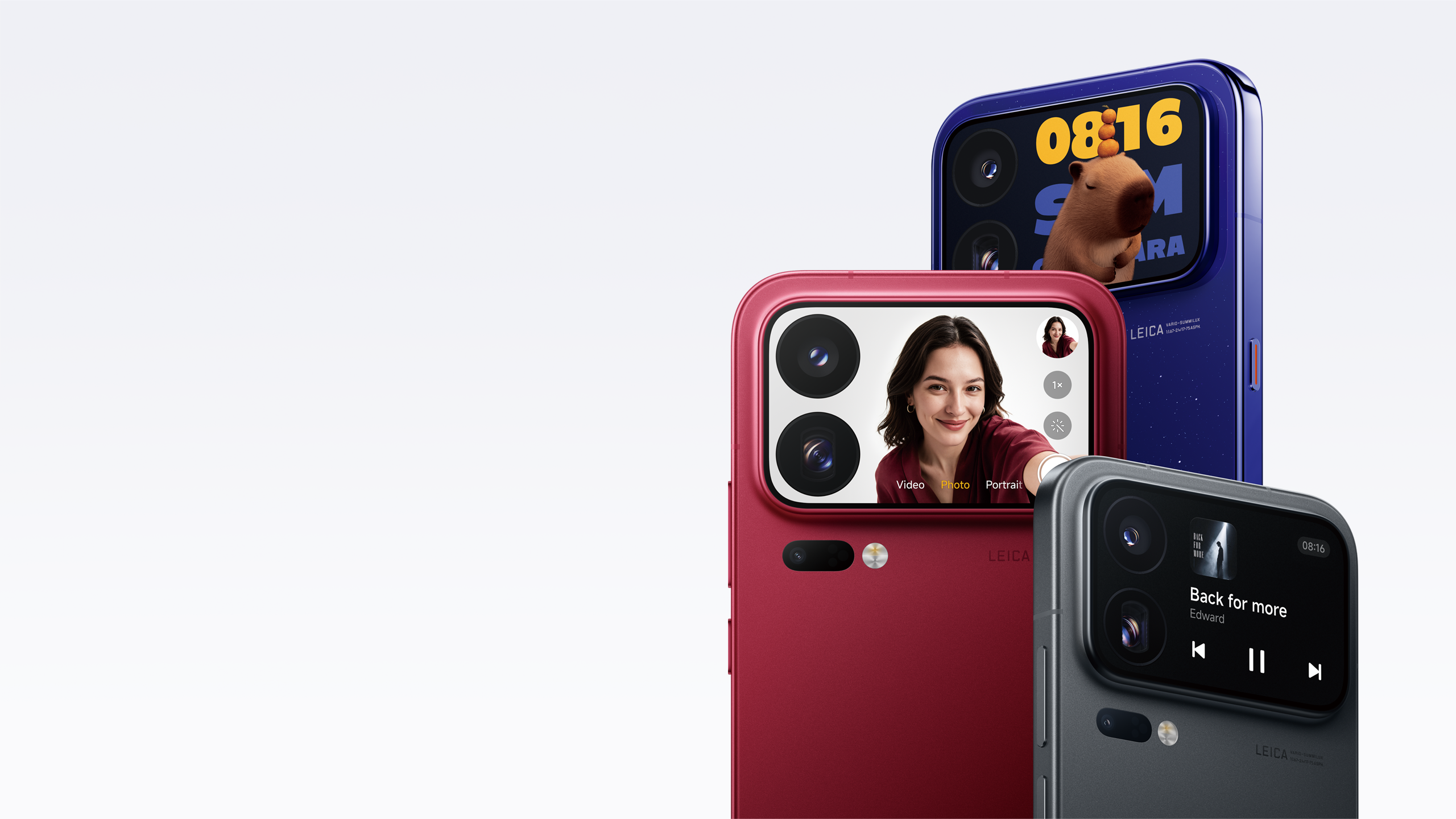
Xiaomi's global Pro series launched together on November 17 in Paris, and from across the room the Xiaomi 18 Pro and Xiaomi 18 Pro Max look like the same phone in two sizes. Up close, they aren't. Xiaomi gave the Pro Max a different, faster binned chip, a bigger silicon-carbon battery with faster wired charging, and a camera sensor upgrade the standard Pro doesn't get — on top of the larger screen and higher starting price you'd expect. If you're trying to decide whether the jump from the Xiaomi 18 Pro to the Pro Max is worth roughly €200 to €500 depending on configuration, the differences below are the ones that actually matter, not just the size of the number on the box. For the full launch pricing across every market Xiaomi has confirmed so far, see our Xiaomi 18 Pro and Pro Max global launch coverage.
The essentials:
- Chipset: Xiaomi 18 Pro runs the Snapdragon 8 Elite Gen 6; the Pro Max gets the higher-binned Snapdragon 8 Elite Extreme Gen 6, per Xiaomi's own global spec pages.
- Battery: 6,000mAh / 90W wired on the Pro versus a 7,050mAh silicon-carbon cell / 100W wired on the Pro Max. Both charge wirelessly at 50W.
- Display: 6.4-inch Xiaomi Privacy Display (2436×1120) on the Pro, 6.9-inch (2624×1208, 419ppi) on the Pro Max, both 1-120Hz LTPO with 4,000-nit peak brightness.
- Camera: identical Leica triple-lens layout, but the Pro Max's 200MP main sensor adds LOFIC HDR (Light Fusion 960L) that the Pro's 960 sensor lacks.
- Price: Xiaomi 18 Pro starts at €1,399 (12GB/256GB); Xiaomi 18 Pro Max starts at €1,599 (12GB/256GB) and tops out at €2,099 for the 16GB/1TB model, arriving after the initial wave.
Chipset and performance: the real split
This is the difference that matters most and gets mentioned least. Xiaomi's own global product pages list the Xiaomi 18 Pro's processor as the Snapdragon® 8 Elite Gen 6, built on a 2nm process with two Prime cores clocked up to 5GHz and six Performance cores. The Xiaomi 18 Pro Max moves up to the Snapdragon® 8 Elite Extreme Gen 6 — Qualcomm's higher-binned variant of the same silicon, built for sustained peak clocks rather than just headline speed. Both phones share Xiaomi's 3D IceLoop cooling system and an Adreno GPU with the Qualcomm AI engine, so the Pro isn't throttled by a worse cooler; it's simply running a lower-tier chip from the same family. In practice that means the Pro Max should hold its peak GPU clocks longer in extended gaming sessions and heavier on-device AI tasks, while the standard Pro remains plenty fast for everyday use, photography and most games at the display's native refresh rate. If you want the deeper technical breakdown of what separates Elite Gen 6 from Elite Extreme Gen 6 across the wider Android lineup, our Snapdragon 8 Elite Gen 6 generational comparison and phone-by-phone chip guide cover which other 2026 flagships get which version.
Display and the rear screen
Both phones use what Xiaomi calls a Privacy Display, built on Xiaomi Shield Glass 3.0 with a 1-120Hz LTPO refresh rate, up to 300Hz touch sampling, 12-bit color depth across the BT.2020 gamut, 4,000-nit peak brightness, and HDR10+/Dolby Vision support. The Pro's panel is 6.4 inches at 2436×1120; the Pro Max stretches to 6.9 inches at 2624×1208 (419ppi) on what Xiaomi describes as a custom "M11" display panel — a sharper pixel density as well as a bigger canvas. Both carry the TÜV Rheinland certifications for low blue light, flicker-free operation and circadian-friendly tuning that Xiaomi has used across recent generations.
Both phones also keep a secondary rear AMOLED display, a feature Xiaomi has historically reserved for its priciest "Ultra" tier rather than the standard Pro line. On the Xiaomi 18 Pro it's 2.7 inches at 912×596 (400ppi); on the Pro Max it grows slightly to 2.9 inches at 976×596, also 400ppi. Both rear panels use Corning Gorilla Glass Victus 2, run at up to 120Hz, and hit the same 4,000-nit peak brightness as the main screen. The rear display is used for camera previews when shooting selfies with the main cameras, notifications, and always-on widgets — functionally identical on both models, just slightly larger on the Pro Max.
Battery and charging: the Pro Max's biggest real advantage
Here the gap is bigger than the spec sheet number suggests. The Xiaomi 18 Pro carries a 6,000mAh (typical) cell with 90W wired HyperCharge and 50W wireless HyperCharge. The Xiaomi 18 Pro Max steps up to a 7,050mAh silicon-carbon battery — a denser cell chemistry that packs more capacity into a similar footprint — paired with 100W wired charging, while wireless charging stays at 50W on both. Both support the usual fast-charging standards (QC3+/QC3.0/QC2.0/PD3.0/PD2.0), and neither phone ships with a charger in the box.
Worth knowing if you've seen different numbers elsewhere: these are the global specs. Xiaomi's China-market versions of both phones ship with noticeably larger cells — 7,000mAh on the China Pro and 8,500mAh on the China Pro Max — that were trimmed down for the international launch, likely for certification and supply reasons rather than anything design-related. If you're buying through Xiaomi's global store or a regional carrier, the 6,000mAh/7,050mAh figures above are the ones that apply to your unit.
Cameras: same lenses, one sensor upgrade
On paper, the camera systems look identical, and mostly they are. Both phones share a Leica Summilux optical lens system (VARIO-SUMMILUX 1:1.67-2.4/17-75 ASPH.) across three rear cameras: a 23mm-equivalent 200MP main camera at f/1.67 with OIS, a 75mm-equivalent 200MP telephoto using a Samsung HP5 sensor at f/2.4 with OIS, and a 50MP ultra-wide at f/2.4 covering a 102° field of view. Both support Xiaomi's Leica Authentic Look and Leica Vibrant Look photographic styles, Leica's classic shutter sound and watermark, and full 200MP photo resolution on the wide and telephoto lenses.
The difference is in the main sensor itself. The Xiaomi 18 Pro's primary camera uses a Light Fusion 960 sensor; the Pro Max uses the Light Fusion 960L variant, which adds LOFIC (Lateral Overflow Integration Capacitor) HDR — a sensor-level technique that captures a wider dynamic range in a single exposure, useful in high-contrast scenes like backlit portraits or bright skies over shadowed foregrounds. Both sensors are physically similar in size (around 1/1.28-inch) and share the same 2.44μm 16-in-1 Super Pixel binning, so this is a meaningful but narrow gap rather than a generational leap — most shots in good light will look effectively the same on either phone.
Design, dimensions and durability
Size is the most obvious difference, and it follows directly from the bigger battery and screen. The Xiaomi 18 Pro measures 151.8mm × 72mm and is 8.46mm thick (8.56mm in Cosmic Blue), weighing 198g in Velvet Red, Black or White and 203g in Cosmic Blue. The Xiaomi 18 Pro Max is noticeably larger at 163.39mm × 77.6mm × 8.39mm, weighing 229g (234g in Cosmic Blue) — about 30 grams heavier, which is a real difference in one-handed use over a full day. Both phones ship in the same four colorways: White, Black, Cosmic Blue and Velvet Red, and both use Xiaomi's 3D IceLoop cooling internally, so there's no thermal-design compromise on the smaller phone.
Security, connectivity and software
Away from the headline differences, Xiaomi kept these parts identical between the two phones. Both use an ultrasonic in-screen fingerprint sensor alongside AI-based face unlock, and both support dual SIM configurations (nano SIM + nano SIM, nano SIM + eSIM, or eSIM + eSIM, depending on region and carrier support). Neither phone's global spec page lists a different 5G band plan, Wi-Fi standard or Bluetooth version between the Pro and Pro Max, so connectivity isn't a factor in choosing between them — this comparison really does come down to chip, battery, screen size and the one camera sensor difference above.
Price and configurations
Xiaomi confirmed the following international pricing at its Paris launch event, covering the initial wave of configurations:
| Model | Memory | Price |
|---|---|---|
| Xiaomi 18 Pro | 12GB / 256GB | €1,399 |
| Xiaomi 18 Pro | 12GB / 512GB | €1,599 |
| Xiaomi 18 Pro Max | 12GB / 256GB | €1,599 |
| Xiaomi 18 Pro Max | 12GB / 512GB | €1,799 |
| Xiaomi 18 Pro Max | 16GB / 1TB | €2,099 (coming soon) |
Notice the overlap: a 12GB/512GB Xiaomi 18 Pro and a 12GB/256GB Xiaomi 18 Pro Max cost the same €1,599. At that price point, the real decision isn't "Pro or Pro Max" in the abstract — it's whether you'd rather have more storage on the smaller phone or the bigger screen, bigger battery and faster chip on the Pro Max with less storage. The 16GB/1TB Pro Max is listed as arriving after the initial wave rather than on day one, so it won't be available to order immediately in every market.
Full spec comparison
| Spec | Xiaomi 18 Pro | Xiaomi 18 Pro Max |
|---|---|---|
| Chipset | Snapdragon 8 Elite Gen 6 | Snapdragon 8 Elite Extreme Gen 6 |
| Display | 6.4" LTPO, 2436×1120, 1-120Hz, 4,000 nits | 6.9" LTPO, 2624×1208 (419ppi), 1-120Hz, 4,000 nits |
| Rear display | 2.7" AMOLED, 912×596, 120Hz | 2.9" AMOLED, 976×596, 120Hz |
| RAM / storage | 12GB+256GB, 12GB+512GB (LPDDR5X / UFS 4.1) | 12GB+256GB, 12GB+512GB, 16GB+1TB (LPDDR5X / UFS 4.1) |
| Battery | 6,000mAh, 90W wired, 50W wireless | 7,050mAh silicon-carbon, 100W wired, 50W wireless |
| Main camera | 200MP, Light Fusion 960, f/1.67, OIS | 200MP, Light Fusion 960L (LOFIC HDR), f/1.67, OIS |
| Telephoto | 200MP, 75mm equiv., Samsung HP5, f/2.4, OIS | 200MP, 75mm equiv., Samsung HP5, f/2.4, OIS |
| Ultra-wide | 50MP, 102° FOV, f/2.4 | 50MP, 102° FOV, f/2.4 |
| Dimensions / weight | 151.8×72×8.46mm, 198g | 163.39×77.6×8.39mm, 229g |
| Starting price | €1,399 (12GB/256GB) | €1,599 (12GB/256GB) |
Which one should you buy
Buy the Xiaomi 18 Pro if you want this generation's camera system and display quality in a phone that's genuinely easier to hold and pocket, and you don't need the absolute longest battery life or peak sustained performance — the regular Snapdragon 8 Elite Gen 6 is still a top-tier chip, just not the highest bin Qualcomm makes. Buy the Xiaomi 18 Pro Max if you're a heavy user who wants the extra battery capacity and faster charging to matter on a 14-hour day, you shoot a lot of high-contrast photos where the LOFIC sensor's dynamic range helps, or you plan to keep the phone long enough that the 16GB/1TB ceiling is worth waiting for. For most buyers comparing on price alone, the 12GB/512GB Pro and the 12GB/256GB Pro Max cost the same €1,599 — at that tie, the Pro Max's bigger screen, bigger battery and faster chip make it the better buy unless you specifically need the extra 256GB of storage more than any of those three things.
What to do next
Check availability and exact configurations for your country on Xiaomi's official global store before ordering, since not every memory tier ships in every market on day one, and the 16GB/1TB Pro Max in particular is still listed as "coming soon." If you're also weighing Xiaomi against the competition rather than against itself, our Xiaomi 18 Pro Max vs iPhone 17 Pro Max comparison and Xiaomi 18 Pro Max vs iPhone 18 Pro Max comparison put the Pro Max's camera and chip advantages up against Apple's current and newest flagships.
Frequently asked questions
What's the main difference between the Xiaomi 18 Pro and Xiaomi 18 Pro Max?
The Pro Max uses a higher-binned Snapdragon 8 Elite Extreme Gen 6 chip instead of the Pro's Snapdragon 8 Elite Gen 6, a larger 7,050mAh silicon-carbon battery with 100W wired charging versus 6,000mAh/90W, a bigger 6.9-inch display versus 6.4 inches, and a main camera sensor with LOFIC HDR that the Pro doesn't have.
Do the Xiaomi 18 Pro and Pro Max have the same cameras?
They share the same Leica triple-lens layout: a 200MP main, 200MP telephoto and 50MP ultra-wide. The one difference is the main sensor: the Pro Max's Light Fusion 960L adds LOFIC HDR for better dynamic range in high-contrast scenes, while the Pro uses the standard Light Fusion 960.
How much battery difference is there between the two phones?
The Xiaomi 18 Pro has a 6,000mAh battery with 90W wired and 50W wireless charging. The Xiaomi 18 Pro Max has a larger 7,050mAh silicon-carbon battery with 100W wired charging and the same 50W wireless charging.
Is the Xiaomi 18 Pro Max worth the extra price over the Pro?
At matching storage tiers the Pro Max costs about €200 more. It's worth it if you want the faster chip, bigger battery, larger screen or the HDR camera sensor; if none of those matter to you, the Pro delivers nearly the same experience in a lighter, easier-to-hold body.
Are the global Xiaomi 18 Pro and Pro Max different from the China versions?
Yes. The global models have smaller batteries than their China counterparts — 6,000mAh versus 7,000mAh on the Pro, and 7,050mAh versus 8,500mAh on the Pro Max — likely due to certification and supply differences for international markets.
Sources
Nadia Osei covers mobile and consumer gadgets for Pandromeda: smartphones, tablets, smartwatches, earbuds and smart-home devices. She tracks launches, software updates and pricing across Apple, Google, Samsung and the rest, and builds comparisons from the manufacturers' published specifications.