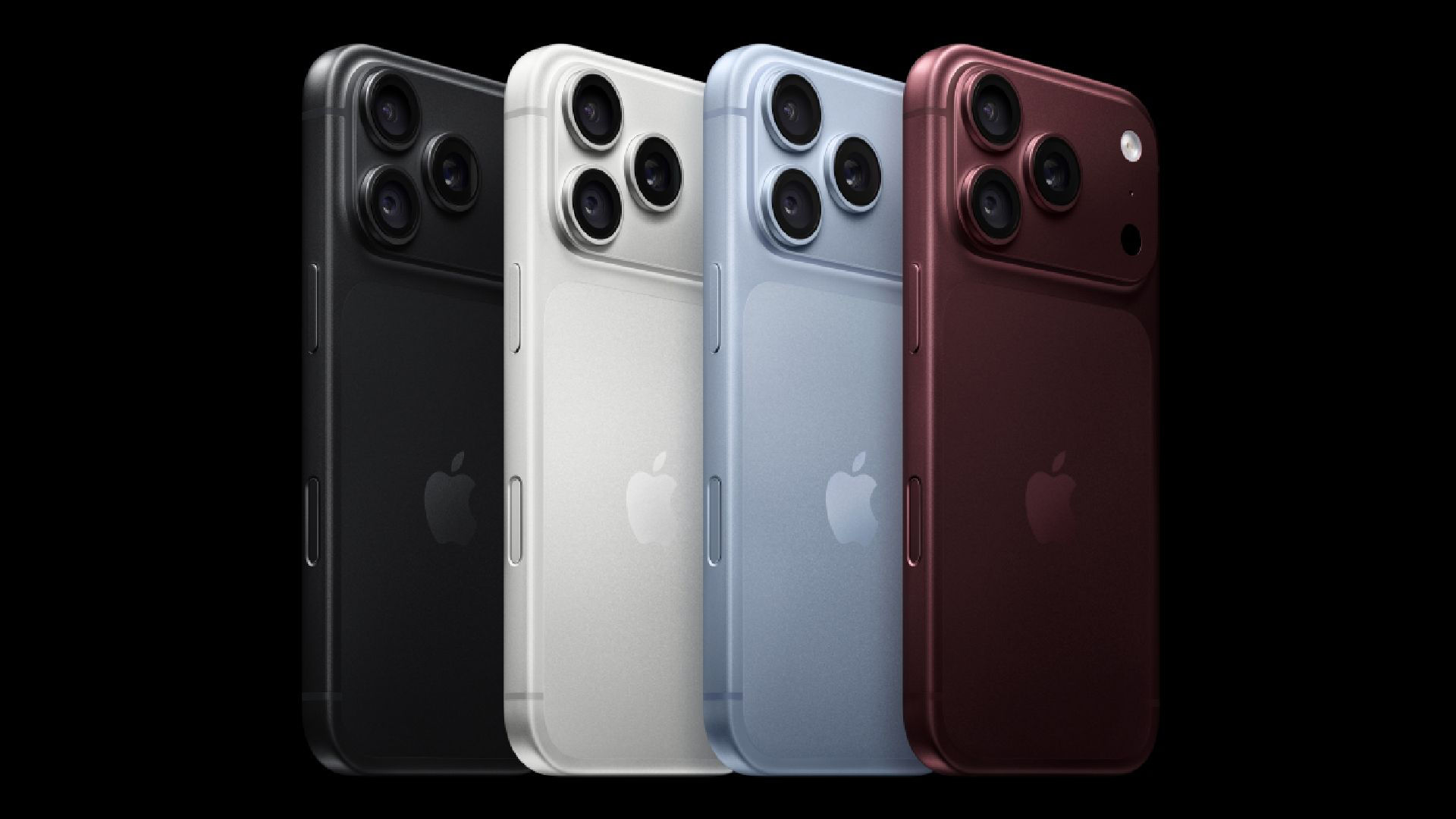
Xiaomi 18 Pro Max vs iPhone 17 Pro Max: Specs, Price, Camera
Xiaomi's newly launched 18 Pro Max takes on Apple's current iPhone 17 Pro Max in display, cameras, chip, battery life and price.
Xiaomi's 18 Pro Max launched globally on November 17, 2026, and the short answer for anyone choosing between it and Apple's current flagship is this: the Xiaomi 18 Pro Max wins on raw camera resolution, battery capacity and charging speed, while the iPhone 17 Pro Max still leads on camera video tools, software support length and ecosystem polish. Both now sit in roughly the same price bracket once you match storage tiers, which makes this one of the closer flagship-vs-flagship calls of the year. Here is every spec that matters, pulled from Xiaomi's and Apple's own product pages, with the caveats clearly marked where a figure is a vendor claim rather than independent testing.
- Xiaomi 18 Pro Max: launched Nov. 17, 2026 outside China; 6.9" 120Hz LTPO display with a toggleable Privacy Display mode; Snapdragon 8 Elite Extreme Gen 6; dual 200MP Leica rear cameras; 7,050mAh silicon-carbon battery; 100W wired / 50W wireless charging; secondary "Back Display."
- iPhone 17 Pro Max: on sale since Sept. 19, 2025; 6.9" Super Retina XDR display at 3,000 nits peak outdoor brightness; A19 Pro chip; triple 48MP Fusion rear cameras with a tetraprism telephoto; up to 39-hour video playback (eSIM models); starts at $1,199.
- Price overlap: both land in the roughly $1,100–$1,850 range depending on storage and region, though Xiaomi's global pricing had not been finalized on its own spec page at the time of writing.
Price and Availability
The iPhone 17 Pro Max has been shipping for well over a year: Apple announced it on September 9, 2025, opened pre-orders on September 12, and began selling it on September 19, 2025, starting at $1,199 for the 256GB model and rising to $1,999 for 2TB. That pricing and availability window has not changed since.
The Xiaomi 18 Pro Max is brand new. It launched in China in September 2026 before Xiaomi brought the Pro and Pro Max global in a Paris event on November 17, 2026 — the day before this article published. Xiaomi's own global spec page lists three configurations (12GB+256GB, 12GB+512GB and 16GB+1TB) but, as of publication, had not posted a final international price on that page itself. Pre-launch retailer listings and regional reports pegged global Pro Max pricing somewhere between roughly €1,599 and €1,799 depending on storage — noticeably higher than the phone's CNY 6,999 (about $985) China starting price — so treat any specific euro or dollar figure you see elsewhere as provisional until Xiaomi's regional stores confirm it. For the blow-by-blow of what Xiaomi announced globally, Pandromeda's coverage of the global launch has the fuller rundown.
Design and Display
Both phones use 6.9-inch flagship panels, but they're built to different philosophies. The iPhone 17 Pro Max's Super Retina XDR OLED runs at 2868×1320 (460 ppi) with ProMotion up to 120Hz, an Always-On mode and what Apple calls the brightest outdoor peak ever on an iPhone at 3,000 nits. Apple also redesigned the body this generation: a brushed, aerospace-grade 7000-series aluminum unibody with Ceramic Shield 2 on the front and, for the first time, Ceramic Shield on the back as well, rated for 4x better crack resistance than the prior glass.
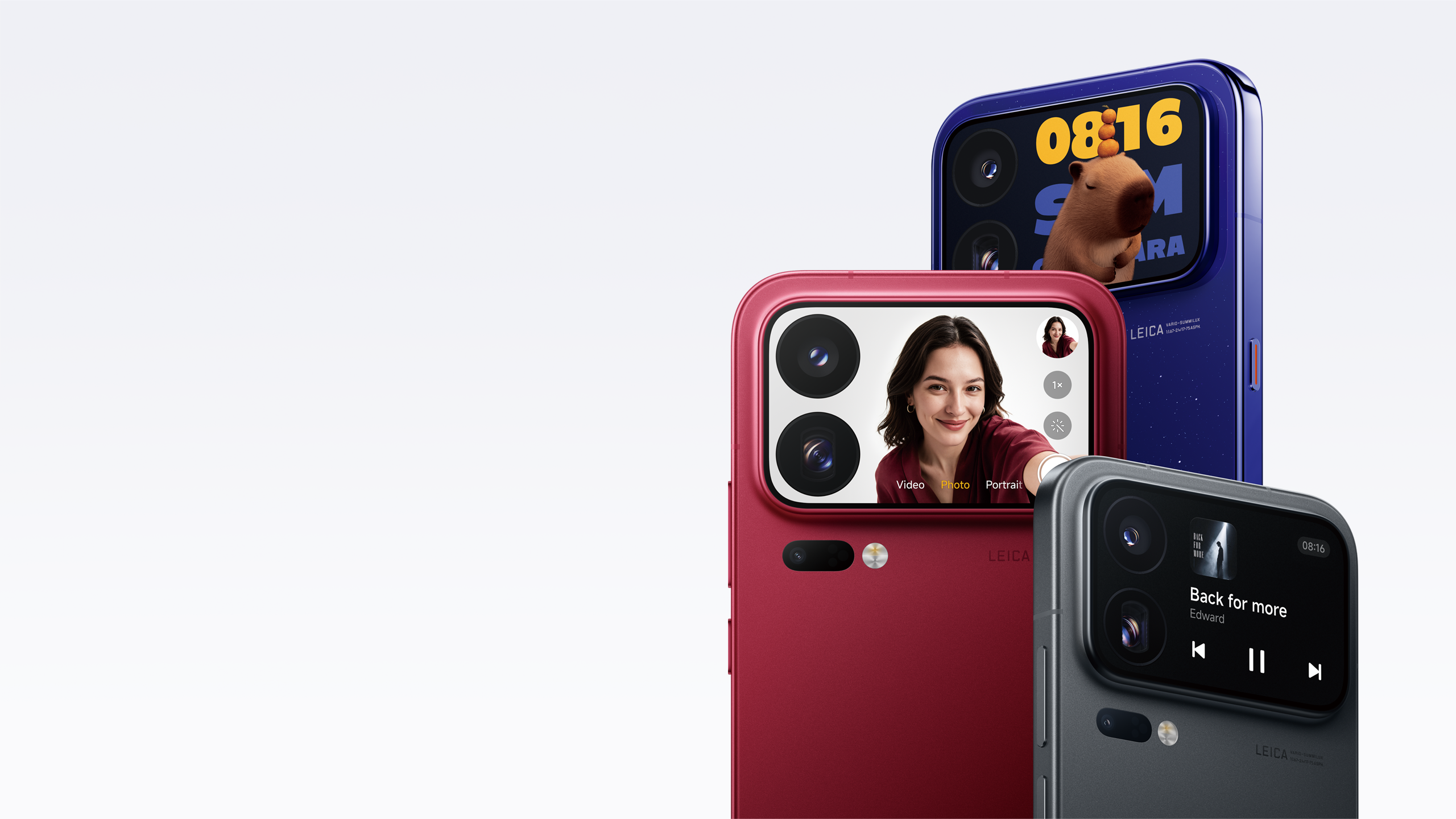
Xiaomi's panel is a 6.9-inch LTPO display at 2624×1208 (419 ppi) with the same 1–120Hz adaptive range, Corning Gorilla Glass Victus 2 on the front, and 4,000 nits of peak brightness in its own measurements. Its headline feature is the "Xiaomi Privacy Display," which uses pixel-level light control (what Xiaomi brands HyperRGB 2.0) to narrow the viewing cone on command, plus a front-camera-based "Privacy Notice" that can detect someone glancing at your screen. The bezels are rated at 0.99mm. The bigger design departure, though, is on the back: a secondary "Back Display" (400 ppi, also peaking at 4,000 nits) that handles notifications, acts as a camera viewfinder for selfies shot on the main cameras, and can run small Gemini-generated mini-apps. It's a feature Apple's hardware has no equivalent for. Full detail on the phone's global rollout and specs is on Xiaomi's own Xiaomi 18 Pro Max spec page.
Weight and footprint land close together: the iPhone 17 Pro Max measures roughly 163.4 × 78 × 8.8mm, while Xiaomi lists the 18 Pro Max at 163.39 × 77.6 × 8.39mm, with weight varying by color — 229g for White, Black and Velvet Red, 234g for Cosmic Blue, against Apple's roughly 233g.
Performance: Snapdragon 8 Elite Extreme Gen 6 vs. A19 Pro
Xiaomi's chip is the Snapdragon 8 Elite Extreme Gen 6, which Xiaomi says is built on a denser process than its predecessor and pairs with LPDDR5X memory; the company cites Qualcomm-provided figures of roughly 44% higher GPU performance, 40% better GPU power efficiency, 13% higher CPU performance and 37% better CPU power efficiency versus the prior generation — all vendor claims, not figures Pandromeda has independently benchmarked. A new "3D IceLoop" vapor-chamber-style cooling system with a 5,513mm² cooling area is meant to sustain that performance under load.
Apple's A19 Pro pairs a 6-core CPU with a 6-core GPU that, for the first time, includes Neural Accelerators in every GPU core, plus a 16-core Neural Engine and a new Apple-designed vapor chamber of its own. Apple claims up to 40% better sustained performance than the previous generation's chip under heavy load — again, a vendor figure rather than a third-party benchmark. The A19 Pro also introduces Apple's N1 wireless chip, which handles Wi-Fi 7, Bluetooth 6 and Thread in one component; Xiaomi's phone separately supports Wi-Fi 7 and Bluetooth 6.0 plus NFC and an IR blaster.
In practice, both chips sit at the top of their respective platforms for late-2026 flagships, and neither vendor's internal percentage claims should be read as apples-to-apples (no pun intended) across Android and iOS — the two platforms optimize very differently, so real-world speed differences come down more to software behavior than raw silicon specs.
Camera Comparison
This is where the two phones diverge most visibly. Xiaomi's 18 Pro Max carries a dual-200MP Leica-tuned system: a 200MP main sensor (23mm equivalent, ƒ/1.67, 1/1.28-inch Light Fusion 960L sensor, OIS) and a 200MP periscope telephoto (75mm equivalent, ƒ/2.4, 3.2x optical zoom with 6.4x and 12.8x in-sensor crop zoom, 12cm macro focusing, OIS), plus a 50MP ultra-wide (102° field of view, ƒ/2.4, EIS). Xiaomi also leans on Leica's Summilux optical coatings to cut ghosting and glare, and offers on-device "Master Portrait" and classic-film-style modes it says are powered by its own AI imaging model trained on Xiaomi's internal photography data.
Apple's triple-camera system uses three 48MP Fusion sensors instead of chasing raw megapixels: a 48MP main, a 48MP Ultra Wide (13mm, ƒ/2.2, 120° field of view), and a redesigned 48MP tetraprism Telephoto with a sensor 56% larger than the previous generation, giving 4x optical zoom at 100mm and 8x optical-quality zoom at 200mm — Apple's longest telephoto reach yet on iPhone — with digital zoom up to 40x for stills. The front camera is an 18MP Center Stage unit with Apple's first square front sensor, built for steadier selfie and FaceTime video. On the video side, the iPhone 17 Pro Max keeps Apple's pro-video edge: Dolby Vision HDR, 4K at 120fps, ProRes RAW, Apple Log 2 and genlock support, aimed squarely at creators who shoot video for a living, a toolset Apple detailed in its own launch announcement.
In short: Xiaomi's camera system is built to win on resolution, zoom reach via in-sensor cropping, and Leica's color science; Apple's is built to win on video production tools and computational consistency. Stills quality between the two hasn't been independently tested here, so treat any sharpness or low-light claims from either company as marketing until third-party lab comparisons are out.
Battery and Charging
Xiaomi's global 18 Pro Max uses a 7,050mAh silicon-carbon battery (the China version ships with a larger 8,500mAh cell — a common pattern for Xiaomi's global variants) and supports 100W wired HyperCharge plus 50W wireless HyperCharge, though no charger is included in the box. Xiaomi's own internal lab testing claims 1.51x the "days of usage" of an unspecified prior model — a vendor figure, not an independent runtime measurement.
Apple doesn't publish a battery capacity in mAh for any iPhone, but does publish a usage claim: up to 39 hours of local video playback for eSIM-only Pro Max models, two hours more than earlier variants, which Apple calls the best battery life of any iPhone to date. Charging tops out lower than Xiaomi's: 50% in about 20 minutes requires a 40W-or-higher USB-C adapter sold separately, and Apple hasn't pushed past that charging ceiling in this generation. On paper, Xiaomi's phone charges roughly twice as fast on wired power; how that translates to all-day battery life in mixed use is something neither company's own figures can settle, since "days of usage" and "hours of video playback" aren't directly comparable metrics.
Software and AI Features
Xiaomi's 18 Pro Max runs its latest HyperOS build on top of Android, with Google Gemini built in as the primary assistant — Gemini Live for camera/screen-sharing conversations, a video-focused "Gemini Omni" tool, and Nano Banana image generation baked into the phone's creative apps. A dedicated hardware AI Button on the frame launches AI Translate or AI Voice Note with a press, and the Back Display gets its own layer of generative features: AI wallpapers, AI group-photo merging, and simple GenAI mini-apps built from a text prompt.
The iPhone 17 Pro Max runs iOS with Apple Intelligence layered across system apps, Siri and writing tools, plus the camera and video pipeline described above. Apple's approach leans more on on-device processing for privacy-sensitive tasks, where Xiaomi's AI features lean more heavily on cloud-based Gemini calls — a meaningful difference if you care about offline functionality or data handling, less so if you mainly want features that work well out of the box.
Xiaomi 18 Pro Max vs. iPhone 17 Pro Max: Full Spec Comparison
| Spec | Xiaomi 18 Pro Max | iPhone 17 Pro Max |
|---|---|---|
| Announced / released | Global launch Nov. 17, 2026 | Announced Sept. 9, 2025; on sale Sept. 19, 2025 |
| Display | 6.9" LTPO, 2624×1208, 419 ppi, 1–120Hz, 4,000 nits peak, Privacy Display mode | 6.9" Super Retina XDR OLED, 2868×1320, 460 ppi, ProMotion 120Hz, 3,000 nits peak outdoor |
| Chip | Snapdragon 8 Elite Extreme Gen 6 | A19 Pro (6-core CPU/GPU, 16-core Neural Engine) |
| RAM / storage | 12GB+256GB, 12GB+512GB, 16GB+1TB (LPDDR5X) | 256GB, 512GB, 1TB, 2TB |
| Rear cameras | 200MP Leica main (ƒ/1.67, OIS) + 200MP Leica telephoto (75mm, 3.2x optical, OIS) + 50MP ultra-wide (102°) | 48MP Fusion main + 48MP tetraprism telephoto (4x/8x optical) + 48MP Fusion ultra-wide (120°) |
| Front camera | Not detailed on Xiaomi's global spec page at publication | 18MP Center Stage, square sensor |
| Second display | Yes — "Back Display," 400 ppi, 4,000 nits | None |
| Battery | 7,050mAh (typ.) silicon-carbon, global version | Not published in mAh; up to 39-hr video playback claimed (eSIM models) |
| Charging | 100W wired, 50W wireless; no charger in box | 50% in ~20 min with 40W+ adapter (sold separately) |
| Water/dust resistance | IP68 | IP68 |
| Connectivity | Wi-Fi 7, Bluetooth 6.0, NFC, IR blaster | Wi-Fi 7, Bluetooth 6, Thread (via Apple N1 chip) |
| Colors | White, Black, Velvet Red, Cosmic Blue | Cosmic Orange, Deep Blue, Silver |
| Dimensions / weight | 163.39×77.6×8.39mm; 229–234g | ~163.4×78×8.8mm; ~233g |
| Starting price | Reportedly ~€1,599+ globally (unconfirmed on official page at publication); CNY 6,999 in China | $1,199 (256GB, US) |
| AI assistant | Google Gemini (Live, Omni, Nano Banana) | Apple Intelligence + Siri |
Which Should You Buy?
If you're inside Apple's ecosystem — Mac, iPad, Apple Watch, iMessage, AirDrop — the iPhone 17 Pro Max's $1,199 starting price, 39-hour battery claim, and genuinely pro-grade video toolset (ProRes RAW, Log 2, genlock) make it an easy phone to keep recommending, especially for anyone who shoots video for work. It's also the known quantity: it's been on sale for over a year, with a deep base of reviews, case and accessory support, and no launch-week surprises left to find.
If you're Android-native, want the newest hardware on the market, or specifically want faster charging, a bigger resolution camera system and the novelty of a usable Back Display, the Xiaomi 18 Pro Max is the more interesting phone on paper — provided its global pricing lands where recent leaks suggest and not meaningfully higher. The open question, genuinely unresolved as of publication, is exactly what Xiaomi will charge once its own regional stores go live with final pricing; that number will decide whether this is a clear win for Xiaomi on value or a wash.
Worth noting: this match-up is about what's actually shipping today. If you're weighing whether to wait for Apple's next generation instead, Pandromeda's separate comparison against the still-unreleased iPhone 18 Pro Max covers that forward-looking angle, and if Samsung is also on your shortlist, see how the iPhone 17 Pro Max stacks up against the Galaxy S26 Ultra for a three-way view.
What's Next
Watch for three things in the coming weeks: Xiaomi confirming final global pricing and country availability on its regional mi.com stores; independent camera and battery-life testing from reviewers who've had hands-on time with retail units, since everything above involving Xiaomi's "1.51x days of usage" and performance percentage gains is a vendor claim rather than a lab result; and whether Apple's rumored next-generation Pro lineup narrows the camera-resolution gap the 18 Pro Max just opened up.
Frequently asked questions
When did the Xiaomi 18 Pro Max launch globally?
Xiaomi launched the Pro and Pro Max globally at a Paris event on November 17, 2026, after debuting them in China in September 2026. Final global pricing had not been posted on Xiaomi's own spec page at the time this article published.
Is the iPhone 17 Pro Max still Apple's current flagship?
Yes. The iPhone 17 Pro Max has been on sale since September 19, 2025, starting at $1,199, and remains Apple's current top-tier Pro Max model as of this article's publication.
How much does the Xiaomi 18 Pro Max cost outside China?
Xiaomi had not confirmed final international pricing on its own global spec page when this article was written. Pre-launch retailer listings and regional reports suggested figures roughly in the €1,599–€1,799 range depending on storage, well above the China starting price of CNY 6,999 (about $985), but treat those as unconfirmed until Xiaomi's regional stores publish official prices.
What's the biggest camera difference between the two phones?
Xiaomi uses two 200MP Leica-tuned sensors (a main and a periscope telephoto) plus a 50MP ultra-wide, emphasizing resolution and zoom crop range. Apple uses three 48MP Fusion sensors, including a tetraprism telephoto with 4x/8x optical zoom, and leans on pro video tools like ProRes RAW and Apple Log 2 that Xiaomi's phone doesn't match.
Which phone charges faster?
Xiaomi's 18 Pro Max supports 100W wired and 50W wireless charging, versus the iPhone 17 Pro Max's roughly 20-minute-to-50% figure with a 40W-or-higher adapter. On paper, Xiaomi charges meaningfully faster, though neither company's charging claims have been independently verified here.
Does the iPhone 17 Pro Max support Wi-Fi 7?
Yes. Apple's A19 Pro-equipped iPhone 17 Pro Max includes Apple's new N1 wireless chip, which supports Wi-Fi 7, Bluetooth 6 and Thread. The Xiaomi 18 Pro Max also supports Wi-Fi 7 and Bluetooth 6.0.
Sources
Nadia Osei covers mobile and consumer gadgets for Pandromeda: smartphones, tablets, smartwatches, earbuds and smart-home devices. She tracks launches, software updates and pricing across Apple, Google, Samsung and the rest, and builds comparisons from the manufacturers' published specifications.