Samsung Galaxy XR vs Apple Vision Pro: Specs, Price and Which to Buy
Galaxy XR starts at $1,799.99 with Android XR and Gemini built in. Vision Pro starts at $3,699 with Apple M5 and visionOS. Here is how they really compare.
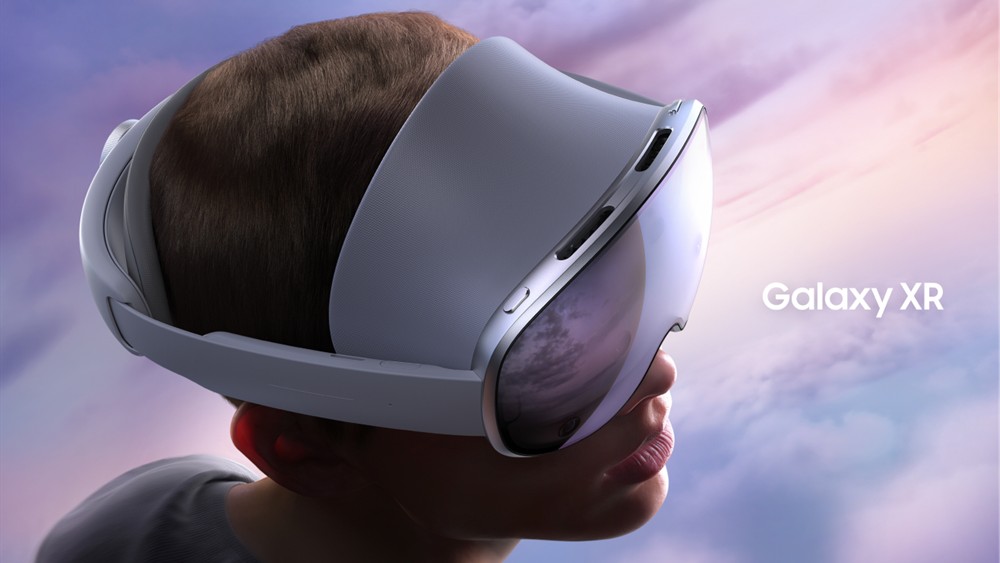
Samsung's Galaxy XR and Apple's Vision Pro are the two most capable mixed-reality headsets you can buy right now, and they take almost opposite approaches to the same idea: a screen-free way to work, watch and play in a space around you instead of on a phone or laptop. Galaxy XR undercuts Vision Pro by just over $1,899 at the entry tier, while Vision Pro leans on Apple's silicon and visionOS polish to justify the premium. Here's how they actually compare on the numbers Samsung and Apple have each published.
Two different bets on mixed reality
Apple shipped the original Vision Pro first, in February 2024, establishing the template for a premium, self-contained mixed-reality headset built around hand and eye tracking instead of controllers. Samsung's answer took longer to arrive: Galaxy XR launched on October 22, 2025, as the first device running Android XR, a headset and glasses platform Samsung, Google and Qualcomm built together specifically to compete in this category. That gap matters for how each company talks about its headset today — Apple is defending a category it defined, while Samsung is positioning Galaxy XR explicitly as the AI-native, Gemini-powered alternative at a lower price.
Both are still niche, expensive products rather than mainstream phone replacements. But for anyone shopping specifically in the "premium mixed-reality headset" category right now, these two are the only serious options from a major phone or computer maker, which is exactly why the comparison keeps coming up.
Price and storage
Samsung sells Galaxy XR in a single configuration for $1,799.99, with financing available at $75/month for 24 months, through Samsung.com and Samsung Experience Stores, where you can also book an in-person demo. Galaxy XR Controllers are sold as an optional accessory rather than included in the box, alongside a separate carrying case; Samsung has also run limited-time bundle promotions pairing the headset with subscriptions and discounted controllers, so it's worth checking Samsung.com for current offers before you buy.
Apple sells Vision Pro across three storage tiers, starting at $3,699 and rising to $3,899 and $4,199 for higher-capacity models, per Apple's own buy page. That's a jump from the original Vision Pro's $3,499 entry price when it launched in 2024, reflecting the move to the new M5 chip. Vision Pro doesn't use hand controllers at all — Apple's pitch has always been eyes, hands and voice as the entire input method — though it also supports the PlayStation VR2 Sense controller as an optional accessory for gaming. Prescription wearers may also need ZEISS Optical Inserts, sold separately, since Vision Pro isn't designed to fit over glasses.
Add up a realistic cart and the gap stays wide at every tier: a base Galaxy XR plus controllers still comes in well under a base Vision Pro with no accessories at all.
Galaxy XR vs Vision Pro: specs compared
| Spec | Samsung Galaxy XR | Apple Vision Pro |
|---|---|---|
| Price | From $1,799.99 | From $3,699 |
| Chip | Qualcomm Snapdragon XR2+ Gen 2 | Apple M5 + R1 |
| Display | 4K Micro-OLED per eye, 4,032 PPI | Micro-OLED system, 23 million total pixels |
| Weight | 545 g (1.20 lb) | Not published by Apple as a single figure |
| Battery life | Up to 2.5 hrs video playback (external pack) | Up to 2.5 hrs general use, up to 3 hrs video (external pack) |
| Input | Hand tracking, voice, optional motion controllers | Eyes, hands, voice (no bundled controller) |
| Software | Android XR, with Gemini and Gemini Live built in | visionOS |
Chips and performance
Galaxy XR runs on Qualcomm's Snapdragon XR2+ Gen 2 platform, which Samsung says delivers 15% higher GPU performance and 20% higher CPU performance than previous generations, handling spatial audio, gesture tracking, AI assistance and 4K visuals.
Vision Pro pairs Apple's M5 chip with a dedicated R1 chip that processes camera, sensor and microphone input separately from the main system — a dual-chip design Apple has used since the original Vision Pro's M2/R1 split, now moved up to M5.
Displays
Both headsets use micro-OLED panels, the current high end for headset optics. Samsung specifies 4K Micro-OLED displays for each eye at 4,032 PPI. Apple doesn't break its figure down per eye; it advertises a combined 23 million pixels across its custom micro-OLED system, which it says delivers "more pixels than a 4K TV, for each eye."
Software: Android XR vs visionOS
This is where the two devices diverge most. Galaxy XR is the first headset running Android XR, a platform Samsung built jointly with Google and Qualcomm. Google's Gemini and Gemini Live are pre-installed and sit at the system level — you can hold the top button or say "Hey Google" to ask Gemini about whatever you're looking at, from a 3D map in Immersive View to a Street View tour, or use Circle to Search to pull up information without leaving what you're doing. Galaxy XR also runs standard Android mobile apps alongside native XR apps, which gives it a much bigger existing app catalog on day one than a brand-new platform normally would, since it inherits years of Android Play Store titles rather than starting from zero.
Vision Pro runs visionOS, which Apple describes as built on the same foundation as macOS, iOS and iPadOS. It's a more closed, Apple-only ecosystem, but also a more mature one at this point, with several years of native visionOS apps built specifically for spatial computing rather than adapted from a phone. Vision Pro also leans heavily on Apple's own services — FaceTime Spatial Personas, Mac Virtual Display for turning a MacBook screen into a giant virtual monitor, and tight iPhone and iPad handoff — features that only make sense if you already own other Apple hardware.
In practice, the software gap is really an ecosystem question: Galaxy XR rewards people already using Android phones and Google services, while Vision Pro rewards people already paying for iPhones, Macs and iPads. Neither headset is a good reason on its own to switch ecosystems; it's much more sensible to buy whichever one matches the phone already in your pocket.
Design, comfort and passthrough
Samsung publishes an exact weight for Galaxy XR: 545 grams (1.20 lb), including the headset and forehead cushion, measuring 120.7 x 194.4 mm across the visor. The external battery pack connects by a cable and clips to a pocket or waistband, which keeps the weight on your face lower than an all-in-one design would, at the cost of a cable running down to the pack. Samsung describes the fit as "ergonomic" and built for "any head shape," with the halo-style band distributing weight around the head rather than resting it all on the front of the face.
Apple doesn't publish a single weight figure for Vision Pro in the same way, instead emphasizing the external battery design, which moves weight off your face the same way Samsung's does. Apple ships Vision Pro with interchangeable Light Seals and both a Dual Knit Band and an optional Solo Knit Band to fine-tune fit, reflecting how much Apple has focused on all-day comfort as a differentiator since the original launch.
Both headsets rely on external cameras to show you the real world in "passthrough" mode rather than cutting you off entirely, which is central to how usable each one feels for everyday tasks like walking around a room or reading a text message without taking the headset off. Samsung's camera and microphone array feeds its Snapdragon XR2+ Gen 2 chip, which Samsung says is tuned specifically for gesture tracking and spatial audio alongside passthrough video. Apple's R1 chip exists for exactly this job on Vision Pro, processing camera, sensor and microphone data on a dedicated chip separate from the M5, which Apple says is what keeps passthrough feeling immediate rather than laggy.
Controls and input
Apple's Vision Pro has never shipped with a hand controller as standard; you navigate with your eyes, tap your fingers together to select, and talk to Siri. For PlayStation VR2 Sense owners, Apple separately supports that controller for gaming.
Samsung took the opposite route: like its other recent hardware launches, Galaxy XR ships hand- and voice-first but adds Galaxy XR Controllers as an optional purchase, with ergonomic buttons and haptic feedback aimed specifically at gaming, where precise input beats hand tracking.
Battery life
Neither headset is designed to be worn untethered from a battery pack. Samsung rates Galaxy XR for up to 2.5 hours of video playback from its external battery, which connects magnetically and supports fast charging so you can keep using the headset while it tops up. Apple rates Vision Pro for up to 2.5 hours of general use and up to 3 hours of video playback on its own external battery pack, under Apple's own testing conditions. In practice, both land in a similar window for a single session before you need to plug in or swap packs.
Availability and support
Both headsets are shipping now, not pre-order products. Galaxy XR launched simultaneously in Korea and the US on October 22, 2025, and Samsung has since confirmed continued software and security support for the device, with newer enterprise-focused features and deployment controls for IT admins added since launch. Vision Pro has been generally available since February 2024, with Apple refreshing its internal chip to the M5 while keeping the external design, pricing structure and visionOS platform largely consistent. That longer track record is itself part of Vision Pro's case: more time for third-party developers to build native visionOS apps than Android XR has had.
Who should actually buy which
If you want to try mixed reality without committing Vision Pro money, or you're already in Google's ecosystem and want Gemini built into your headset, Galaxy XR at $1,799.99 is the far easier buy, and it comes with a wider day-one app library through Android compatibility. It's also the better pick if gaming is a priority, since Samsung sells dedicated motion controllers built for that use case rather than asking hand tracking to do everything.
If you're already deep in Apple's ecosystem, want the most refined visionOS software experience, rely on Mac Virtual Display or FaceTime Spatial Personas, and don't mind paying roughly double, Vision Pro from $3,699 remains the reference device other headsets are still measured against — including this one. Neither is an impulse buy at these prices; both companies offer in-person demos, and trying one before buying is the single best way to tell which fit and software you actually prefer.
What to do next
Both companies sell headsets directly: Samsung through Samsung.com and Samsung Experience Stores, with in-person demos available, and Apple through its own Vision Pro buy page and Apple Stores. If you're unsure which ecosystem fits you better, a demo is worth the trip before spending $1,800 or more either way — and if budget is the deciding factor, check how the phone side of each ecosystem compares too, since both headsets lean on their maker's phone and app ecosystem.
Frequently asked questions
How much does Samsung Galaxy XR cost?
Galaxy XR costs $1,799.99 for its single configuration, with financing available at $75/month for 24 months through Samsung.com.
How much does Apple Vision Pro cost?
Vision Pro starts at $3,699 and goes up to $3,899 and $4,199 for higher-storage configurations, according to Apple's official buy page.
Does Galaxy XR come with controllers?
No. Galaxy XR is hand- and voice-first out of the box; Galaxy XR Controllers are sold separately as an optional accessory, mainly aimed at gaming.
Does Vision Pro work with controllers?
Vision Pro is designed for eyes, hands and voice input with no bundled controller, though it supports the PlayStation VR2 Sense controller as an optional accessory for some games.
What operating system does each headset run?
Galaxy XR runs Android XR, built by Samsung, Google and Qualcomm, with Gemini built in. Vision Pro runs Apple's visionOS.
Which headset has better battery life?
They are close: Samsung rates Galaxy XR for up to 2.5 hours of video playback, while Apple rates Vision Pro for up to 2.5 hours of general use and up to 3 hours of video playback, both from external battery packs.
Sources
- Samsung: Galaxy XR official product pagesamsung.com
- Samsung Newsroom: Introducing Galaxy XR — Opening New Worldsnews.samsung.com
- Samsung Newsroom UK: Galaxy XR is available to buy nownews.samsung.com
- Apple: Vision Pro official product pageapple.com
- Apple: Vision Pro buy page (pricing)apple.com
Nadia Osei covers mobile and consumer gadgets for Pandromeda: smartphones, tablets, smartwatches, earbuds and smart-home devices. She tracks launches, software updates and pricing across Apple, Google, Samsung and the rest, and builds comparisons from the manufacturers' published specifications.