Galaxy S26 FE vs Galaxy S26: Specs, Price and Which to Buy
Samsung's $699.99 Galaxy S26 FE looks like a bargain next to the $899.99 Galaxy S26 — here is exactly what you gain and lose at each price.
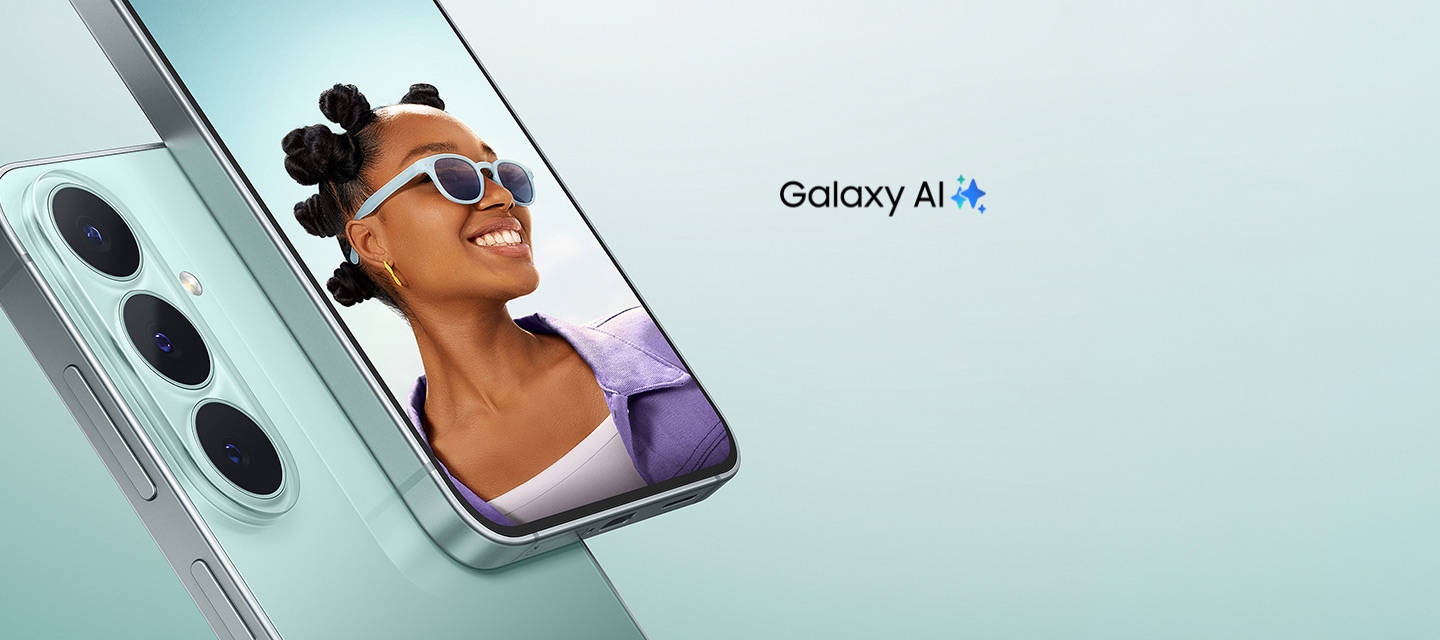
The short version: the Galaxy S26 FE is $699.99 and gets you most of what makes a 2026 Galaxy phone feel like a Galaxy phone — a big AMOLED screen, Galaxy AI, 7 years of updates — while the Galaxy S26 starts at $899.99 and buys you a faster chipset, more RAM, a telephoto lens with a longer reach, and a lighter, thinner body. If you want the cheapest real entry into the S26 family, buy the FE. If you want the chipset and camera hardware that will age best, pay the extra $200 for the standard S26.
- Buy the Galaxy S26 FE if your budget caps out around $700, you want the biggest screen for the money (6.7"), and you don't lean on zoom photography.
- Buy the Galaxy S26 if you want the quicker Snapdragon 8 Elite Gen 5 for Galaxy chip (in the US), 12GB of RAM, a lighter 167g body, and don't mind paying $200 more.
- Both ship with IP68 water resistance, Gorilla Glass Victus+, One UI with Galaxy AI, and a 12MP selfie camera.
- Biggest FE trade-off: the Exynos 2500 chipset and 8GB of RAM, versus a flagship Snapdragon/Exynos 2600 chip and 12GB on the standard S26.
Price and availability
Samsung's own Galaxy S26 FE product page lists the phone "from $699.99 before eligible trade-in," with 128GB, 256GB and 512GB storage options and three colors: Pistachio, Graphite and Blueberry, confirmed on Samsung's buy page. Samsung's page doesn't break out a price for each storage step, but the 128GB model is the one priced at $699.99; multiple outlets that covered the September 4 on-sale date reported the 256GB step-up lands around $100 higher, with the 512GB tier reported in some markets only.
The standard Galaxy S26 is listed on Samsung's compare page "from $899.99 before trade-in," which covers the 256GB model; the 512GB option costs more, following Samsung's usual per-tier step-up. The S26 only comes in 256GB or 512GB — there's no cheaper 128GB version, which is one reason the FE exists as a separate line in the first place. Both phones are sold unlocked through Samsung.com and through AT&T, T-Mobile and Verizon.
If you've already compared the standard Galaxy S26 against Google's Pixel 11, the FE slots in as the budget-flagship option Samsung didn't have at that price point before.
Chipset and performance
This is the single biggest difference between the two phones. The Galaxy S26 FE runs Samsung's own Exynos 2500, a 10-core chip built around Arm Cortex-X925 cores with an Xclipse 950 graphics processor, according to Samsung's spec page. It's the same silicon family that powered last year's Galaxy Z Flip7, not a new flagship-class design.
The standard Galaxy S26, in the US, ships with the Snapdragon 8 Elite Gen 5 for Galaxy, per Samsung's official compare page for the S26 series — the same customized Qualcomm chip used across the S26, S26+ and S26 Ultra in the US market. (Samsung sells an Exynos 2600 variant of the base S26 and S26+ in some international markets, but the US retail version is Snapdragon.) That's a meaningfully newer, faster, more efficient chip than the FE's Exynos 2500, and it shows up in sustained performance, gaming frame rates and on-device AI tasks.
RAM follows the same pattern: the FE ships with 8GB, while the standard S26 ships with 12GB across both its storage tiers. For everyday use — browsing, social apps, messaging — 8GB is still plenty in 2026. For heavier multitasking, more demanding games, or running several Galaxy AI features at once, the extra 4GB on the standard S26 gives it more headroom over the life of the phone.
Display compared
The Galaxy S26 FE has the bigger screen of the two: a 6.7-inch FHD+ Dynamic AMOLED 2X panel at 120Hz. The standard Galaxy S26 uses a smaller 6.3-inch Dynamic AMOLED 2X panel, also at up to 120Hz, but with a higher-end LTPO panel and a much higher rated peak brightness — Samsung's compare page lists 2,600 nits for the S26 series versus a display brightness Samsung doesn't publish for the FE (per the Wikipedia entry for the Galaxy S26 series, third-party measurements put the FE closer to 1,900 nits).
In practice that means the FE gives you more screen real estate for video and multitasking, while the standard S26 gives you a sharper, punchier panel that's easier to read in direct sunlight and likely sips less battery thanks to its LTPO refresh-rate scaling. Neither phone gets the Ultra's Privacy Display feature, which is exclusive to the Galaxy S26 Ultra.
Battery and charging
Battery capacity actually favors the FE here: it packs a 4,900mAh cell, the same capacity as the Galaxy S26+, versus 4,300mAh in the standard S26. Samsung's FE page cites up to 29 hours of video playback, with a footnote disclosing that figure comes from internal lab testing on a pre-release unit rather than independent measurement — worth keeping in mind as a directional figure, not a guarantee.
Charging speed swings back toward the standard S26's camp but in a mixed way. The FE supports 45W wired charging (Samsung sells the compatible charger separately) and 15W wireless charging. The standard S26 charges somewhat slower by Samsung's own numbers, reaching about 55% in 30 minutes on its wired charger versus the FE's unpublished percentage-to-time figure. Both support Qi2 wireless charging at 15W. In short: the FE has the bigger battery, but don't assume that automatically means longer real-world battery life once you factor in screen size and chipset efficiency.
Cameras compared
Both phones use a triple rear camera system with a 50MP wide lens and a 12MP ultra-wide, plus a 12MP front camera at f/2.2. The difference is the third lens. The Galaxy S26 FE's telephoto is an 8MP sensor with 3x optical zoom. The standard Galaxy S26 steps up to a 10MP telephoto, also 3x optical, but with support up to 30x digital zoom on both phones per Samsung's spec pages. The S26's wide lens is also rated with "2x optical quality zoom" that the FE's wide camera doesn't carry on Samsung's spec sheet.
The gap is real but not dramatic — this isn't the jump to the Galaxy S26 Ultra's 200MP main sensor and 5x periscope lens, which is a different tier of camera hardware entirely. For most people choosing between these two phones, either telephoto lens will produce a usable 3x zoom shot; the difference shows up mainly in low light or when cropping in further digitally.
RAM and storage tiers
The Galaxy S26 FE is the more flexible phone on storage, officially offered in 128GB, 256GB and 512GB, all paired with 8GB of RAM. The standard Galaxy S26 only comes in 256GB or 512GB, but pairs either with 12GB of RAM. There's no way to get 12GB of RAM in the cheaper FE, and no way to get the FE's lower 128GB starting tier in the standard S26.
Neither phone supports expandable microSD storage, which has been standard for the Galaxy S line since the S20 era, so picking the right tier up front matters more than it used to.
Design, build and durability
Both phones use an aluminum frame with Gorilla Glass Victus+ on the front and back, and both carry an IP68 rating for dust and water resistance, per Samsung's FE spec page and Samsung's S26 spec page. The standard Galaxy S26 is the smaller and lighter device at 167g and 7.2mm thick, against the Galaxy S26 FE's larger 6.7-inch footprint (Samsung's FE page doesn't publish exact height, width or weight figures, but third-party teardowns put it close to the Galaxy S26+'s dimensions given the matching 6.7-inch screen and 4,900mAh battery).
Color options differ too: the FE comes in Pistachio, Graphite and Blueberry, while the standard S26 ships in Cobalt Violet, Sky Blue, Black and White, plus Silver Shadow and Pink Gold as Samsung.com-exclusive finishes.
Software and update policy
Here the two phones are essentially tied. The Galaxy S26 FE launched on One UI 9 based on Android 17, and Samsung's spec page commits to up to 7 generations of OS upgrades and 7 years of security updates. The standard Galaxy S26 shipped earlier in the year on One UI 8.5 and has already been promised the same long-term update commitment Samsung now applies across the current Galaxy S lineup.
Galaxy AI features — on-device translation, Photo Assist, generative edit tools, Now Brief — are present on both phones; Samsung doesn't gate its headline AI features behind chipset tier on this generation, though more demanding generative features may run a little faster on the S26's newer Snapdragon silicon.
Galaxy S26 FE vs Galaxy S26: full spec comparison
| Spec | Galaxy S26 FE | Galaxy S26 (US) |
|---|---|---|
| Price (from) | $699.99 | $899.99 |
| Chipset | Exynos 2500 | Snapdragon 8 Elite Gen 5 for Galaxy |
| RAM | 8GB | 12GB |
| Storage | 128GB / 256GB / 512GB | 256GB / 512GB |
| Display | 6.7" FHD+ Dynamic AMOLED 2X, 120Hz | 6.3" Dynamic AMOLED 2X, up to 120Hz, 2,600 nits |
| Battery | 4,900mAh | 4,300mAh |
| Charging | 45W wired, 15W wireless | ~55% in 30 min wired, 15W wireless (Qi2) |
| Rear cameras | 50MP wide (OIS), 12MP ultra-wide, 8MP 3x telephoto | 50MP wide, 12MP ultra-wide, 10MP 3x telephoto |
| Front camera | 12MP, f/2.2 | 12MP, f/2.2 |
| Build | Aluminum frame, Gorilla Glass Victus+, IP68 | Aluminum frame, Gorilla Glass Victus+, IP68, 167g, 7.2mm |
| OS at launch | One UI 9 / Android 17 | One UI 8.5 |
| Colors | Pistachio, Graphite, Blueberry | Cobalt Violet, Sky Blue, Black, White (+ Samsung.com exclusives) |
What you actually give up with the FE
Strip away the marketing and the FE's real trade-offs come down to three things. First, the chipset: the Exynos 2500 is a step behind the Snapdragon 8 Elite Gen 5 for Galaxy in raw performance, and that gap will be more noticeable in year three or four of ownership than it is on day one. Second, RAM: 8GB versus 12GB matters more for how long the phone stays comfortable to use than for how it feels out of the box. Third, the telephoto camera: 8MP and 3x optical versus 10MP and 3x optical is a small gap on paper, but it's the kind of difference that shows up specifically in zoomed-in, lower-light shots — exactly the situations where more resolution and a slightly larger sensor earn their keep.
What you don't give up is almost everything else people associate with a modern Galaxy phone: the IP68 rating, Gorilla Glass Victus+, Galaxy AI, One UI 9, and Samsung's 7-year update promise are all there on the cheaper phone. If none of those three trade-offs matter for how you actually use a phone, the FE is simply the better value of the two.
Which one should you buy
Buy the Galaxy S26 FE if you're upgrading from a phone that's three or more years old, you want the biggest screen you can get without paying S26+ money, and you don't regularly shoot zoomed-in photos. $699.99 for a current-generation Galaxy with 7 years of guaranteed updates is a genuinely strong deal by 2026 flagship standards.
Buy the standard Galaxy S26 if you want the fastest chip Samsung sells at this size, you'll keep the phone for four-plus years and want the extra performance headroom, or you shoot enough zoomed photos that the better telephoto lens is worth $200 to you. If neither answer feels obvious, Samsung's own return policy and the identical core software experience on both phones means you can buy the FE first and upgrade later without losing much.
Worth noting: Samsung's broader 2026 ecosystem push extends well beyond the phone itself — its Galaxy Ring's sleep apnea detection feature works with either S26 model the same way, so that decision doesn't need to factor into which phone you pick.
What to do next
If you're buying today, check Samsung.com directly for current trade-in credit on your old phone before comparing carrier deals — trade-in values shift the effective price of both phones more than any other factor. Decide first whether you need more than 8GB of RAM or a longer zoom; if the answer to both is no, the Galaxy S26 FE is the more sensible purchase for most buyers. If you're still deciding between Samsung and a completely different platform at this price, it's worth lining this matchup up against how the iPad mini A20 Pro compares against the iPad Air for a sense of how other manufacturers handle the "cheaper flagship" tier.
Frequently asked questions
What is the main difference between the Galaxy S26 FE and the Galaxy S26?
Chipset and RAM. The Galaxy S26 FE uses Samsung's Exynos 2500 with 8GB of RAM, while the standard Galaxy S26 (in the US) uses the Snapdragon 8 Elite Gen 5 for Galaxy with 12GB of RAM. The S26 also has a slightly better 10MP telephoto camera versus the FE's 8MP telephoto.
How much does the Galaxy S26 FE cost?
Samsung's official product page lists it from $699.99 before eligible trade-in, for the 128GB model. It's also available in 256GB and 512GB storage.
Does the Galaxy S26 FE support Galaxy AI?
Yes. The Galaxy S26 FE ships with One UI 9 on Android 17 and includes Samsung's Galaxy AI features, the same core AI tools available on the standard Galaxy S26.
Is the Galaxy S26 FE waterproof like the Galaxy S26?
Both phones carry an IP68 rating for dust and water resistance and use Gorilla Glass Victus+ on the front and back, per Samsung's spec pages.
How long will each phone receive software updates?
Samsung commits to up to 7 generations of OS upgrades and 7 years of security updates for the Galaxy S26 FE, matching the policy Samsung applies across the current Galaxy S26 lineup.
Which has the better camera for zoom shots, the FE or the S26?
The standard Galaxy S26 has a slight edge with its 10MP, 3x optical telephoto lens versus the FE's 8MP, 3x optical telephoto. Both support up to 30x digital zoom, but the S26's larger sensor should hold up better in lower light at range.
Sources
- Samsung — Galaxy S26 FE specssamsung.com
- Samsung — Galaxy S26 FE storage, colors and pricingsamsung.com
- Samsung — Galaxy S26 | S26+ specssamsung.com
- Samsung — Galaxy S26 series compare toolsamsung.com
- Wikipedia — Samsung Galaxy S26 seriesen.wikipedia.org
Nadia Osei covers mobile and consumer gadgets for Pandromeda: smartphones, tablets, smartwatches, earbuds and smart-home devices. She tracks launches, software updates and pricing across Apple, Google, Samsung and the rest, and builds comparisons from the manufacturers' published specifications.