RedMagic 12 Pro vs iQOO 16: Specs, Price and Which to Buy
RedMagic 12 Pro and iQOO 16 both run Snapdragon 8 Elite Extreme Gen 6 — here is how their specs, cameras, cooling and pricing actually compare.
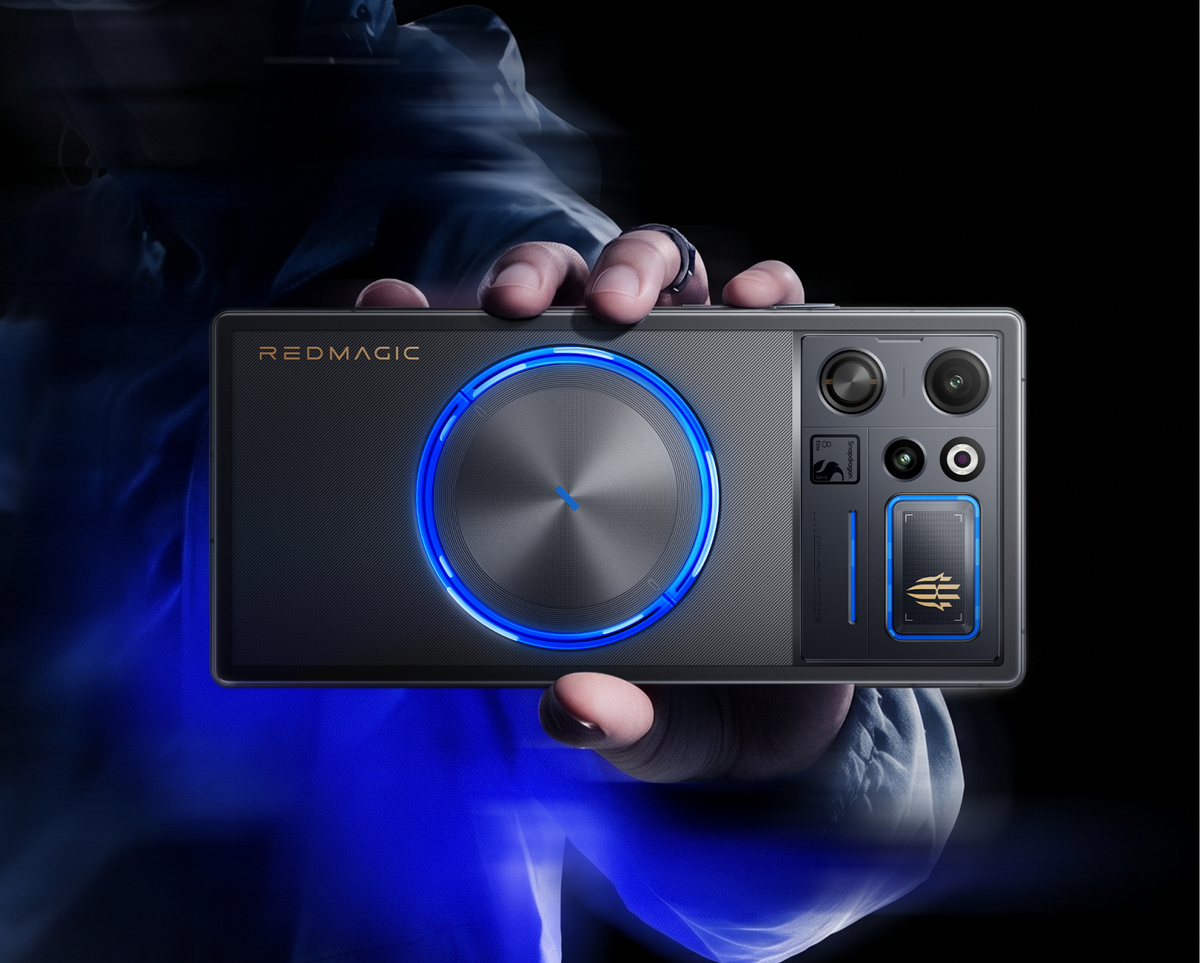
The RedMagic 12 Pro and the iQOO 16 are both built around the same Snapdragon 8 Elite Extreme Gen 6 chipset, but they take very different approaches to the gaming-phone formula: RedMagic leans into built-in cooling fans and shoulder triggers, while iQOO leans into camera hardware and a slimmer, more conventional flagship body. RedMagic's 12 Pro starts at $899 globally with preorder perks opening November 12, while the iQOO 16 has been on sale in China since September 29 starting at 5,999 yuan (roughly $840, unofficial conversion), with no confirmed global price yet. If you want a phone built first for marathon gaming sessions, the RedMagic 12 Pro's cooling and triggers make the stronger case; if you want a gaming-capable flagship that doubles as your main camera phone, the iQOO 16 is closer to a traditional do-everything handset.
- Chipset: Both phones use Qualcomm's Snapdragon 8 Elite Extreme Gen 6, built on a 2nm process.
- Battery: Both ship with an 8,400mAh cell; RedMagic charges faster at up to 80W wired/wireless, iQOO tops out at 100W wired/40W wireless.
- Price: RedMagic 12 Pro starts at $899 (global, 12GB tier). iQOO 16 starts at 5,999 yuan in China (12GB/256GB); no global/US price yet.
- Availability: iQOO 16 is already on sale in China. RedMagic 12 Pro preorder perks open November 12, with no general sale date confirmed yet.
- Gaming extras: RedMagic has physical shoulder triggers, a built-in cooling fan, and (per early hands-on reports, unconfirmed by RedMagic) a Linux Terminal mode. iQOO has no shoulder triggers or fan and instead prioritizes a periscope telephoto camera.
RedMagic 12 Pro: Specs, Price and Preorder Details
Nubia's RedMagic line has built its reputation on treating a phone like a handheld gaming console, and the RedMagic 12 Pro's preorder window keeps that approach intact. According to RedMagic's official global product page, the phone runs Qualcomm's Snapdragon 8 Elite Extreme Gen 6 alongside RedMagic's own R5 gaming co-processor, paired with a 6.85-inch AMOLED display running at 2688 x 1216 resolution and up to 185Hz refresh. RedMagic rates peak global brightness at 1,900 nits with 100% DCI-P3 coverage, and the touch sampling rate scales up to 5,000Hz for instant input and 500Hz on average — numbers aimed squarely at competitive mobile gaming rather than everyday use.
Cooling is handled by what RedMagic calls AquaCore Cooling 3.0, a dual-loop liquid-cooling system with a 25,500rpm turbo fan, a vapor chamber, and what the company brands "Liquid Metal 4.0" thermal material. The battery is an 8,400mAh cell with up to 80W wired and wireless charging, plus reverse wireless charging for accessories. RAM comes in 12GB or 16GB configurations, with storage up to 1TB. On the camera side, RedMagic again prioritizes gaming over photography: a 50MP main camera with optical image stabilization, a 50MP ultra-wide, and a 16MP front camera tucked under the display.
Pricing starts at $899 for the 12GB configuration, scaling up through 16GB/512GB and 16GB/1TB tiers. RedMagic's preorder mechanic opens November 12: paying a refundable $1 deposit unlocks "Early Bird Perks," which the company describes as discounts, bundled gifts, and one day of early purchase access ahead of general sale. RedMagic has not yet announced the general sale date itself.
iQOO 16: Specs, Price and Availability
The iQOO 16 is already a known quantity: it launched in China on September 29, 2026, and has been selling through vivo and iQOO's own online stores since that evening. Per iQOO's official Chinese product page, the phone shares its headline chip with the RedMagic 12 Pro — the Snapdragon 8 Elite Extreme Gen 6 — but pairs it with iQOO's own Q4 gaming chip rather than RedMagic's R5. iQOO, a gaming-focused vivo sub-brand founded in 2019, still sells the 16 exclusively in China for now. iQOO's own lab testing, cited on that same page, lists an AnTuTu score above 5.5 million on the top-spec 16GB/1TB model; treat that as a vendor-reported figure rather than an independent benchmark.
The display is a 6.85-inch 2K AMOLED panel built with Samsung, marketed under the internal name "Zhufeng," running up to 165Hz with touch sampling as high as 5,000Hz. iQOO's page doesn't publish an exact pixel count or brightness figure, though a resolution around 1440 x 3168 is widely reported elsewhere and should be treated as unconfirmed until iQOO states it directly. Camera hardware is where the iQOO 16 clearly out-specs the RedMagic 12 Pro on paper: a 50MP main sensor (1/1.3", f/1.68) with stabilization, a 50MP periscope telephoto (1/1.95", f/2.65) offering 3x optical and 6x lossless zoom up to 100x digital, and a 50MP ultra-wide (1/2.75", f/2.05). The front camera resolution isn't itemized on the official page; some trackers report 32MP, which should be treated as unconfirmed.
Battery and charging specs land close to RedMagic's: an 8,400mAh typical cell (8,170mAh rated) with 100W wired and 40W wireless charging. RAM/storage runs on LPDDR5X and UFS 4.1, with the previously reported configuration lineup covering 12GB/256GB up through 16GB/1TB. Chinese press covering the September 29 launch event listed retail prices of 5,999 yuan, 6,799 yuan, 7,499 yuan, and 8,499 yuan across those four tiers, with temporary launch-period discounts bringing the entry model down to roughly 5,499 yuan. iQOO has not announced pricing for any market outside China, including the US or global markets, as of this writing.
RedMagic 12 Pro vs iQOO 16: Full Spec Comparison
| Spec | RedMagic 12 Pro | iQOO 16 |
|---|---|---|
| Chipset | Snapdragon 8 Elite Extreme Gen 6 + RedMagic R5 | Snapdragon 8 Elite Extreme Gen 6 + iQOO Q4 |
| Display | 6.85" AMOLED, 2688x1216, 185Hz, 1,900 nits peak | 6.85" AMOLED (2K), 165Hz, exact resolution unconfirmed |
| Battery | 8,400mAh | 8,400mAh typical (8,170mAh rated) |
| Charging | Up to 80W wired and wireless, plus reverse charging | 100W wired, 40W wireless |
| Rear cameras | 50MP main (OIS) + 50MP ultra-wide | 50MP main (OIS) + 50MP periscope telephoto (3x/6x/100x) + 50MP ultra-wide |
| Front camera | 16MP under-display | Unspecified by iQOO (32MP reported, unconfirmed) |
| RAM / storage | 12GB or 16GB RAM, up to 1TB | 12GB or 16GB RAM, up to 1TB |
| Cooling | AquaCore 3.0 dual-loop liquid cooling + 25,500rpm fan | Vapor chamber (no built-in fan) |
| Shoulder triggers | Yes (520Hz) | No |
| Software | RedMagic OS 12 (Android 17) | OriginOS, reportedly version 7 on Android 17 (unconfirmed) |
| Durability | IP68 + IP69 | IP68 + IP69 (GB/T 4208-2017 lab tests) |
| Starting price | $899 (global, 12GB tier) | 5,999 yuan / ~$840 unofficial (China, 12GB/256GB) |
| Availability | Preorder perks open Nov 12; general sale date unannounced | On sale now in China; no global date confirmed |
Display and Cooling: Built for Marathon Gaming Sessions
Both phones use 6.85-inch AMOLED panels, but RedMagic pushes the refresh rate higher at 185Hz against iQOO's 165Hz, and RedMagic publishes a specific brightness figure (1,900 nits peak) that iQOO's page doesn't match with a public number. The bigger functional gap is cooling: RedMagic's AquaCore 3.0 system combines a dual-loop liquid-cooling setup with an actual spinning turbo fan rated at 25,500rpm, aimed at keeping the Snapdragon chip's clock speeds stable during long sessions. iQOO's official page lists only a vapor chamber, the same passive-cooling approach used in most conventional flagships — effective for short bursts, but without RedMagic's active airflow for sustained load.
Performance: Same Chip, Different Priorities
Because both phones run the Snapdragon 8 Elite Extreme Gen 6, raw CPU and GPU ceiling should be similar on paper; the practical difference will come down to sustained performance under thermal load and each brand's own gaming co-processor. RedMagic's R5 chip and iQOO's Q4 chip are both proprietary add-ons that the companies say assist with frame stabilization and touch latency, though neither company has published detailed, independently verifiable benchmarks comparing the two chips directly. iQOO's cited AnTuTu score of roughly 5.5 million on its 16GB/1TB configuration is a company-run lab test, not a third-party result, and RedMagic has not published an equivalent AnTuTu figure on its own product page.
Cameras: Flagship Photography vs. a Gaming-First Compromise
This is the category where the two phones diverge most clearly in intent. RedMagic's 12 Pro ships with a simpler two-lens rear setup — a 50MP OIS main camera and a 50MP ultra-wide — reflecting a long-standing pattern in gaming phones of treating the camera as a secondary feature. The iQOO 16 instead carries a three-lens system that includes a genuine periscope telephoto lens with 3x optical zoom, 6x lossless zoom, and up to 100x digital zoom, a configuration usually reserved for camera-focused flagships. Buyers who want their gaming phone to also be a capable everyday/travel camera should weight this category heavily toward the iQOO 16.
The Linux Terminal Wildcard
One feature that could set the RedMagic 12 Pro apart has nothing to do with gaming at all. Early hands-on reports describe the 12 Pro as the first Snapdragon-powered Android phone able to run Google's Linux Terminal app, a feature built on the Android Virtualization Framework (AVF), Google's system for running an isolated, ARM64-only virtual machine on-device. AVF-based Linux Terminal support has so far been limited mainly to Google's own Pixel phones and reportedly some Exynos-powered Galaxy S26 models, so a Snapdragon phone supporting it would be notable. It's important to flag that RedMagic's own global product page makes no mention of a Linux Terminal feature at all, so this should be treated as reported and unconfirmed by the manufacturer rather than an advertised spec. Per those early reports, the feature requires enabling a Developer Options toggle, allocates roughly 132GB of fixed storage to the Linux environment, and defaults to 1GB of adjustable RAM extendable to around 10.6GB. The iQOO 16 has no equivalent feature reported anywhere.
Software and Update Policy
RedMagic ships the 12 Pro on RedMagic OS 12, built on Android 17, per the company's own product page. iQOO's official page confirms OriginOS as the software platform but doesn't state the exact shipped version; it's widely, though not officially, reported as OriginOS 7 running on Android 17. Neither company's product page for these specific phones states a formal update-support commitment (number of OS upgrades or years of security patches) as of this writing, so buyers weighing long-term support should wait for either brand to publish that detail for these exact models.
Price and Availability: Which Is Easier to Buy Right Now
Right now, the iQOO 16 has the practical advantage of simply being purchasable: it's been on general sale in China since late September, with four configurations between 5,999 and 8,499 yuan (before launch-period discounts). The catch is that iQOO has not confirmed any price or sale date for global markets, including the US, so buyers outside China may be waiting indefinitely or relying on imports. The iQOO 16's positioning against vivo's own X500 Pro Max suggests vivo is treating it as a China-first release for now.
The RedMagic 12 Pro is the opposite case: it has a confirmed global price of $899 and an official preorder date of November 12, but no confirmed general sale date yet. The $1 Early Bird Perks deposit is refundable and mainly functions as a way to lock in launch discounts and early access rather than a full purchase commitment, so it's a low-risk way to secure a place in line while RedMagic finalizes its actual ship date.
Which Gaming Phone Should You Buy?
If sustained frame rates during long play sessions matter most to you, the RedMagic 12 Pro's active cooling, physical shoulder triggers, and higher 185Hz refresh rate make it the more purpose-built gaming device, and its unconfirmed-but-reported Linux Terminal support is a genuine bonus for anyone who also wants a pocketable Linux machine. If you want one phone to handle gaming, everyday use, and photography — especially zoomed or travel photography — without obvious compromises, the iQOO 16's periscope camera system and slimmer, fan-less body make it the more conventional flagship choice, provided you're buying in China or willing to import. Buyers should also weigh that RedMagic's price and preorder terms are confirmed for global markets today, while iQOO's are not yet confirmed outside China.
What's Next
Three things to watch before deciding: whether RedMagic announces a firm general sale date following the November 12 preorder window, whether iQOO confirms any international pricing or availability for the 16, and whether RedMagic ever officially acknowledges Linux Terminal support rather than leaving it to hands-on reports. Pandromeda will update this comparison once RedMagic publishes a general sale date or iQOO confirms a global launch.
Frequently asked questions
Does the RedMagic 12 Pro really support Google's Linux Terminal?
It's reported in early hands-on coverage, but RedMagic's own product page doesn't mention the feature. If accurate, it would make the 12 Pro the first Snapdragon-powered Android phone to run Linux Terminal, which is built on Google's Android Virtualization Framework. Treat it as unconfirmed until RedMagic states it officially.
Is the iQOO 16 available outside China?
Not yet. It has been on sale in China since September 29, 2026, but iQOO has not announced pricing, specs, or a release date for any other market, including the US.
How much does the RedMagic 12 Pro cost?
It starts at $899 globally for the 12GB RAM configuration. Preorder perks, unlocked with a refundable $1 deposit, open November 12; a general sale date has not been announced.
Do the RedMagic 12 Pro and iQOO 16 use the same processor?
Yes. Both run Qualcomm's Snapdragon 8 Elite Extreme Gen 6, though each pairs it with its own gaming co-processor: RedMagic's R5 versus iQOO's Q4.
Which phone has the better camera?
The iQOO 16 looks stronger on paper: it adds a 50MP periscope telephoto lens with up to 100x digital zoom that the RedMagic 12 Pro's two-lens camera system doesn't include.
Which phone cools better during long gaming sessions?
RedMagic's AquaCore 3.0 system uses active dual-loop liquid cooling with a spinning turbo fan, while the iQOO 16 relies only on a passive vapor chamber, according to each company's official specs.
Sources
- RedMagic 12 Pro official product page (global.redmagic.gg)global.redmagic.gg
- iQOO 16 official product page (vivo.com.cn)vivo.com.cn
- Android Virtualization Framework documentation (source.android.com)source.android.com
- Nubia Technology — Wikipediaen.wikipedia.org
- iQOO — Wikipediaen.wikipedia.org
Nadia Osei covers mobile and consumer gadgets for Pandromeda: smartphones, tablets, smartwatches, earbuds and smart-home devices. She tracks launches, software updates and pricing across Apple, Google, Samsung and the rest, and builds comparisons from the manufacturers' published specifications.