Google Pixel Tag: Release Date, Price, and How It Works
Google's Bluetooth item tracker lands November 11 at $29.99, pairing with the Find Hub network to take on Apple's AirTag and Motorola's Moto Tag.

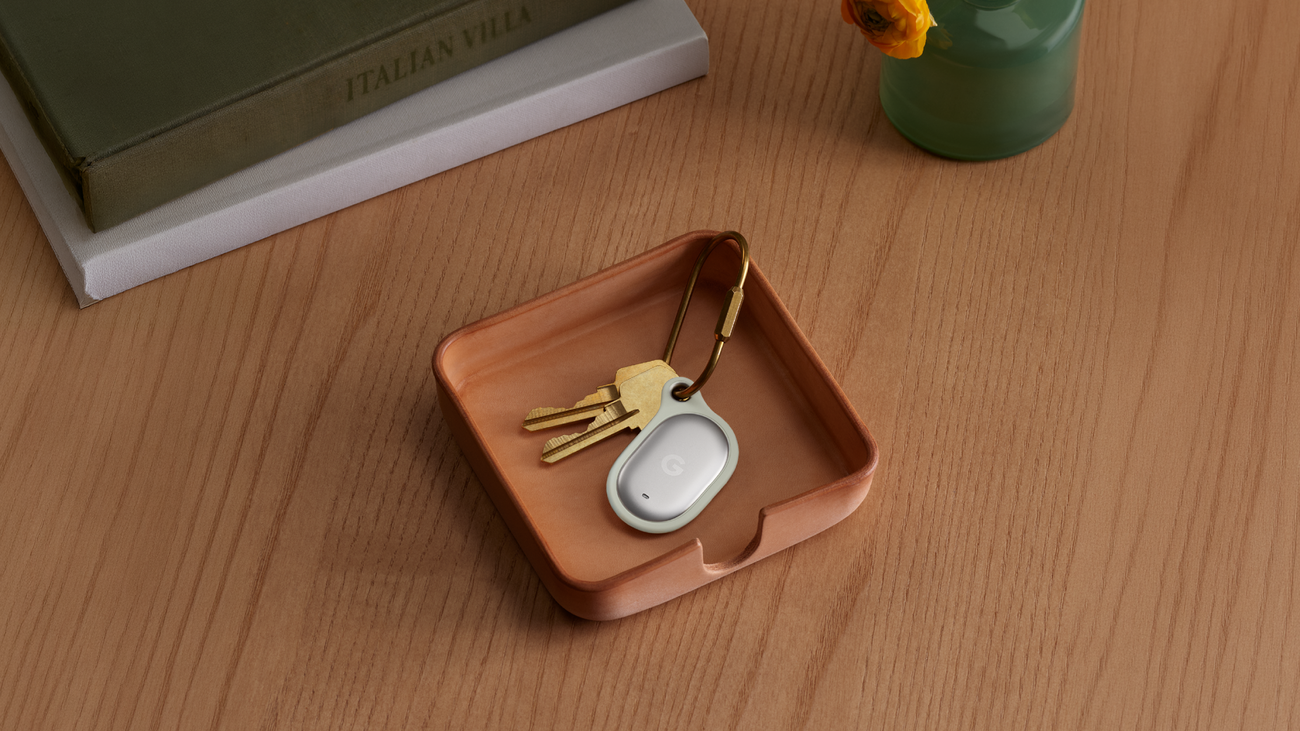
Google's first official item tracker, the Pixel Tag, goes on sale November 11, 2026, priced at $29.99 for a single tag and $99.99 for a four-pack, according to Google's own product listing and the retail details that have followed its August reveal. The coin-sized Bluetooth tracker clips onto keys, bags, or luggage and reports its location through Google's Find Hub network — the company's answer to Apple's AirTag and Motorola's Moto Tag.
Google unveiled Pixel Tag at the Made by Google '26 event alongside the Pixel 11 phone lineup and the Pixel Watch 5, slotting a dedicated tracker into its hardware catalog for the first time. Here's everything confirmed about the release date, pricing, specs, and how the Find Hub-powered tracking actually works.
Key facts: Pixel Tag
- Release date: November 11, 2026
- Price: $29.99 (1-pack) / $99.99 (4-pack)
- Color: Fog (one color at launch)
- Network: Google Find Hub (over 1 billion Android devices)
- Finding tech: Bluetooth Channel Sounding + Ultra Wideband (UWB) for Precision Finding
- Battery: User-replaceable CR2032, rated to last over a year
- Water/dust resistance: IP67
- Compatibility: Android phones running Android 9 or later
Pixel Tag release date and price
Google's official Pixel Tag listing on the Google Store currently shows the device as "Coming November 2026" with a starting price of "From $29.99," confirming the base cost directly from Google's own pricing data. Retail trackers and multiple outlets that have been following the rollout since the August announcement report the specific on-sale date as November 11, 2026, with the four-pack priced at $99.99. As of publication, the Google Store lists the product's status as "Not available — get notified," meaning pre-orders and live checkout had not opened yet, consistent with a launch about a week out.
That pricing puts a single Pixel Tag roughly in line with a single Apple AirTag and undercuts nothing dramatically — trackers in this category have clustered around the $25–$30 mark for years. The four-pack, at $99.99, works out to $25 per tag, a modest bulk discount for anyone planning to tag a wallet, backpack, car keys, and a suitcase all at once.
| Configuration | Price | Color | Availability |
|---|---|---|---|
| Pixel Tag (1-pack) | $29.99 | Fog | November 11, 2026 |
| Pixel Tag (4-pack) | $99.99 | Fog | November 11, 2026 |
Google's product page does not yet expose a live price for the four-pack bundle in its checkout flow — only the single-tag price is confirmed through Google's own structured pricing data at the time of writing. The $99.99 four-pack figure is the price being reported consistently across retail and news coverage tracking Google's listings, but buyers should treat it as reported rather than fully finalized until Google's checkout page goes live with it directly.
What is the Google Pixel Tag?
Pixel Tag is Google's first first-party Bluetooth item finder — a small, button-style tracker designed to be clipped, stuck, or slipped into the things people lose most often: keys, bags, wallets, and luggage. Google describes it simply as a way to "easily find the things you love, whether they're near or far, right in Find Hub."
Functionally, it plays the same role as Apple's AirTag does for iPhone owners or Motorola's Moto Tag does for Android users: a cheap, disposable-feeling hardware accessory that piggybacks on a massive existing device network to report its location, rather than relying on its own cellular or GPS connection. The difference is that Pixel Tag is built and sold by Google itself, directly tied to the same Find Hub app and network that already locates lost Pixel phones, tablets, and watches.
Its arrival is also tied to timing. Pixel Tag launched alongside the Pixel 11 series and the Pixel Watch 5 at Made by Google '26, rounding out Google's hardware lineup with an accessory category it had previously ceded entirely to Apple, Samsung (SmartTag), and Motorola.
How Pixel Tag works with Find Hub
Pixel Tag doesn't have its own GPS or cellular radio. Instead, it broadcasts a Bluetooth signal that nearby Android phones — including ones that aren't owned by the tag's owner — can detect anonymously and relay back through Google's servers. Google's own description of the system: "Using a global network of over 1 billion Android devices, Find Hub can help you locate your belongings, even when they're miles away."
That crowdsourced network is the same Find Hub system (the rebranded successor to Find My Device) that already tracks lost Android phones, tablets, and Wear OS watches. Adding a dedicated tag extends that same map to physical objects that don't have their own radios or batteries worth mentioning.
Once an item is located, Google's listing describes receiving "simple directional guidance to easily find your items," along with the ability to "play a sound on your Google Pixel Tag, or even ask Gemini to ring it for you" — folding the tracker into Google's Gemini assistant alongside the Find Hub app itself.
Precision finding is handled by a second layer: Pixel Tag's spec sheet lists both Bluetooth Channel Sounding and Ultra Wideband (UWB) for Precision Finding as connectivity features. UWB is the same short-range, high-accuracy radio technology Apple uses in AirTag for its "precision finding" arrows — it lets a compatible phone show a close-range directional readout instead of just a rough Bluetooth proximity signal, which matters most in the last few feet of a search, like digging through a couch or a bag.
Pixel Tag specs
Google's product page lists the following specifications for Pixel Tag:
| Spec | Detail |
|---|---|
| Dimensions | 1.1 in (W) x 1.8 in (H) x 0.2 in (D) |
| Weight | 0.4 oz with battery (0.3 oz without) |
| Materials | Polycarbonate and metal |
| Water/dust resistance | IP67 (max depth of 1 meter, up to 30 minutes), under IEC 60529 |
| Connectivity | Bluetooth Channel Sounding; Ultra Wideband (UWB) for Precision Finding |
| Battery | User-replaceable CR2032 coin cell; rated to last over 1 year |
| Sensors | Accelerometer |
| Audio | Built-in speaker |
| Compatibility | Android phones running Android 9 and later |
| Warranty | 1 year |
The accelerometer is notable because it's what allows Pixel Tag to detect motion for features like separation alerts, while the replaceable CR2032 battery means owners won't need to throw the whole tag away when it eventually dies — a design choice shared with both AirTag and Moto Tag.
Design and color options
Google's listing currently shows Pixel Tag in a single color: Fog, a light, brushed-metal gray that matches the muted palette Google has used across recent Pixel hardware. The body is described as having a "remarkably slim stainless steel design" that's meant to "easily attach to daily essentials like your keys, handling everyday bumps and splashes while lasting a full year on a single battery." Google also highlights that the "thin, discreet profile fits right into wallets without the bulk" — a direct jab at the comparatively chunkier, puck-shaped AirTag, which doesn't slide into a wallet sleeve nearly as cleanly.
Unlike Apple, which sells AirTag in a single finish but offers a wide range of third-party cases and loops, Google has not detailed an accessories lineup for Pixel Tag alongside the base product on its store listing as of publication.
Setup and Fast Pair
Setup leans on Fast Pair, the same one-tap Bluetooth pairing system Google uses for Pixel Buds and other accessories. Google's product description puts it this way: "With Fast Pair, seamlessly connect your Pixel to Google Pixel Tag." The reverse also works: "If you misplace your phone, you can press the button on your Pixel Tag to ring your phone — even if it's on silent," turning the tracker into a two-way finder rather than a one-directional one.
Once paired, a Pixel Tag shows up inside the Find Hub app alongside any other tracked devices, where it can be named, located on a map, or set to play its built-in speaker.
Privacy and unwanted-tracking protections
Crowdsourced tracker networks have faced scrutiny for years over the risk of being used to covertly follow someone — a concern Apple, Google, and Samsung have all had to address through joint industry standards for unwanted tracking alerts. Google's Pixel Tag listing addresses this directly: "Your device location data is encrypted and not stored on the Find Hub network. Built with privacy protections from the ground up, the network helps ensure your devices and their locations stay private."
Find Hub already includes alerts that notify Android users if an unfamiliar tracker appears to be traveling with them over time, in line with the cross-platform unwanted-tracking detection standard Apple and Google co-developed. Pixel Tag is expected to operate under those same existing Find Hub protections rather than a separate system.
Pixel Tag vs. AirTag and Moto Tag
Pixel Tag enters a category that already has two established players. Apple's AirTag relies on Apple's Find My network, which Apple says draws on "more than a billion iPhone, iPad, and Mac devices" for crowdsourced location reporting — the same basic model Google is now applying to Android with Find Hub, just gated to Apple's own ecosystem and unusable for locating items from an Android phone. Motorola's Moto Tag, meanwhile, already runs on Google's Find Hub network today, giving Android users a UWB-equipped tracker option that predates Pixel Tag by roughly two years.
That makes Pixel Tag's real competition, in practice, Moto Tag rather than AirTag — both tags plug into the exact same Find Hub network and the same underlying Android device pool, with the main differences coming down to industrial design, included accessories, and brand loyalty. Where Pixel Tag distinguishes itself is tighter integration with Pixel-specific software, including the Gemini-assisted ringing feature and Fast Pair setup tuned for Pixel phones, plus a slimmer form factor aimed at wallets rather than just keychains.
Pixel Tag will work with any Android 9+ device, not just a Pixel, though Pixel owners get the deepest feature set through Fast Pair and Gemini. It joins a string of recent wearable and accessory launches worth tracking alongside it, including Samsung's Galaxy Ring.
Where to buy Pixel Tag and availability
Pixel Tag is listed for purchase directly on the Google Store, where interested buyers can currently sign up to be notified when it goes live. Based on Google's "Coming November 2026" status and the November 11 date reported around the rollout, availability should open in the first half of that week, likely expanding to major US carriers and retailers that already stock other Pixel accessories shortly after the Google Store listing goes live. Google has not detailed international pricing or release timing on its US store listing as of publication.
Pixel Tag FAQ
When does the Pixel Tag come out? Google's store listing marks it "Coming November 2026," with November 11, 2026 reported as the specific on-sale date.
How much does the Pixel Tag cost? $29.99 for one tag, confirmed on Google's store listing; a four-pack is priced at $99.99 according to retail reporting around the launch.
Does Pixel Tag work with iPhone? No. It requires an Android phone running Android 9 or later and relies on Google's Find Hub network, which iPhones cannot access.
What happens next
The remaining open questions are mostly ones Google itself hasn't answered yet: whether the Google Store's checkout flow confirms the $99.99 four-pack price when pre-orders open, whether additional colors or accessory loops follow the Fog launch color, and how international pricing and availability will compare to the US rollout. Google's listing is expected to move out of its "Not available — get notified" state and into an orderable one as November 11 approaches; Pandromeda will update this story once the Google Store flips the listing live and the four-pack pricing is confirmed directly at checkout.
Frequently asked questions
When does the Pixel Tag come out?
Google's official store listing marks the Pixel Tag as "Coming November 2026." Multiple retail reports tracking Google's rollout cite November 11, 2026 as the specific on-sale date.
How much does the Pixel Tag cost?
A single Pixel Tag is $29.99, confirmed directly on Google's store listing. A four-pack is reported at $99.99, though that price is not yet live in Google's checkout flow.
What color does the Pixel Tag come in?
Google's store listing currently shows one color at launch: Fog, a light gray finish.
Does the Pixel Tag work with iPhone?
No. Pixel Tag requires an Android phone running Android 9 or later and relies on Google's Find Hub network, which is not accessible from iOS.
How does Pixel Tag find lost items?
It uses Google's Find Hub network, which crowdsources location data anonymously from over 1 billion Android devices, plus Bluetooth Channel Sounding and Ultra Wideband (UWB) for close-range precision finding.
How is Pixel Tag different from Motorola's Moto Tag?
Both trackers run on the same Find Hub network, but Pixel Tag adds tighter integration with Pixel phones, including Fast Pair setup and Gemini-assisted ringing, plus a slimmer, wallet-friendly design.
Sources
- Google Store: Google Pixel Tag product pagestore.google.com
- Google Store: Find Hub devices categorystore.google.com
- Android: Find My Device / Find Hubandroid.com
- Apple: AirTag official product pageapple.com
- Motorola: Moto Tag official product pagemotorola.com
Nadia Osei covers mobile and consumer gadgets for Pandromeda: smartphones, tablets, smartwatches, earbuds and smart-home devices. She tracks launches, software updates and pricing across Apple, Google, Samsung and the rest, and builds comparisons from the manufacturers' published specifications.