iQOO 15 vs OnePlus 15: Specs, Price and Which Flagship to Buy
Both run the same Snapdragon 8 Elite Gen 5 chip and launched at nearly identical prices. Here is how their displays, cameras, batteries and global availability actually differ.

The iQOO 15 and the OnePlus 15 both ship with the same Snapdragon 8 Elite Gen 5 chipset, similar-size 50MP triple camera arrays and India launch prices that landed within ₹7,000 of each other — but the two flagships now sit in very different positions. The iQOO 15 is in active, official stock in India today, while the OnePlus 15 is caught up in parent company OnePlus's July 2026 decision to stop rolling out new phones in North America and Europe. Spec for spec it's close; buyability is where the gap opens up.
Quick verdict
If you can only buy one where you live, that decides it: the iQOO 15 is officially sold in China, India, Taiwan, Indonesia, Thailand, Saudi Arabia, Malaysia and Russia, while the OnePlus 15 remains the easier buy across North America and most of Europe — at least until existing retail stock runs out. Camera-wise the iQOO 15's longer 3x periscope and brighter 6,000-nit local peak display give it a slight edge on paper; the OnePlus 15 answers with faster wired charging (120W vs. 100W in most markets) and a cleaner, more widely supported version of Android in OxygenOS 16.
- Same core chip: both run the Snapdragon 8 Elite Gen 5, so raw performance differences will come down to cooling and software tuning, not silicon.
- iQOO 15 has the bigger, brighter, higher-resolution display (6.85", 2K, up to 6,000 nits local peak) vs. OnePlus 15's 6.78", 1.5K panel capped lower on brightness.
- OnePlus 15 charges faster on wires (120W in India/global units) but the iQOO 15 counters with a larger-capacity-rated 7,000mAh cell.
- OnePlus has officially confirmed it is ending new phone launches in North America and Europe — the OnePlus 15 is tied to that transition; the iQOO 15 is not sold at all, officially, in the US or UK.
Availability: where you can actually buy each phone
This is the part most comparisons skip, and it matters more than usual this time. On OnePlus's own Notice of Business Adjustment, dated July 16, 2026, the company states plainly: "After thorough evaluation, OnePlus has decided to conclude product rollouts in Europe and North America." Existing devices — the OnePlus 15 included — keep getting software updates, security patches and warranty support, and the notice is explicit that consumer-protection rights are unaffected. But it means the OnePlus 15, which launched in China on October 27, 2025 and went global on November 13, 2025, is positioned to be one of the last OnePlus flagships broadly sold new in the West. OnePlus's North American community site also closes permanently at 11:59 p.m. ET on August 16, 2026, per the same notice.
The iQOO 15 has the opposite problem in reverse: it launched in China first, then rolled out officially to India (November 26, 2025), followed by Taiwan, Indonesia, Thailand, Saudi Arabia, Malaysia and Russia. There is no official U.S. or UK launch — iQOO's regional storefronts for those markets carry no live product listing, and reviewers have noted it's purchasable there only through grey-market importers, which forfeits warranty coverage and can break eSIM support. If you're in India, Southeast Asia or the Middle East, the iQOO 15 is a straightforward official purchase. If you're in the US or Europe, it isn't, at least not through authorized channels.
Price compared
Both phones launched in India at nearly identical prices. The OnePlus 15 opened at a reported ₹72,999 for 12GB+256GB and ₹79,999 for 16GB+512GB. The iQOO 15 launched four days later at the same MRP tier — ₹72,999 and ₹79,999 — though iQOO's own launch-week marketing advertised effective prices of ₹64,999 and ₹71,999 after a ₹7,000 instant bank discount, with general sales opening December 1, 2025 on Amazon.in and iQOO's own store.
Those launch numbers haven't held. Checking iQOO's official India e-store directly shows the 16GB+512GB Alpha model currently listed at ₹93,999, marked as 16% off a ₹112,999 MRP. OnePlus's India pricing has moved in the same direction — it was reported at ₹85,999 (12GB+256GB) and ₹93,999 (16GB+512GB) by mid-2026, with stock described as constrained. In other words, a year after launch the two phones have converged on price again, just at a noticeably higher number than either started at. In the US, the OnePlus 15 listed at launch for $899.99 (12GB+256GB) and $999.99 (16GB+512GB); the iQOO 15 was never priced for the US market because it was never officially sold there.
Full specs compared
| Spec | iQOO 15 | OnePlus 15 |
|---|---|---|
| Display | 6.85" Samsung 2K "M14" OLED, 3168×1440, up to 144Hz, 6,000 nits local peak | 6.78" LTPO AMOLED, 1272×2772 (1.5K), up to 165Hz |
| Chipset | Snapdragon 8 Elite Gen 5 + Q3 co-processor | Snapdragon 8 Elite Gen 5 |
| RAM / storage | 12GB+256GB, 16GB+512GB (LPDDR5X, UFS 4.1) | 12GB+256GB, 16GB+512GB (LPDDR5X, UFS 4.1) |
| Battery | 7,000mAh silicon anode (6,830mAh rated) | 7,300mAh Silicon NanoStack |
| Charging | 100W wired, 40W wireless (dock sold separately) | 120W wired, 50W wireless (80W wired on US units, per launch reporting) |
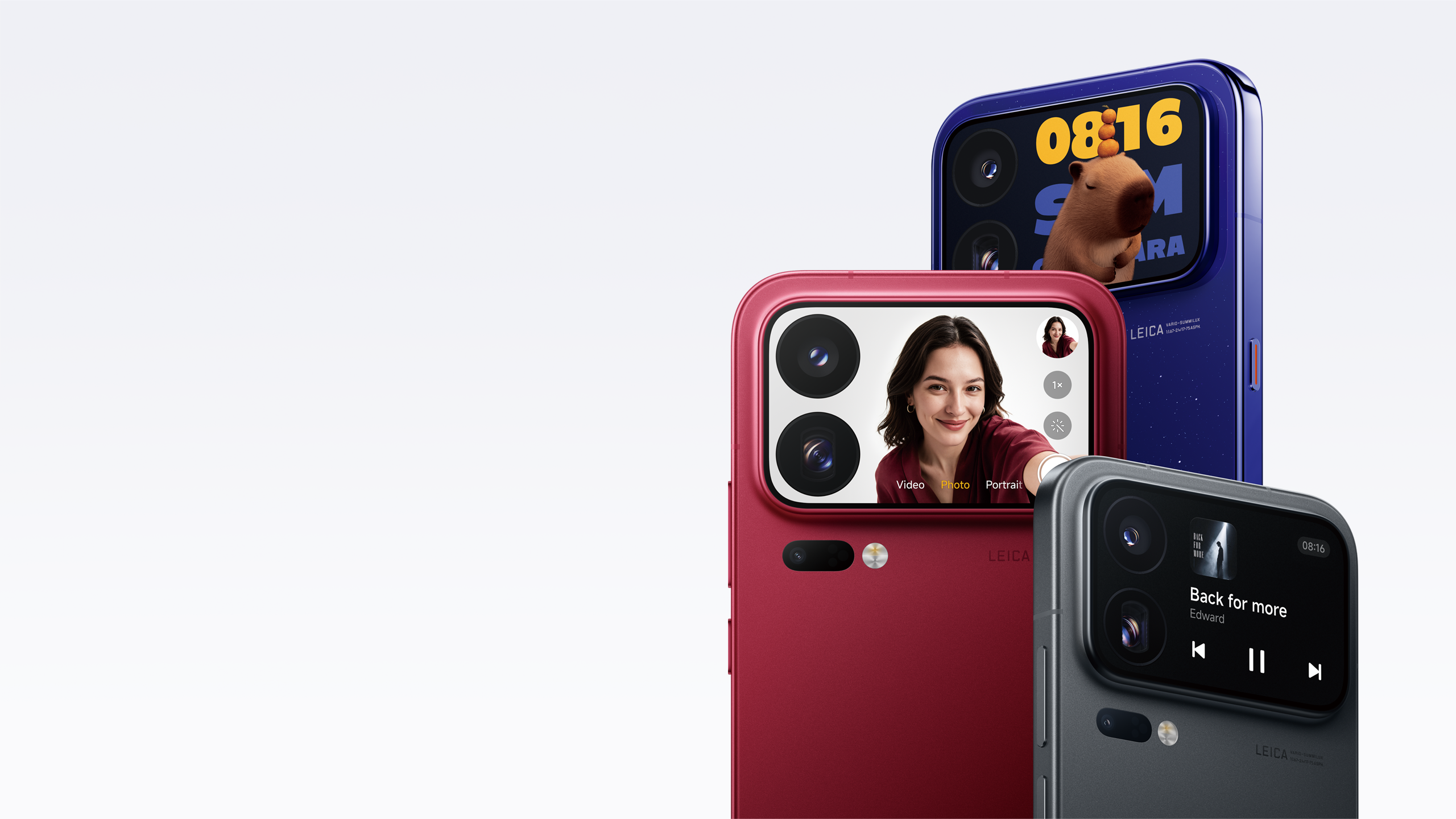
| Rear cameras | 50MP Sony IMX921 main (OIS) + 50MP ultrawide + 50MP Sony IMX882 periscope, 3x optical / up to 100x zoom | 50MP main (OIS) + 50MP ultrawide (112°) + 50MP periscope, 3.5x optical / up to 30x zoom |
| Front camera | 32MP, f/2.2, 90° FOV | 32MP RGBW with autofocus |
| IP rating | IP68 and IP69 (official) | Marketed as comprehensive dust/water resistance; no specific IP code published on the India site |
| Software | OriginOS 6 on Android 16 (first global OriginOS 6 device) | OxygenOS 16 on Android 16 |
| Colors | Legend, Alpha (Grey in select SE Asian/Russian markets) | Sand Storm, Infinite Black, Ultra Violet |
| Official markets | China, India, Taiwan, Indonesia, Thailand, Saudi Arabia, Malaysia, Russia | Launched globally; North America/Europe rollouts ending per July 2026 notice |
Note the one genuine gap in the public record here: OnePlus publishes glowing language about "the industry's most complete IP ratings" on its own OnePlus 15 product page but does not state a specific IP code there, which is unusual for a 2026 flagship. iQOO, by contrast, states IP68 and IP69 directly in its own launch materials, with the standard caveat that this isn't a certification for prolonged underwater use.
Display: brighter and sharper on paper
The iQOO 15's 6.85-inch panel is both higher-resolution (3168×1440, a true 2K) and brighter on paper than the OnePlus 15's 6.78-inch, 1272×2772 ("1.5K") screen. iQOO's own iQOO 15 product page lists 2600 nits as the full-screen high-brightness figure and 6,000 nits as a local peak — numbers aimed squarely at outdoor HDR video and gaming. The OnePlus 15 counters with a higher top refresh rate (165Hz vs. 144Hz), which matters more for competitive mobile gaming than for everyday scrolling, where the difference is barely perceptible.
Performance and battery
Both phones are built around the same Snapdragon 8 Elite Gen 5, Qualcomm's current flagship mobile platform, built on a 3nm process with a third-generation Oryon CPU. iQOO pairs it with what it calls a "Q3 Supercomputing Chip" for additional graphics/AI offload, which is iQOO's own branding rather than an independently verified benchmark claim — treat any specific frame-rate or AnTuTu numbers you see elsewhere as third-party testing, not official figures from either company.
On battery, the OnePlus 15's 7,300mAh Silicon NanoStack cell has a nominal capacity edge over the iQOO 15's 7,000mAh silicon-anode pack (rated at 6,830mAh). Charging flips the advantage: OnePlus's 120W SUPERVOOC (in India and most global markets; US units have historically shipped at a lower 80W) beats iQOO's 100W FlashCharge on paper, though both companies claim roughly similar real-world top-up speeds. Wireless charging favors OnePlus too — 50W AIRVOOC built in, versus iQOO's 40W wireless, which additionally requires buying a separate charging dock.
Cameras compared
Both phones use a near-identical camera blueprint: three 50MP rear sensors covering main, ultrawide and periscope telephoto, plus a 32MP front camera. The difference is in the periscope specifically. iQOO's 15 uses a 50MP Sony IMX882 sensor for 3x optical zoom and advertises reach up to 100x digital zoom; OnePlus's 15 uses a 3.5x optical periscope it describes as reaching "7x optical-quality" zoom with a 30x digital ceiling. In practice, that gives the iQOO 15 a longer native reach for zoomed shots, while OnePlus's shorter-but-higher-quality zoom range is pitched at closer portrait and detail shots. OnePlus's ultrawide also specifies a 112° field of view, wider than typical ultrawide modules; iQOO doesn't publish an equivalent FOV figure for its ultrawide on its spec page.
Readers coming from Samsung or Google ecosystems may also want to see how OnePlus's camera system holds up against other recent flagships — our OnePlus 15 vs. Galaxy S26 Ultra comparison and our look at how the OnePlus 15's cameras stack up against the Pixel 11 Pro both go deeper on computational photography differences that don't show up in a spec sheet.
Software and long-term support
This is where OnePlus's business pivot actually bites hardest. The OnePlus 15 ships on OxygenOS 16 over Android 16, and OnePlus's own FAQ attached to the July 16, 2026 notice confirms existing devices will keep receiving "software updates, security patches, and applicable support." But the same FAQ also describes a coming option — not a requirement — for eligible OnePlus devices to voluntarily move to ColorOS, the Android skin used by sibling brand Oppo, once ColorOS 17 ships, with a rollback path to OxygenOS for anyone who doesn't like it. That's a real change in direction for a brand that built its identity partly on OxygenOS being distinct from Oppo's software.
The iQOO 15 runs OriginOS 6 on Android 16 — the first iQOO phone to launch globally with that version — and carries no equivalent restructuring announcement. iQOO (and parent brand vivo) have not signaled any similar retreat from the markets they currently serve.
Which flagship should you buy?
Buy the iQOO 15 if you live somewhere it's officially sold — India, China, Taiwan, Indonesia, Thailand, Saudi Arabia, Malaysia or Russia — and you want the brighter, higher-resolution screen and the longer periscope reach, and you're comfortable with OriginOS, which is less widely reviewed in English-language coverage than OxygenOS.
Buy the OnePlus 15 if you're in a market where it's still on shelves (including the US and most of Europe, for now) and you want faster wired and wireless charging plus a software experience you already know from past OnePlus phones — while going in aware that OnePlus's long-term Western product pipeline is explicitly winding down, and that a future software transition toward ColorOS is on the table.
Neither phone is a bad buy on hardware alone; this is genuinely one of the closer flagship-vs-flagship matchups of the cycle. The deciding factor for most readers will be geography and risk tolerance around long-term support, not the spec sheet.
What's next
Two threads are worth watching. First, how OnePlus's North America and Europe wind-down actually plays out for OnePlus 15 owners — whether that voluntary ColorOS option arrives smoothly, and whether retail stock of the OnePlus 15 simply sells through without a direct successor landing in those markets. Readers curious whether to jump to whatever comes next from OnePlus, rather than stick with the 15, can see how the math looks in our OnePlus 16 vs. OnePlus 15 upgrade comparison. Second, whether iQOO follows vivo's broader international pattern and eventually pushes into the US or UK — nothing in iQOO's current rollout schedule suggests that's imminent, but the brand has expanded its official footprint with nearly every generation.
Frequently asked questions
Is the iQOO 15 sold in the US or UK?
No. iQOO has not officially launched the iQOO 15 in the US or UK. It's sold through authorized channels in China, India, Taiwan, Indonesia, Thailand, Saudi Arabia, Malaysia and Russia; buying one elsewhere means an unofficial import with no local warranty.
Will the OnePlus 15 still get software updates?
Yes. OnePlus's July 16, 2026 Notice of Business Adjustment states that existing OnePlus devices, including the OnePlus 15, will continue receiving software updates, security patches and after-sales support despite the company ending new product rollouts in North America and Europe.
Do the iQOO 15 and OnePlus 15 use the same processor?
Yes, both use Qualcomm's Snapdragon 8 Elite Gen 5. iQOO pairs it with an additional chip it calls the Q3 Supercomputing Chip for graphics and AI tasks.
Which phone has the better camera zoom?
The iQOO 15's 50MP periscope telephoto offers 3x optical zoom and advertises reach up to 100x digital zoom. The OnePlus 15's periscope is rated at 3.5x optical ('7x optical-quality') with a 30x digital ceiling, prioritizing closer zoom quality over maximum reach.
How much do the iQOO 15 and OnePlus 15 cost in India?
Both launched at a reported ₹72,999 (12GB+256GB) and ₹79,999 (16GB+512GB) MRP within days of each other in late 2025. Prices have since risen on both official stores; iQOO's own India e-store lists the 16GB+512GB model at ₹93,999 as of this writing.
Is OnePlus switching the OnePlus 15 to ColorOS?
Not by force. OnePlus's official FAQ says eligible OnePlus devices will have the option to voluntarily update to ColorOS once ColorOS 17 ships, with a rollback path back to OxygenOS. Devices outside that upgrade scope keep receiving OxygenOS maintenance.
Sources
- OnePlus 15 official specs — OnePlus Indiaoneplus.in
- iQOO 15 official specs — iQOO Indiaiqoo.com
- OnePlus Notice of Business Adjustment, July 16, 2026service.oneplus.com
- iQOO 15 official India store listingshop.iqoo.com
- Qualcomm Snapdragon 8 Elite Gen 5 product pagequalcomm.com
Nadia Osei covers mobile and consumer gadgets for Pandromeda: smartphones, tablets, smartwatches, earbuds and smart-home devices. She tracks launches, software updates and pricing across Apple, Google, Samsung and the rest, and builds comparisons from the manufacturers' published specifications.