OnePlus 15 vs Pixel 11 Pro: Specs, Price and Camera Compared
A full spec, price and camera breakdown of two current flagships: OnePlus's charging and battery muscle against Google's zoom camera and seven years of guaranteed updates.
The OnePlus 15 and the Pixel 11 Pro take opposite bets on what a flagship phone should prioritize. OnePlus packs in a larger 7,300mAh battery, 80W wired charging and a lower starting price around $899.99; Google counters with a more flexible 5x periscope-plus-120x "Pro Zoom" camera system, a brighter 3,600-nit display and a seven-year software update commitment that outlasts OnePlus's by several years. If raw battery life, charging speed and price-per-dollar matter most, the OnePlus 15 wins. If camera versatility, display brightness and long-term software support matter more, the Pixel 11 Pro is the better buy.
- Chipsets: Snapdragon 8 Elite Gen 5 (OnePlus 15) vs Google Tensor G6 (Pixel 11 Pro)
- Battery: 7,300mAh / 80W wired, 50W wireless (OnePlus 15) vs 4,850mAh / 30W wired, 25W wireless (Pixel 11 Pro)
- Rear cameras: Triple 50MP, 3.5x periscope telephoto (OnePlus 15) vs 50MP wide + 48MP ultrawide + 48MP 5x telephoto with 120x Pro Zoom (Pixel 11 Pro)
- Starting price: $899.99 (OnePlus 15, 12GB/256GB) vs $1,099 (Pixel 11 Pro, 12GB/256GB)
- Software support: OxygenOS 16 on Android 16 vs 7 years of OS, security and Pixel Drop updates on Android 17
Chipset and performance
The OnePlus 15 runs on Qualcomm's Snapdragon 8 Elite Gen 5, paired with LPDDR5X RAM (up to 9,600Mbps in the 16GB configuration) and UFS 4.1 storage, according to OnePlus's own OnePlus 15 product page. OnePlus also builds the phone around a 360° Cryo-Velocity vapor chamber cooling system rated for roughly 5,731mm² of heat-dissipating surface area, which the company says keeps the chip running at full tilt during extended gaming sessions, including an "always-on 120FPS" mode it says it validated in its own test lab.
The Pixel 11 Pro instead uses Google's in-house Tensor G6 chip paired with a dedicated Titan M3 security coprocessor, per Google's official Pixel 11 Pro tech specs page. Tensor chips have historically prioritized on-device AI and imaging workloads — the processing behind Pixel's computational photography and Gemini-powered features — over raw benchmark throughput, so the two phones are built around different performance philosophies rather than directly comparable architectures. Memory options on the Pixel 11 Pro scale from 12GB with 256GB of storage up to 16GB with 512GB or 1TB of Zoned UFS storage.
Display
OnePlus equips the 15 with a 6.78-inch LTPO 1.5K panel behind Gorilla Glass Victus 2, with a dynamic refresh rate up to 165Hz and 3,200Hz touch sampling — specs aimed squarely at mobile gamers. OnePlus also highlights the phone's 1.15mm bezels on all four sides and a 95.5% screen-to-body ratio as design wins.
The Pixel 11 Pro uses a smaller 6.3-inch Super Actua LTPO OLED panel at 1280×2856 resolution (495 PPI) with a 1–120Hz adaptive refresh rate, also under Gorilla Glass Victus 2. Where Google pulls ahead is brightness: its spec page lists up to 2,400 nits for HDR content and up to 3,600 nits peak brightness, well above anything OnePlus publishes for the 15. Buyers who want a bigger canvas similar to the OnePlus 15 can step up to the Pixel 11 Pro XL, a 6.8-inch variant at 1344×2992 resolution that Google sells separately.
Battery and charging
This is where the OnePlus 15's advantage is largest. Its 7,300mAh Silicon NanoStack battery is more than 50% larger than the Pixel 11 Pro's typical 4,850mAh cell, and OnePlus backs it with 80W SUPERVOOC wired charging (up to 100W with a separate GaN adapter sold separately) and 50W AIRVOOC wireless charging. OnePlus also claims the battery retains 80% of its original capacity after four years of use.
Google's official specs list 30W USB-C PPS wired charging on the Pixel 11 Pro, good for roughly 55% in 30 minutes, plus Qi2.2-certified Pixelsnap wireless charging up to 25W. Both companies sell their fast chargers separately rather than in the box. On paper, the OnePlus 15 should comfortably out-endure and out-charge the Pixel 11 Pro, though actual screen-on time depends heavily on how each chipset and software stack manages power.
Cameras
OnePlus's triple rear system on the 15 pairs a 50MP wide camera with optical image stabilization, a 50MP ultrawide with a 112° field of view, and a 50MP periscope telephoto offering 3.5x optical zoom (OnePlus also advertises 7x "optical-quality" zoom). The front camera is a 32MP sensor with autofocus and what OnePlus calls a custom RGBW design meant to let in roughly 60% more light than a standard array.
The Pixel 11 Pro's rear array, per Google's own spec sheet, is a 50MP wide camera (ƒ/1.68, 82° field of view, 1/1.3-inch sensor), a 48MP ultrawide with autofocus and Macro Focus (ƒ/1.7, 123° field of view), and a 48MP telephoto with optical image stabilization and 5x optical zoom (ƒ/2.8, 23° field of view). Google rates its "Pro Zoom" feature at up to 120x, with what it calls optical-quality results at 0.5x, 1x, 2x, 5x and 10x. The front camera is a 42MP dual-pixel selfie camera with autofocus and a 103° ultrawide field of view — notably wider resolution and field of view than the OnePlus 15's front sensor. Google's camera system also leans on computational features like Magic Capture, Add Me and Pro Zoom that are tied closely to the Tensor chip's on-device processing.
Software and update support
The OnePlus 15 ships on OxygenOS 16, OnePlus's Android 16-based skin. OnePlus has already begun rolling its Android 17-based OxygenOS update out to the 15, detailed in Pandromeda's coverage of the OnePlus 15's Android 17 update timeline, though the company has not published a specific multi-year OS and security update pledge on its own OnePlus 15 product page.
Google is far more explicit: its official Pixel 11 Pro specs page promises "7 years of OS, security, and Pixel Drop updates," and the phone launched with Android 17 out of the box. That is a meaningfully longer guaranteed support window than OnePlus publishes for the 15. Google's own Android 17 rollout hasn't been entirely smooth across the Pixel 11 line, either — as Pandromeda detailed when the Pixel 11's Android 17 QPR1 update slipped, timing has occasionally lagged Google's own schedule even with a longer support commitment on paper.
AI and software features
Both phones lean heavily on on-device AI, but they approach it from different angles. OnePlus's AI Smart Link feature on the 15 is built to let the phone instantly adapt connectivity behavior to each app's needs, and the company's OP Gaming Core uses an adaptive CPU scheduler to keep frame rates steady during long sessions — features aimed squarely at performance and connectivity rather than generative AI. Google, by contrast, builds Pixel software features directly into the Tensor G6: on-device security scanning for malware and phishing, Magic Capture and Add Me in the camera app, and Gemini-powered tools across the OS. Google's spec sheet also notes that the Pixel 11 Pro includes VPN by Google at no extra cost and describes "multi-layer hardware security" spanning a quantum-safe secure boot process, a dedicated Tensor security core, the Titan M3 chip, and a Trusty trusted execution environment — security infrastructure OnePlus doesn't detail to the same level of depth on its own product page.
Connectivity and audio
Both phones support Wi-Fi 7 and roughly comparable Bluetooth generations — OnePlus lists Bluetooth 6.0 and a 360° omni-directional antenna design, while Google specifies Bluetooth v6 with antenna diversity. The Pixel 11 Pro adds an Ultra-Wideband chip for precise spatial ranging and dual-band GNSS support across GPS, GLONASS and Galileo, plus Google Cast built in. On audio, Google's spec page lists stereo speakers, three microphones, noise suppression and Spatial Audio on the Pixel 11 Pro. OnePlus supports dual active eSIMs on the 15 alongside physical SIM options, which matters for buyers who want to run two numbers without juggling physical cards.
Design and durability
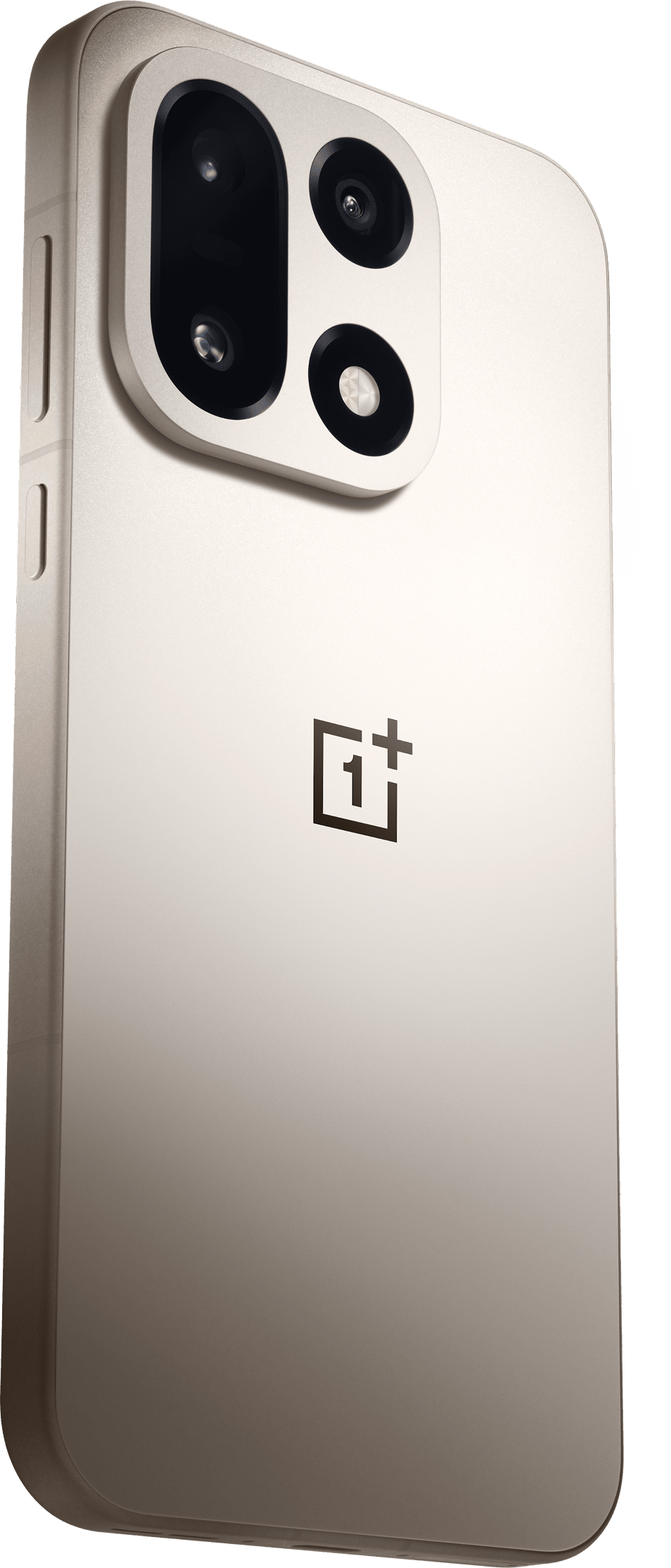
Both phones use Gorilla Glass Victus 2 on their front panels. Google specifies a full IP68 dust- and water-resistance rating for the Pixel 11 Pro, built around a "spacecraft-grade" aluminum frame, with its Obsidian colorway getting a matte-finish frame specifically. OnePlus describes the 15 as carrying "the industry's most complete IP ratings," covering everything from heavy rain to high-pressure water jets, but stops short of publishing a single IP code on its own product page — it notes the phone is rated for fresh water only and isn't designed for professional diving. Google's color lineup for the Pixel 11 Pro is Canyon, Olive, Fog and Obsidian (matte); OnePlus offers the 15 in its own set of finishes, including the sand-toned model shown in this article's photo.
Price and availability
OnePlus's 15 launched in the US with pricing reported at $899.99 for the 12GB/256GB configuration and $999.99 for 16GB/512GB. Google's official Pixel 11 Pro configuration and pricing page lists the phone starting at $1,099 for 12GB of RAM and 256GB of storage, scaling up through 512GB and 1TB options with 16GB of RAM, with financing offered as low as roughly $15.25 a month over 36 months and additional savings available for buyers trading in an eligible device. At list price, the Pixel 11 Pro's entry configuration costs about $200 more than the equivalent OnePlus 15 tier, before factoring in either company's trade-in promotions, carrier deals or storage-tier upgrades, which can shift the effective price either direction depending on what a buyer is trading in.
Both phones are current, widely available flagships rather than close-out or last-generation models, which is part of why this pairing makes sense as a head-to-head: shoppers comparing a nearly-$900 OnePlus flagship against a roughly $1,100 Pixel flagship are weighing a genuine price gap against genuine differences in cameras, display brightness and update policy, not comparing a new phone to an outgoing one.
| Spec | OnePlus 15 | Pixel 11 Pro |
|---|---|---|
| Chipset | Snapdragon 8 Elite Gen 5 | Google Tensor G6 + Titan M3 |
| Display | 6.78" LTPO 1.5K, up to 165Hz | 6.3" Super Actua LTPO OLED, 1–120Hz, up to 3,600 nits |
| RAM / storage | 12GB/16GB LPDDR5X, UFS 4.1 | 12GB/256GB, 16GB/512GB or 1TB |
| Battery | 7,300mAh | 4,850mAh (typical) |
| Wired charging | 80W SUPERVOOC (up to 100W) | 30W USB-C PPS |
| Wireless charging | 50W AIRVOOC | 25W Pixelsnap (Qi2.2) |
| Rear cameras | 50MP wide (OIS) + 50MP ultrawide + 50MP 3.5x periscope telephoto | 50MP wide + 48MP ultrawide (Macro) + 48MP 5x telephoto, Pro Zoom to 120x |
| Front camera | 32MP RGBW, autofocus | 42MP dual-pixel, 103° FOV |
| Water/dust resistance | "Industry's most complete IP ratings" (no published code), fresh water only | IP68 |
| Software | OxygenOS 16 (Android 16), Android 17 rolling out | Launched on Android 17; 7 years of OS, security & Pixel Drop updates |
| Connectivity | Wi-Fi 7, Bluetooth 6.0, dual eSIM, NFC | Wi-Fi 7, Bluetooth 6, NFC, UWB |
| Starting price | $899.99 (12GB/256GB) | $1,099 (12GB/256GB) |
Which should you buy
Choose the OnePlus 15 if battery life, charging speed and price are your top priorities: a larger 7,300mAh cell, 80W wired and 50W wireless charging, and a roughly $200 lower starting price make it the better value on raw hardware. Choose the Pixel 11 Pro if you want the more flexible camera system — a 5x telephoto with 120x Pro Zoom and a wider, higher-resolution front camera — a noticeably brighter display, and Google's seven-year software and security update commitment, which is the longest guarantee either company publishes for these phones. Buyers who are curious how the newer OnePlus 16 stacks up against Google's lineup instead can see Pandromeda's OnePlus 16 vs Pixel 11 comparison for that generation's tradeoffs.
Neither phone is a bad flagship purchase. The decision mostly comes down to whether you'd rather pay less up front for more raw battery and charging performance, or pay more for Google's camera versatility and the industry's longest guaranteed update window. Gamers and anyone who routinely runs their battery down by mid-afternoon will likely find the OnePlus 15's bigger cell and faster charger more useful day to day than any spec-sheet number. Buyers who keep phones for four or five years, or who lean on zoom photography and Google's AI camera tools regularly, will get more cumulative value out of the Pixel 11 Pro's longer support window and more flexible telephoto system, even at the higher up-front price.
Frequently asked questions
Which has the better camera, the OnePlus 15 or the Pixel 11 Pro?
The Pixel 11 Pro has the more flexible rear camera system on paper, with a 48MP 5x telephoto and a 120x 'Pro Zoom' mode plus a wider, higher-resolution 42MP front camera. The OnePlus 15 counters with an all-50MP triple rear setup and a 3.5x periscope telephoto, so OnePlus's cameras lean on higher base resolution while Google's lean on zoom range and computational processing.
How much bigger is the OnePlus 15's battery than the Pixel 11 Pro's?
The OnePlus 15 has a 7,300mAh battery versus the Pixel 11 Pro's typical 4,850mAh cell, according to each company's official specs — more than 50% larger capacity on the OnePlus 15.
Does the OnePlus 15 or Pixel 11 Pro charge faster?
The OnePlus 15 charges faster on paper, with 80W SUPERVOOC wired charging (up to 100W with a separate adapter) and 50W AIRVOOC wireless charging, compared to the Pixel 11 Pro's 30W wired and 25W Qi2.2 wireless charging.
How many years of software updates does each phone get?
Google explicitly promises 7 years of OS, security and Pixel Drop updates for the Pixel 11 Pro on its official specs page. OnePlus has not published a specific multi-year update pledge for the OnePlus 15 on its own product page, though it has already begun rolling out an Android 17-based OxygenOS update.
Which phone is cheaper, the OnePlus 15 or Pixel 11 Pro?
The OnePlus 15 starts lower, at a reported $899.99 for 12GB/256GB, versus the Pixel 11 Pro's official starting price of $1,099 for the same 12GB/256GB configuration — about a $200 difference before trade-in offers.
Is the OnePlus 15 or Pixel 11 Pro display brighter?
Google's official specs list the Pixel 11 Pro's display at up to 2,400 nits for HDR and up to 3,600 nits peak brightness, a figure OnePlus does not match on its own OnePlus 15 product page.
Sources
- OnePlus 15 — Official Product Page (oneplus.com)oneplus.com
- Google Pixel 11 Pro — Official Tech Specs (store.google.com)store.google.com
- Google Pixel 11 Pro — Official Pricing & Configurationsstore.google.com
- Qualcomm — Snapdragon 8 Elite Gen 5qualcomm.com
- Wikipedia — Google Tensoren.wikipedia.org
Nadia Osei covers mobile and consumer gadgets for Pandromeda: smartphones, tablets, smartwatches, earbuds and smart-home devices. She tracks launches, software updates and pricing across Apple, Google, Samsung and the rest, and builds comparisons from the manufacturers' published specifications.