iOS 27.1 Lands for iPhone Duo: What Actually Changed
Apple's security page lists iOS 27.1 as exclusive to the foldable iPhone Duo, released October 23 with no published CVE entries. Here is what's confirmed, and what's still rumor.
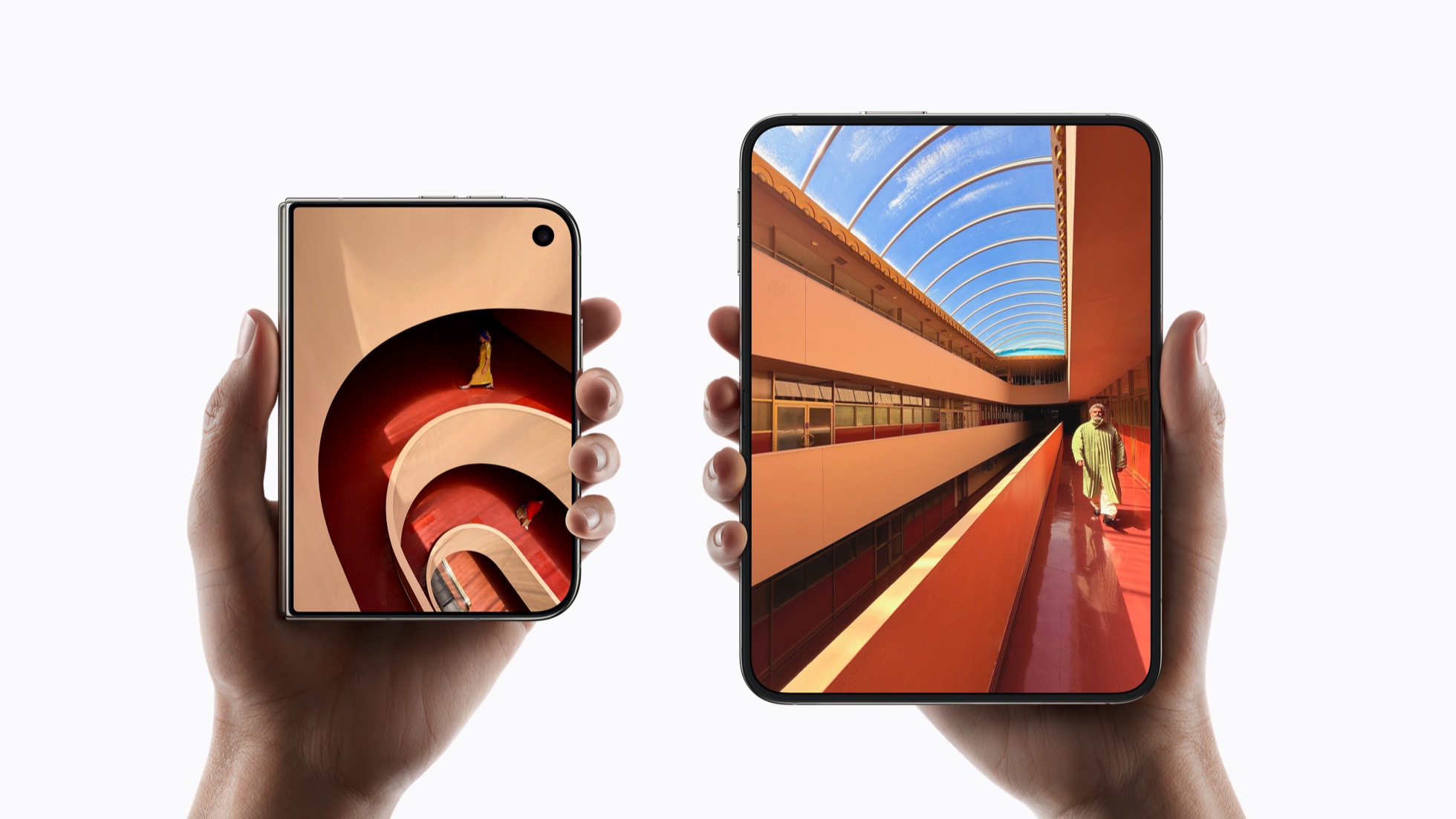
Apple's official security-release page lists iOS 27.1 as available for exactly one device — the iPhone Duo — with a release date of October 23, 2026, and the note "this update has no published CVE entries." That is the entirety of what Apple has confirmed in writing about this specific build. It is not the general iOS 27 update that landed on other iPhones (that was iOS 27.0.1, released September 28); it is a one-device, one-time software version that exists because the iPhone Duo, Apple's first foldable iPhone, needed an operating system built for a fold that no other iPhone has.
- What it is: iOS 27.1, listed by Apple as available only for iPhone Duo
- Release date: October 23, 2026 — the same day the iPhone Duo went on sale
- Security content: "No published CVE entries," per Apple's support page
- Not a general release: other iPhones remain on iOS 27.0.1 (September 28, 2026)
- Confirmed by Apple: a folding-specific interface, Split View, StandBy on either display, and new developer APIs for the hinge and dual displays
- Not confirmed by Apple: specific bug fixes, a public changelog, or the Siri/Messages/Passwords additions some outlets have speculated about
What Apple's own release notes actually say
Apple tracks every iOS and iPadOS security update on a single page at support.apple.com. The iOS 27.1 entry there is short: available for iPhone Duo, released October 23, 2026, no published CVE entries. That last phrase is Apple's standard wording for updates that don't carry security patches worth itemizing — it does not mean the update does nothing, only that there's nothing on the security side to disclose.
Apple has not published a separate "what's new" changelog for iOS 27.1 the way it sometimes does for major point releases. The most detailed first-party description of what the software actually contains comes not from a release-notes page but from two Apple Newsroom posts: the September 9 announcement of the iPhone Duo itself, and an October developer-focused post about apps built for the new device. Between those two documents and the bare security-page listing, a reasonably complete — if still narrow — picture of iOS 27.1 emerges.
Why this update exists only for one phone
iOS 27.1 is unusual because it isn't rolling out to the rest of the iPhone lineup. Every other supported iPhone — from the iPhone 11 up through the iPhone 18 Pro — is currently running iOS 27.0.1, which Apple shipped on September 28, two weeks after iOS 27's general release on September 14. The iPhone Duo skipped that update track entirely and launched on October 23 running its own 27.1 build instead, because it needed OS-level support for a folding display that didn't exist when iOS 27 shipped in September.
Apple introduced the iPhone Duo on September 9 as its first foldable iPhone: a 7.6-inch inner display and a 5.4-inch outer display in a titanium body, starting at $1,999 for 256GB. Apple's own announcement made clear the device would ship running iOS 27.1 rather than plain iOS 27, specifically because the software needed to manage a device that is, in effect, two screens and a hinge. Preorders opened October 16, and the phone went on sale at Apple Stores worldwide on October 23 — the same day iOS 27.1 appeared on Apple's security page.
What's actually new: the fold-specific interface
Based on Apple's own product materials, the software differences in iOS 27.1 are built around the Duo's two displays rather than around any single new headline feature. Apple describes a side-mounted Dock and controls, a Today View that lives on the inner display, and a redesigned Dynamic Island adapted to the device. Multitasking is a bigger focus than on a standard iPhone: Split View lets two apps run side by side, the system supports multiple windows of the same app, and app pairs can be saved for reuse. StandBy, Apple's always-on glanceable display mode, works on either screen of the Duo even when the phone isn't charging — something it doesn't do on a non-folding iPhone.
None of this is published as a bullet-point "what's new in 27.1" list by Apple. It's described across the Duo's launch materials as simply how the phone works, which is a reasonable approach for a device that only this software version has ever run on. In practice, that means there is no meaningful way to separate "iOS 27.1 features" from "iPhone Duo features" — for this device, right now, they are the same thing.
Camera software and Siri tied to this release
Apple's Duo announcement also ties several camera-software features to the device's launch software: Smart Take, Duo Preview (using the outer display as a viewfinder for the subject being photographed), Duo FaceTime, a Siri-driven camera mode, and an updated set of Photographic Styles. These are presented by Apple as part of what the iPhone Duo does out of the box — again, running iOS 27.1.
On Siri: Apple's September materials describe Siri's new AI capabilities arriving in beta with iOS 27 on September 14, in English only, and state that additional languages — French, Japanese, Korean, Portuguese, and Spanish — were planned to follow in October. Apple's own text ties that language expansion to a broader rollout timeline rather than specifically to the iPhone Duo's one-device build, so it's worth treating it as a general Siri AI milestone that happened to land in the same month as iOS 27.1, not as a confirmed line item inside the Duo-only update.
The clearest technical detail: the iOS 27.1 SDK
The most concrete, unambiguous description of what iOS 27.1 adds comes from Apple's October Newsroom post aimed at developers, "Developers bring incredible new app experiences to iPhone Duo." It describes the iOS 27.1 SDK as providing new and updated APIs specifically for the fold: layout APIs that let an app split its content across the crease, a hinge API that responds to the physical angle of the display, scene accessories for showing different content on the inner and outer screens at once, and new camera APIs tied to the Duo's dual-display viewfinder tricks. Apps built with standard SwiftUI and UIKit components reportedly adapt to the fold automatically without extra code, and Xcode 27.1 adds a "Device Hub" for testing simulated folding poses without needing a physical unit.
That same post lists a long roster of apps Apple says were updated for the Duo at or around launch — Netflix, Prime Video, Paramount+, Microsoft Word and Outlook, Zoom, Slack, Salesforce, Instagram's Edits app, several games including Asphalt Legends and Zenless Zone Zero, and regional apps like KakaoTalk. None of that is a security fix or a changelog entry, but it is the most substantive, verifiable description Apple has given of what the 27.1 software layer actually enables.
What "no published CVE entries" does and doesn't tell you
Apple's security-release page is a tracking log, not a feature changelog, and reading "no published CVE entries" as "this update is minor" is a common but not entirely safe assumption. It means Apple is not disclosing any vulnerability fixes tied to this specific build — not that the underlying code is identical to iOS 27.0.1 plus a new icon. Because the iPhone Duo is new hardware with a new display architecture, the comparison to a same-hardware point update like iOS 27.0.1 (which also carries "no published CVE entries," per the same page) is somewhat apples-to-oranges: that update was a small patch to existing phones, while iOS 27.1 is the first and only software this particular hardware has ever shipped with.
What's rumored, not confirmed
Several features widely discussed in tech coverage ahead of the Duo's launch are not confirmed by anything Apple has published about iOS 27.1 specifically. According to MacRumors, which flagged in mid-September that two features already shown off for iOS 27 — Messages' contextual "Add to Reminders" and "Add to Notes" suggestions, and a Passwords app feature that can automatically repair a weak or reused password with one tap — were held back from the September 14 release and promised only for "a future software update." MacRumors speculated iOS 27.1 "will likely be" that update, but used explicitly hedged language throughout ("likely," "we expect") rather than reporting it as confirmed.
That speculation runs into a wrinkle Apple's own support page exposes: iOS 27.1, as Apple has listed it, is available only for the iPhone Duo — not for the iPhone 11 through iPhone 18 Pro models still running iOS 27.0.1. If the Messages and Passwords features MacRumors described are real and do eventually ship, Apple's current public documentation doesn't show them arriving through this particular, Duo-only 27.1 build; they would more plausibly land in a later, broader point release that simply hasn't been numbered or published yet. Readers should treat any claim that those features are "in iOS 27.1 now" as an unconfirmed leak rather than an official fact, regardless of which outlet is repeating it.
Build numbers are a similar case. Some outlets have reported the iPhone Duo shipped with build 24A94232 and that Apple quietly pushed a newer build, 24A94425, shortly before launch so buyers would see a day-one update during setup — but Apple has not published those build numbers itself, and the reports disagree on some details, so they're worth treating as unverified rather than fact.
iOS 27 release history so far
For context, here is how iOS 27.1 fits into the broader iOS 27 timeline, based on Apple's own security-release page and Newsroom posts:
| Version | Release date | Applies to | Security content |
|---|---|---|---|
| iOS 27 | Sept 14, 2026 | iPhone 11 and later | Published CVE advisory |
| iOS 27.0.1 | Sept 28, 2026 | iPhone 11 and later | No published CVE entries |
| iOS 27.1 | Oct 23, 2026 | iPhone Duo only | No published CVE entries |
Notice that iOS 27.1 doesn't sit in the same lineage as 27.0.1 on Apple's page — it's a separate, device-scoped entry rather than the "next" update after 27.0.1 for every iPhone. Owners of a standard iPhone shouldn't expect an iOS 27.1 prompt; the next update most of them see will carry a different version number entirely.
Should iPhone Duo owners install it, and what's next
For the small group of people who now own an iPhone Duo, there isn't really a decision to make: iOS 27.1 is the software the device ships with, and Apple's setup process reportedly prompts new owners to install the latest build (whichever one that is) during first-time setup, the same way any new iPhone nudges you toward the newest point release before you start transferring data — a process similar in spirit to moving files between Apple devices over AirDrop. There's no older, alternate version of iOS running on Duo hardware to compare it against, so "should you update" mostly reduces to "yes, if prompted."
The bigger open question is what comes next, for the Duo and for Apple's broader foldable push. Apple's developer post references Xcode 27.1 and app-level adaptations that will keep arriving as more developers build for the fold, and the standard iPhone line is expected to move on to its own next point release in the coming weeks, separate from whatever comes after 27.1 on the Duo. Given how new the hardware is, and how thin Apple's own public documentation of 27.1 remains, expect more detail — and almost certainly a more conventional version-numbering scheme — once the general iPhone lineup and the Duo are back on a shared update track. In the meantime, how Apple's first folding iPhone holds up against established players in the broader premium-phone market, the kind of comparison Pandromeda has made for devices like the OnePlus 15 and Pixel 11 Pro, is a separate story that will take months of real-world use to tell.
Frequently asked questions
What devices can install iOS 27.1?
According to Apple's official security-release page, iOS 27.1 is available only for the iPhone Duo. Other iPhones (iPhone 11 and later) are running iOS 27.0.1, released September 28, 2026, not iOS 27.1.
Does iOS 27.1 fix any security vulnerabilities?
Apple's support page lists iOS 27.1 as having "no published CVE entries," meaning Apple has not disclosed any security vulnerabilities fixed in this release.
Is iOS 27.1 the same as the general iOS 27 update?
No. The general iOS 27 release came out September 14, 2026, and a follow-up, iOS 27.0.1, came September 28 for the standard iPhone lineup. iOS 27.1 is a separate, device-specific build that exists solely for the iPhone Duo.
Does iOS 27.1 add the Passwords app's compromised-password fix or Messages suggestions?
That is not confirmed. Apple has not stated those features are part of iOS 27.1. MacRumors reported, using hedged language like "likely," that those delayed iOS 27 features might arrive with iOS 27.1, but this remains an unconfirmed report, not an Apple-stated fact.
When did the iPhone Duo and iOS 27.1 launch?
The iPhone Duo went on sale October 23, 2026, after preorders opened October 16. Apple's security page lists iOS 27.1's release date as October 23, 2026, the same day.
What new developer features does iOS 27.1 include?
Per Apple's Newsroom post for developers, the iOS 27.1 SDK adds layout APIs for splitting content across the fold, a hinge-angle API, scene accessories for showing content on both displays, and new camera APIs, alongside a Device Hub in Xcode 27.1 for testing simulated folding poses.
Sources
- Apple – Apple security releases (support.apple.com)support.apple.com
- Apple Newsroom – Apple unveils iPhone Duoapple.com
- Apple Newsroom – iPhone Duo arrives at Apple Store locations worldwideapple.com
- Apple Newsroom – Developers bring incredible new app experiences to iPhone Duoapple.com
- Wikipedia – IOS version historyen.wikipedia.org
Nadia Osei covers mobile and consumer gadgets for Pandromeda: smartphones, tablets, smartwatches, earbuds and smart-home devices. She tracks launches, software updates and pricing across Apple, Google, Samsung and the rest, and builds comparisons from the manufacturers' published specifications.