Fitbit Edge vs Fitbit Charge 6: What's the Difference?
Google's $179.99 Fitbit Edge adds a hybrid OLED screen, a swappable battery, and sharper GPS to the Charge 6 formula. Here is exactly what changed, and what didn't.
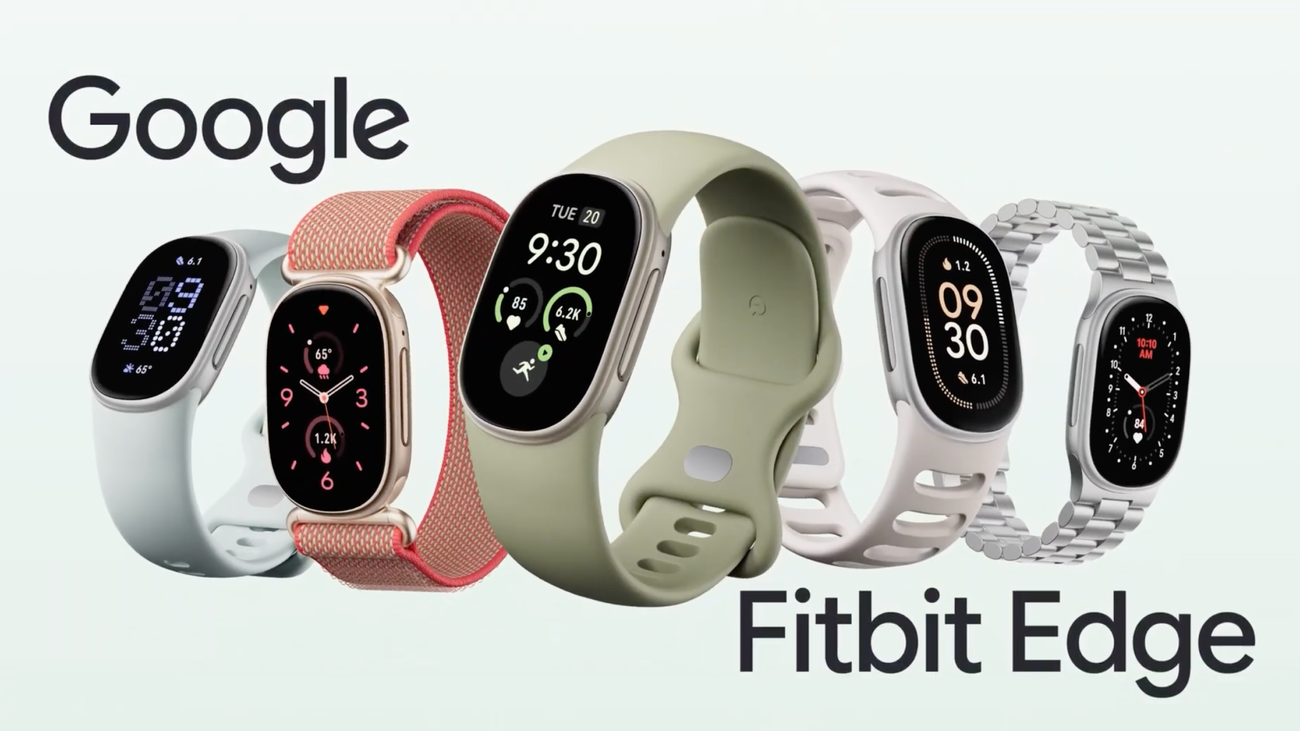
The short answer: the Fitbit Edge, which Google started selling on October 27, 2026, is the real successor to the Fitbit Charge 6, not a side-grade. For $179.99 you get a bigger always-on-capable hybrid OLED screen, a user-replaceable battery (Google calls it Fitbit's first repairable tracker), and GPS Google says is up to 40% more accurate. The Charge 6 keeps selling at a lower price with a smaller AMOLED screen, SpO2 and EDA sensors the Edge's spec sheet doesn't list, and a sealed, non-swappable battery. Neither device puts Gemini or a third-party app store on your wrist — that stays on the Pixel Watch line.
Quick facts
- Fitbit Edge: $179.99 (Active Band), $219.99 Stephen Curry Special Edition; released October 27, 2026
- Fitbit Charge 6: $159.95 at the Google Store, Fitbit's prior flagship tracker
- Edge's 7-day battery figure is Google's own pre-production lab claim, not independently tested
- Edge is water-resistant to 5 ATM / IP68 — Google's own materials say "not waterproof or dust proof"
- Edge needs Android 11+ or iOS 16.4+ and the Google Health app; Charge 6 works on older OS versions
- Neither tracker runs Gemini on the wrist or supports a third-party app store — that's Wear OS territory
- Fitbit has operated as a Google-owned brand since 2021
Pricing and availability
Google announced the Fitbit Edge on October 12, 2026, opened pre-orders the same day, and put it on shelves on October 27, 2026 — just four days before this comparison was written. The standard Edge, which ships with a silicone Active Band, costs $179.99. A Stephen Curry Special Edition, with what Google describes as rye and game-day-orange tones, costs $219.99. Buyers of either version get three months of Google Health Premium included.
The Fitbit Charge 6 is older stock by comparison: it's listed at $159.95 on the Google Store's Charge 6 specs page, roughly $20 cheaper than the new Edge. Google and retailers discount the Charge 6 fairly often, so street prices can land well below that list figure, which widens the price gap even further in the Charge 6's favor if budget is your main constraint.
Design and display
The biggest visible change is the screen. The Edge uses what Google calls a hybrid OLED panel with 46% more viewing area than earlier Fitbit trackers, bright enough to read in direct sunlight, with an always-on display option and a side button that now gives haptic feedback. Reporting that covered the launch puts the panel at roughly 1.34 inches, though Google's own spec pages don't print an exact diagonal measurement — treat that figure as press-reported rather than Google-confirmed.
The Charge 6, by contrast, uses a 1.04-inch AMOLED display rated at 450 nits, the same basic panel size the Charge line has used since the Charge 5. It has no always-on mode built into Google's marketing for it the way the Edge does.
Build materials moved too. According to the Google Store's Fitbit Edge spec page, the case is recycled aluminum (Google's footnote says at least 2% of the product's weight) with what it calls a protective metal housing, and the whole unit is 11.5mm thick and weighs 17.7 grams without a band (about 32g with one). Google says the case is 45% lighter than an Apple Watch Series 12. The Edge ships in Obsidian, Fog, Olive, and Canyon finishes, with Active Sport, Magnet, Metal Links, and a coming-soon Performance Loop band sold separately. The Charge 6's pebble-shaped body weighs about 15 grams on its own and roughly 31 grams with its band — lighter still, but on an older design Fitbit hasn't significantly reworked since the Charge 5. If you're also weighing a bigger always-on screen against a smartwatch, our breakdown of always-on displays on iPhone, Android, and Apple Watch covers the battery trade-offs that always-on panels generally bring.
Health and fitness sensors
Both trackers carry continuous heart-rate monitoring and an ECG app (restricted to select countries and not for users under 22). The Edge adds a skin-temperature sensor, HRV-based recovery metrics, sleep-stage analysis, and Google's new Health Guardian feature, which flags trends in blood pressure, insulin resistance, and abnormal heart rate over time — Google is explicit that these are wellness signals, not a diagnostic tool, and availability varies by region and device.
Notably, Google's own Edge materials don't list a blood-oxygen (SpO2) sensor or an EDA (electrodermal activity) stress sensor among its specs, while the Charge 6's spec sheet includes both HRM, SpO2, ECG, and EDA alongside an ambient light sensor. That's a real gap worth flagging if nightly SpO2 readings or EDA-based stress scores matter to you — don't assume the newer device automatically carries over every sensor the older one had.
On GPS, the Edge has built-in precision GPS that Google says is up to 40% more accurate than the tracking in prior Fitbit generations, plus an altimeter, more than 50 exercise modes, and automatic recognition of up to 100 workout types. The Charge 6 also has built-in GPS (with GLONASS), but Google hasn't published a comparable accuracy improvement figure for it.
Battery life and charging
Google rates the Edge at up to seven days per charge. That number comes with an important caveat buried in Google's own footnote: it's based on 2026 lab testing on pre-production hardware in California, under default settings and average use, with Battery Saver mode — not an independent, real-world benchmark, and Google itself says actual results will vary. Fast charging is quick: Google says five minutes on the included USB-C cable (with a 30W adapter, sold separately) returns roughly a full day of use.
The Charge 6 carries the identical "up to seven days" claim from Fitbit, with a roughly two-hour full charge time. In other words, the two devices are marketed with the same headline battery figure — the real differentiator is what happens when the battery eventually degrades.
That's where the Edge's party trick comes in: Google calls it Fitbit's first repairable fitness tracker, built with a modular internal design and a user-replaceable battery. The Charge 6, like every Fitbit tracker before it, has a sealed battery that can't be swapped by the owner — when it wears out, the whole device is typically replaced rather than repaired.
Water resistance, not waterproofing
The Edge is rated 5 ATM to the ISO 22810:2010 standard and IP68 under IEC 60529, tested at the factory. Google's own product copy is careful to spell out that this means the device is water-resistant, not waterproof or dust proof — a distinction worth repeating because "swim-proof" marketing language often gets flattened into "waterproof" in casual conversation. The Charge 6 is rated to 50 meters, which is the same practical swim-friendly tier, though Fitbit markets the Charge 6's rating in meters rather than the ATM/IP68 pairing Google uses for the Edge.
Software, Gemini, and the app ecosystem
Neither device is a smartwatch, and Google hasn't tried to make either one behave like the Pixel Watch. The Edge requires Android 11 or later, or iOS 16.4 or later, plus a Google Account, the Google Health app, and an internet connection. The Charge 6 has looser OS requirements, running on older Android and iOS versions, which matters if you or a gift recipient is on an older phone.
Despite the marketing push around Gemini and Google Health, the Edge does not put Gemini on your wrist the way the Pixel Watch line does — there's no microphone on the device, so Gemini features are routed through the Google Health app on your phone rather than answered on-wrist. The Edge also has no third-party app store; the built-in apps (ECG, Google Maps assist, media controls, notifications) are what you get, full stop. The Charge 6 works the same way — no app store, no on-device voice assistant. If you want Gemini or downloadable apps on your wrist, that's a reason to look past both trackers toward a Wear OS watch, a comparison we cover in Pixel Watch 4 vs Galaxy Watch 8 and our three-way smartwatch buying guide.
Google Health Coach, the Edge's AI-assisted coaching layer tied into the broader Google Health platform, needs a separate Google Health Premium subscription (three months are included with purchase, then it's a recurring cost). The Charge 6 is tied into the same Google Health / Fitbit Premium ecosystem for its advanced insights, so the subscription situation is a wash between the two — budget for it either way if you want the full feature set.
Repairability: the headline difference
If there's one feature Google is clearly using to differentiate the Edge from every Fitbit before it, this is it. Google's launch materials call the Edge "our first repairable fitness tracker," built around a modular internal architecture with a battery you — or presumably an authorized repair channel — can swap out instead of replacing the whole band. The Charge 6 offers nothing comparable; like the rest of the Charge line, its battery is sealed inside the pebble module for the device's life.
| Spec | Fitbit Edge | Fitbit Charge 6 |
|---|---|---|
| Price | $179.99 (Active Band); $219.99 Stephen Curry Edition | $159.95 (Google Store) |
| Released | October 27, 2026 | September 2023 |
| Display | Hybrid OLED, always-on option, 46% more area than prior Fitbit trackers | 1.04-inch AMOLED, 450 nits |
| Battery life (maker claim) | Up to 7 days (Google pre-production lab test) | Up to 7 days (Fitbit claim) |
| Battery replaceable? | Yes — Google's first repairable tracker | No — sealed |
| Water resistance | 5 ATM (ISO 22810:2010) + IP68; not waterproof | Up to 50 meters |
| Weight | ~17.7g without band, ~32g with band | ~15g pebble, ~31g with band |
| Case material | Recycled aluminum (≥2% by weight) | Aluminum |
| GPS | Built-in, up to 40% more accurate (Google claim) | Built-in GPS + GLONASS |
| Sensors | HR, ECG, skin temperature, HRV, sleep stages | HR, SpO2, ECG, EDA, ambient light |
| Gemini on wrist / app store | No (no microphone; no third-party apps) | No |
| OS support | Android 11+ / iOS 16.4+ | Android 9+ / iOS 15+ (reported) |
| Requires | Google Health app, Google Account | Fitbit / Google Health app |
Who should actually buy which one
Buy the Fitbit Edge if you want the newest hardware: a bigger, brighter, always-on-capable screen, Google's claimed GPS accuracy bump, and the long-term reassurance of a battery you aren't stuck replacing the whole device for. It's also the one to pick if you're on a very recent phone already, since it demands Android 11+ or iOS 16.4+.
Stick with the Fitbit Charge 6 — or look for discounted Charge 6 stock — if SpO2 and EDA stress tracking matter to you, if your phone is a few years old, or if you simply want to save roughly $20 (often more, once retailer discounts kick in) on a tracker Google itself is still actively selling and supporting. Neither device is a smartwatch replacement; if Gemini on your wrist or downloadable apps are a dealbreaker, that pushes you toward the Pixel Watch line instead, where our Apple Watch, Galaxy Watch, and Pixel Watch comparison can help narrow things down.
What next
Fitbit Edge pre-orders and retail stock are live now at the Google Store's Fitbit Edge page, where you can also check current finish and band availability. If you already own a Charge 6, there's no official trade-in bundle confirmed at launch — check the Google Store for current offers before buying outright. Expect independent battery-life and GPS-accuracy testing to arrive from reviewers in the coming weeks, which will be the real check on Google's "up to seven days" and "40% more accurate" claims; we'll update this comparison once that data lands.
Frequently asked questions
Is the Fitbit Edge waterproof?
No. Google rates the Fitbit Edge at 5 ATM (ISO 22810:2010) and IP68 (IEC 60529), which means it's water-resistant for swimming and showering. Google's own product materials specifically state it is "not waterproof or dust proof," so avoid high-pressure water, scuba diving, or hot tubs.
Does the Fitbit Edge replace the Fitbit Charge 6?
Google and the press covering the October 12, 2026 launch position the Fitbit Edge as the successor to the Charge 6, with a bigger hybrid OLED screen, a user-replaceable battery, and improved GPS accuracy claims. Google continues to sell the Charge 6 at a lower price alongside it.
Can I use Gemini directly on the Fitbit Edge?
Not on the wrist. The Fitbit Edge has no microphone, so Gemini-powered features are accessed through the Google Health app on your phone rather than spoken to or answered on the band itself. Full on-wrist Gemini remains a Pixel Watch (Wear OS) feature.
Does the Fitbit Edge have a blood oxygen (SpO2) sensor?
Google's official Fitbit Edge spec materials do not list an SpO2 sensor, unlike the Fitbit Charge 6, whose spec sheet includes SpO2 and an EDA stress sensor. If overnight blood-oxygen tracking matters to you, check Google's current spec page before buying.
How much more does the Fitbit Edge cost than the Charge 6?
The standard Fitbit Edge costs $179.99, about $20 more than the Fitbit Charge 6's $159.95 Google Store list price. A Stephen Curry Special Edition of the Edge costs $219.99. Retailers often discount the Charge 6 further, widening the gap.
Is the Fitbit Edge's replaceable battery something you can swap yourself?
Google calls the Edge "our first repairable fitness tracker," built with a modular internal design and a replaceable battery, in contrast to the sealed, non-swappable battery in the Charge 6 and every earlier Fitbit tracker. Google hasn't published independent, at-home repair instructions alongside the launch, so confirm the official repair process before attempting it yourself.
Sources
- Google — Fitbit Edge announcementblog.google
- Google Store — Fitbit Edge tech specsstore.google.com
- Google Store — Fitbit Charge 6 tech specsstore.google.com
- Google Store — Fitbit Edge product pagestore.google.com
- Wikipedia — Fitbiten.wikipedia.org
Nadia Osei covers mobile and consumer gadgets for Pandromeda: smartphones, tablets, smartwatches, earbuds and smart-home devices. She tracks launches, software updates and pricing across Apple, Google, Samsung and the rest, and builds comparisons from the manufacturers' published specifications.