WD Black SN850X vs Samsung 990 Pro: Which SSD to Buy
Speeds, price per GB amid the 2026 NAND shortage, PS5 compatibility, and endurance — which NVMe SSD wins for gaming and everyday PC use.
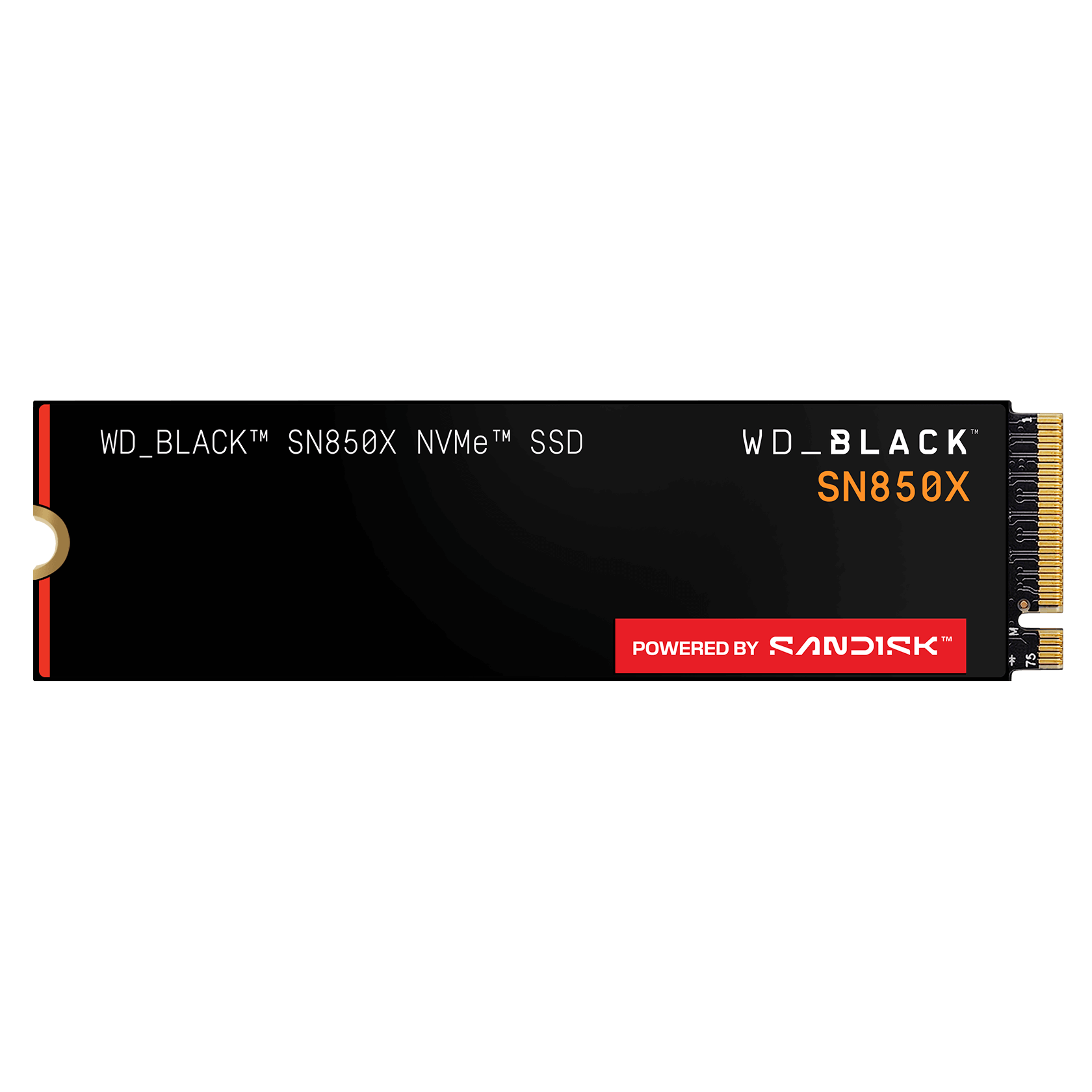
The WD Black SN850X and the Samsung 990 Pro are the two most-searched PCIe 4.0 NVMe SSDs for PC gamers and PS5 owners, and on paper they are close enough that the decision usually comes down to price and availability rather than pure specs: Samsung's drive posts higher official sequential numbers (7,450MB/s read, 6,900MB/s write) than WD's (7,300MB/s read, 6,300–6,600MB/s write), but WD's heatsink models are consistently easier to find in a PS5-ready SKU, and both carry a 5-year warranty. In the middle of 2026's NAND and DRAM price surge, the bigger question for most buyers isn't which drive is technically faster — it's which one you can actually buy near its old price, and how much capacity you really need before shortage-driven pricing makes the decision for you.
Specs at a glance: WD Black SN850X vs Samsung 990 Pro
Both drives are PCIe Gen 4.0 x4 NVMe SSDs in the standard M.2 2280 form factor, sold with and without a pre-installed heatsink. The table below pulls directly from Western Digital's own SN850X product listing and Samsung's official 990 PRO datasheets.
| Spec | WD Black SN850X | Samsung 990 Pro |
|---|---|---|
| Capacities | 1TB, 2TB, 4TB, 8TB | 1TB, 2TB, 4TB |
| Interface | PCIe Gen4 x4, NVMe | PCIe Gen4 x4, NVMe 2.0 |
| Sequential read (up to) | 7,300MB/s | 7,450MB/s |
| Sequential write (up to) | 6,300MB/s (1TB) / 6,600MB/s (2TB+) | 6,900MB/s |
| Random read (up to) | 800K IOPS (1TB) / 1,200K IOPS (2TB+) | 1,200K IOPS (1TB) / 1,400K IOPS (2TB) at QD32 |
| Random write (up to) | 1,100K IOPS (1TB–4TB) / 1,200K IOPS (8TB) | 1,550K IOPS at QD32 |
| Controller / NAND | WD in-house controller, TLC 3D NAND | Samsung in-house controller, V-NAND TLC |
| DRAM cache | Yes (capacity-scaled) | 1GB LPDDR4 (1TB) / 2GB LPDDR4 (2TB) |
| Endurance (TBW) | 600TB (1TB) / 1,200TB (2TB) / 2,400TB (4TB) / 4,800TB (8TB) | 600TB (1TB) / 1,200TB (2TB) |
| Warranty | 5-year limited | 5-year limited |
| PS5 support | Officially marketed for PS5 (heatsink models) | Officially marketed for PS5 (heatsink models) |
Sequential and random speed: who's actually faster
Samsung's own datasheet lists the 990 Pro at up to 7,450MB/s sequential read and 6,900MB/s sequential write across both the 1TB and 2TB capacities, measured with Intelligent TurboWrite active. Western Digital's official spec sheet for the SN850X lists 7,300MB/s sequential read across all capacities, with sequential write scaling from 6,300MB/s on the 1TB model up to 6,600MB/s on the 2TB, 4TB and 8TB models. On paper, that gives Samsung a modest but consistent lead in both sequential figures.
Random I/O tells a similar story. Samsung specs the 990 Pro at up to 1,200K IOPS random read (1TB) or 1,400K IOPS (2TB), and up to 1,550K IOPS random write at queue depth 32, regardless of capacity. WD's SN850X posts 800K IOPS random read on the 1TB model, rising to 1,200K IOPS on 2TB and larger, with random write holding at 1,100K IOPS through the 4TB model and 1,200K IOPS on the 8TB flagship. In practice, these differences are small enough that most games and everyday desktop tasks won't reveal a gap you can feel — both drives load levels and boot Windows in essentially the same amount of time. The numbers matter more if you're doing sustained large-file work: video editing scratch disks, large game installs, or bulk asset transfers, where Samsung's higher sustained write ceiling has a slight edge.
Price per GB amid the 2026 NAND price surge
Historically, the SN850X and 990 Pro have traded blows on price per gigabyte, with WD typically running a little cheaper at the same capacity. That comparison has been scrambled by the NAND and DRAM shortage that has gripped the industry through 2026. As we covered in our look at why SSD prices are surging in 2026, AI data-center demand has pulled fab capacity away from consumer NAND, and analysts expect the shortfall to persist through the rest of the year.
The pricing damage is visible on both sides of this comparison. TechRadar reported in January 2026 that the 2TB Samsung 990 Pro with Heatsink jumped more than 80%, from around $170 in November 2025 to $319.99, alongside a separate report that Kingston's NAND input costs rose 246% in under a year. Tom's Hardware separately documented Western Digital's parent SanDisk raising prices across its Black and Blue SSD lineups by as much as 2.8x their original MSRP as the same shortage squeezed supply. Neither brand has been spared, which means price-per-GB is a much less reliable tiebreaker in late 2026 than it was even a year ago. The practical takeaway: shop by whichever drive is currently priced closest to its pre-2026 MSRP rather than assuming either brand has a structural pricing advantage right now, and don't expect a "good deal" 2TB drive at 2024-era pricing until supply loosens.
PS5 compatibility: WD Black SN850X vs Samsung 990 Pro
Both drives are explicitly built to work in the PlayStation 5's M.2 expansion slot, and both manufacturers say so directly. Western Digital markets the SN850X as "designed for PC gaming rigs and PlayStation 5 consoles," while Samsung lists "Client PCs, PlayStation®5" as the 990 Pro's stated usage application on its own datasheet. Sony's PS5 storage requirements call for a PCIe Gen4 NVMe M.2 SSD with a heatsink (or a drive equipped with one), sequential read speed of at least 5,500MB/s, and a physical size that fits the console's expansion bay — both drives clear that bar comfortably at over 7,000MB/s sequential read.
The practical difference is in the heatsink SKUs. Both companies sell heatsink-equipped versions sized to fit the PS5's expansion slot without modification, but you need to buy the correct variant: a bare drive without a heatsink (or with an oversized third-party one) won't fit or won't cool adequately in the console. Check the listing carefully for "with heatsink" in the product name before buying for a PS5, on either brand.
Endurance and warranty compared
Endurance is nearly a wash at matching capacities. WD rates the SN850X at 600TB written for the 1TB model and 1,200TB for the 2TB model, scaling up to 2,400TB (4TB) and 4,800TB (8TB) — identical ratios that Samsung also uses for the 990 Pro's 600TB (1TB) and 1,200TB (2TB) TBW figures. Both companies back their drives with a 5-year limited warranty, whichever comes first between the warranty period and the TBW ceiling. For a typical gamer or general user, both endurance budgets are effectively unreachable in normal use; you'd need to rewrite the entire drive hundreds of times over five years to hit the ceiling, which is more relevant to heavy content creators or anyone running the drive as a constant read/write scratch disk.
Software, security, and everyday differences
Beyond raw throughput, the two drives ship with different management software and near-identical security feature sets. Samsung bundles its 990 Pro with Samsung Magician, which handles firmware updates, drive health monitoring, and over-provisioning, and the drive supports AES 256-bit full-disk encryption along with TCG/Opal V2.0 and IEEE1667 encrypted-drive standards, according to Samsung's own datasheet. Western Digital pairs the SN850X with the WD Dashboard utility for similar firmware, health, and game-mode toggles on its Windows software. Both companies rate their drives for the same 0–70°C measured operating range (Samsung) or a comparable industry-standard operating window (WD), so neither has a meaningful thermal advantage without adequate case airflow — which is exactly why both ship heatsink options in the first place.
Physically, both drives use the same single-sided M.2 2280 footprint without a heatsink, so they'll fit any standard M.2 slot, laptop or desktop, that supports PCIe Gen4 NVMe drives. Once you add the official heatsink, though, both become noticeably taller and are only guaranteed to fit a PS5 expansion bay or a desktop case with clearance for a full-height M.2 cooler — always check your motherboard's M.2 slot clearance (particularly under a graphics card) before ordering a heatsink model for a desktop build.
Which SSD to buy for gaming
For gaming and PS5 use specifically, both drives are effectively interchangeable in real-world performance — load times are governed as much by the game engine and PCIe Gen4 bandwidth ceiling as by the small gap between 7,300MB/s and 7,450MB/s sequential read. The decision should come down to availability and price at the capacity you need: a 2TB or 4TB drive is the sane minimum for a modern game library, since most current-generation titles now install well north of 100GB. If you're planning a fuller gaming PC upgrade around either drive, our RTX 5080 vs RX 9070 XT comparison covers the GPU side of that same 2026 budget squeeze.
Which SSD to buy for general PC use
For a general-purpose boot drive, secondary storage, or a workstation that isn't gaming-focused, the calculus shifts slightly toward whichever drive is cheaper at your target capacity, since the performance gap between the two rarely surfaces outside of sustained large-file transfers or professional creative workloads. Samsung's slightly higher sustained sequential write ceiling (6,900MB/s vs. WD's 6,300–6,600MB/s) gives it a small edge for exporting large video files or working with big datasets, but for everyday productivity, web browsing, and application launches, either drive will feel indistinguishable from the other. If you're also weighing a memory upgrade alongside your storage, our DDR6 RAM explainer looks at how the same component shortage is affecting system memory pricing.
Heatsink versions and installation notes
Both manufacturers sell heatsink and non-heatsink variants of the same underlying drive. Samsung's 990 Pro with Heatsink adds a red-and-black finned aluminum cooler that brings the drive's maximum dimensions to 80.15mm x 25mm x 8.88mm, per Samsung's own datasheet — wide and tall enough that Samsung explicitly warns the pre-installed heatsink should never be removed, as doing so voids the warranty. WD's heatsink SN850X models use a similarly sized cooler designed to clear the PS5's expansion bay cover. If your motherboard already has an M.2 heatsink built into the chipset shroud, a non-heatsink drive is usually the better fit for a desktop PC; for a PS5, buy the heatsink version regardless, since the console has no other cooling for the expansion slot.
Bottom line: what to buy right now
Neither drive is a bad choice in isolation — Samsung's 990 Pro has the edge in official throughput and random IOPS, while WD's SN850X lineup offers a wider capacity range up to 8TB. In late 2026's shortage-distorted market, the more useful question is which one is actually in stock near a reasonable price at the capacity you need today, since both brands have seen list prices climb well above their 2024–2025 norms. If you can find either drive's 2TB heatsink model within shouting distance of its pre-surge price, buy it rather than waiting for the market to cool off; TrendForce and other industry analysts don't expect NAND supply to normalize before the second half of 2027. Buy for the capacity you need now, confirm you're getting the correct heatsink SKU for a PS5 install, and treat price-per-GB parity between these two drives as temporary rather than a long-term trend.
Frequently asked questions
Is the WD Black SN850X faster than the Samsung 990 Pro?
Officially, no. Samsung's 990 Pro posts higher sequential figures (7,450MB/s read, 6,900MB/s write) than the SN850X (7,300MB/s read, 6,300-6,600MB/s write), per each maker's own specs. The real-world difference is small for most games and everyday use.
Which is better for PS5, WD Black SN850X or Samsung 990 Pro?
Both are officially marketed for PS5 and clear Sony's minimum 5,500MB/s sequential-read requirement by a wide margin. Buy the heatsink-equipped SKU of whichever drive you choose, since a bare drive won't cool properly in the console's expansion bay.
Why are SSD prices so high in 2026?
AI data centers are consuming NAND and DRAM manufacturing capacity that used to go to consumer drives, tightening supply across every brand. Kingston has reported a 246% jump in NAND input costs in under a year, and analysts don't expect the shortage to ease before the second half of 2027.
What's the endurance (TBW) difference between the two drives?
They're nearly identical at matching capacities: WD rates the SN850X at 600TB written (1TB) and 1,200TB (2TB), and Samsung rates the 990 Pro the same at 600TB (1TB) and 1,200TB (2TB), both backed by a 5-year limited warranty.
Does the Samsung 990 Pro need a heatsink for PS5?
Yes. Sony's PS5 expansion slot requires a heatsink-equipped M.2 drive, and Samsung explicitly warns that removing the pre-installed heatsink on its 990 Pro with Heatsink model voids the warranty, so buy the heatsink SKU specifically for a console install.
Should I buy the WD Black SN850X or Samsung 990 Pro for a non-gaming PC?
Either works well. Samsung's slightly higher sustained sequential write speed helps marginally with large file exports, while WD's wider capacity range (up to 8TB) can make sense if you need more storage than Samsung's 990 Pro currently offers.
Sources
- WD_BLACK SN850X NVMe SSD — official product page (SanDisk / Western Digital)sandisk.com
- Samsung 990 PRO — official product page (Samsung)samsung.com
- Samsung NVMe SSD 990 PRO Datasheet Rev. 1.0 (Samsung Semiconductor)download.semiconductor.samsung.com
- Samsung NVMe SSD 990 PRO with Heatsink Datasheet Rev. 2.0 (Samsung Semiconductor)download.semiconductor.samsung.com
- TechRadar — the RAM shortage claims another victim as PS5 SSD prices rockettechradar.com
- Tom's Hardware — Sandisk crushes wallets with up to 2.8X SSD price hikestomshardware.com
Mara Lindqvist edits the hardware desk. She covers graphics cards, processors, memory and storage, the foundries and chip designers behind them, and what the numbers on a spec sheet mean for people choosing a PC. Specifications in her stories come from manufacturer spec pages and datasheets.